Treasure Network (MAGIC) is a decentralized AI entertainment ecosystem powered by its native token, MAGIC, and governed by the Treasure DAO community. It is committed to building an "Agent Civilization" centered around AI-native digital and physical collectibles and interactive IP. The ecosystem's core components include the Neurochimp AI Agent framework, the Mastermind large-scale orchestration backend, the Agent Creator one-click agent-building tool, and proprietary applications such as Smolworld and Bridgeworld Canopy. MAGIC functions as the unified value medium for Agent Hashrate, on-chain services, and governance voting.
2026-06-30 02:43:49
T-RIZE is a blockchain infrastructure platform designed for the tokenization of real-world assets (RWAs). Its primary objective is to transform real estate, private equity, fund shares, and other tangible assets into on-chain digital assets. By leveraging RizeNet, an Asset Issuance Engine, Federated Learning, and a Compliance Management System, it establishes a comprehensive technical framework for asset issuance, management, trading, and analysis. Compared to traditional asset securitization, T-RIZE enhances asset liquidity through blockchain and smart contracts while reducing barriers to cross-border investment and asset management.
2026-06-25 03:40:38
RIZE is the native functional token of the T-RIZE Real World Activos (RWA) tokenization ecosystem, designed to create a unified economic system spanning asset issuance, on-chain governance, network incentives, and value capture. By integrating asset issuance demand, ecosystem Usar scenarios, and token circulation mechanisms, RIZE not only assumes payment and governance functions but also serves as an important value carrier between real-world assets and blockchain networks.
2026-06-25 03:40:07
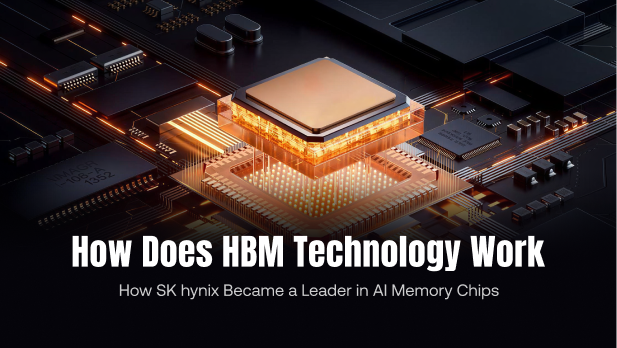
HBM (High Bandwidth Memory) is an advanced memory technology purpose-built for high-performance computing and artificial intelligence workloads. By vertically stacking multiple DRAM chips and using a silicon interposer to connect the processor with memory, HBM delivers higher bandwidth, lower power consumption, and superior energy efficiency—all within a compact footprint.
2026-06-25 02:32:34
SK hynix, a global leader in memory chip manufacturing, plays a key role as a high-performance memory supplier in the AI supply chain. Its core products—DRAM, HBM (High Bandwidth Memory), and enterprise-grade SSDs—are widely deployed in AI chips, GPU servers, cloud computing platforms, and large data centers.
2026-06-25 02:31:44
SK hynix and Micron Technology are two of the three core memory chip manufacturers worldwide, having long dominated the DRAM, NAND Flash, and enterprise storage markets. As demand for artificial intelligence, large model training, and data centers grows, both companies are actively expanding their presence in the HBM (High Bandwidth Memory) market to serve the high-speed memory needs of AI GPUs.
2026-06-25 02:30:50
South Korea is a critical hub in the global semiconductor industry, with a longstanding leadership in memory chips. Samsung Electronics and SK Hynix together command the global market for DRAM, NAND Flash, and HBM (High Bandwidth Memory), positioning South Korea as a key supply center for AI storage infrastructure. In contrast to China's Taiwan region, which excels in wafer foundry, South Korea's semiconductor sector emphasizes memory chip research, development, and manufacturing. The industry encompasses not only memory chip manufacturers but also equipment suppliers, material producers, packaging and testing firms, and a wafer foundry ecosystem.
2026-06-25 02:29:37
The relationship between EigenCloud and EigenLayer is that of a "shared security layer" and a "verifiable cloud platform layer." EigenLayer extends Ethereum’s economic security to the AVS (Actively Validated Services) network through its restaking mechanism, while EigenCloud leverages these security capabilities to build a unified development platform. By integrating services such as EigenDA, EigenCompute, and EigenVerify, it provides developers with data availability, off-chain computation, and result verification.
2026-06-24 07:50:29
Heima's cross-chain transaction process is built on a Chain Abstraction architecture, eliminating the need for users to manually switch wallets, bridge assets, or prepare Gas on the destination chain. Users simply submit a transaction intent, and Heima's Omni Executor automatically calculates the optimal execution path, sources cross-chain liquidity, coordinates execution nodes to complete the transaction, and anchors all execution records to the Heima Layer 1 network for verification and auditing. The entire process is orchestrated by Omni Account, Omni Executor, Agent Hub, and Heima Layer 1 working in concert, delivering unified accounts, Gas abstraction, and cross-chain liquidity management.
2026-06-24 05:24:35
Heima (HEI) is a Chain Abstraction network designed to enable users to perform multi-chain operations without needing to understand the underlying blockchain, through mechanisms such as Unified Accounts, cross-chain asset coordination, Gas Abstraction, and Intent Execution. The project is an upgrade from the original identity infrastructure network Litentry, marking a strategic shift from on-chain identity aggregation to building chain abstraction infrastructure.
2026-06-24 01:52:01
Heima and Particle Network both operate within the Chain Abstraction space, but they take distinct technical approaches. Particle Network focuses on building Universal Accounts and Universal Liquidity, delivering a seamless multi-chain experience through unified accounts and unified liquidity. In contrast, Heima constructs a comprehensive cross-chain coordination layer around Intent, Omni Account, Omni Executor, and Agent Hub, using intent-driven execution and automated agent networks to mask cross-chain complexity. While both aim to simplify users' management of multi-chain assets and applications, they differ significantly in execution layer design, network structure, liquidity coordination methods, and ecosystem positioning.
2026-06-24 01:50:33
Heima is a cross-chain coordination network built on Chain Abstraction, delivering a unified multi-chain interaction layer via Omni Account, Omni Executor, Agent Hub, and Heima Layer 1. It solves key pain points in multi-chain environments—complex account management, fragmented Gas Tokens, cumbersome cross-chain transactions, and dispersed liquidity. In DeFi and multi-chain asset management, users simply submit a transaction intent, and the system automatically handles cross-chain routing, liquidity coordination, and execution, transforming complex multi-chain workflows into a unified experience.
2026-06-24 01:49:55
Biconomy is a Web3 infrastructure protocol specializing in Account Abstraction, designed to reduce the complexity of blockchain interactions through smart accounts, gas abstraction, modular execution environments, and transaction orchestration mechanisms, bringing Web3 applications closer to the Web2 user experience. As the ERC-4337 standard matures, Biconomy has assembled a complete technical stack—including Nexus Smart Account, Paymaster, Bundler, MEE (Modular Execution Environment), and Supertransaction—driving the transformation of blockchain accounts from traditional wallets into programmable smart accounts.
2026-06-23 11:40:22
The core distinction between OKZOO and traditional DePIN projects lies in the type of resources the network produces and utilizes. Traditional DePIN projects center on infrastructure resources like hashrate, communication networks, bandwidth, or geolocation. In contrast, OKZOO focuses on environmental data collection and AI data infrastructure. Through P-mini devices, OKZOO gathers real-world environmental data and combines AI Pet and AIOT incentive mechanisms to build an AIoT network.
2026-06-22 02:00:20
OKZOO (AIOT) is an AIoT infrastructure integrating AI, IoT, and blockchain networks, collecting real-world data through distributed environmental sensing devices and leveraging AI Pet interaction mechanisms and AIOT tokens to incentivize user data contributions. OKZOO aims to build a global environmental data network, providing trustworthy, Tiempo real, and verifiable data sources for AI models, smart devices, and real-world applications.
2026-06-22 01:54:52