Open blockchain networks allow anyone to create unlimited wallet addresses. This design leaves room for innovation, but it also makes bot accounts and Sybil attacks a persistent problem. In airdrops, DAO governance, on-chain social networks, and GameFi incentive systems, attackers often control large numbers of addresses in bulk to capture extra benefits, undermining the fairness of resource distribution.
When a system cannot distinguish real users from automated programs, governance outcomes, incentive mechanisms, and community activity can all become distorted. As a result, the Web3 ecosystem has gradually begun exploring trusted identity infrastructure, seeking a more reliable way to identify participants while preserving openness. Proof of Humanity emerged from this context, with the goal of providing verifiable proof of human identity for blockchain networks.
Core Principles of Trusta.AI’s Proof of Humanity
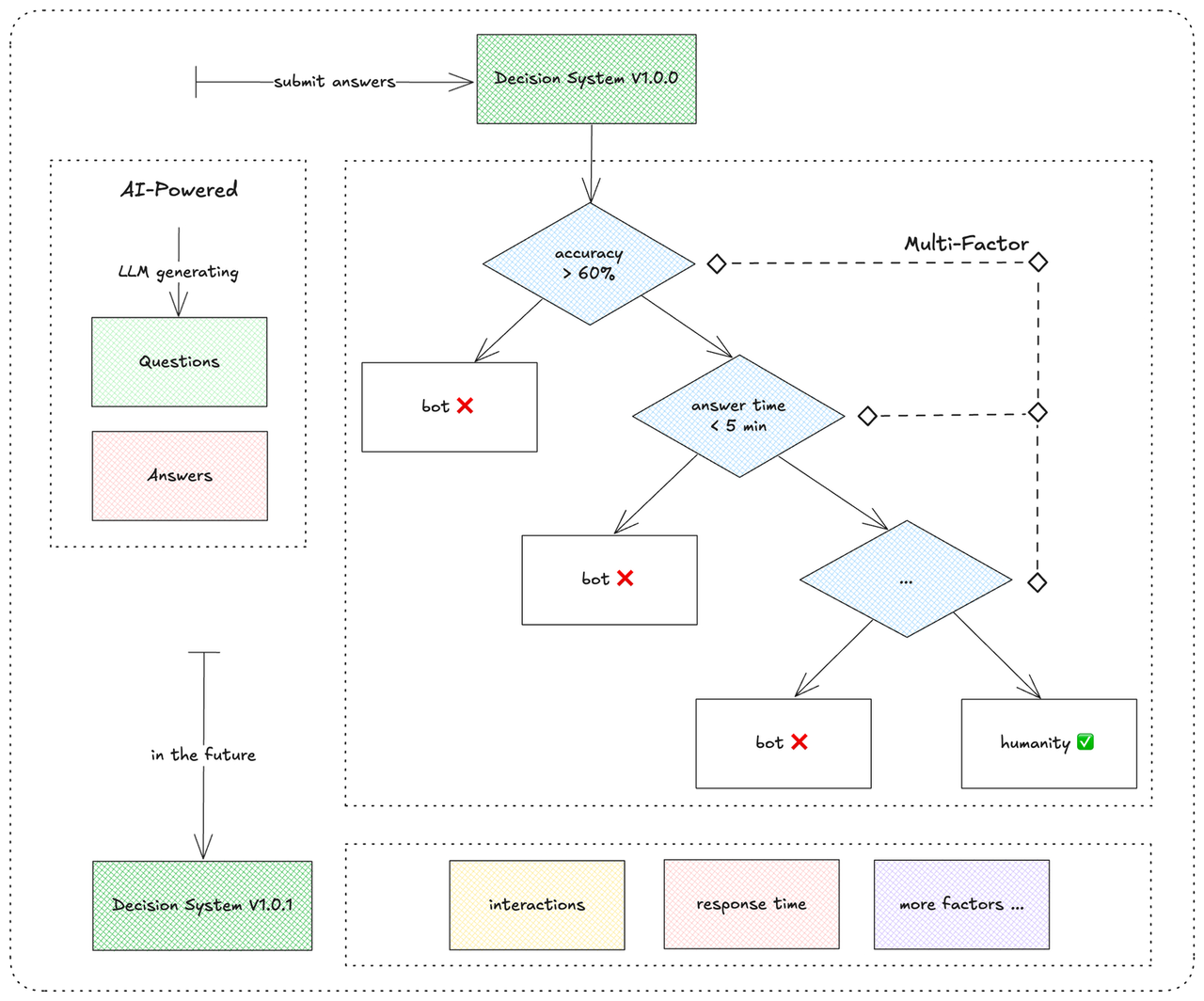
Trusta.AI’s Proof of Humanity does not rely on a single verification method. Instead, it uses multidimensional data analysis to determine whether there is a real person behind an account. The system first evaluates a wallet’s long-term on-chain behavior, including transaction frequency, protocol interactions, asset holding history, and activity across multiple chains. Real users usually develop continuous and natural behavioral patterns, while bot accounts often show highly regular or batch-like characteristics.
Beyond behavior analysis, Trusta.AI also studies relationships between addresses, such as fund flows, interaction networks, and account clustering. This relationship analysis helps detect large groups of addresses controlled by the same entity, making it easier to identify potential Sybil attack networks.
At the same time, the system continuously records account performance through a reputation model. Identity verification is not a one-time process. It is updated as users continue participating in on-chain activity. As reputation data accumulates, an account’s trustworthiness can more accurately reflect its real value.
Source: Trusta.AI
Complete Proof of Humanity Verification Process
Step 1: Connect the Wallet and Create an Identity Profile
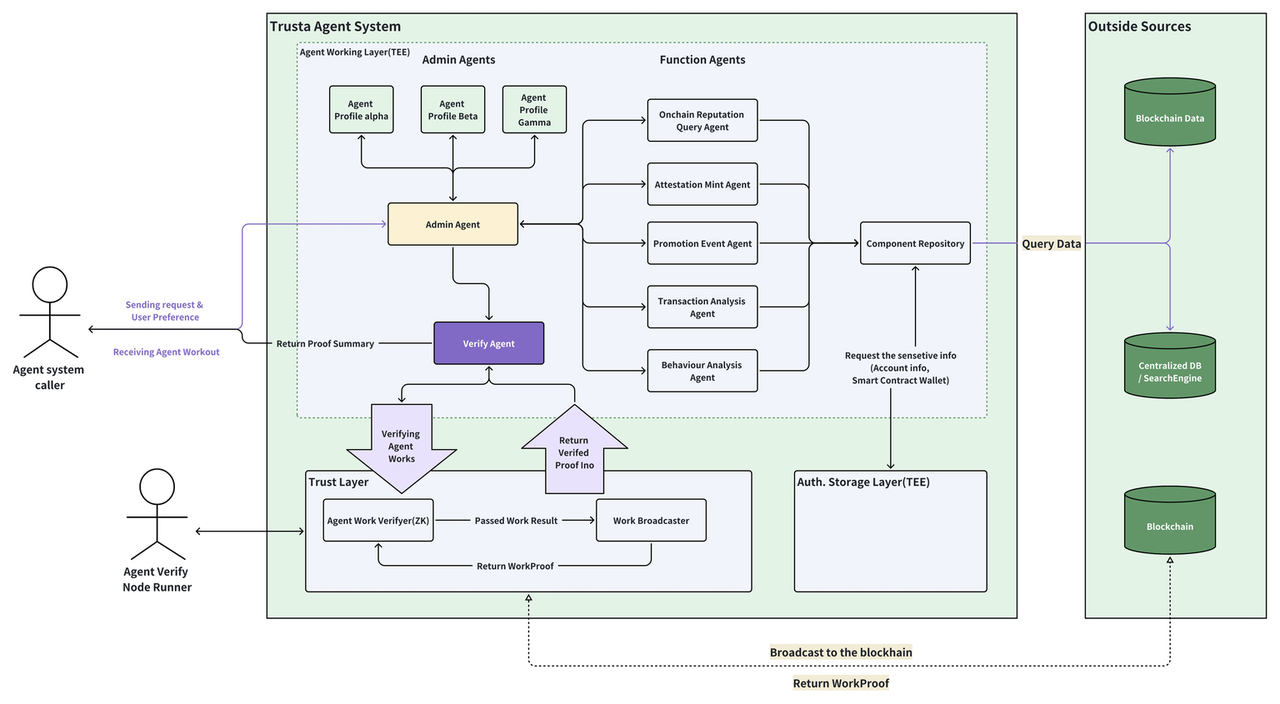
Users first connect their wallet to an application or service that supports Trusta.AI. The system reads publicly available on-chain information, including wallet creation time, transaction history, asset activity, and protocol interaction records. This process usually does not require users to transfer assets and does not affect control of the wallet.
Step 2: Behavior Analysis and Risk Detection
After wallet data enters the TrustScan risk detection engine, the system begins analyzing the account’s behavior patterns. The analysis covers activity time distribution, transaction habits, interaction depth, and relationship networks with other addresses. Using this information, the system can identify abnormal behavior, bot-like traits, and possible links to Sybil attacks.
Step 3: Reputation Assessment and Identity Judgment
The behavior data then enters the TrustGo reputation model. This model comprehensively evaluates the account’s activity level, participation, consistency, and historical contributions, then generates a corresponding reputation score. The score not only reflects whether the account is trustworthy, but also indicates the quality of its long-term participation in the ecosystem.
Step 4: Generate the Identity Verification Result
Once the assessment is complete, the system generates an identity status. Some accounts may be recognized as highly trusted human users, while others may be marked as risk accounts or placed in a pending further verification status. Different protocols and applications can call these identity results according to their own needs.
Step 5: Issue Verifiable Credentials
After verification is approved, Trusta.AI can issue a Verifiable Credential to the account. These credentials can be reused across multiple applications, so users do not need to complete identity verification again in every protocol. This improves the composability of the identity system.
Step 6: Continuously Update Reputation Records
Proof of Humanity is not a one-time certification that remains valid forever. As users continue participating in on-chain activity, their reputation records and identity status are continuously updated. This dynamic verification mechanism helps identity results better reflect a user’s current reality while reducing the risks caused by outdated identity records.
Use Cases of Proof of Humanity in Web3
The most direct use case for Proof of Humanity is airdrop distribution. Project teams can use identity verification results to identify real participants and reduce the share of incentive resources captured by bot accounts, improving distribution efficiency.
In DAO governance, identity verification can reduce the impact of Sybil attacks on voting results, allowing governance decisions to better reflect the views of the real community. For decentralized social platforms, Proof of Humanity helps reduce fake accounts and improves both content quality and the credibility of community interactions.
As the on-chain reputation economy develops, identity data is also being used in credit assessment, collaboration networks, and on-chain lending scenarios. At the same time, AI Agent is gradually becoming an important participant in the blockchain ecosystem. In the future, trusted identity systems may also expand into digital economic environments where human users and AI Agents participate together.
What Challenges Does Proof of Humanity Face
Although human verification can improve network trustworthiness, it still faces several challenges.
First, identity verification and privacy protection must be kept in balance.
Second, as AI technology continues to advance, bot behavior is becoming increasingly similar to human behavior, making detection more difficult.
In addition, identity standards have not yet been unified across different protocols, and cross-platform identity recognition is still in an early stage.
These issues are also important directions of ongoing exploration across the Web3 identity sector.
Conclusion
As an important part of Trusta.AI’s digital identity network, Proof of Humanity verifies whether an account is controlled by a real person through on-chain behavior analysis, reputation scoring, and Verifiable Credentials. Compared with traditional KYC or purely biometric solutions, Proof of Humanity places greater emphasis on long-term behavioral accumulation and on-chain reputation building. As the Web3, DAO, and AI Agent ecosystems continue to develop, trusted identity is becoming important infrastructure for the digital economy, and Proof of Humanity serves as a key entry point into this trust system.
FAQs
Is Proof of Humanity the same as KYC?
No. KYC is used to verify real-world identity, while Proof of Humanity is used to verify whether there is a real person behind an account. The two serve different purposes.
How does Trusta.AI determine whether an account belongs to a real person?
Trusta.AI analyzes an account’s on-chain behavior, interaction history, relationship networks, and reputation records, evaluating account authenticity across multiple dimensions.
Can Proof of Humanity prevent Sybil attacks?
Proof of Humanity cannot completely eliminate Sybil attacks, but it can significantly improve the ability to identify bots and batch-controlled accounts, thereby reducing the success rate of such attacks.
Which is more suitable for Web3, Proof of Humanity or World ID?
They follow different approaches. World ID focuses more on biometric uniqueness verification, while Trusta.AI places greater emphasis on on-chain behavior, reputation accumulation, and long-term identity management, making them suitable for different scenarios.