As real-world assets (RWA) gradually become an important direction for the blockchain industry, the focus of market discussion has shifted from “how assets can be brought on-chain” to “how an on-chain token can truly correspond to a real-world asset.” Unlike native crypto assets, RWA involves real-world claims, commodities, real estate or securities, so ownership verification and value mapping cannot be completed through smart contracts alone.
Blockchain can record the transfer of tokens, but it cannot directly verify whether a real-world asset actually exists. Nor can it automatically enforce legal recovery in the real world. For this reason, the core of RWA is not merely a technical issue. It is also a matter of legal structure and financial infrastructure.
To create a trusted connection between on-chain tokens and real-world assets, the industry has gradually developed a standardized structure built around SPVs, custodians, legal agreements and off-chain enforcement mechanisms.
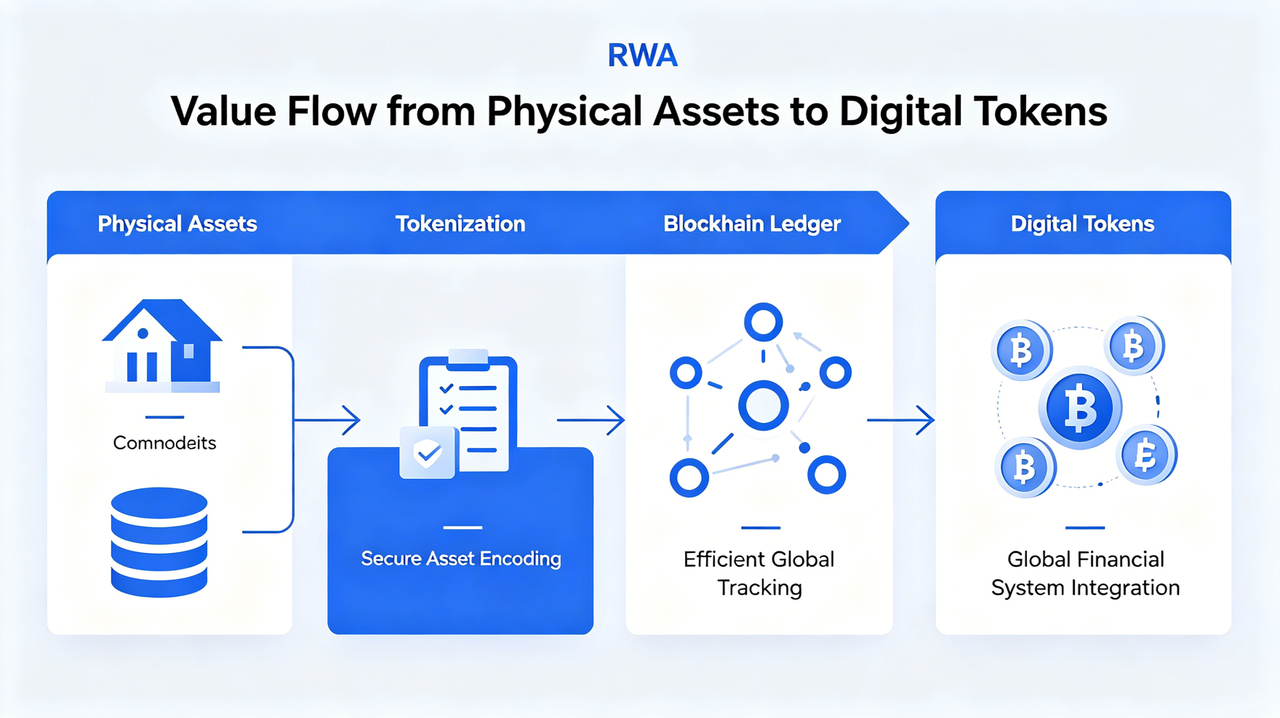
What Is the Legal Structure of RWA?
The legal structure of RWA is, in essence, the legal mapping relationship between real-world assets and on-chain tokens. Its core purpose is to ensure that on-chain holders can claim corresponding rights to real-world assets through a legal mechanism.
In most cases, what users purchase is not the asset itself, but a type of interest token issued by a legal entity. For example, a real estate RWA project may not place direct property ownership on-chain. Instead, an SPV company may hold the property, and the SPV then issues tokens on-chain.
Therefore, the key to RWA is not token technology itself, but whether the legal relationship behind the token is valid. Without an effective legal structure, an on-chain token may still be tradable, but it cannot truly correspond to rights in a real-world asset.
What Role Does an SPV Play in RWA?
An SPV, or Special Purpose Vehicle, is one of the most common legal structures used in RWA.
An SPV is usually a specially established legal entity that independently holds a specific asset and isolates risk. For example, in a real estate RWA project, the property may be held by an SPV, while the on-chain tokens purchased by users correspond to a portion of the SPV’s income rights or equity.
This structure serves several important purposes.
First, it enables asset isolation. Even if the project operator encounters financial problems, the assets held by the SPV are usually not directly affected.
Second, an SPV helps clarify the legal relationship. On-chain tokens can correspond to the SPV’s equity, debt claims or income rights, giving investors enforceable rights at the legal level.
In addition, an SPV can help a project meet compliance requirements in different jurisdictions, since the securities laws and fund laws of many countries require real-world assets to be managed through legal entities.
Why Is the Custodian a Core Role in RWA?
Because blockchain cannot directly hold real-world assets, RWA must rely on custodians to manage off-chain assets.
A custodian’s responsibilities usually include:
-
Safekeeping assets
-
Verifying asset authenticity
-
Maintaining reserve records
-
Cooperating with audits and liquidation
-
Handling asset disposal in the event of default
For example, in a gold RWA project, physical gold is usually held by a professional vault or financial institution. In a U.S. Treasury RWA project, the corresponding bonds may be held through a bank or brokerage account.
The credibility of the custodian directly affects market trust in an RWA project. If the custodian cannot prove that the assets truly exist, the value basis of the on-chain token will also come into question.
For this reason, many large RWA projects introduce third-party audits, Proof of Reserve mechanisms and regular disclosure systems to improve transparency.
How Are Off-Chain Assets Mapped to On-Chain Tokens?
One of the core issues in RWA is how to establish the corresponding relationship between real-world assets and on-chain tokens.
This process usually involves several steps:
Asset Ownership Verification
First, the legal ownership of real-world asset must be confirmed. For example, U.S. Treasuries, real estate or gold must be formally held by an SPV or custodian.
Legal Agreement Binding
Next, legal documents define the relationship between the token and the asset. For instance, they specify whether the token corresponds to income rights, creditor rights or redemption rights.
On-Chain Mapping
After the legal structure has been completed, the project team issues the corresponding tokens on the blockchain. The number of tokens is usually linked to the value or share of the real-world asset.
Oracle Data Synchronization
Because the prices of real-world assets change, many RWA projects need to rely on oracles to synchronize NAV, yield or market prices on-chain.
Through this series of mechanisms, RWA can create a trusted connection between real-world assets and the blockchain.
Why RWA Cannot Operate Outside the Real-World Legal System
Unlike native crypto assets such as Bitcoin or ETH, RWA fundamentally depends on the real-world legal system.
If default, asset loss or custody problems occur, the smart contract itself cannot automatically recover assets in the real world. Ultimately, courts, regulators or legal contracts still need to step in.
For example:
-
Real estate rent defaults require real-world legal enforcement
-
Bond liquidation depends on the traditional financial system
-
Gold redemption requires physical storage and delivery
Therefore, RWA is not actually a financial model that is “fully on-chain.” It is a hybrid structure that combines on-chain and off-chain elements.
This is also why RWA is often described as a “law-first blockchain application.”
What Are the Main Legal Risks of RWA?
Although RWA is considered capable of improving asset liquidity and the efficiency of global financing, its legal risks remain a major focus for the market.
These risks include:
Asset Authenticity Risk
If the off-chain assets do not exist, or if the reserve size does not match the tokens issued, the on-chain assets may lose their value support.
Custody Risk
If the custodian goes bankrupt, violates regulations or manages assets poorly, the assets may become impossible to redeem.
Regulatory Risk
Different countries have very different regulatory requirements for tokenized securities, fund shares and on-chain yield products.
Legal Enforcement Risk
Even if token holders have theoretical rights, those rights may be difficult to enforce in practice in a cross-border legal environment.
For this reason, one of the core competitive strengths of RWA is not simply technology, but whether its legal structure is transparent, stable and enforceable.
Differences in Legal Structures Across RWA Models
There is no unified legal structure for RWA projects in today’s market.
| RWA Type |
Common Legal Structure |
Rights Corresponding to the Token |
| U.S. Treasury RWA |
SPV + custody account |
Income rights |
| Real Estate RWA |
SPV holds the property |
Equity / income rights |
| Gold RWA |
Custodial vault |
Commodity reserve rights |
| Private Credit RWA |
Debt agreement |
Debt income rights |
| Tokenized Fund |
Fund structure |
Fund shares |
Different structures directly affect investor rights, regulatory requirements and liquidation mechanisms.
Conclusion
The core of RWA is not merely asset tokenization. It is about building a trusted connection between real-world assets and on-chain tokens through SPVs, custodians, legal agreements and off-chain enforcement mechanisms. Blockchain can improve transaction efficiency and global liquidity, but the ownership verification, custody and legal enforcement of real-world assets still depend on traditional financial and legal systems.
Therefore, RWA is essentially a hybrid financial structure that combines “on-chain technology + off-chain law.” As regulation, custody and on-chain infrastructure continue to mature, RWA may further drive the migration of traditional financial assets to blockchains and become an important infrastructure connecting TradFi and DeFi.
FAQs
What Is an SPV?
An SPV, or Special Purpose Vehicle, is a special purpose entity usually used to independently hold real-world assets and serve as the legal intermediary between on-chain tokens and real-world assets.
Why Does RWA Need a Custodian?
Because blockchain cannot directly hold real-world assets, a custodian is needed to handle asset safekeeping, reserve verification and liquidation execution.
Does an RWA Token Directly Represent Asset Ownership?
Not necessarily. Many RWA tokens actually correspond to income rights, creditor claims or SPV interests, rather than direct ownership of the asset itself.
What Role Does an Oracle Play in RWA?
An oracle synchronizes real-world asset prices, yields, NAV and other data on-chain, helping smart contracts access real-world information.
What Is the Biggest Legal Risk of RWA?
The main risks include asset authenticity risk, custody risk, regulatory uncertainty and cross-border legal enforcement issues.