As Web3 moves from single-chain ecosystems into a multichain environment, more projects are deploying across Ethereum, Layer2, Cosmos, and other public blockchain ecosystems. Although each blockchain has its own applications and liquidity systems, assets often cannot move between them naturally.
As multichain DeFi, stablecoins, and chain abstraction applications continue to grow, the market has begun to need a more unified way to issue cross-chain assets. Developers want the same token to maintain a consistent state across multiple blockchains, rather than creating large numbers of fragmented wrapped assets.
What Is Interchain Token Service (ITS)?
Interchain Token Service (ITS) is a cross-chain token management protocol provided by Axelar. It helps projects deploy, synchronize, and manage tokens across multiple blockchains.
The core goal of ITS is to let developers manage cross-chain assets through a unified architecture, instead of building a separate token system for each chain.
Under the traditional model, if a project wants to expand into a multichain ecosystem, it usually needs to deploy token contracts separately, manage liquidity, and maintain bridging mechanisms on each chain. ITS brings these processes into one infrastructure layer through Axelar’s cross-chain communication network.
Developers can think of ITS as a kind of “cross-chain asset operating system” that coordinates token states and liquidity across multiple blockchains.
How Is ITS Different From a Traditional Cross-Chain Bridge?
The biggest difference between ITS and traditional bridging protocols is that ITS does not focus simply on “moving assets.” Instead, it focuses on unified cross-chain asset management.
Traditional cross-chain bridges usually use a Lock-and-Mint model. Users lock tokens on the source chain, then receive the corresponding wrapped tokens on the destination chain. This model can create multiple versions of the same asset across different chains and lead to fragmented liquidity.
ITS, by contrast, attempts to establish a unified cross-chain asset standard. Developers can define how the same token behaves across multiple blockchains and synchronize that logic through the Axelar network.
This mechanism can reduce the complexity introduced by wrapped tokens and may also improve liquidity efficiency across multichain environments.
How Does ITS Work?
ITS runs on Axelar’s General Message Passing (GMP) and cross-chain validation network.
When developers deploy a cross-chain token through ITS, the system establishes unified token management logic across different blockchains. Asset operations performed by users on one chain can be synchronized to other chains through GMP.
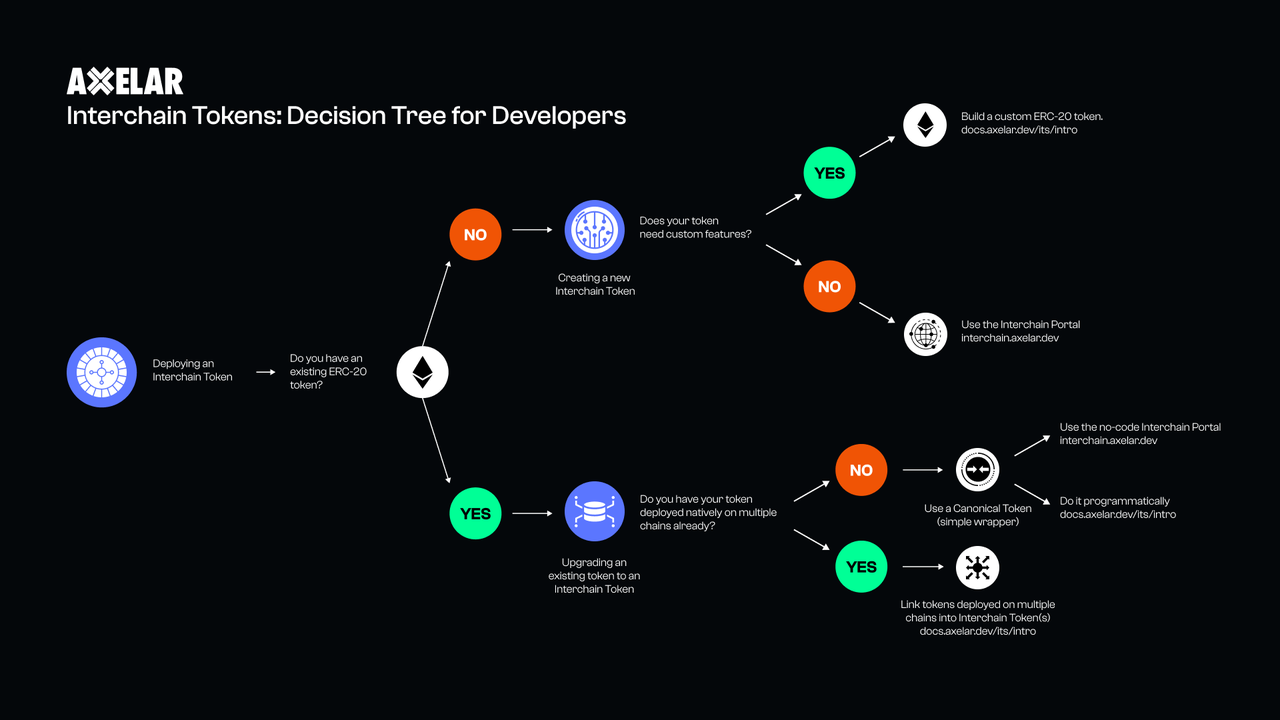
For example, when a user initiates a cross-chain transfer on Ethereum, Axelar’s validator network confirms the relevant event and sends a message to the destination chain. The destination chain then executes the corresponding token operation, completing cross-chain asset synchronization.
The entire process is coordinated by Axelar’s validator network, allowing ITS to maintain consistent asset states across multiple blockchains.
How Does ITS Enable “Deploy Once, Scale Everywhere”?
“Deploy Once, Scale Everywhere” is one of the key design ideas behind ITS.
Traditional multichain deployment usually requires developers to create and maintain token contracts on each chain separately, while also managing different bridging solutions and liquidity pools. This approach not only increases development complexity, but also makes asset fragmentation more likely.
ITS allows projects to expand to multiple blockchains through a unified architecture. Developers only need to define cross-chain token logic once, then synchronize it across multiple ecosystems through the Axelar network.
This mechanism can reduce maintenance costs for developers and help applications expand more easily into multichain ecosystems.
Why Is ITS Suitable for Stablecoins and RWA?
Stablecoins and real-world assets (RWA) usually require a high degree of liquidity consistency and asset credibility, so they place higher demands on cross-chain infrastructure.
The traditional wrapped token model can cause the same asset to form multiple liquidity pools across different blockchains, affecting both stability and efficiency.
ITS can help stablecoin issuers maintain a unified asset standard across multiple blockchains and reduce asset fragmentation.
For RWA, ITS can also help institutions synchronize asset states and permission logic across different chains, improving consistency within multichain financial infrastructure.
How Is ITS Different From LayerZero OFT?
ITS is often compared with LayerZero’s Omnichain Fungible Token (OFT) model.
Both aim to solve the problem of unified multichain assets, but their technical approaches are different. LayerZero relies more on Ultra Light Nodes and a messaging endpoint structure, while ITS is built on Axelar’s PoS validator network and GMP mechanism.
From an architectural perspective, ITS is closer to a unified cross-chain token management system, while OFT places more emphasis on an omnichain token communication model.
Both approaches are important directions in chain abstraction and cross-chain asset infrastructure.
What Challenges Does ITS Face?
Although ITS provides a more unified model for cross-chain assets, multichain environments are still highly complex by nature.
First, different blockchains have different execution logic and security models, so cross-chain asset synchronization requires more sophisticated validation mechanisms. Second, cross-chain protocols have always been major targets for security attacks in Web3.
In addition, as the number of supported chains increases, the costs of cross-chain message validation and network maintenance will continue to rise. Finding the right balance among security, efficiency, and decentralization remains an ongoing challenge for cross-chain asset protocols.
Conclusion
Interchain Token Service (ITS) is cross-chain token infrastructure launched by Axelar. It is designed to help projects achieve unified asset deployment and management across multiple blockchains.
Compared with the traditional wrapped token model, ITS places greater emphasis on native cross-chain tokens and a unified liquidity structure. By combining Axelar’s GMP with its PoS validator network, ITS can synchronize asset states and logic across multiple blockchains.
FAQs
Does ITS Depend on GMP?
Yes. ITS runs on Axelar’s General Message Passing (GMP) mechanism.
Does ITS Support Native Cross-Chain Tokens?
Yes. One of the goals of ITS is to help projects create a unified native cross-chain token experience.
Why Is ITS Suitable for Stablecoins?
ITS can reduce liquidity fragmentation, making it better suited to stablecoin scenarios that require unified liquidity.
How Is ITS Different From LayerZero OFT?
Both are forms of cross-chain token infrastructure, but ITS is based on Axelar’s validator network, while OFT is based on LayerZero’s messaging architecture.
Are There Security Risks With ITS?
As with all cross-chain protocols, ITS must deal with security challenges in multichain environments, so validation mechanisms and network security design are very important.







