In recent years, the sharing economy has fundamentally transformed how people access resources, enabling the rental and sharing of transportation, accommodations, and everyday goods through digital platforms. As blockchain technology matures, sharing platforms are increasingly adopting decentralized solutions to enhance transaction security, data privacy, and asset management. ivault is a Web3 platform built around the sharing economy, leveraging blockchain verification, peer-to-peer (P2P) lending, and non-custodial wallet features to help users easily share a wide range of assets while strengthening data security and user autonomy.
What Is ivault?
 (Source: ivault.io)
ivault, headquartered in Zurich, Switzerland, is a peer-to-peer (P2P) lending platform that enables users to rent, lend, or sell physical goods via a mobile app. The platform utilizes patented blockchain technology to create verification records for each item, delivering higher security for both parties and reducing the risk of personal data exposure. Official data shows that by the first half of 2026, the ivault app had surpassed 170,000 downloads, with global service capabilities continuing to expand.
How Does ivault Use Blockchain?
Unlike traditional sharing platforms, ivault integrates blockchain technology for item management and identity authentication. The platform registers and verifies items, storing related data on the blockchain to ensure transparency while protecting user privacy. Users can complete the entire lending process—whether lending, renting, or selling—directly within the app using their smartphones.
What Problems Does ivault Aim to Solve?
By merging the sharing economy with Web3 technology, ivault addresses several real-world challenges:
-
Overconsumption and Resource Waste
Many products are used infrequently after purchase, despite significant manufacturing costs and resource input. Through sharing, a single item can serve more people, improving resource utilization and reducing unnecessary purchases.
-
Barriers to Sustainable Living
Eco-friendly products often come with high price tags, making them less accessible. Shared rentals provide an alternative, allowing users to access what they need without buying new, thus lowering living expenses.
-
Personal Data Privacy
Many online platforms collect extensive user data, raising the risk of data breaches. ivault’s Web3 framework is designed to give users greater control over their personal information.
What Are ivault’s Main Features?
Beyond lending services, ivault offers several features to enhance the sharing experience:
-
Peer-to-Peer Sharing Marketplace
A public P2P marketplace lets users freely rent, borrow, or sell items, with the platform facilitating transactions.
-
Community Interaction
ivault encourages resource sharing among users in nearby areas, fostering a more interactive community environment.
-
Sustainability Rewards
The platform tracks certain sustainable behaviors and offers points-based rewards to incentivize broader participation in the sharing economy.
-
Non-Custodial Wallet
ivault features a built-in non-custodial wallet, empowering users to manage their blockchain assets independently without relying on the platform for custody.
ivault’s Blockchain Ecosystem
ivault employs a dual blockchain architecture, comprising a proprietary blockchain exclusive to the platform and tokens on a public blockchain. Tokens can be exchanged between the two, with the entire ecosystem managed by the TEOS engine to enable seamless cross-chain integration.
The Core Role of the ivault Token
The ivault Token is central to the platform’s ecosystem, underpinning all interactions, transactions, and value exchanges. Blockchain technology ensures secure, transparent P2P transactions, reducing dependence on centralized intermediaries. This model lowers transaction costs, enhances privacy, and enables users to manage their assets and data with greater autonomy in a trustworthy digital environment.
IVAULT Token Use Cases
 (Source: ivault.io)
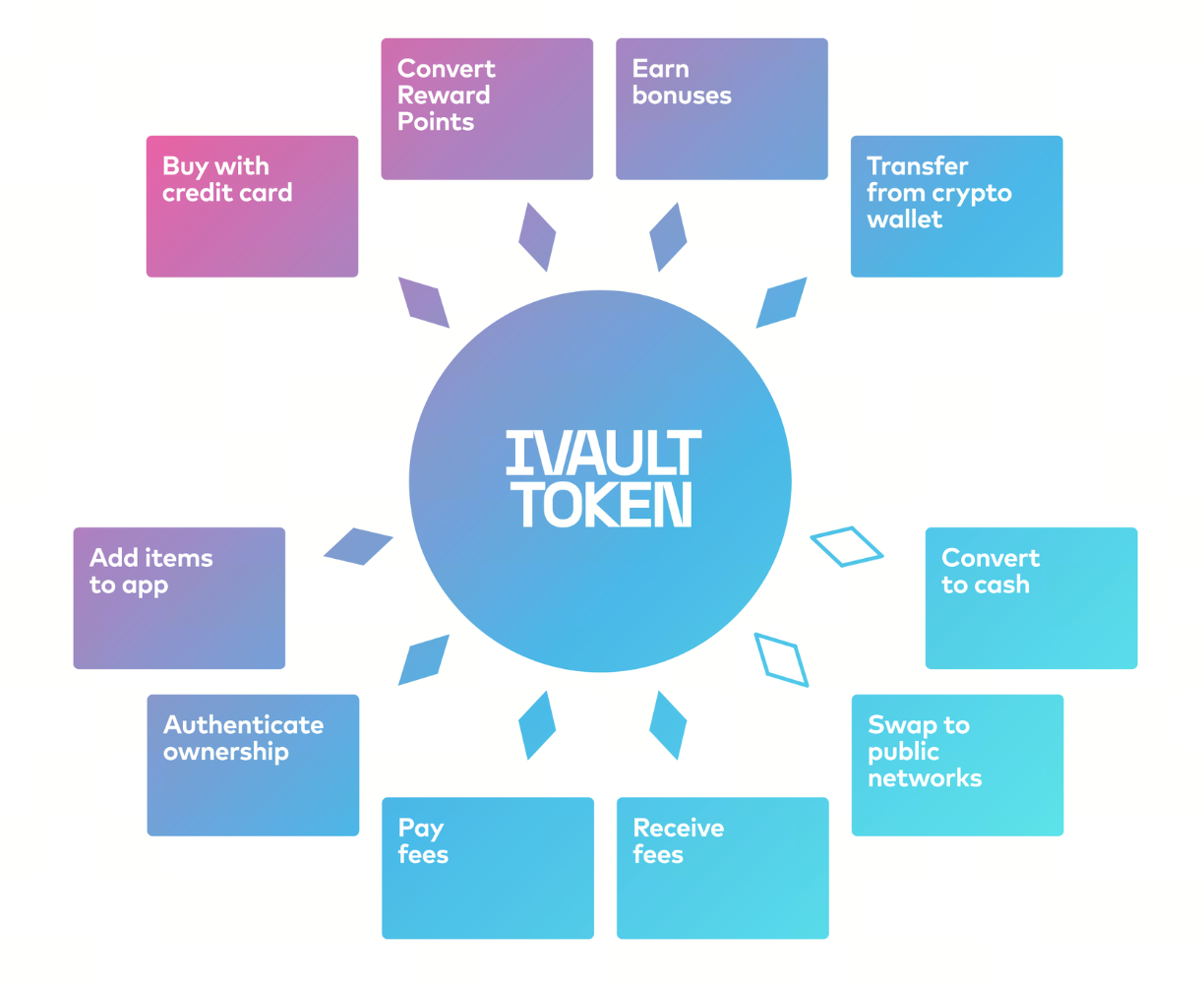
The IVAULT Token is the core value medium of the iVAULT ecosystem, serving as a payment tool and linking digital asset management, physical asset verification, and ecosystem incentives. Users can transfer value seamlessly across multiple application scenarios with a single token, boosting overall platform efficiency.
IVAULT Token Economic Model
 (Source: ivault.io)
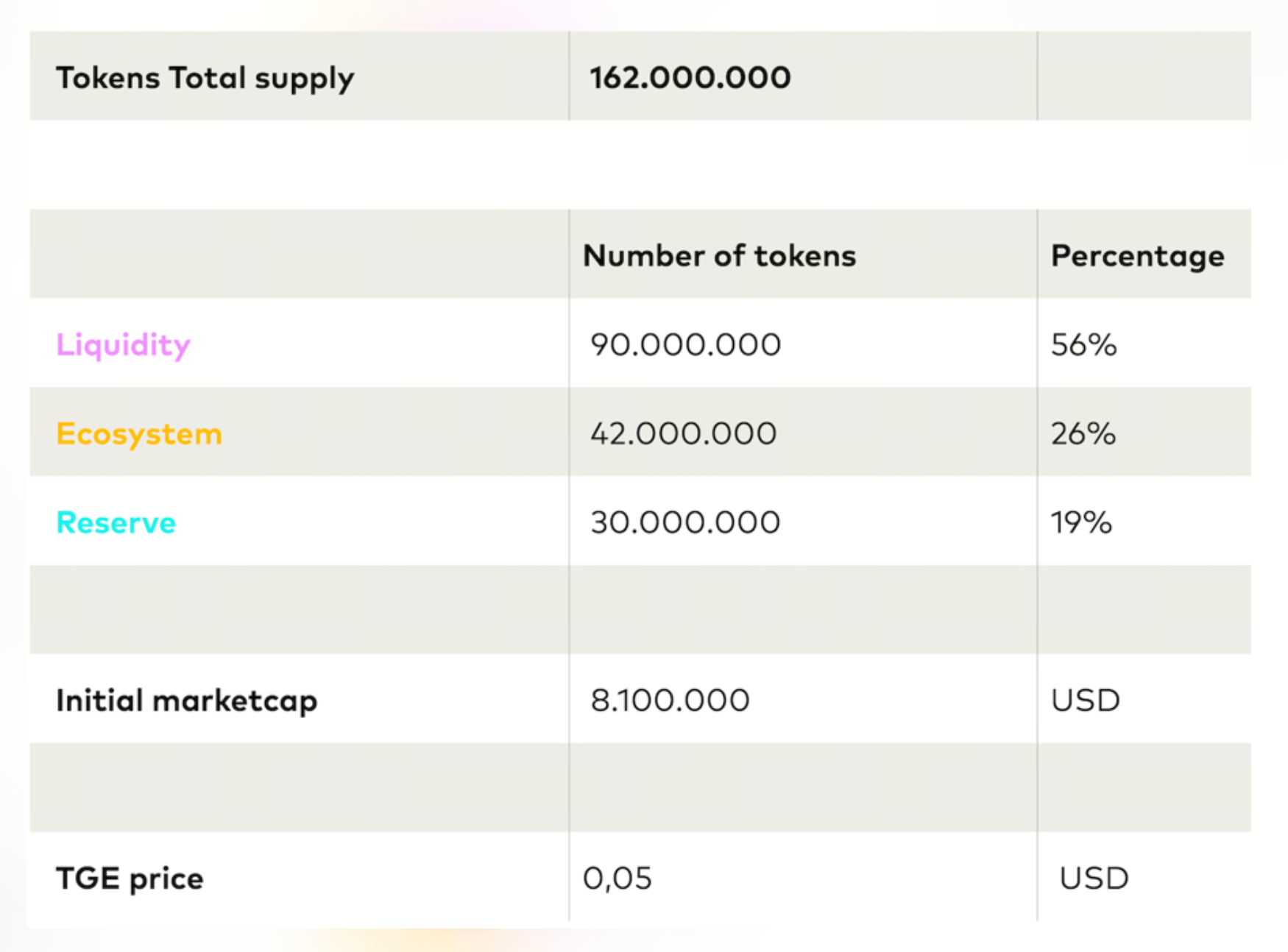
The total supply of IVAULT Tokens is capped at 162 million (162,000,000) under a fixed supply mechanism, balancing market liquidity, ecosystem growth, and long-term operations.
Token distribution is as follows:
Liquidity: 90 million (56%)
For exchange liquidity, market trading needs, and improving token circulation.
Ecosystem: 42 million (26%)
For platform partnerships, ecosystem development, user incentives, and future product innovation.
Reserve: 30 million (19%)
Allocated to long-term operations, strategic investments, and future market expansion.
The project’s initial market cap is set at $8.1 million, with a TGE (Token Generation Event) price of $0.05. This structure prioritizes token allocation for market liquidity and ecosystem development, supporting deep trading while retaining resources for long-term platform growth and expansion.
Fundraising and Token Allocation
 (Source: ivault.io)
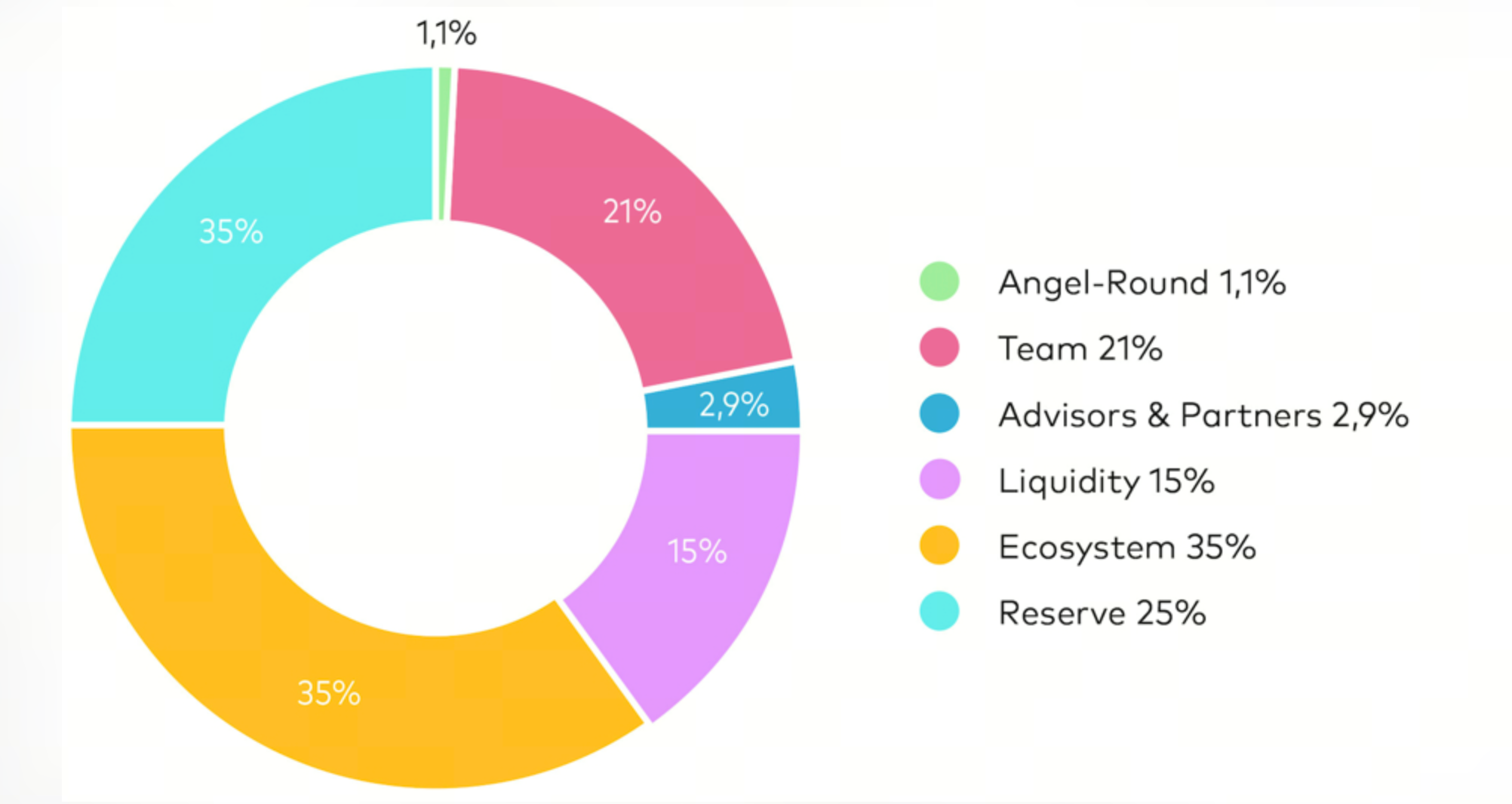
Beyond public circulation, IVAULT implements detailed token allocations for the team, investors, and ecosystem development to balance project growth and community interests.
Allocation breakdown:
Ecosystem: 35%
For partner expansion, community incentives, platform features, and future application development.
Reserve: 25%
For long-term operations, strategic partnerships, and market expansion.
Team: 21%
Allocated to core developers and operational staff to support ongoing product development and long-term commitment.
Liquidity: 15%
For market making on exchanges, boosting liquidity, and minimizing slippage.
Advisors & Partners: 2.9%
For strategic partnerships and professional advisor incentives to support global expansion.
Angel Round: 1.1%
For early investors, supporting initial product development and marketing.
Overall, nearly 60% of tokens (ecosystem, liquidity, and reserve) are dedicated to platform development and market growth, reflecting a focus on ecosystem expansion, product advancement, and community engagement—rather than team holdings—helping to establish a sustainable token economy.
ivault is committed to continuous infrastructure development. The project has joined the Google Cloud Startup Program and is enhancing its platform via partnerships covering cloud infrastructure, security, data analytics, AI, and development processes to support global growth. ivault is also developing dedicated AI features to elevate user interaction beyond rentals, although specific details remain undisclosed.
International Growth and Industry Engagement
ivault actively participates in global tech events. The platform was featured in the documentary “We Love Zurich,” which highlights Swiss innovation, and was shortlisted for the “Most Real World” award at the WAIB Summit 2026, which recognizes projects with real-world blockchain value. Founder and CEO Arman Sarhaddar was also nominated for the Web3 Pioneer individual award.
Summary
ivault is a peer-to-peer lending platform that fuses the sharing economy with Web3 technology, aiming to establish a safer, privacy-centric sharing model through blockchain verification, non-custodial wallets, and a dual-chain structure. In addition to supporting daily rentals and transactions, the platform integrates sustainability into its service design to promote efficient resource use. As ivault continues to expand its global infrastructure, adopt AI, and refine its blockchain ecosystem, it exemplifies a new direction for the convergence of sharing economy and blockchain—demonstrating how Web3 applications are increasingly woven into everyday life.
FAQ
Q1: What is ivault?
A: ivault is a blockchain-based P2P item lending platform that enables users to rent out, borrow, or sell physical goods via a mobile app.
Q2: How does ivault utilize blockchain technology?
A: ivault uses blockchain to establish item verification and transaction records, increasing transparency in the sharing process. Coupled with a non-custodial wallet, users can manage their digital assets independently.
Q3: What is the role of the IVAULT Token in the ecosystem?
A: The IVAULT Token is the core value medium of the ivault ecosystem, supporting platform transactions, payments, user incentives, and bridging digital assets with physical item verification across multiple application scenarios.







