Qualcomm (QCOM) stock is the Nasdaq-listed U.S. equity of Qualcomm Incorporated, ticker symbol QCOM. Qualcomm’s core business rests on mobile system-on-chips (SoCs), wireless connectivity technology, and patent licensing, making it a key semiconductor supplier in the global smartphone supply chain. For crypto industry participants, QCOM stock belongs on the research radar because mobile wallets, on-chain applications, and edge AI inference all depend on phone chips for power efficiency, compute capability, and security isolation. QCOM sits in a clearly defined compute lane relative to NVIDIA, AMD, and dedicated mining chips.
Qualcomm is a technology company built on semiconductor design, connectivity standards, and mobile computing platforms. The business entity behind QCOM stock sells Snapdragon chips and collects licensing fees from patents—a “connectivity + mobile computing platform” profile rather than a pure GPU or ASIC vendor.
Crypto users typically follow QCOM because digital asset experiences are concentrating on mobile: wallet signing, DApp interaction, and light-node sync all rely on SoC power efficiency, compute, and security isolation. QCOM represents the edge-side, low-power compute path—a different track from data-center GPUs or PoW mining ASICs.
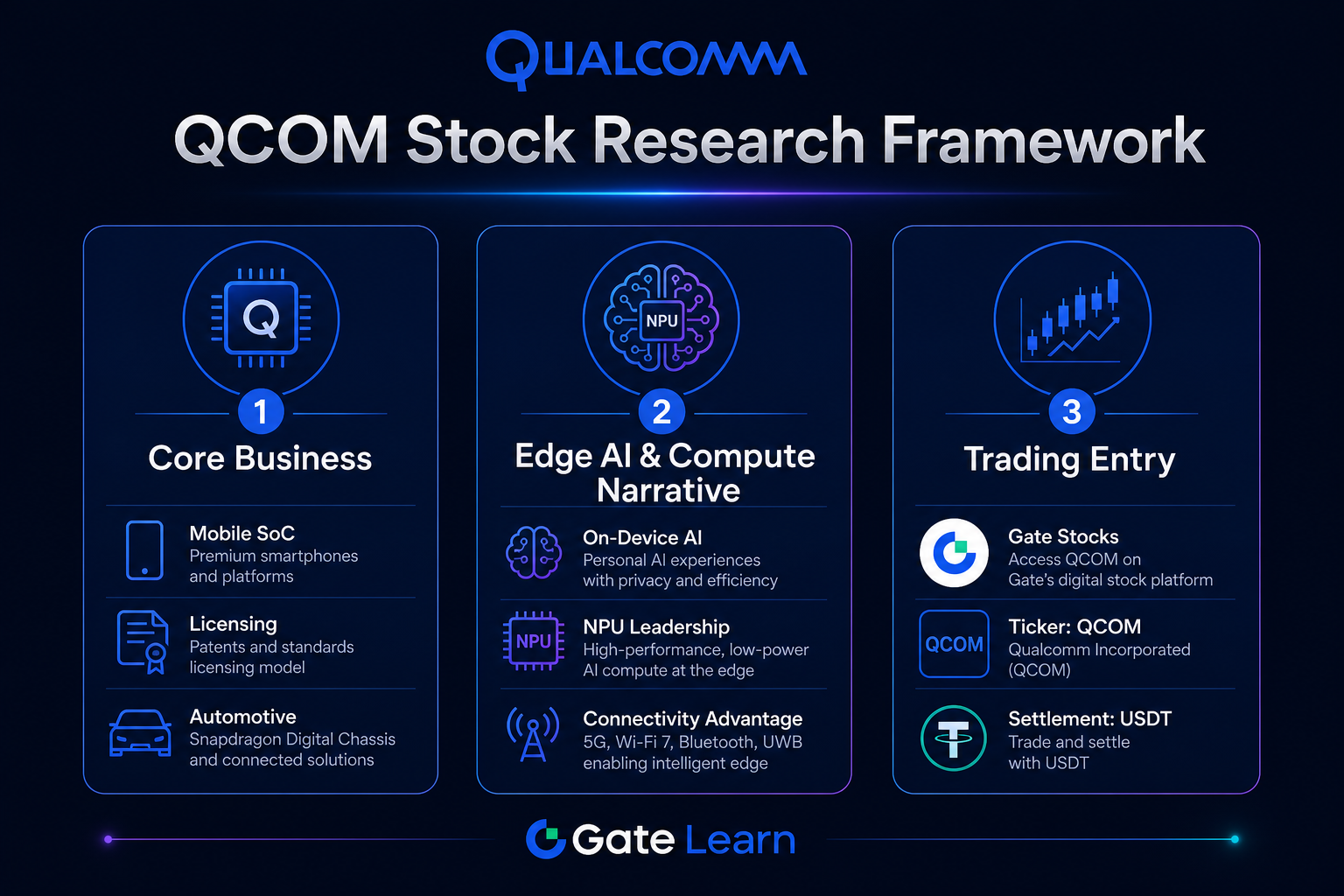 Figure 1. QCOM stock research framework: a three-layer view from core business and edge compute narrative to Gate Stocks trading access.
What Are QCOM’s Core Businesses and Revenue Logic?
QCOM revenue follows a dual track of “chip sales + patent licensing”: the QCT segment centers on Snapdragon, RF, and connectivity chips; the QTL segment draws from 3G/4G/5G patent licenses. Automotive and IoT represent longer-term diversification.
| Revenue segment |
Main content |
What it means for QCOM stock research |
| QCT (chip business) |
Snapdragon SoC, RF, connectivity chips |
Reflects end-device demand cycles and product iteration pace |
| QTL (technology licensing) |
Wireless communication patent licenses |
Delivers relatively high gross margins and more stable cash flow |
| Automotive & IoT |
Cockpit chips, connected vehicles, edge devices |
Represents mid- to long-term growth and business diversification |
Chip revenue is sensitive to handset replacement cycles; licensing revenue ties to the global cellular device base and patent negotiations. Reading QCOM earnings requires tracking QCT/QTL growth rates, gross margins, and segment guidance together.
How Do Qualcomm Chips Differ from Crypto Mining ASICs and GPUs?
“Compute” in semiconductors is not a single concept. Snapdragon targets integrated mobile computing—CPU, GPU, NPU/DSP, and modem working together—with power efficiency and integration prioritized over maximum hash throughput. PoW mining ASICs harden specific algorithms; NVIDIA and AMD GPUs suit AI training and general parallel compute and were historically used for some PoW algorithms, but they are not built for phone form factors.
| Compute type |
Typical examples |
Design goal |
Relationship to crypto use cases |
| Mobile SoC |
Qualcomm Snapdragon |
Low power, high integration, connectivity first |
Wallets, DApps, edge AI, light nodes |
| Mining ASIC |
Bitcoin and other dedicated miner chips |
Fixed algorithm, maximum hash efficiency |
PoW block production and hashrate competition |
| Discrete GPU |
NVIDIA, AMD data-center/consumer GPUs |
General parallel compute, AI training |
Off-chain AI, some historical PoW, rendering |
Each answers a different layer of compute demand. chip stocks vs crypto compute compares Qualcomm, mining ASIC makers, and GPU leaders across business models, hardware architecture, and investor research angles. For QCOM stock research, the key takeaway is that Qualcomm does not belong in the same “crypto compute stock” bucket, yet the infrastructure layer for mobile crypto experiences is closely tied to its products.
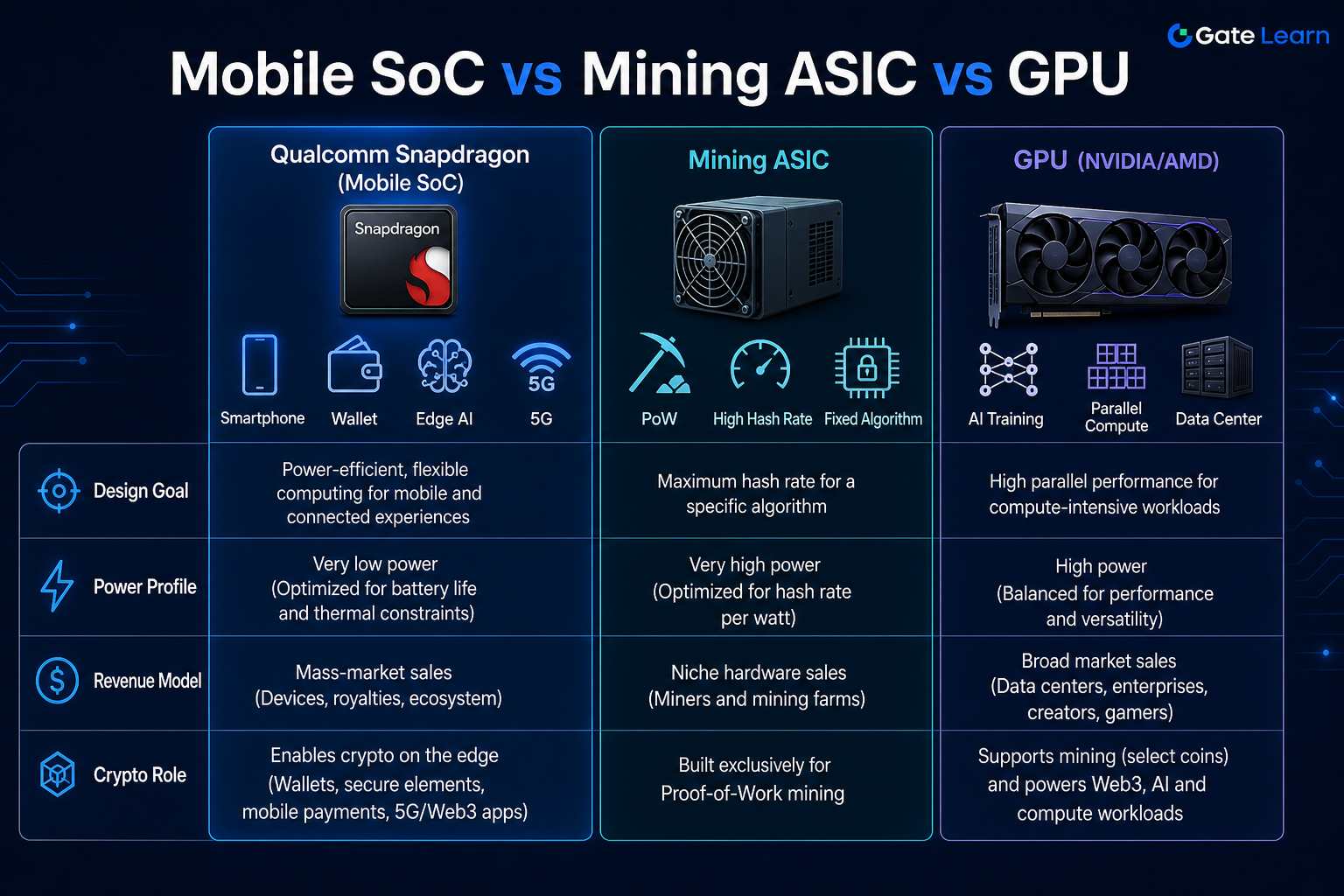 Figure 2. Mobile SoC, mining ASIC, and GPU compute roles compared: different silicon serves different workloads.
Web3 entry points continue shifting to mobile. Qualcomm does not issue tokens, but Snapdragon secure boot, hardware key storage, TEE, and AI acceleration units form the underlying capabilities for mobile Web3 experiences. 5G/Wi-Fi connectivity affects on-chain sync and DApp responsiveness; automotive and IoT edge positioning can intersect indirectly with DePIN-style narratives, but each project must be evaluated on its own merits. The Web3 connection is best understood as “terminal infrastructure supplier,” not “on-chain protocol equity.”
QCOM stock research can start with business structure, profitability, and competitive landscape: QCT/QTL revenue mix and gross margins, R&D spend, and inventory turnover. Mobile SoCs face share pressure from MediaTek, Apple in-house chips, and Samsung Exynos; edge AI narratives require cross-vendor comparison of NPU throughput and developer ecosystems. 5G patent negotiations and OEM litigation periodically affect QTL expectations.
QCOM’s main risks stem from demand cycles, intensifying competition, patent and regulatory uncertainty, and alignment between valuation and expectations. Handset replacement frequency and macro conditions affect chip shipments; MediaTek’s value positioning and Apple’s vertical integration create share pressure. QTL rate negotiations and OEM litigation show that licensing revenue requires ongoing legal maintenance; automotive and IoT design wins face long cycles from win to volume production.
| Risk type |
Main manifestation |
How to monitor |
| Demand cycle |
Falling phone shipments, channel destocking |
Quarterly guidance, industry shipment data |
| Competitive risk |
Share loss, ASP pressure |
Competitor launches, device teardowns |
| Patent & regulatory |
Lower licensing rates, litigation settlements |
Legal filings, regulatory announcements |
| Expectations risk |
Valuation misaligned with growth |
Valuation multiples, earnings estimate revisions |
The risks above describe mechanism-level factors that may affect how QCOM is priced; they do not constitute buy-or-sell guidance.
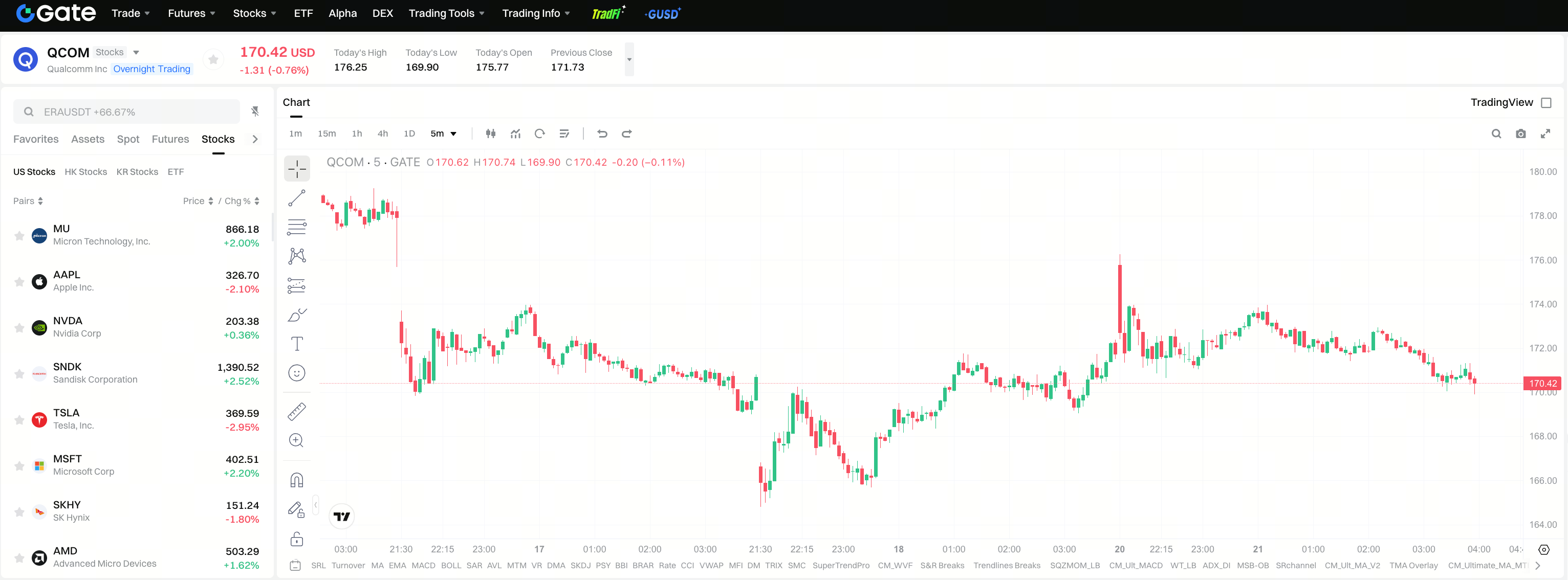
Gate Stocks supports lookup by ticker QCOM for Qualcomm. The Gate QCOM stock page confirms company name and market attributes. USDT-based trading involves funding preparation, symbol search, order placement, and position verification; rules follow what Gate Stocks displays on the page. trade QCOM with USDT breaks down preparation requirements and a verification checklist for the full flow. Confirming the symbol and reading business fundamentals and filings before focusing on price moves is generally a more structured approach.
A unified framework has three layers: business identity (chips + licensing, tied to phone and automotive cycles); compute narrative mapping (mobile Web3 and edge AI as low-power compute; PoW and data-center AI map to ASICs and GPUs respectively); trading access (Gate Stocks provides QCOM lookup and USDT paths, while fundamentals still return to filings and risk checklists). Each layer stands on its own—crypto narratives should not reclassify QCOM into mining or GPU peer groups.
Summary
Qualcomm (QCOM) stock represents a semiconductor company built on mobile SoCs, connectivity technology, and patent licensing, with business logic anchored in the smartphone supply chain and long-term licensing income. Crypto users focus on QCOM for the edge compute and security capabilities that mobile wallets and Web3 experiences depend on—not PoW mining hashrate. Researching QCOM means watching QCT/QTL revenue structure, competitive dynamics, patent risk, and Gate Stocks access together, layering compute narratives, single-stock fundamentals, and platform operations in one framework.
FAQ
Qualcomm is a semiconductor and wireless communications technology company. Core products include Snapdragon mobile chips, RF and connectivity components, and licensing fees from 3G/4G/5G patent portfolios. QCOM is its Nasdaq-listed ticker symbol.
QCOM is the stock symbol for Qualcomm Incorporated, listed on Nasdaq. On Gate Stocks, the QCOM code retrieves the corresponding page for company name verification.
Does Qualcomm mainly sell chips or collect licensing fees?
Qualcomm’s two primary revenue sources are QCT chip sales and QTL technology licensing. Chip sales track smartphone shipment cycles more closely; licensing comes from wireless communication patents and typically carries higher gross margins.
Can Qualcomm chips be used for mining?
Qualcomm Snapdragon and other mobile SoCs are not designed for PoW hash computation and are unsuitable as mining hardware for networks such as Bitcoin. PoW mining typically uses ASICs optimized for specific algorithms, or historically GPUs—fundamentally different compute targets from phone chips.
How do Web3 and mobile chips relate?
Web3 user entry points sit largely on mobile devices. Wallet signing, secure key storage, and DApp interaction depend on SoC security modules, connectivity, and AI acceleration units. Qualcomm supplies terminal-side infrastructure—not on-chain protocols themselves.
Common risks include smartphone demand cycle swings, competition from MediaTek and Apple in-house chips, patent licensing rates and litigation progress, and whether valuation aligns with growth expectations. Risks should be read alongside QCT/QTL business structure and industry cycles.