Unibase (UB) is a decentralized infrastructure for long-term memory and agent interoperability in AI Agent systems. Through its Memory Layer, open protocols, and on-chain data systems, it gives autonomous AI the ability to keep learning and collaborating over time. As AI Agents evolve from simple chat tools into autonomous digital entities that can execute tasks and coordinate across platforms, long-term memory, identity management, and communication between agents are becoming important areas of AI infrastructure.
In recent years, the convergence of AI and Web3 has pushed forward the idea of the “Open Agent Internet.” Unlike traditional AI platforms, which often rely on centralized databases and closed ecosystems, decentralized AI networks place greater emphasis on data ownership, cross-platform agent collaboration, and verifiable state synchronization. Unibase aims to provide AI Agents with an underlying architecture similar to a “long-term brain,” allowing different AI systems to accumulate knowledge continuously, share context, and operate independently in on-chain environments.
What Is Unibase?
Unibase is a decentralized Memory Layer built for AI Agents. Its core goal is to address the limitations AI Agents face in long-term memory, cross-platform collaboration, and data verifiability.
Traditional AI systems usually depend on limited context windows, which makes it difficult to retain user history, task status, or environmental information over long periods. As a result, when AI handles complex tasks, it often needs to repeatedly retrieve context and struggles to develop true continuous learning. Through modules such as Membase, AIP Protocol, and Unibase DA, Unibase provides AI Agents with long-term memory and on-chain state synchronization capabilities.
Within Unibase architecture, AI is no longer just a single model. It becomes more like a digital agent that can persist over time, maintain an identity, and collaborate with others. This design is also viewed as an important part of the Open Agent Internet.
What Is the Open Agent Internet?
The Open Agent Internet can be understood as an open network where AI Agents are able to connect and interact with one another.
On the traditional internet, human users interact through accounts, browsers, and applications. In the Open Agent Internet, AI Agents can communicate through unified protocols, exchange states, carry out tasks, and share certain knowledge or context.
The key shift is that AI Agents are no longer confined to a single platform. They can call tools across applications, maintain long-term identities, and build collaborative relationships with other agents. Unibase seeks to make this system possible in a decentralized way, so that AI Agent memory, communication, and data storage are not controlled by a single platform.
How Does Unibase’s Core Architecture Work?
Unibase’s underlying architecture is mainly composed of three parts: Membase, AIP Protocol, and Unibase DA.
| Module |
Function |
| Membase |
AI long-term memory system |
| AIP Protocol |
Agent communication and identity protocol |
| Unibase DA |
Data availability layer |
Membase stores the long-term context and historical states of AI Agents, allowing AI to continuously retrieve past information across different points in time. AIP Protocol, short for Agent Interoperability Protocol, handles agent identity, permissions, and cross-platform communication. Through a unified protocol, different AI Agents can exchange information and share states. Unibase DA, or Data Availability, supports high-throughput data storage and synchronization, providing data availability for AI workloads.
Together, these three layers form a decentralized infrastructure for AI Agents, allowing AI to operate over the long term within an open network.

What Is Membase?
Membase is Unibase’s long-term AI Memory system.
Traditional large language models usually operate within short-term context windows. Once a conversation ends, most of the state cannot be retained for long. For autonomous AI, however, long-term memory is essential, because complex tasks often require the continuous accumulation of past experience.
Membase is used to:
-
Save user interaction history
-
Store task states
-
Manage knowledge fragments
-
Provide long-term context retrieval
-
Support shared memory across multiple agents
This structure makes AI Agents feel more like persistent digital entities rather than one-time question-and-answer tools. In a decentralized environment, long-term memory also involves data ownership and verifiability, so Unibase combines on-chain verification mechanisms with distributed storage structures to manage AI Memory.
How Does AIP Protocol Enable Agent Interoperability?
AIP Protocol is Unibase’s agent interoperability protocol. It is designed to establish a unified communication standard between AI Agents.
In the Open Agent Internet, different AI Agents may come from different platforms, models, or applications. Without a unified protocol, it would be difficult for agents to share states or collaborate. AIP Protocol supports agent identity management, state synchronization, permission control, and agent-to-agent communication.
This system shares some similarities with wallet addresses and smart contract interfaces in Web3. Through standardized protocols, different AI Agents can form collaborative relationships within an open network. As multi-agent systems continue to develop, interoperability protocols are increasingly seen as an important part of AI infrastructure.
What Is Unibase DA?
Unibase DA is a Data Availability Layer designed for AI Agents.
As AI Agents operate, they continuously generate large amounts of data, including conversation states, memory updates, tool call records, and task execution results. Traditional blockchains often struggle to process high-frequency AI data directly, so Unibase introduces a dedicated data availability architecture to support AI workloads.
The core purpose of Data Availability is to ensure that data remains accessible, improve network throughput, and reduce storage costs. For AI Agent networks, the data availability layer serves as the foundational base for long-term memory and state synchronization.
What Is the UB Token Used For?
UB is the native token of the Unibase network. It is mainly used for protocol operations and ecosystem incentives.
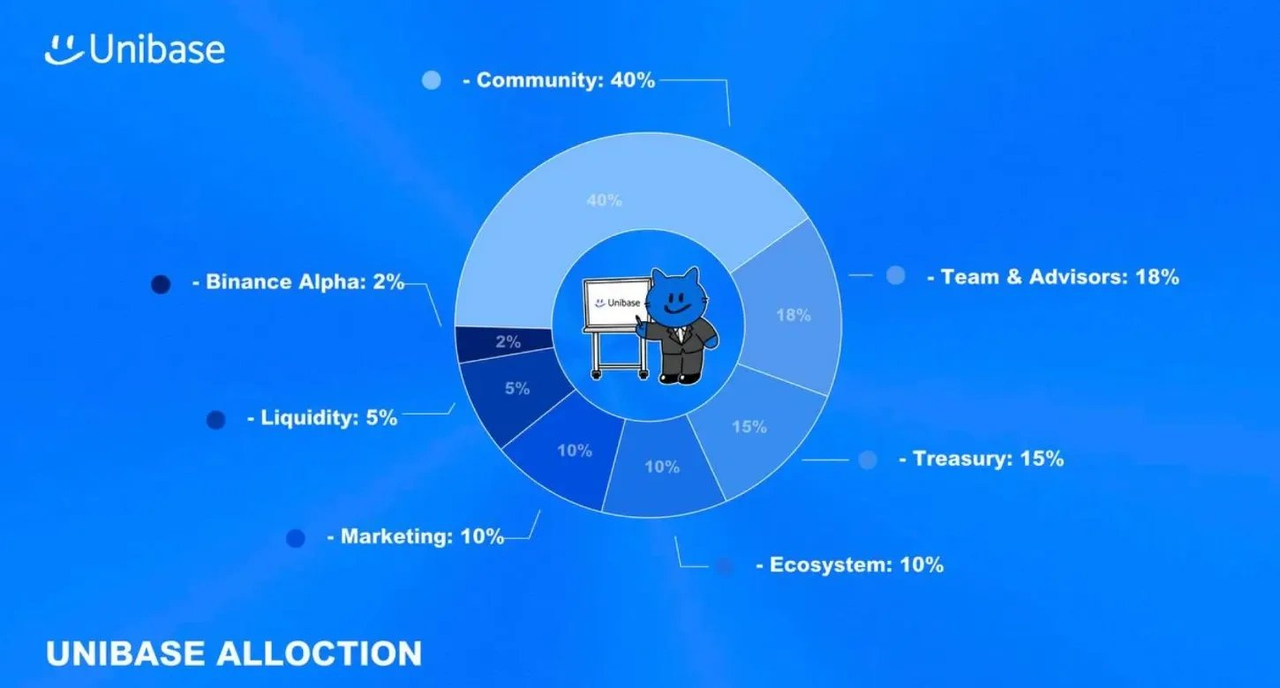
UB can be used for protocol fees, agent registration, node incentives, data storage, network governance, and other scenarios. In some designs, UB may also be used for Agent Staking and governance mechanisms to coordinate network resources and maintain system operations.
Because the economic models of AI infrastructure projects may continue to change as protocols are upgraded, the relevant rules are usually subject to official releases.
What Are the Use Cases of Unibase?
As AI Agents gradually gain autonomous capabilities, long-term memory and interoperability infrastructure are beginning to support more practical applications.
In multi-agent collaboration scenarios, different AI systems can share states and memory to jointly complete research, data analysis, or automated operations. In decentralized AI Assistant scenarios, AI can retain user preferences and historical context over time without relying entirely on centralized platform databases.
Autonomous trading agents may also run continuously by combining long-term market history with real-time states, while decentralized knowledge networks allow AI Agents to share knowledge fragments and contextual information. As AI DAOs and autonomous collaboration systems develop, long-term memory and agent identity systems are becoming increasingly important.
How Is Unibase Different From Other AI Infrastructure Projects?
The current AI Crypto sector includes several major directions, such as AI Compute, AI Data, AI Agent Frameworks, AI Memory Layers, and AI DA.
| Type |
Representative Direction |
| AI Compute |
Decentralized computing power |
| AI Data |
Data marketplaces |
| AI Agent Framework |
Agent development frameworks |
| AI Memory Layer |
Long-term memory systems |
| AI DA |
AI data availability |
Compared with Virtuals, Unibase is more focused on AI Memory Layer and Agent Interoperability infrastructure, rather than simply providing GPU computing power or AI model services. Compared with traditional AI cloud platforms, its main characteristics are decentralized data structures, long-term memory systems, agent-to-agent communication, and a Web3-native architecture.
Conclusion
Unibase (UB), as a decentralized memory layer and interoperability infrastructure for AI Agents, is designed to address AI’s limitations in long-term memory, agent collaboration, and data verifiability.
As AI Agents evolve from chat tools into autonomous digital entities, long-term memory, identity protocols, and open communication networks are becoming important directions in AI infrastructure. Through Membase, AIP Protocol, and its data availability architecture, Unibase is attempting to build the foundational infrastructure for the Open Agent Internet.
FAQs
What Is Membase Used For?
Membase is used to store the long-term context, historical states, and knowledge data of AI Agents, allowing AI to keep learning and retrieve historical information over time.
What Is AIP Protocol?
AIP Protocol is Unibase’s agent communication protocol. It is used to support AI Agent identity management, state synchronization, and cross-platform agent collaboration.
Why Do AI Agents Need Long-Term Memory?
Long-term memory helps AI preserve historical states, keep learning, and perform complex tasks, rather than relying only on short-term context windows.
What Is the Role of Unibase DA?
Unibase DA is the data availability layer. It supports high-frequency data storage, synchronization, and on-chain verification for AI Agents.
What Is the UB Token Used For?
UB is mainly used for protocol fees, network governance, node incentives, and ecosystem participation.