Wojak (WOJAK) is a community-driven meme coin built around the classic internet meme “Wojak,” also known as “Feels Guy,” and is mainly active within blockchain ecosystems such as Ethereum. Unlike crypto projects that emphasize utility or infrastructure, Wojak derives much of its value from meme culture, community consensus, and internet-based identity.
2026-05-14 03:21:42
Infinex uses Swidge to aggregate DEXs and cross-chain bridges, allowing users to complete cross-chain swaps, route matching, and onchain trade execution through a unified interface.
2026-05-14 03:16:59
Infinex’s account system is a non-custodial account structure based on Passkey and Account Abstraction. It is designed to reduce the complexity of traditional Web3 wallets. Users do not need to store seed phrases. Instead, they can log in and sign transactions through Face ID, Touch ID, or device verification, creating an onchain interaction experience closer to that of a standard internet application.
2026-05-14 03:15:56
Infinex (INX) is a non-custodial DeFi superapp built around Account Abstraction and Passkey login. It aims to simplify how users access onchain assets, cross-chain trading, perpetual contracts, and yield protocols. As the multichain ecosystem becomes increasingly complex, Infinex lowers the barrier for ordinary users to enter DeFi through a unified account system, gas abstraction, and an aggregated trading experience.
2026-05-14 03:11:13
INX is a utility token within the Infinex ecosystem. It is mainly used to receive gas subsidy support for transaction fees and to participate in the platform’s governance mechanism.
2026-05-14 02:54:03
Kaia (KAIA) is an EVM-compatible Layer 1 blockchain formed through the merger of Klaytn, which was supported by South Korea’s internet ecosystem, and Finschia, LINE’s Web3 network. It focuses on stablecoin payments, on-chain finance, and Web3 application infrastructure. Through a high-performance network, low transaction costs, and integration with super app ecosystems such as LINE, Kaia aims to support large-scale Web3 user onboarding in Asia and enable use cases such as DeFi, payments, RWA, and Mini DApps.
2026-05-14 02:36:20
Kaia Mini DApps are lightweight Web3 applications that run on the Kaia blockchain and can be embedded directly into super app ecosystems such as LINE. Compared with traditional DApps, Mini DApps lower the operational barrier for ordinary users entering Web3 through Gas Fee Delegation, simplified wallet interactions, and in-app access. Their workflow usually includes user entry, account connection, on-chain transaction execution, and application result feedback. They are used in payments, blockchain games, digital assets, and social Web3 scenarios.
2026-05-14 02:31:43
Gas Fee Delegation is a gas fee payment mechanism provided by the Kaia blockchain. It allows application developers or service providers to pay on-chain transaction fees on behalf of users. Compared with traditional blockchains, where users must hold the native token before completing a transaction, Kaia’s gasless mechanism lowers the barrier to Web3 adoption and improves the user experience in Mini DApps, payments, and super app scenarios. The process usually includes transaction generation, user signing, fee delegation, and on-chain confirmation.
2026-05-14 02:26:54
KAIA is the native token of the Kaia network, created through the gradual integration of Klaytn’s KLAY and Finschia’s FNSA after the network merger. This conversion involves more than a change in token name. It also includes the integration of governance systems, validator structures, and ecosystem resources. KLAY and FNSA holders can complete the asset conversion through the official migration mechanism, while Kaia uses a unified network and token system to further support stablecoin payments, Mini DApps, and the growth of Asia’s Web3 ecosystem.
2026-05-14 02:16:13
Solayer (LAYER) is a protocol token built around Solana’s shared security and restaking structure. Its core goal is to coordinate validation resources, ecosystem incentives, and on-chain governance. As restaking gradually evolves from a single yield mechanism into part of the on-chain infrastructure layer, LAYER is also taking on a more important economic coordination role within the Solayer network.
2026-05-14 01:58:17
Solayer (LAYER) is a restaking protocol built in the Solana ecosystem. Its core goal is to improve the capital efficiency of SOL assets through shared security and the reuse of validation resources, while providing additional security support for on-chain services.
2026-05-14 01:53:20
The primary emphasis for enterprise AI adoption centers on inference and operational systems. This article provides an overview of the production-grade inference stack, multi-model and hybrid deployment strategies, agent tool boundaries and auditing, and the essential requirements for security and compliance, enabling readers to develop a practical evaluation framework.
2026-05-14 01:50:03
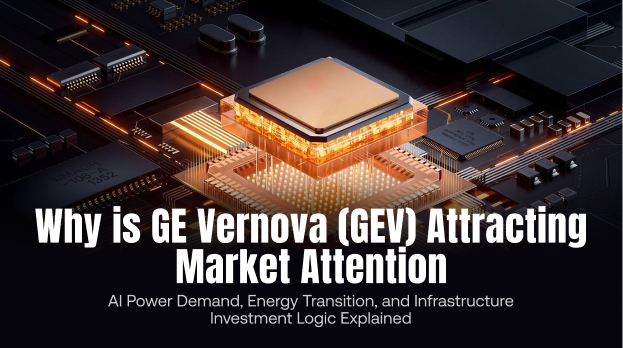
GE Vernova (GEV) is an energy infrastructure company spun off from GE Vernova, with businesses spanning gas power generation, grid equipment, wind energy, energy software, and other areas. As the global energy structure adjusts and AI data centers expand rapidly, GE Vernova has become one of the energy infrastructure companies drawing meaningful market attention.
2026-05-14 01:43:51
Solayer (LAYER) is a restaking protocol built on Solana. It is designed to improve on-chain execution efficiency and infrastructure scalability across the Solana ecosystem through shared security, resource reuse, and a hardware accelerated network.
2026-05-14 01:37:09
AI infrastructure goes beyond just acquiring GPUs. This article presents a layered framework that systematically outlines the entire chain—from chips, HBM, packaging, and interconnects, to data centers, power supply, and networks, and ultimately to inference services and enterprise governance. It also details the distinctions between training and inference regarding costs and scalability, providing readers with a comprehensive and searchable knowledge map.
2026-05-13 11:42:13