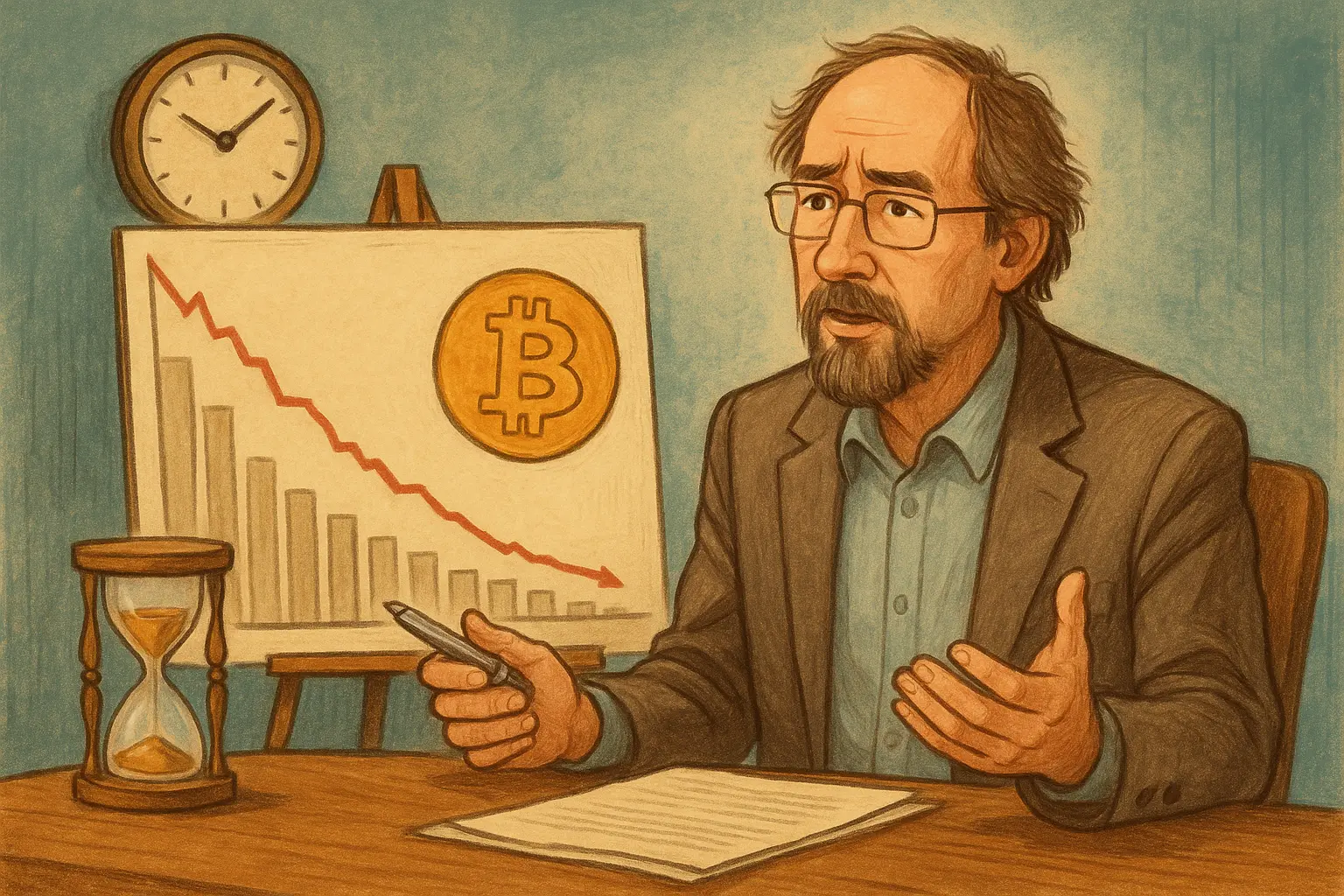
According to an interview report published by CoinDesk on April 29, Blockstream CEO Adam Back said that Bitcoin spot ETFs are the most important market bullish signal in the near term, but institutional adoption is far slower than expected. In the interview, he estimated that from institutions such as BlackRock recommending an allocation of Bitcoin to fund managers to the completion of actual portfolio building, the process takes one year, and even as long as 18 months.
Adam Back’s Assessment of the Speed of Institutional Fund Inflows
According to CoinDesk’s report, Adam Back said in the interview: “I think people may have misjudged how slowly institutional investors are willing to accept these ETFs. So the ETFs have already been bought, but when BlackRock recommends allocating 2% to 4% in Bitcoin in its stock portfolio, fund managers haven’t done it yet. They will eventually do it, but the pace is slower than people expected.”
Back further explained in the interview that the current market strength is being reflected in the form of institutional fund inflows, including ETF inflows, sovereign wealth funds, sovereign debt investments, and investors directly buying Bitcoin or shares of Bitcoin treasury companies such as Strategy (formerly MicroStrategy, ticker: MSTR). He specifically mentioned that Strategy’s STRC (Stretch-series perpetual preferred shares) has achieved notable success in raising funds to buy Bitcoin.
According to CoinDesk’s report, Back also said that ETF providers represented by BlackRock, Morgan Stanley, and Fidelity have become Bitcoin’s new allies and have the capability to outlast political transitions in the U.S. government. In the interview, he said: “Even if the government changes, the ‘business-as-usual’ policies will continue—and one reason is that BlackRock and other ETF providers will now defend their own business.”
Four-Year Cycle Assessment and Quantum Computing Risk Evaluation
According to CoinDesk’s report, Back commented on Bitcoin’s four-year halving cycle: “Even if the four-year cycle gets broken, people expect this to happen. So they sell, and that’s what happens.” He said this logic can only change if people observe market strength first.
Regarding quantum computing risk, Back pointed out in the interview that institutional investors are more systematic in risk management, focusing on tail risks over the next ten years: “Even if there’s a very small tail risk, they want to make sure this risk has been mitigated.” He said that retail investors typically view quantum threats as a problem of the distant future, while institutions will ask concrete questions: “Is this a 1% risk? Are there mitigation measures?”
Related Background
According to CoinDesk’s report, Adam Back is also the CEO and co-founder of the Bitcoin asset management company BSTR. BSTR plans to go public by merging with Cantor Equity Partners (CEPO) through a special purpose acquisition company (SPAC) deal. The New York Times previously speculated that Back is Satoshi Nakamoto, the anonymous founder of Bitcoin, and Back denied this in the interview.
Frequently Asked Questions
When did Adam Back’s interview with CoinDesk take place? What are the key takeaways?
According to a CoinDesk report dated April 29, 2026, Adam Back said that Bitcoin spot ETFs are the most important market signal in the near term, but the process for institutional entities to build positions is estimated to take 12 to 18 months, with adoption slower than the broader market’s typical expectations.
How does Adam Back assess Bitcoin’s four-year cycle?
According to CoinDesk’s report, Back said in the interview that even if the four-year cycle is broken, a price decline may still occur because investors expect it and therefore sell. He noted that any change in market logic needs to be based on observing strength driven by institutional fund inflows.
How does Adam Back assess the risk of quantum computing to Bitcoin?
According to CoinDesk’s report, Back said in the interview that institutional investors systematically assess the tail risks of quantum computing and require confirmation that mitigation measures are in place; retail investors, meanwhile, typically view quantum threats as a problem of the distant future and pay less attention.


