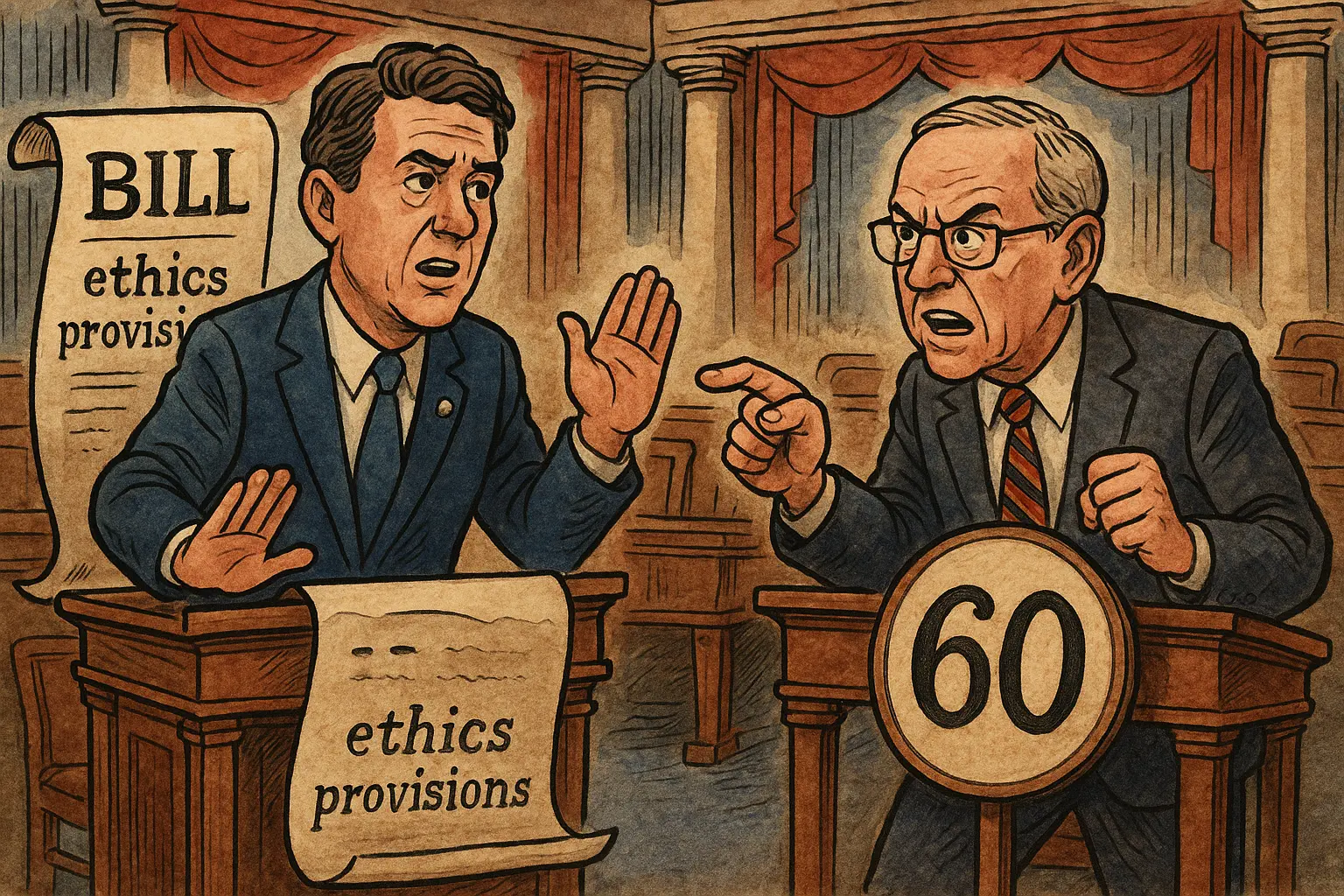
According to CoinTelegraph’s May 12 report, New York state Democratic senator Kirsten Gillibrand said that without moral provisions targeting potential conflicts of interest for elected officials, her Democratic colleagues would not vote in support of the bill in the Senate floor session. To pass, the CLARITY Act must receive at least 60 votes in the Senate floor session, and bipartisan support is crucial to the bill’s final passage.
Legislative Background and Bill Progress
According to CoinTelegraph, the CLARITY Act passed in the U.S. House of Representatives in July 2025, but then stalled afterward due to disagreements over the wording of multiple issues, including stablecoin yield, tokenized stocks, and moral standards. Because the CLARITY Act covers different aspects of both securities law and commodities law, it must be reviewed by both the Senate Banking Committee and the Agriculture Committee, with the latter completing its review in January 2026.
According to CoinTelegraph, members of the Senate Banking Committee, Tom Tillis and Angela Alsobrooks, announced earlier this month that they had reached a compromise on the issue of stablecoin yield, which helps move the bill forward.
Moral Provision Disputes: Democratic Position
According to CoinTelegraph’s interview, Senator Gillibrand said: “The negotiations are going well, and I still believe we can pass a bipartisan bill in this Congress. The American people deserve a well-regulated market with strong consumer protections, and real moral reform—so that politicians can’t use their insider relationships to profit privately.”
According to CoinTelegraph’s report, the background for the Democratic Party’s moral provision demands is that the incumbent U.S. President Donald Trump has close ties to the crypto industry through “Official Trump” (TRUMP) cryptocurrency, the family business World Liberty Financial, and his cryptocurrency investments prior to taking office. According to a July 2025 report by Forbes, Trump’s personal wealth increased by about $1.2 billion due to cryptocurrency investments.
Republican Lawmaker Statements and Subsequent Legislative Process
According to CoinTelegraph’s report, Senate Banking Committee chair and Republican senator Tim Scott said that ethical concerns related to connections to a presidential crypto holdings go beyond the committee’s jurisdiction and must be handled by the Ethics Committee before the bill can be submitted for a full Senate vote. In April 2026, Republican senator Tillis said that if bipartisan consensus cannot be reached on the moral provisions, he will not support any related bill. Republican senator Cynthia Lummis of Wyoming has been actively pushing the bill and urged lawmakers to vote in favor of the CLARITY Act on Thursday; Lummis is expected to retire in 2027.
Crypto advocacy group The Digital Chamber CEO Cody Carbone told CoinTelegraph: “Ethics issues must be resolved on the Senate floor, and it’s not under the jurisdiction of the Senate Banking Committee, so I expect it won’t hinder the legislative process.”
According to CoinTelegraph’s report, even if the CLARITY Act passes committee review and receives 60 votes on the Senate floor, the bill may still need to return to the House, and only after both chambers pass a coordinated version can it be submitted to the president for signature to become law.
Frequently Asked Questions
What exact procedural stage is the CLARITY Act reviewing on Thursday?
According to CoinTelegraph’s May 12, 2026 report, Thursday’s session is a committee review in the Senate Banking Committee—an official examination process at the committee level for the bill. The bill still needs to pass the Senate floor with at least 60 votes and complete coordination between the two chambers before it can be submitted for presidential signature.
What is the core moral provisions demand raised by the Democrats?
According to CoinTelegraph’s interview, Democratic lawmakers led by Senator Gillibrand are asking for the bill to include specific provisions to prevent members of Congress, elected officials, and the U.S. president and vice president from using insider relationships to profit privately in the cryptocurrency market.
Why was the CLARITY Act’s earlier legislative process delayed?
According to CoinTelegraph’s report, the CLARITY Act passed in the House of Representatives in July 2025, and the Senate Agriculture Committee completed its review in January 2026. This round is the Senate Banking Committee stage, and it was delayed for several months due to disputes over wording related to stablecoin yield, tokenized stocks, and moral provisions.


