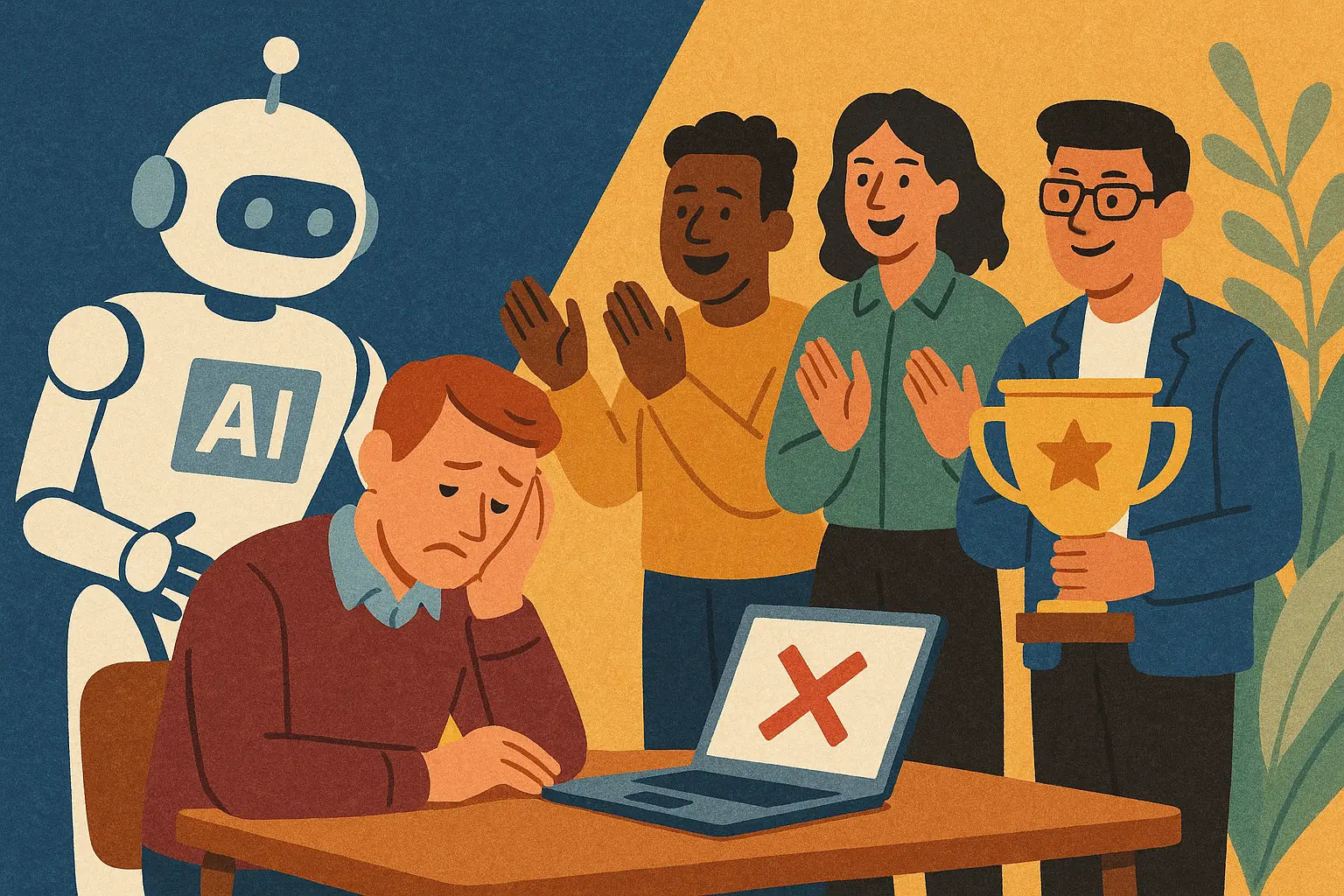
According to Microsoft’s annual “Work Trend Index” report released on May 5, the report analyzed trillions of anonymous Microsoft 365 productivity signals and surveyed 20,000 employees across multiple markets including the United States, the United Kingdom, India, and Japan. The report data shows that only 13% of employees say their employers provide incentives when attempts to improve work with AI do not achieve expected results.
Structural gaps in AI readiness between individuals and organizations
According to Microsoft’s “Work Trend Index” report, 65% of AI users say they worry that if they don’t adapt quickly, they will fall behind, but 45% admit that focusing on existing goals feels safer than redesigning workflows. The original report states: “More employees are using AI in advanced and efficient ways. The issue is that most organizations haven’t kept pace. In many cases, people are ready—but the systems around them aren’t.”
Microsoft defines “cutting-edge professionals” among surveyed AI users as those who run multi-step agent workflows, redesign business processes, and establish shared operational standards across teams; this group makes up 16% of surveyed AI users. Within this group, the proportion of people who can complete tasks that they could not do a year earlier is 80%, higher than the 58% across all AI users.
Organizational factors account for 67% of AI impact: key data from Microsoft’s report
According to Microsoft’s report, organizational factors (including corporate culture, manager support, and talent development mechanisms) account for 67% of the quantifiable impact brought by AI, while individual mindsets and behaviors account for only 32%. Based on this, the report divides AI users into three tiers:
Microsoft’s report: AI user segmentation data (Source: Microsoft “Work Trend Index”)
Cutting-edge status: 19% of AI users reach the best state where organizational capability and personal readiness mutually reinforce each other
Not at the best state: 31% of AI users have not yet reached the best level mentioned above
Early development: for the remaining users, their individual AI skills and the conditions for organizational support are still forming
Missing corporate incentives: only 13% of employees say their employer provides incentives when AI experiments fail
Lack of leadership alignment: only 26% of employees believe leadership stays consistent on AI strategy
Common questions
What is the sample size and which markets are covered in this Microsoft survey?
According to Microsoft’s annual “Work Trend Index” report, the survey covers 20,000 employees across multiple markets including the United States, the United Kingdom, India, and Japan, and combines analysis based on trillions of anonymous Microsoft 365 productivity signals.
What is the definition and share of “cutting-edge professionals” in the report?
According to Microsoft’s report, “cutting-edge professionals” are AI users who run multi-step agent workflows, redesign business processes, and establish shared operational standards across teams, accounting for 16% of surveyed AI users. The report also notes that 19% of AI users reach the cutting-edge best state where organizational capability and personal readiness mutually reinforce each other.
What is the contribution share of organizational factors to AI impact shown in the report data?
According to Microsoft’s “Work Trend Index” report, organizational factors (including corporate culture, manager support, and talent development mechanisms) account for 67% of the quantifiable impact generated by AI, while personal mindsets and behaviors account for 32%, with the remainder coming from other factors.


