Singapore's fintech sector experienced a recovery in 2024, with funding increasing almost 30% year-on-year to US$1.9 billion, according to Tech in Asia data. While total funding dipped in 2025, fintech startups in Singapore raised about US$1.6 billion, surpassing 2023's levels. In the first nine months of 2025, fintech firms headquartered in Singapore accounted for 87% of total fintech funding across the ASEAN economic bloc, a joint report by UOB, the Singapore Fintech Association, and PWC found—higher than the 65% contributed in 2024.
Company Portfolio Changes
Several Singapore-based fintech firms have undergone significant transitions. Dash, the e-wallet launched by Singtel in 2014, was sold to Western Union and can now be used for overseas money transfers. SME lending platform Validus's Singapore business was bought by GXS Bank in 2025. Crypto exchange Tokenize Exchange wound down operations after getting denied a digital payment token license, while buy-now-pay-later firm LatitudePay ceased operations. Financial comparison site MoneySmart also withdrew Bubblegum, its general insurance brand, from the market in November 2024, citing rising operational costs and "changes in market conditions."
New Market Entrants
Tech in Asia has added fresh names to its fintech tracking list. Ara offers automated receivable management and debt collection for companies, raising an undisclosed amount in a round backed by Iterative. Datung, an MSME financing service mostly serving the Philippines, raised US$125,000 from Antler. Pexx, which provides services like US dollar accounts and stablecoin cards, raised US$4.5 million from investors including Antler and Emo Capital.
Global Expansion Strategies
More fintech firms in Singapore are building presence in global markets to serve both local firms expanding internationally and international companies serving Southeast Asian customers.
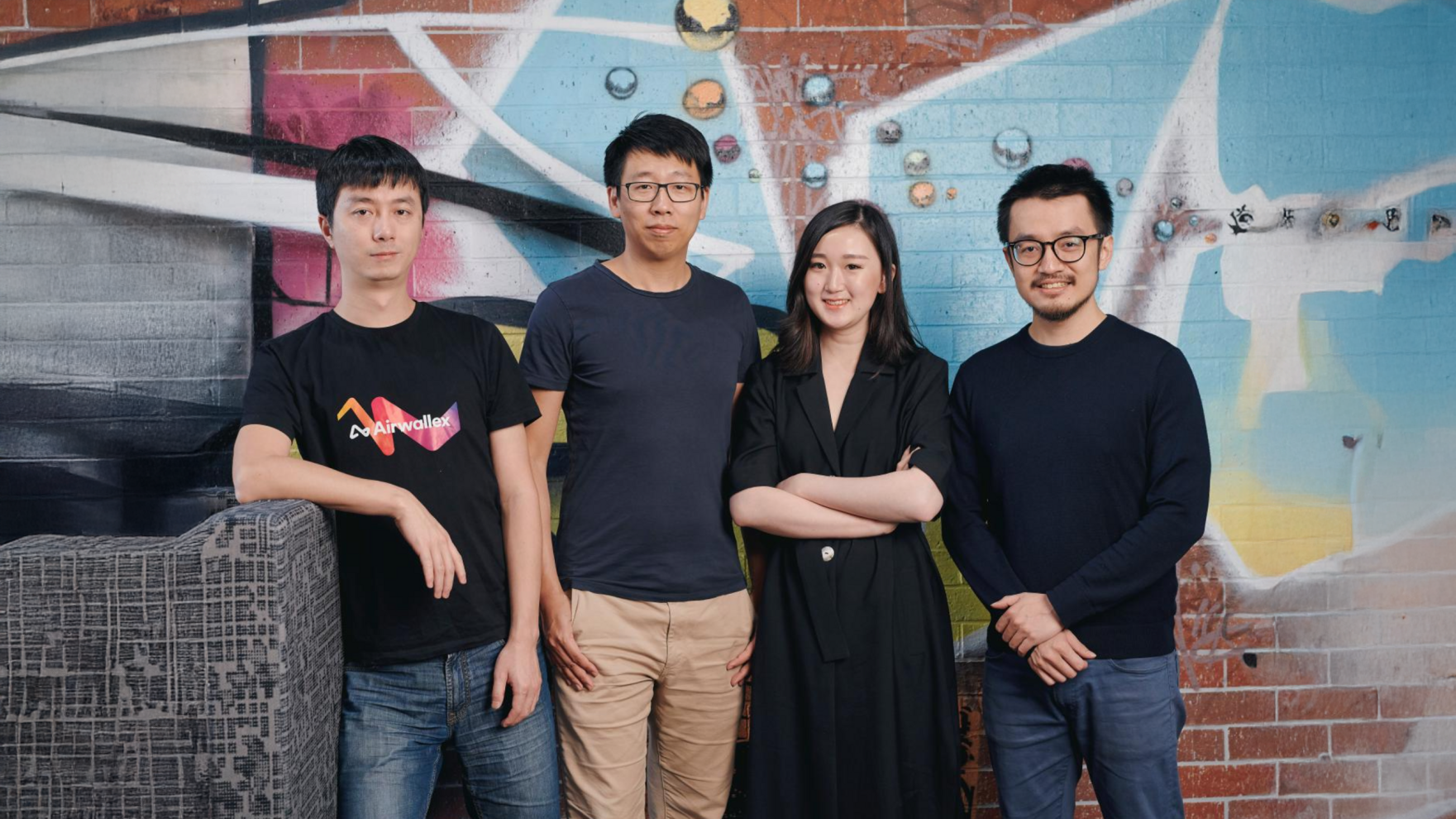 Airwallex team / Photo credit: Airwallex
Airwallex raised US$630 million in 2025—the most raised by any Singapore-based fintech business in the last twelve months. The company, which provides multicurrency accounts and cross-border transfers for businesses, announced it would be setting up a second headquarters in the US to meet growing demand from local customers. CEO and co-founder Jack Zhang told Fox Business that the firm has committed over US$1 billion in investments into the US market by 2029, while simultaneously scaling presence in Europe, the Middle East, and Africa.
Aspire, which helps enterprises handle business accounts, payments, and corporate cards, is executing a similar strategy. The firm made a push into the US last month after months of operating quietly. Aspire crossed US$1 billion in annual recurring revenue in October 2024, with the US and EMEA regions serving as major growth drivers. CEO Andrea Baronchelli said the company is targeting breakeven by mid-2026.
Thunes secured 50 licenses to operate in Western markets as of June 2025. In 2024, the firm acquired Tilia, a US-based payments provider for online games and creator economies. In April 2024, Thunes raised US$150 million in a Series D round—one of the largest fintech fundraises in Southeast Asia in 2025.
Stablecoin Enterprise Adoption
Digital asset providers have made strides as enterprises explore real-world utility of stablecoins for cross-border services. Businesses are increasingly integrating stablecoins such as USDC into treasury operations to minimize traditional banking delays, foreign exchange friction, and settle cross-border transactions in real time.
Tazapay uses USDC and USDT to enable B2B payments from overseas, avoiding multiday settlement delays and reducing costs. Co-founder and CEO Rahul Shinghal told Tech in Asia in November 2024 that stablecoin-enabled payments adoption was a key factor in projecting a tripling of revenue by the end of 2025.
Thunes launched a service in 2025 enabling payouts in stablecoins like USDT and USDC to mobile wallets across 130 countries globally. Stablecoins are becoming an alternative to traditional payment railways like SWIFT for financial services, offering instantaneous settlements and lower costs.
FAQ
How much did Singapore fintech companies raise in 2024 and 2025?
Singapore fintech funding reached US$1.9 billion in 2024, representing a 30% year-on-year increase. In 2025, fintech startups raised approximately US$1.6 billion, according to Tech in Asia data.
What is Singapore fintech's share of ASEAN funding?
In the first nine months of 2025, fintech firms headquartered in Singapore accounted for 87% of total fintech funding across the ASEAN economic bloc, up from 65% in 2024, according to a joint report by UOB, the Singapore Fintech Association, and PWC.
Which Singapore fintech companies are expanding globally?
Airwallex, Aspire, and Thunes are among the leading Singapore fintech firms expanding internationally. Airwallex committed over US$1 billion in US market investments by 2029, Aspire targets breakeven by mid-2026, and Thunes secured 50 licenses across Western markets as of June 2025.


