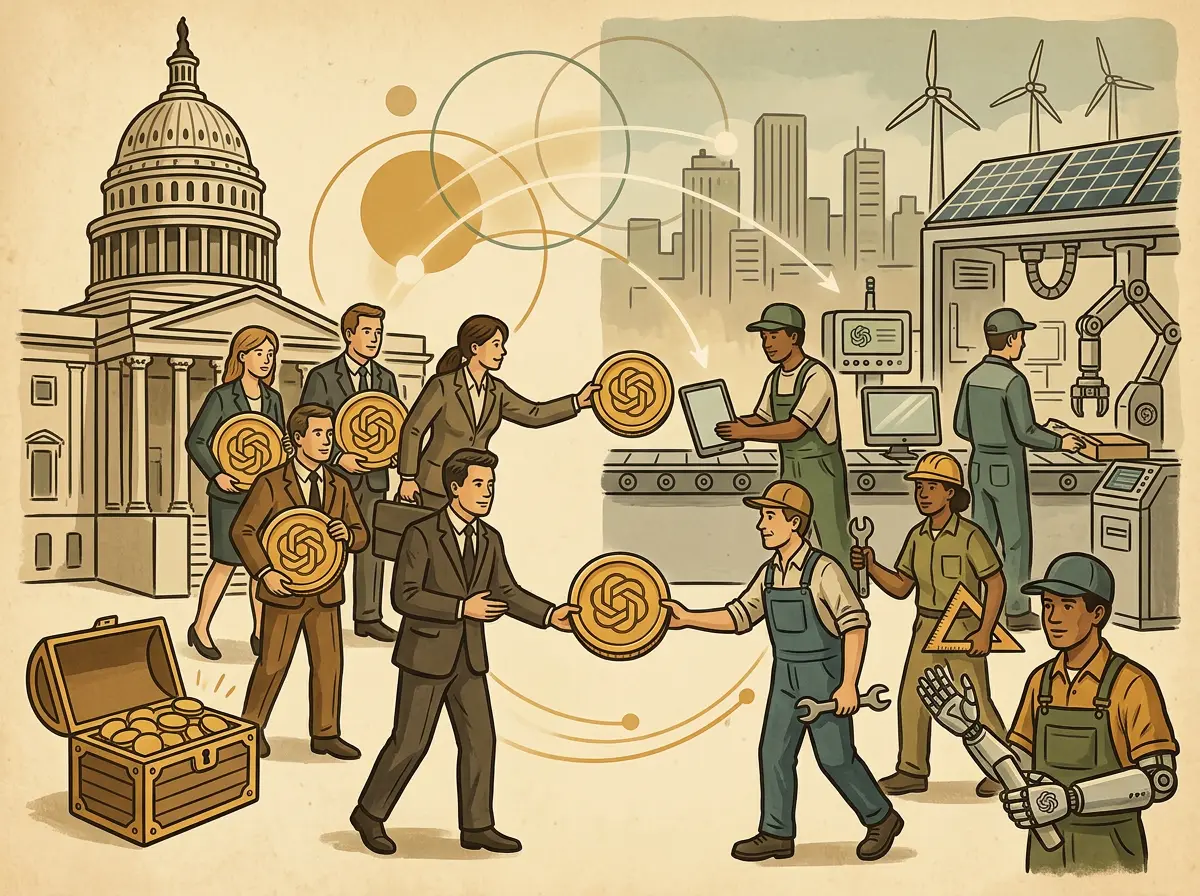
On May 28, the OpenAI Foundation announced that it will invest $250 million to help societies manage the economic turmoil brought on by the rapid adoption of artificial intelligence (AI). The statement, co-written by Wojciech Zaremba, an OpenAI co-founder, confirms three core investment directions: understanding how AI is reshaping the economy, supporting workers in dealing with recent shocks, and building new structures to broadly share the long-term benefits of automation.
OpenAI Foundation’s Three Investment Priorities and Infrastructure Goals
In the section on understanding how AI will reshape the economy, the statement confirms that existing labor statistics data and GDP are designed for “different eras.” The Foundation says these tools cannot accurately reflect how AI will redistribute value among workers, businesses, consumers, and capital owners. The Foundation confirms its goal to help build the next-generation infrastructure, including better real-time labor market data systems and updated occupational mapping systems.
On supporting workers, the statement confirms that traditional reskilling programs have had “uneven” results. The Foundation notes that effective transition plans need to include wage-loss insurance, job-search support, and pathways into growing industries.
Statement Confirms Exploration of Policy Framework: Tax Shifts and Sovereign Wealth Fund Models
The statement confirms that the directions the Foundation hopes to explore include: shifting taxes from labor to capital, setting up windfall or excess-revenue mechanisms, and establishing public or sovereign wealth fund models. The statement specifically cites Norway’s government pension fund and the Alaska Permanent Fund as potential reference cases for broadly distributing AI wealth.
Siddarth and Zaremba also confirmed in the statement: “Artificial intelligence will bring about major economic change, but the pace and scope of its development remain highly uncertain. With the speed of current change, the window to seize the moment is shorter than ever, and once things go wrong, the costs will be extremely high.”
Frequently Asked Questions
How will the OpenAI Foundation’s $250 million be allocated, and when will the first projects be announced?
According to the Foundation’s announcement, the funds will be distributed through three channels: grants, partnerships, and direct work, focusing on three areas—understanding the AI economy’s impact, supporting worker transitions, and distributing the benefits of automation. The Foundation confirms it expects to announce the first specific funded projects later this year; as of May 28, it has not disclosed individual grant amounts or specific recipients.
Why does the OpenAI Foundation believe existing GDP and labor statistics are insufficient to measure AI’s impact?
Based on the statement, Siddarth and Zaremba confirm that current statistical tools are designed for “different eras” and cannot accurately reflect how AI will redistribute value among workers, businesses, consumers, and capital owners. Therefore, the Foundation plans to fund the development of real-time labor market data systems and updated occupational mapping infrastructure.
Which real-world examples does the OpenAI Foundation’s sovereign wealth fund model reference?
According to the statement, the Foundation, while exploring new structures for broadly distributing the wealth created by AI, specifically cites Norway’s government pension fund and the Alaska Permanent Fund as potential reference models. It also references policy directions such as shifting taxes from labor to capital and establishing excess-revenue mechanisms, but the statement does not disclose the specific funding amounts or timelines for these explorations.


