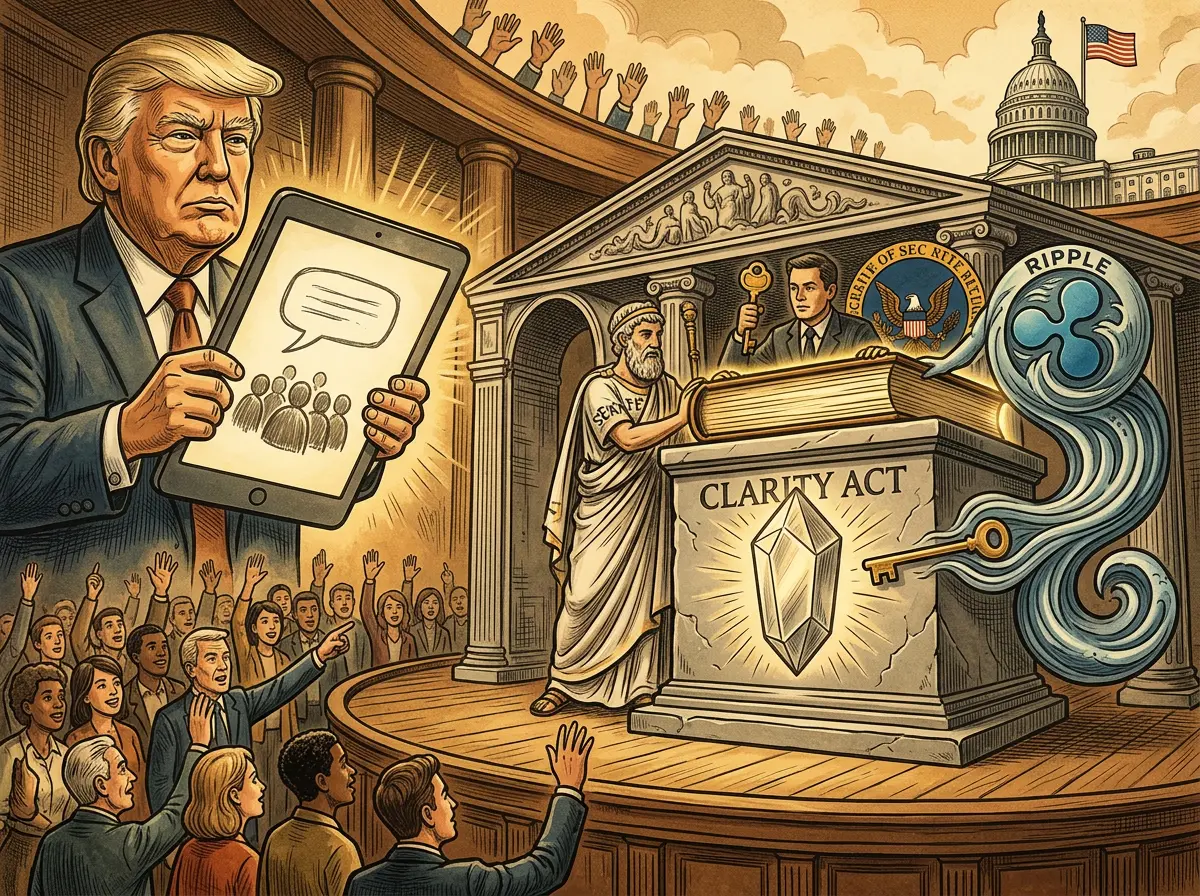
U.S. President Trump posted on Truth Social on May 28, calling the U.S. the “world’s cryptocurrency capital.” Within hours, the U.S. Securities and Exchange Commission (SEC), Ripple, and Tim Scott, the chair of the Senate Banking Committee, each weighed in, urging the submission of the “2025 Digital Asset Market Transparency Act” (“CLARITY Act”) for a full Senate vote.
Public statements confirmed by each party: SEC, Ripple, and the Senate
SEC Chair Paul Atkins confirmed on X that “the era of enforcement-first is over,” and pledged that with the joint efforts of President Trump and Congress, the digital asset market will receive “much-needed clear guidance.” Ripple CEO Brad Garlinghouse confirmed that after years of SEC lawsuits against the company, this is now a “vindication,” adding that “the anti-crypto army has been defeated by the courts, voters, and President Trump himself, making it meaningless in policy, law, or politics.”
Senator Cynthia Lummis confirmed and emphasized the CLARITY Act’s core consumer-protection provisions: “If there is no CLARITY Act, if digital asset exchanges go bankrupt, customers cannot guarantee they own their assets outright; they can only join the ranks of creditors, and then hope for good luck.”
Key provisions and current legislative progress confirmed for the CLARITY Act
Key confirmed provisions of the CLARITY Act include: defining most digital tokens as commodities, allocating regulatory authority between the CFTC and the SEC, and adding custody protections for exchange customers’ assets.
On May 14, the bill passed the Senate Banking Committee in a bipartisan vote of 15 to 9. Senate Majority Leader John Thune controls the Senate’s agenda-setting. In the full Senate voting stage, the bill must reach a supermajority threshold of 60 votes, and it still needs to be reconciled with the version passed by the House of Representatives.
FAQ
What is the current progress of the CLARITY Act in the U.S. legislative process?
On May 14, 2026, the bill passed the Senate Banking Committee with a bipartisan vote of 15 to 9, and is currently waiting to be scheduled for a full Senate vote. The full-vote stage requires reaching a supermajority threshold of 60 votes, and it still needs to complete reconciliation with the House version.
How does the CLARITY Act divide regulatory oversight jurisdiction for digital tokens?
According to the key provisions confirmed by the bill, the CLARITY Act defines most digital tokens as commodities, distributes regulatory authority between the CFTC and the SEC, and adds provisions for custody protection of exchange customers’ assets, aiming to prevent a repeat of situations where customers’ assets are lost, such as in the FTX collapse case.
What specifically is the policy shift confirmed by SEC Chair Atkins?
Paul Atkins confirmed on X that “the era of enforcement-first is over,” and confirmed that, with the joint efforts of President Trump and Congress, the SEC will provide the digital asset market with “much-needed clear guidance.” Atkins did not disclose a specific rulemaking timeline in his statement.


