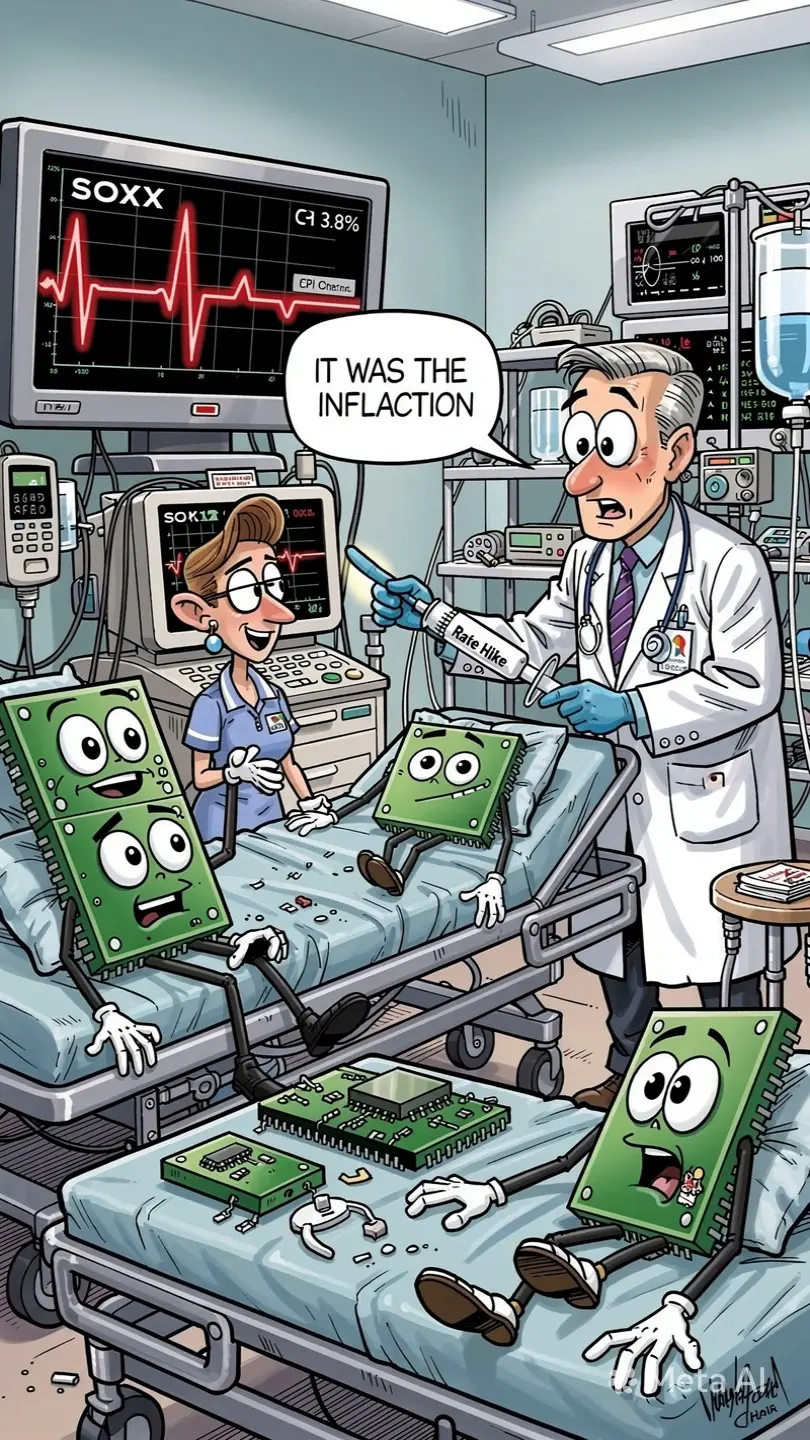
# SemiconductorSectorTakesAHit

6.91K

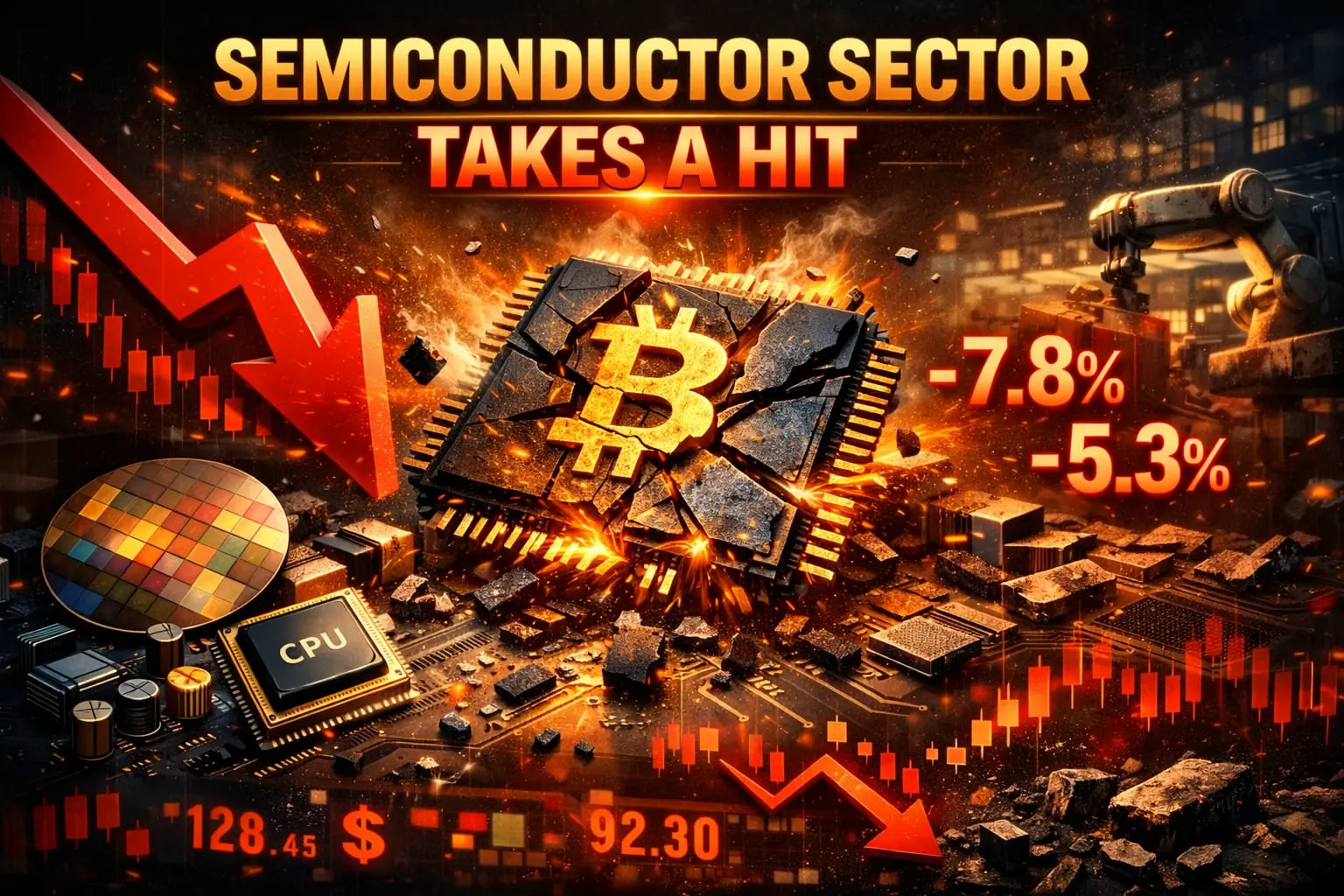
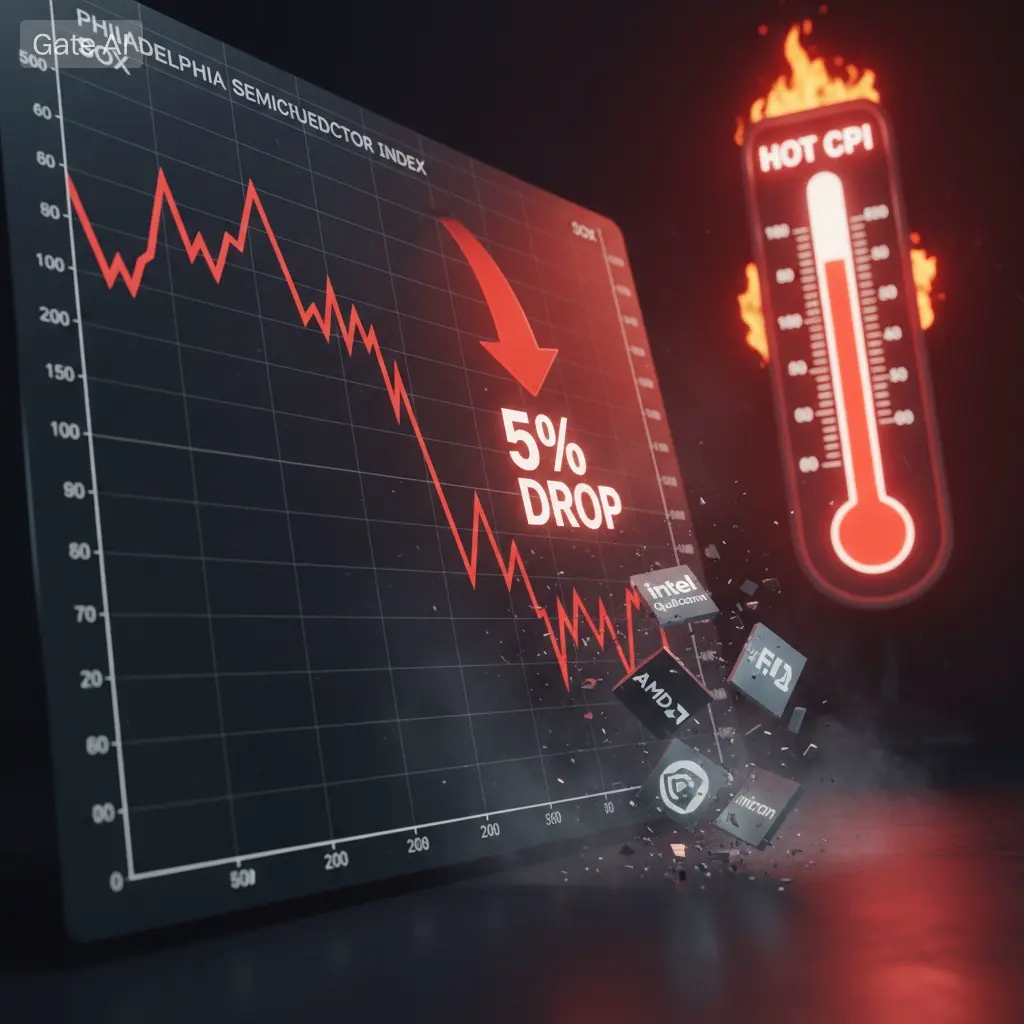
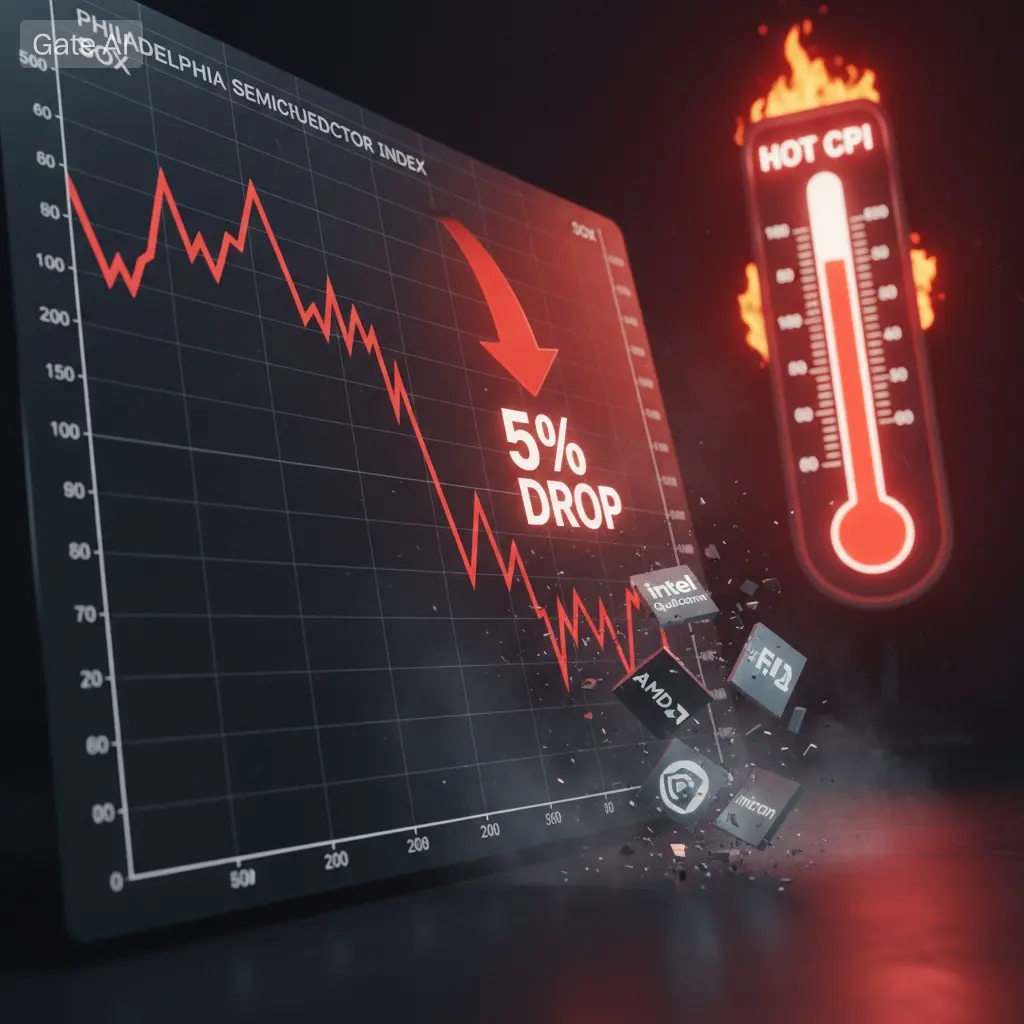
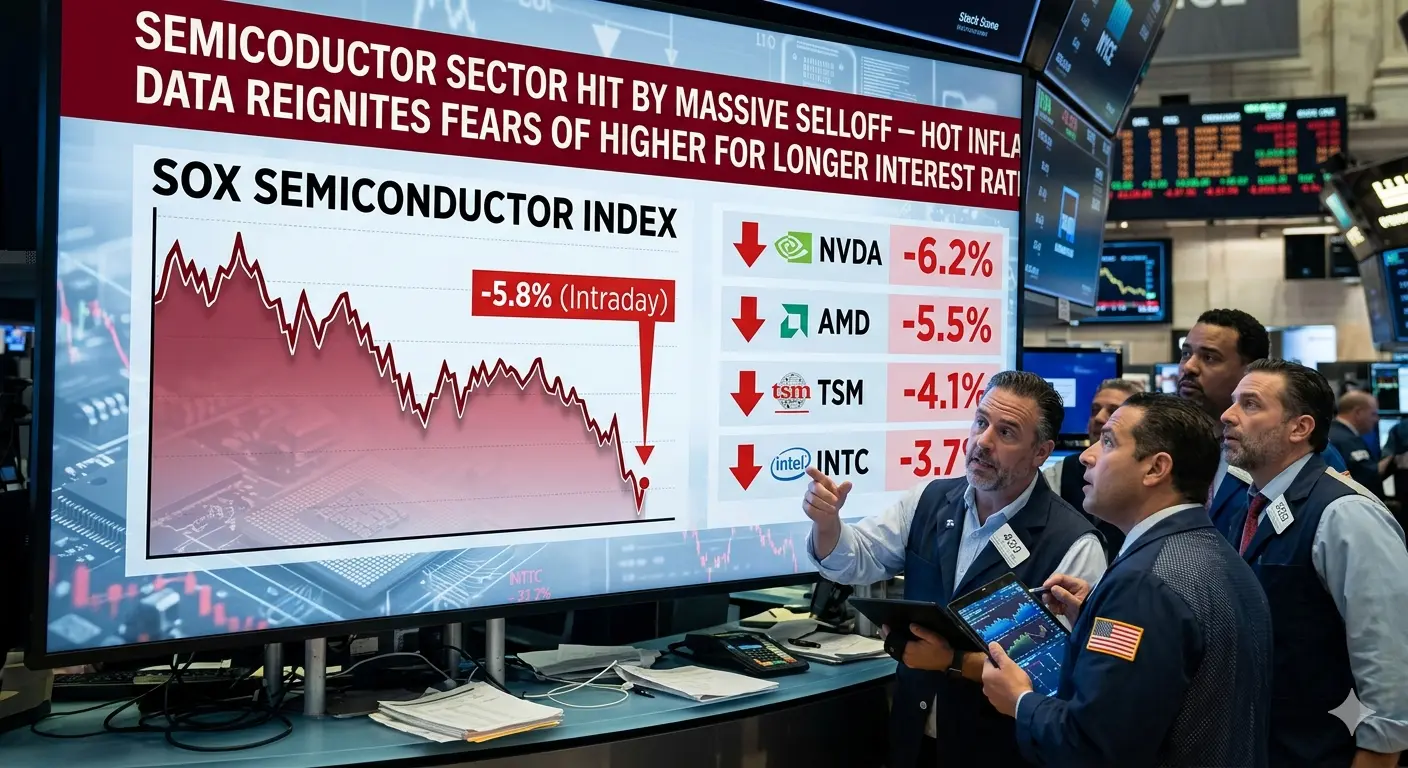
The Philadelphia Semiconductor Index tumbled more than 5 percent intraday on May 12. Beyond Micron, Qualcomm fell nearly 12 percent, Intel dropped over 9 percent, SanDisk fell more than 8 percent, while ASML, AMD and TSMC all fell over 3 percent. The AI chip sector saw broad based selling amid renewed tightening concerns following the hotter than expected April CPI print. The pressure of a high interest rate environment on high valuation tech stocks is becoming visible.

#SemiconductorSectorTakesAHit
The semiconductor sector did not just experience a normal red day — it experienced a full scale repricing event that may carry major implications for the broader crypto market throughout the rest of May.
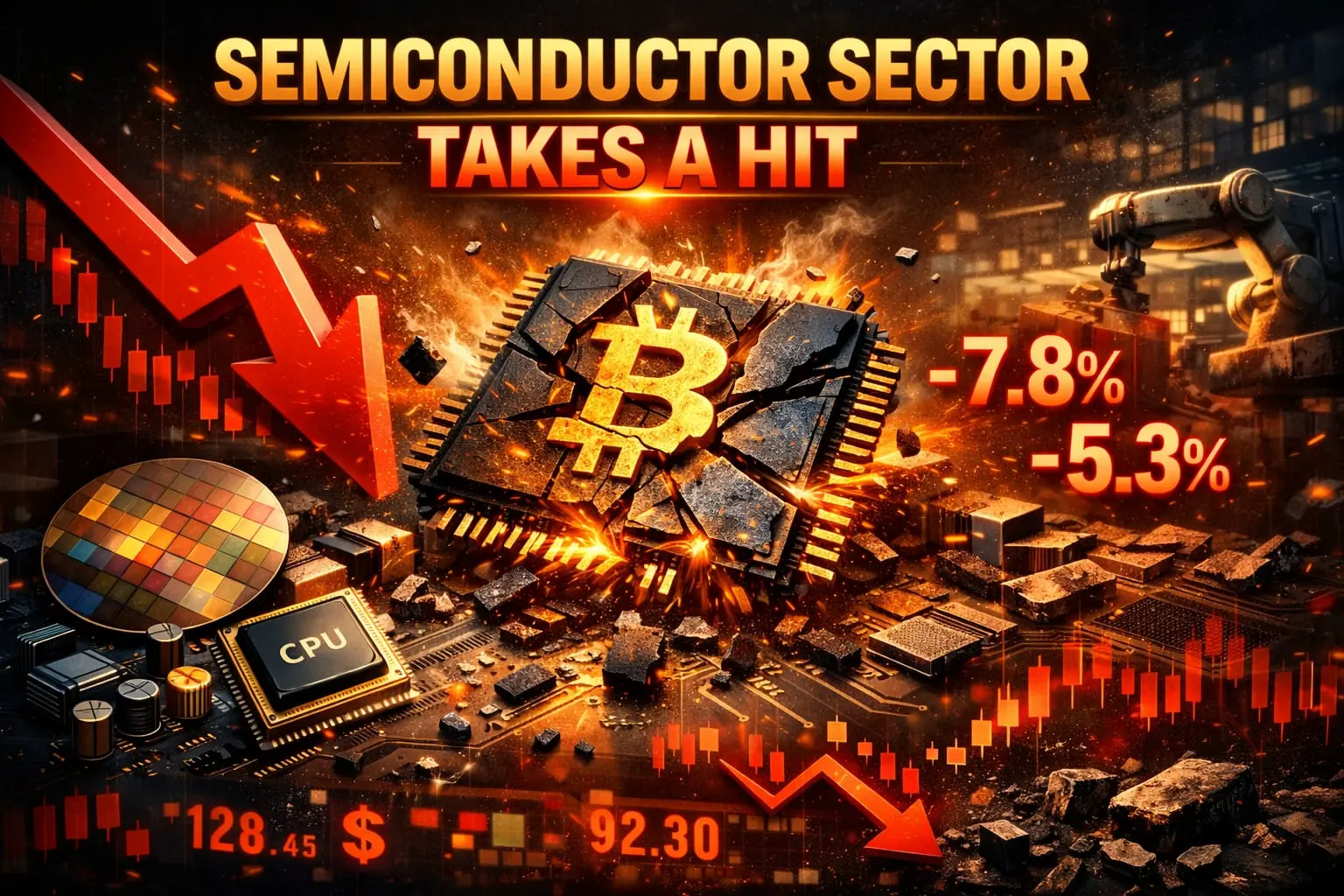
The Philadelphia Semiconductor Index collapsing more than 5% intraday sent a loud message across global risk markets. Qualcomm plunged nearly 12%. Intel dropped over 9%. SanDisk lost more than 8%, while ASML, AMD, and TSMC all suffered heavy declines together. This was not isolated weakness. This was coordinated institutional de-risking triggered by one factor th
NOT-8%
MAY-2.76%
MAJOR-6.79%
MORE-30.86%
CryptoChampion
#SemiconductorSectorTakesAHit
The semiconductor sector did not just experience a normal red day — it experienced a full scale repricing event that may carry major implications for the broader crypto market throughout the rest of May.
The Philadelphia Semiconductor Index collapsing more than 5% intraday sent a loud message across global risk markets. Qualcomm plunged nearly 12%. Intel dropped over 9%. SanDisk lost more than 8%, while ASML, AMD, and TSMC all suffered heavy declines together. This was not isolated weakness. This was coordinated institutional de-risking triggered by one factor the market can no longer ignore: inflation.
The April CPI print at 3.8% completely shifted sentiment. Investors were already nervous about interest rates staying higher for longer, but this number reinforced fears that inflation remains deeply embedded inside the global economy. And when inflation refuses to cool, central banks become aggressive. Aggressive central banks are dangerous for high-growth sectors that depend on future valuation expansion to justify elevated prices.
That is exactly where semiconductors and crypto suddenly intersect.
Most people still treat semiconductors and crypto as separate worlds. In reality, they are becoming deeply connected through AI infrastructure, cloud computing, mining operations, and next-generation data center demand. Companies tied to Bitcoin mining are increasingly transitioning toward AI compute models because the economics of GPU infrastructure are exploding. Hut 8, IREN, and multiple mining firms are now positioning themselves as hybrid AI and energy infrastructure companies rather than simple miners.
This means semiconductor weakness can directly impact sentiment around crypto-related growth narratives.
The market is beginning to question whether the AI boom became overheated too quickly. Micron’s recent 147% rally before its sharp reversal became a perfect example of excessive momentum colliding with macroeconomic reality. Investors chased AI exposure aggressively for months under the assumption that future growth would overpower interest rate pressure. The CPI shock interrupted that belief instantly.
Another major layer involves geopolitics.
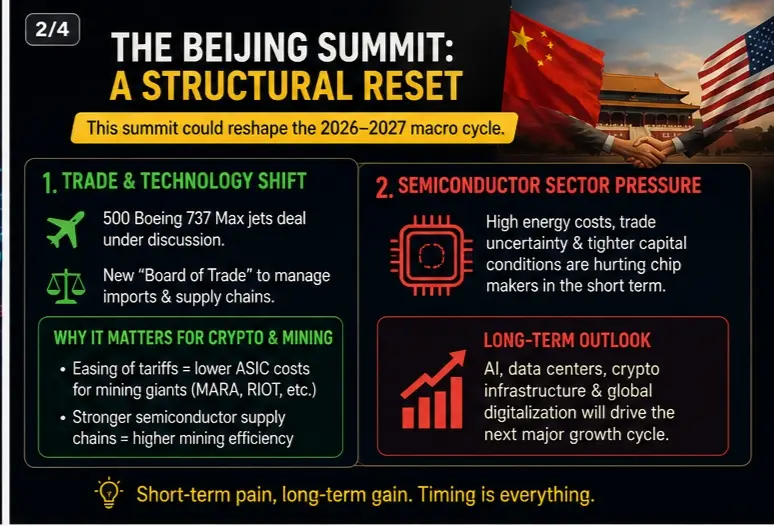
Qualcomm executives traveling alongside Trump to China during a period of severe market weakness creates an unusual backdrop. Markets are now balancing two opposing forces simultaneously: economic pressure from inflation and potential optimism surrounding future trade negotiations. Any signal of easing tensions between Washington and Beijing could stabilize semiconductor sentiment temporarily, but uncertainty remains extremely high.
For crypto traders, the lesson is becoming increasingly clear.
Liquidity conditions still control everything.
Bitcoin, Ethereum, AI tokens, and high-beta altcoins all perform best when monetary policy supports risk appetite. When inflation rises and bond yields climb, capital becomes selective. Speculation weakens. Valuation multiples compress. Narratives alone stop carrying markets upward.
This does not mean the long-term crypto thesis is broken.
It means short-term survival depends on discipline, patience, and intelligent positioning. The traders who survive difficult macro periods are usually the ones who understand that preserving capital during uncertainty matters more than chasing every momentum wave.
The semiconductor crash may ultimately become one of the first warning shots signaling that markets are entering a much more selective phase after months of aggressive AI-driven optimism.
Risk management is no longer optional.
It is becoming the entire game.
#GateSquare #ContentMining
#GateSquareMayTradingShare
repost-content-media
  • Reward
  • 2
  • Repost
  • Share
ybaser:
2026 GOGOGO 👊
View More
#SemiconductorSectorTakesAHit
The semiconductor sector did not just experience a normal red day — it experienced a full scale repricing event that may carry major implications for the broader crypto market throughout the rest of May.
The Philadelphia Semiconductor Index collapsing more than 5% intraday sent a loud message across global risk markets. Qualcomm plunged nearly 12%. Intel dropped over 9%. SanDisk lost more than 8%, while ASML, AMD, and TSMC all suffered heavy declines together. This was not isolated weakness. This was coordinated institutional de-risking triggered by one factor th
post-image
  • Reward
  • 1
  • Repost
  • Share
ybaser:
2026 GOGOGO 👊
#GateSquareMayTradingShare #SemiconductorSectorTakesAHit
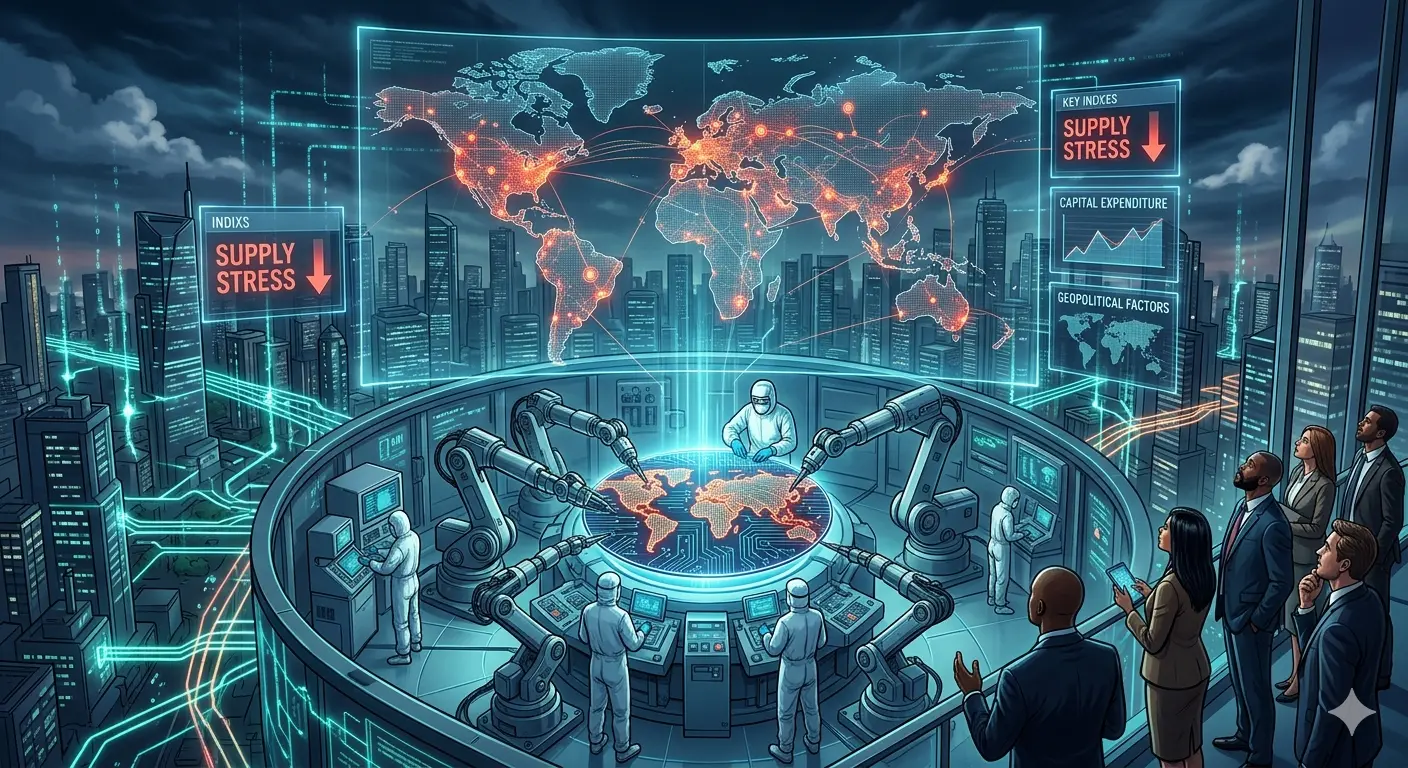
⚡ Semiconductor Sector Gets Crushed — What This Means for Crypto
May 12th delivered a brutal session for tech. The Philadelphia Semiconductor Index tumbled over 5% intraday and the names involved were not small players.
Qualcomm down nearly 12%. Intel dropping over 9%. SanDisk falling more than 8%. ASML, AMD and TSMC all sliding over 3%. Broad based. Simultaneous. Ugly.
And the trigger — the same April CPI print at 3.8% that has been reshaping market expectations all day.
Here is the honest connection to crypto that most people are not
Crypto_Buzz_with_Alex
#SemiconductorSectorTakesAHit
⚡ Semiconductor Sector Gets Crushed — What This Means for Crypto
May 12th delivered a brutal session for tech. The Philadelphia Semiconductor Index tumbled over 5% intraday and the names involved were not small players.
Qualcomm down nearly 12%. Intel dropping over 9%. SanDisk falling more than 8%. ASML, AMD and TSMC all sliding over 3%. Broad based. Simultaneous. Ugly.
And the trigger — the same April CPI print at 3.8% that has been reshaping market expectations all day.
Here is the honest connection to crypto that most people are not making clearly enough.
Semiconductors and crypto are more linked than they appear on the surface. The AI infrastructure boom that has been driving chip demand is the same technological wave that crypto miners like Hut 8 and IREN are pivoting toward. When chip stocks get hammered on tightening concerns it signals that the market is repricing the entire high valuation technology sector — and crypto sits firmly inside that repricing.
High interest rate environments are particularly brutal for high valuation assets because of how discounted cash flow models work. When future earnings get discounted at higher rates they are worth less today. Semiconductors trading at stretched valuations after massive recent runs — Micron up 147% in 29 days before today — become the most obvious targets when macro turns unfavorable.
The Qualcomm angle is interesting specifically because their executives are traveling with Trump to China right now. A company whose stock just dropped 12% has executives in Beijing negotiating trade frameworks simultaneously. That tension between corporate pain and diplomatic opportunity is something markets will be watching closely for resolution signals from the summit.
The broader message from today's semiconductor selloff is straightforward. The market is telling us that the era of easy valuation expansion driven by AI enthusiasm is running into the hard wall of monetary reality. 3.8% CPI and a new hawkish Fed chair do not care about your AI growth story.
For crypto the takeaway is the same one May has been teaching us repeatedly. Quality matters. Entry price matters. And macro always wins in the short term regardless of how compelling the long term narrative is.
Chips down. Rates up. Discipline required.
How are you reading the semiconductor selloff in context of your crypto positioning? Drop below 👇
#SemiconductorSectorTakesAHit #GateSquare #CryptoMarket
repost-content-media
  • Reward
  • 17
  • Repost
  • Share
Crypto_Buzz_with_Alex:
LFG 🔥
View More
#SemiconductorSectorTakesAHit
⚡ Semiconductor Sector Gets Crushed — What This Means for Crypto
May 12th delivered a brutal session for tech. The Philadelphia Semiconductor Index tumbled over 5% intraday and the names involved were not small players.
Qualcomm down nearly 12%. Intel dropping over 9%. SanDisk falling more than 8%. ASML, AMD and TSMC all sliding over 3%. Broad based. Simultaneous. Ugly.
And the trigger — the same April CPI print at 3.8% that has been reshaping market expectations all day.
Here is the honest connection to crypto that most people are not making clearly enough.
Semi
post-image
  • Reward
  • 14
  • Repost
  • Share
ShainingMoon:
To The Moon 🌕
View More
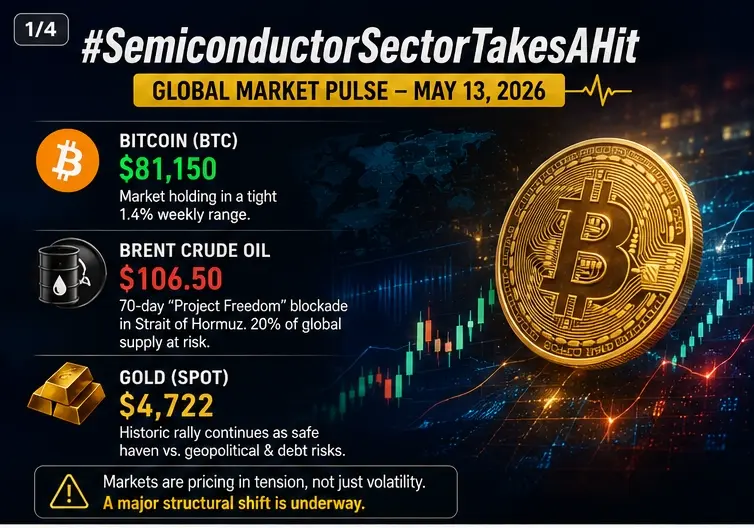
#SemiconductorSectorTakesAHit Here is the real-time market data and structural context as of Wednesday, May 13, 2026:
📊 Global Market Pulse (May 13, 2026)
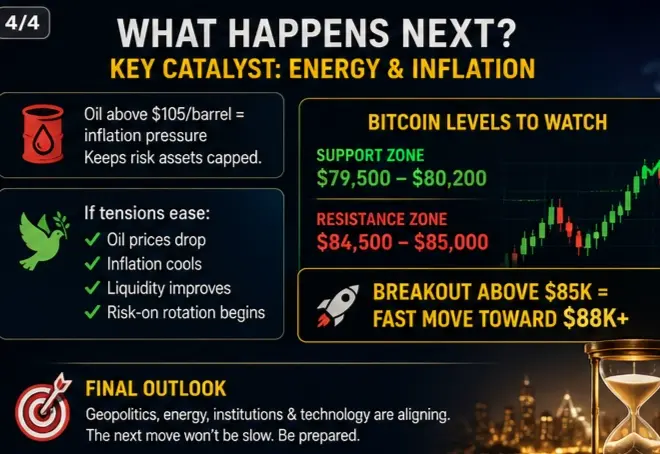
Bitcoin (BTC): ~$81,150. The market is holding its breath as price action stays pinned within a narrow 1.4% range over the last week.
Brent Crude Oil: ~$106.50. Energy prices remain elevated due to the 70-day "Project Freedom" blockade in the Strait of Hormuz, where 20% of global supply remains at risk.
Gold (Spot): ~$4,722. Gold continues its historic run, acting as the primary safe haven against Middle Eastern volatility and U.S. debt c
Original content no longer visible
  • Reward
  • 10
  • Repost
  • Share
ybaser:
To The Moon 🌕
View More
#SemiconductorSectorTakesAHit
Global Market Pulse — May 13, 2026
The global financial system is currently moving through one of the most sensitive macro environments of this cycle, where geopolitics, energy markets, and institutional capital flows are tightly interconnected.
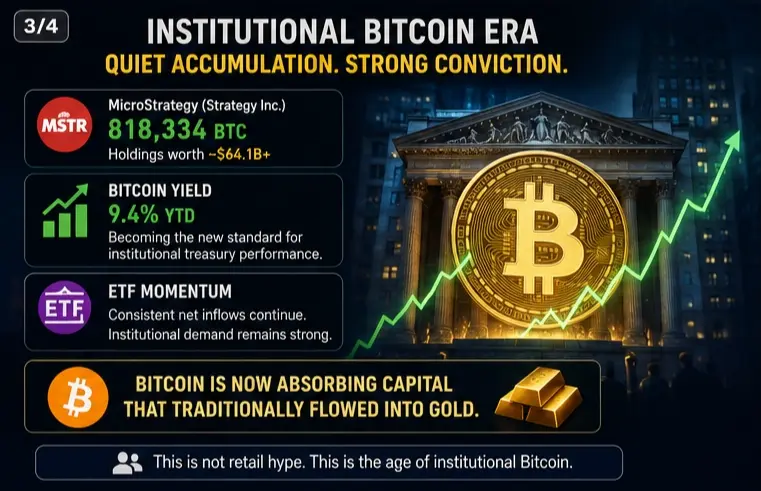
Bitcoin (BTC) is trading near $81,150, but what stands out is not the price level — it’s the compression. Volatility has dropped significantly, with BTC locked inside a tight 1.4% weekly range. This type of price behavior historically signals that the market is preparing for a major expansion move, with liquidity building
post-image
post-image
post-image
post-image
  • Reward
  • 6
  • Repost
  • Share
ybaser:
2026 GOGOGO 👊
View More
#SemiconductorSectorTakesAHit
#GateSquareMayTradingShare

𝐒𝐞𝐦𝐢𝐜𝐨𝐧𝐝𝐮𝐜𝐭𝐨𝐫 𝐒𝐞𝐜𝐭𝐨𝐫 𝐇𝐢𝐭 𝐁𝐲 𝐌𝐚𝐬𝐬𝐢𝐯𝐞 𝐒𝐞𝐥𝐥𝐨𝐟𝐟 — 𝐇𝐨𝐭 𝐈𝐧𝐟𝐥𝐚𝐭𝐢𝐨𝐧 𝐃𝐚𝐭𝐚 𝐑𝐞𝐢𝐠𝐧𝐢𝐭𝐞𝐬 𝐅𝐞𝐚𝐫𝐬 𝐎𝐟 𝐇𝐢𝐠𝐡𝐞𝐫 𝐅𝐨𝐫 𝐋𝐨𝐧𝐠𝐞𝐫 𝐈𝐧𝐭𝐞𝐫𝐞𝐬𝐭 𝐑𝐚𝐭𝐞𝐬
Global semiconductor stocks came under intense pressure after a sharp wave of selling swept through the chip industry following hotter-than-expected US inflation data, triggering renewed fears that the Federal Reserve may keep interest rates elevated for longer than investors previously anticipated.
The Philadelphia Semicond
MrFlower_XingChen
#SemiconductorSectorTakesAHit
#GateSquareMayTradingShare
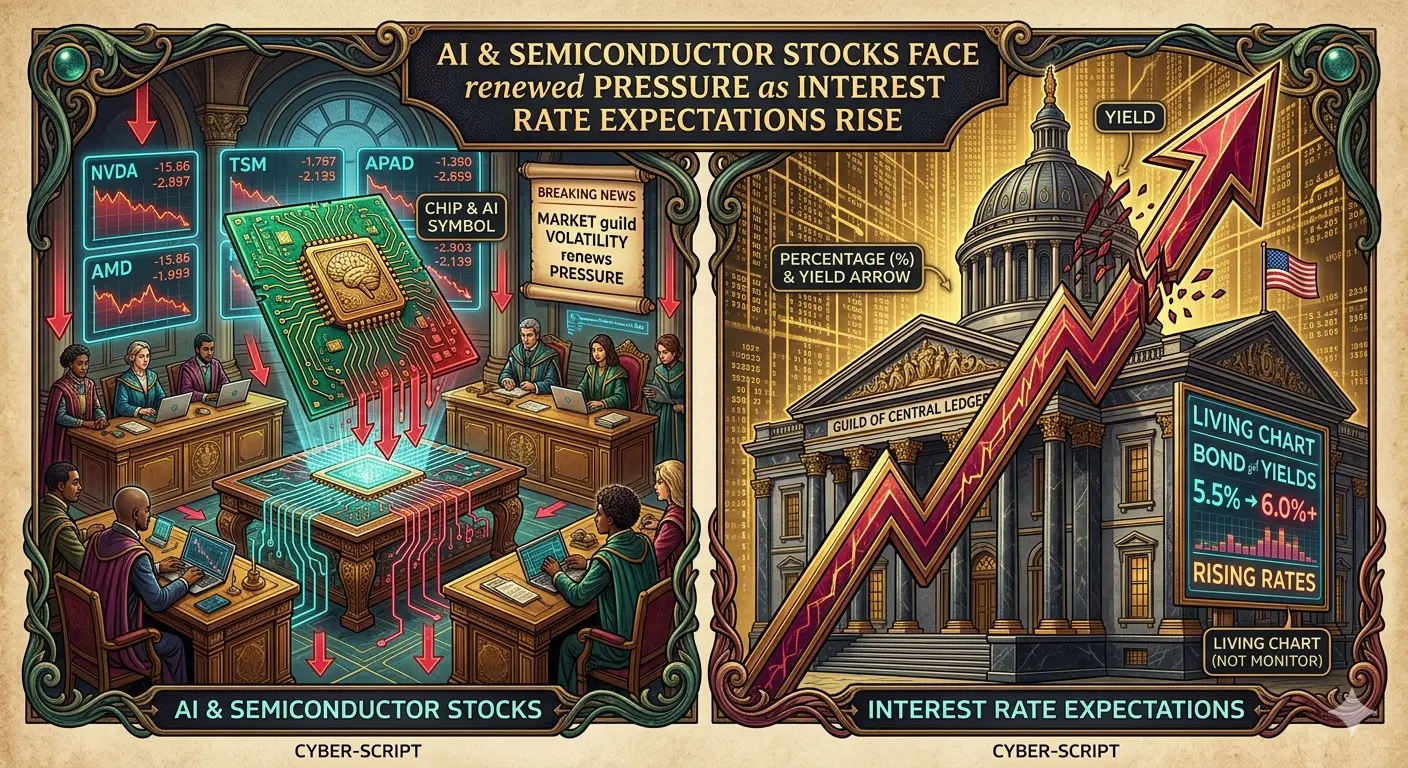
𝐒𝐞𝐦𝐢𝐜𝐨𝐧𝐝𝐮𝐜𝐭𝐨𝐫 𝐒𝐞𝐜𝐭𝐨𝐫 𝐇𝐢𝐭 𝐁𝐲 𝐌𝐚𝐬𝐬𝐢𝐯𝐞 𝐒𝐞𝐥𝐥𝐨𝐟𝐟 — 𝐇𝐨𝐭 𝐈𝐧𝐟𝐥𝐚𝐭𝐢𝐨𝐧 𝐃𝐚𝐭𝐚 𝐑𝐞𝐢𝐠𝐧𝐢𝐭𝐞𝐬 𝐅𝐞𝐚𝐫𝐬 𝐎𝐟 𝐇𝐢𝐠𝐡𝐞𝐫 𝐅𝐨𝐫 𝐋𝐨𝐧𝐠𝐞𝐫 𝐈𝐧𝐭𝐞𝐫𝐞𝐬𝐭 𝐑𝐚𝐭𝐞𝐬
Global semiconductor stocks came under intense pressure after a sharp wave of selling swept through the chip industry following hotter-than-expected US inflation data, triggering renewed fears that the Federal Reserve may keep interest rates elevated for longer than investors previously anticipated.
The Philadelphia Semiconductor Index plunged more than 5% intraday, marking one of the sector’s steepest broad-based declines in recent months and exposing how sensitive AI and technology valuations remain to changing macroeconomic conditions.
𝐒𝐞𝐦𝐢𝐜𝐨𝐧𝐝𝐮𝐜𝐭𝐨𝐫 𝐒𝐞𝐜𝐭𝐨𝐫 𝐇𝐢𝐭 𝐁𝐲 𝐌𝐚𝐬𝐬𝐢𝐯𝐞 𝐒𝐞𝐥𝐥𝐨𝐟𝐟 quickly became one of the dominant themes across financial markets as investors aggressively reduced exposure to high-growth technology companies.
The weakness spread across nearly the entire semiconductor supply chain.
Qualcomm suffered one of the largest declines, falling nearly 12%, while Intel dropped more than 9% and SanDisk lost over 8%. Major global chip leaders including ASML, AMD, and TSMC also posted significant losses, reinforcing the idea that the selloff was not company-specific but instead reflected broad macroeconomic pressure on the sector.
The primary catalyst behind the decline was the latest CPI inflation report, which signaled that inflation may remain more persistent than markets expected. That immediately increased concerns that the Federal Reserve could delay future rate cuts and maintain restrictive financial conditions deeper into the economic cycle.
Technology and AI-related stocks are especially vulnerable in this environment because their valuations rely heavily on future earnings expectations.
When interest rates rise, the present value of future profits declines as discount rates increase. This creates pressure on high-growth companies whose valuations are based more on long-term expansion potential than immediate cash-flow generation.
The AI sector has become particularly exposed to this dynamic.
Over the past year, investors poured enormous amounts of capital into semiconductor and AI infrastructure companies as enthusiasm surrounding artificial intelligence transformed global market sentiment. AI-driven demand for advanced chips, cloud computing infrastructure, and high-performance data centers fueled one of the strongest rallies in modern technology history.
However, elevated valuations also created substantial positioning risk.
As inflation data surprised to the upside, traders rapidly moved to reduce exposure across crowded AI trades, accelerating downside volatility throughout the semiconductor industry. Institutional investors who aggressively accumulated AI-related positions over recent months were suddenly forced to rebalance portfolios as Treasury yields climbed and monetary tightening fears intensified.
The selloff also demonstrates how interconnected the global semiconductor ecosystem has become.
Companies like ASML provide critical lithography systems used by manufacturers such as TSMC, while firms including AMD, Qualcomm, Nvidia, and Intel compete within the broader race for AI computing dominance. Because of these interconnected supply chains, negative macro sentiment can rapidly impact the entire industry regardless of individual company performance.
At the same time, analysts continue emphasizing that the long-term structural outlook for semiconductors and artificial intelligence remains extremely strong.
Global demand for advanced computing power continues expanding due to AI adoption, cloud infrastructure growth, autonomous technologies, cybersecurity systems, robotics, and high-performance enterprise data processing.
Governments worldwide are also prioritizing semiconductor independence and domestic chip manufacturing as geopolitical competition increasingly centers around technological leadership and AI infrastructure control.
However, markets are beginning to shift focus away from pure growth optimism toward questions surrounding valuation sustainability and earnings resilience under prolonged tight monetary conditions.
This marks an important psychological transition.
During periods of ultra-loose liquidity, investors often prioritize future potential over present profitability. But when inflation remains elevated and borrowing costs stay high, markets become far more selective, rewarding companies with stronger balance sheets, durable cash flows, and realistic valuation structures.
The current environment could therefore create a much more volatile phase for semiconductor and AI-related assets where exceptional long-term fundamentals coexist with short-term macroeconomic pressure and valuation compression.
Another growing concern is whether prolonged high interest rates could eventually slow enterprise AI spending.
Many corporations continue investing aggressively in artificial intelligence infrastructure, but tighter financing conditions may eventually impact the pace of expansion, particularly among smaller technology firms and speculative startups dependent on external capital and venture funding.
At the same time, larger technology giants with strong balance sheets may become even more dominant if tighter liquidity conditions weaken smaller competitors.
Bond markets are also playing a major role in the sector’s volatility.
As Treasury yields rise, investors increasingly compare the risk-adjusted return potential of expensive growth stocks against safer fixed-income alternatives. This creates additional pressure on sectors trading at historically elevated multiples.
For cryptocurrency markets, the semiconductor selloff also carries broader implications.
AI infrastructure, GPU demand, high-performance computing systems, and semiconductor manufacturing all remain deeply connected to digital asset mining, blockchain infrastructure, and emerging decentralized AI ecosystems. Weakness across the chip sector may therefore influence sentiment across broader technology and crypto-related markets.
Looking ahead, future inflation data, Federal Reserve policy decisions, Treasury yield movements, and AI earnings growth will likely determine whether semiconductor stocks stabilize or face additional downside pressure.
If inflation remains stubbornly elevated, markets may continue rotating away from speculative growth sectors toward defensive and value-oriented assets. However, if inflation begins cooling and rate-cut expectations return, semiconductor and AI stocks could once again attract aggressive institutional inflows due to their enormous long-term growth potential.
For now, the sharp decline across the chip industry serves as another reminder that even the market’s strongest sectors remain highly vulnerable to macroeconomic shifts when valuations become heavily dependent on optimistic future growth assumptions.
𝐓𝐇𝐄 𝐀𝐈 𝐁𝐎𝐎𝐌 𝐑𝐄𝐌𝐀𝐈𝐍𝐒 𝐀𝐋𝐈𝐕𝐄 — 𝐁𝐔𝐓 𝐌𝐀𝐑𝐊𝐄𝐓𝐒 𝐀𝐑𝐄 𝐍𝐎𝐖 𝐅𝐎𝐑𝐂𝐈𝐍𝐆 𝐓𝐄𝐂𝐇 𝐕𝐀𝐋𝐔𝐀𝐓𝐈𝐎𝐍𝐒 𝐓𝐎 𝐅𝐀𝐂𝐄 𝐌𝐀𝐂𝐑𝐎𝐄𝐂𝐎𝐍𝐎𝐌𝐈𝐂 𝐑𝐄𝐀𝐋𝐈𝐓𝐘
repost-content-media
  • Reward
  • Comment
  • Repost
  • Share
#SemiconductorSectorTakesAHit
⚡ A Deep-Dive Into Chip Market Volatility, AI Infrastructure Pressure, Institutional Repositioning, and Liquidity Rotation Across Global Technology Markets ⚡
The semiconductor sector taking a major hit is once again highlighting how deeply interconnected modern technology markets have become with macroeconomic conditions, artificial intelligence expectations, institutional liquidity behavior, and global supply chain dynamics. Semiconductor companies are no longer viewed simply as hardware manufacturers — they now represent the foundational infrastructure powering
post-image
post-image
post-image
  • Reward
  • Comment
  • Repost
  • Share
#SemiconductorSectorTakesAHit
SEMICONDUCTOR SECTOR TAKES A HIT AS GLOBAL MARKETS ENTER A NEW TECHNOLOGY AND SUPPLY CHAIN STRESS PHASE
The global semiconductor sector is facing renewed pressure as technology stocks manufacturing giants and chip related companies experience another wave of weakness driven by macroeconomic uncertainty geopolitical tension supply chain concerns and changing investor expectations. The semiconductor industry has become one of the most strategically important sectors in the entire global economy because modern financial systems artificial intelligence cloud computin
post-image
post-image
  • Reward
  • 4
  • Repost
  • Share
ShainingMoon:
To The Moon 🌕
View More
#GateSquareMayTradingShare
𝐒𝐄𝐌𝐈𝐂𝐎𝐍𝐃𝐔𝐂𝐓𝐎𝐑 𝐒𝐄𝐂𝐓𝐎𝐑 𝐒𝐔𝐅𝐅𝐄𝐑𝐒 𝐁𝐑𝐎𝐀𝐃 𝐒𝐄𝐋𝐋𝐎𝐅𝐅 𝐀𝐒 𝐇𝐎𝐓 𝐈𝐍𝐅𝐋𝐀𝐓𝐈𝐎𝐍 𝐃𝐀𝐓𝐀 𝐑𝐄𝐈𝐆𝐍𝐈𝐓𝐄𝐒 𝐑𝐀𝐓𝐄 𝐅𝐄𝐀𝐑𝐒
The semiconductor sector experienced a sharp wave of selling pressure after the Philadelphia Semiconductor Index plunged more than 5% intraday on May 12, triggering one of the largest broad-based declines across the chip industry in recent months. The selloff reflected growing investor concern that persistent inflation and elevated interest rates may continue weighing heavily on high-valuation technology and
MrFlower_XingChen
#GateSquareMayTradingShare
𝐒𝐄𝐌𝐈𝐂𝐎𝐍𝐃𝐔𝐂𝐓𝐎𝐑 𝐒𝐄𝐂𝐓𝐎𝐑 𝐒𝐔𝐅𝐅𝐄𝐑𝐒 𝐁𝐑𝐎𝐀𝐃 𝐒𝐄𝐋𝐋𝐎𝐅𝐅 𝐀𝐒 𝐇𝐎𝐓 𝐈𝐍𝐅𝐋𝐀𝐓𝐈𝐎𝐍 𝐃𝐀𝐓𝐀 𝐑𝐄𝐈𝐆𝐍𝐈𝐓𝐄𝐒 𝐑𝐀𝐓𝐄 𝐅𝐄𝐀𝐑𝐒
The semiconductor sector experienced a sharp wave of selling pressure after the Philadelphia Semiconductor Index plunged more than 5% intraday on May 12, triggering one of the largest broad-based declines across the chip industry in recent months. The selloff reflected growing investor concern that persistent inflation and elevated interest rates may continue weighing heavily on high-valuation technology and artificial intelligence related stocks.
The weakness spread aggressively across nearly the entire semiconductor supply chain.
Qualcomm dropped almost 12%, Intel declined more than 9%, and SanDisk fell over 8% as investors rapidly reduced exposure to growth-sensitive technology companies. Meanwhile, major global semiconductor leaders including ASML, AMD, and TSMC also posted significant losses exceeding 3%, signaling that the selloff was not isolated to a single company or earnings issue but instead reflected broader macroeconomic pressure on the sector.
The primary catalyst behind the decline was a hotter-than-expected April CPI inflation report, which reinforced fears that the Federal Reserve may need to maintain restrictive monetary policy for longer than markets had previously anticipated. Rising inflation expectations immediately impacted rate-sensitive sectors, particularly technology stocks whose valuations are heavily dependent on future earnings growth and lower discount rates.
Semiconductor and AI-related companies have been among the strongest-performing sectors over the past year due to explosive enthusiasm surrounding artificial intelligence infrastructure, data center expansion, and next-generation computing demand. However, these same companies also carry some of the highest market valuations in global equities, making them especially vulnerable when interest rate expectations move higher.
In high-rate environments, future earnings become less valuable in present terms because discount rates rise. This creates pressure on growth stocks whose valuations are based heavily on long-term expansion expectations rather than current cash flow generation. As Treasury yields increase, investors often rotate capital away from speculative growth sectors toward more defensive or value-oriented assets.
The AI sector in particular has become increasingly sensitive to macroeconomic conditions despite maintaining strong long-term growth narratives. While demand for AI chips, cloud computing infrastructure, and advanced semiconductor manufacturing remains structurally strong, investors are beginning to question whether current valuations fully account for prolonged tight monetary conditions and slowing economic momentum.
Another important factor behind the selloff is positioning risk.
Over recent months, semiconductor and AI stocks attracted enormous institutional inflows as investors aggressively chased exposure to artificial intelligence themes. This created crowded positioning across many leading names. When inflation data surprised to the upside, traders quickly moved to reduce risk exposure, accelerating downside volatility across the sector.
The decline also highlights how interconnected the modern semiconductor ecosystem has become.
Companies like ASML supply critical lithography equipment used by global chip manufacturers such as TSMC, while firms like AMD, Qualcomm, and Intel compete directly within the broader AI and computing infrastructure race. As a result, negative macro sentiment can rapidly spread across the entire industry regardless of individual company fundamentals.
At the same time, analysts emphasize that the current selloff does not necessarily invalidate the long-term structural growth outlook for semiconductors and AI infrastructure. Global demand for advanced chips continues expanding due to artificial intelligence adoption, cloud computing growth, autonomous systems, cybersecurity infrastructure, and high-performance data processing requirements.
However, the market is increasingly shifting focus from pure growth narratives toward questions of valuation sustainability and earnings resilience under tighter financial conditions.
This transition marks an important change in investor psychology. During periods of aggressive liquidity expansion, markets often reward future potential over present profitability. But when inflation remains elevated and borrowing costs stay high, investors become far more selective, prioritizing companies with stronger balance sheets, durable cash flows, and realistic valuation metrics.
The current environment may therefore create a more volatile phase for the AI and semiconductor sector, where strong long-term fundamentals coexist with shorter-term macroeconomic pressure and valuation compression.
Another emerging concern is whether prolonged high interest rates could slow enterprise AI spending or delay large-scale infrastructure investment cycles. Many companies continue investing heavily in AI capabilities, but tighter financing conditions could eventually impact the pace of expansion, particularly among smaller firms and speculative startups dependent on external capital.
Despite the recent correction, semiconductors remain one of the most strategically important industries in the global economy. Governments worldwide continue prioritizing domestic chip manufacturing, supply chain security, and AI competitiveness due to the sector’s critical role in national technology infrastructure and economic leadership.
Looking ahead, market direction for semiconductor stocks will likely depend heavily on future inflation data, Federal Reserve policy expectations, Treasury yield movements, and the ability of AI-driven earnings growth to justify elevated valuations.
If inflation remains stubbornly high, pressure on high-multiple technology sectors could continue. However, if inflation begins stabilizing and monetary tightening expectations ease, investors may once again rotate aggressively into semiconductor and AI-related assets due to their powerful long-term growth potential.
For now, the sharp decline across the Philadelphia Semiconductor Index serves as a reminder that even the market’s strongest sectors remain highly vulnerable to macroeconomic shifts, especially when valuations become heavily dependent on optimistic future growth assumptions.
𝐀𝐈 𝐀𝐍𝐃 𝐒𝐄𝐌𝐈𝐂𝐎𝐍𝐃𝐔𝐂𝐓𝐎𝐑 𝐒𝐓𝐎𝐂𝐊𝐒 𝐅𝐀𝐂𝐄 𝐑𝐄𝐍𝐄𝐖𝐄𝐃 𝐏𝐑𝐄𝐒𝐒𝐔𝐑𝐄 𝐀𝐒 𝐈𝐍𝐓𝐄𝐑𝐄𝐒𝐓 𝐑𝐀𝐓𝐄 𝐄𝐗𝐏𝐄𝐂𝐓𝐀𝐓𝐈𝐎𝐍𝐒 𝐑𝐈𝐒𝐄
#SemiconductorSectorTakesAHit
repost-content-media
  • Reward
  • Comment
  • Repost
  • Share
Load More