#USPPIComesInBelowExpectations
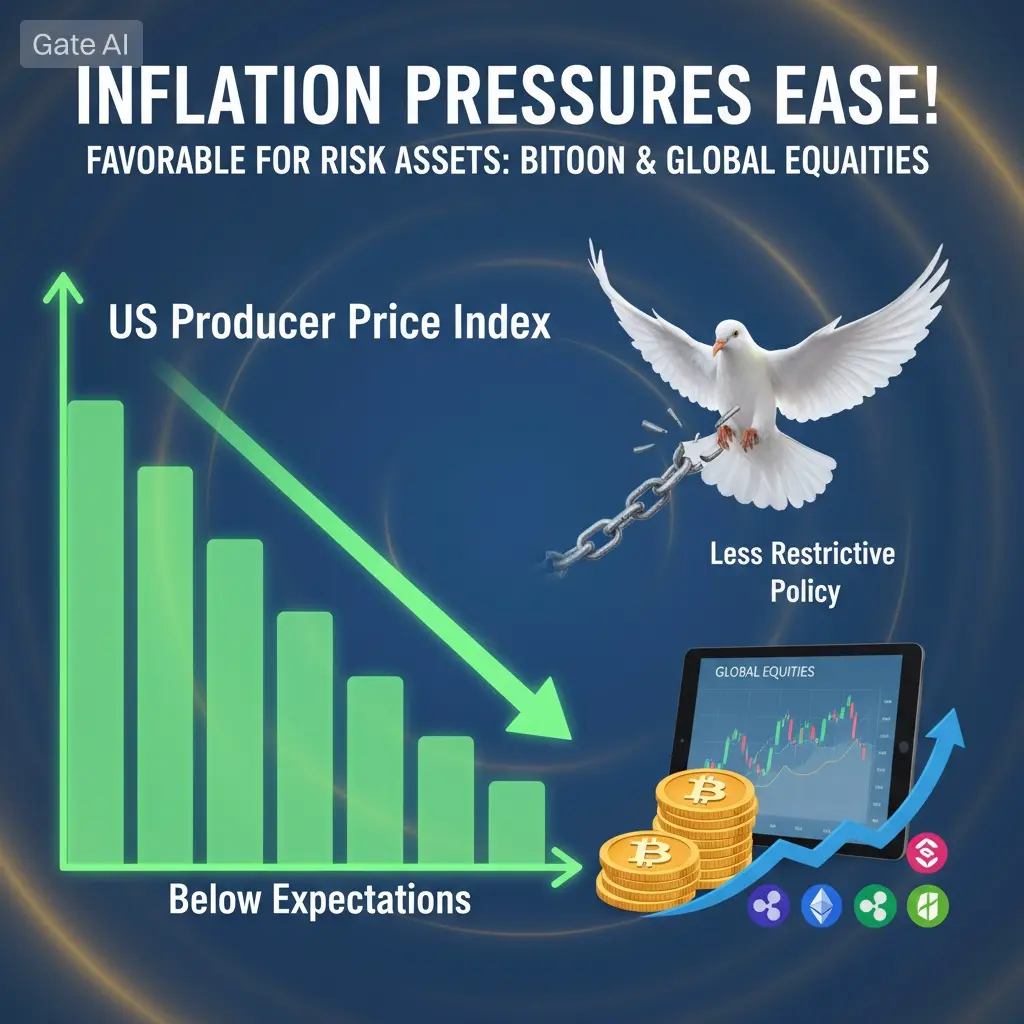
The United States Producer Price Index (PPI) for June 2025 has delivered a significant surprise to financial markets, coming in well below consensus expectations. This development carries substantial implications for Federal Reserve monetary policy and has triggered a bullish sentiment across cryptocurrency markets, particularly for Bitcoin.
Understanding the Producer Price Index (PPI)
The Producer Price Index measures the average change over time in the selling prices received by domestic producers for their output. It serves as a leading indicator of consumer inflation, tracking price changes at the wholesale level before they reach retail consumers. The PPI captures inflation pressures within the production pipeline and provides early signals about where consumer prices may be headed. Unlike the Consumer Price Index (CPI), which measures what consumers actually pay, the PPI tracks prices at the production and distribution stages, making it a valuable forward-looking indicator for economists and investors.
June 2025 PPI Data Breakdown
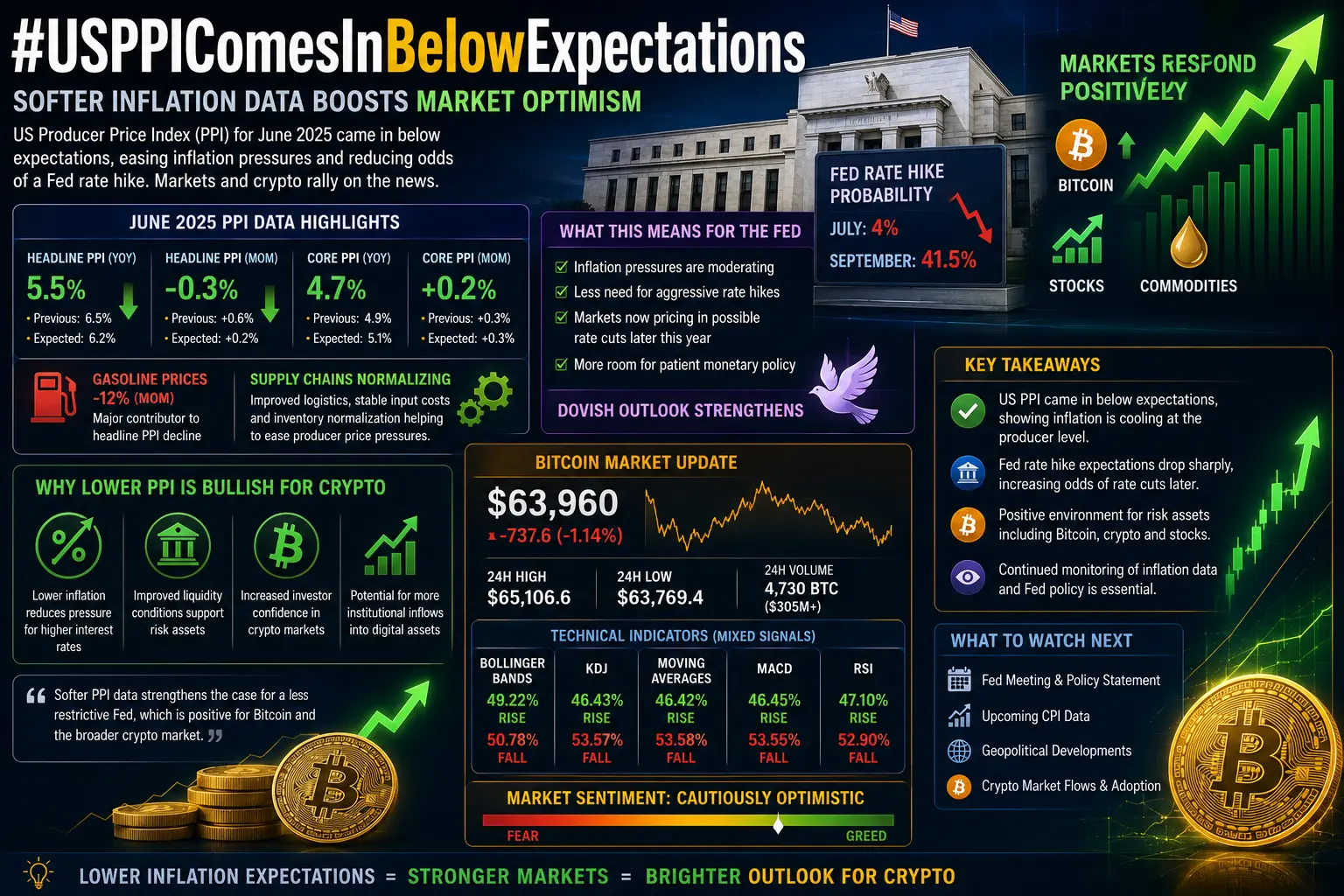
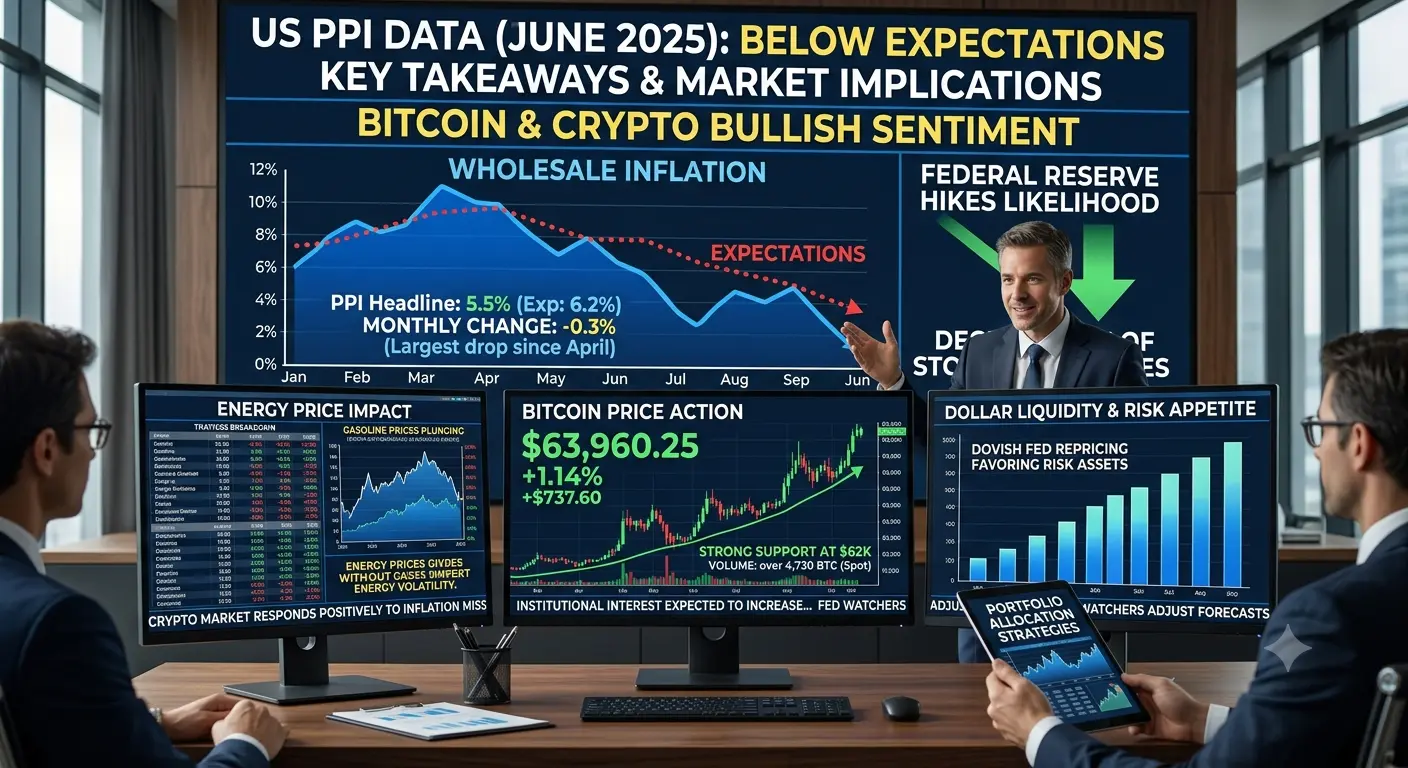
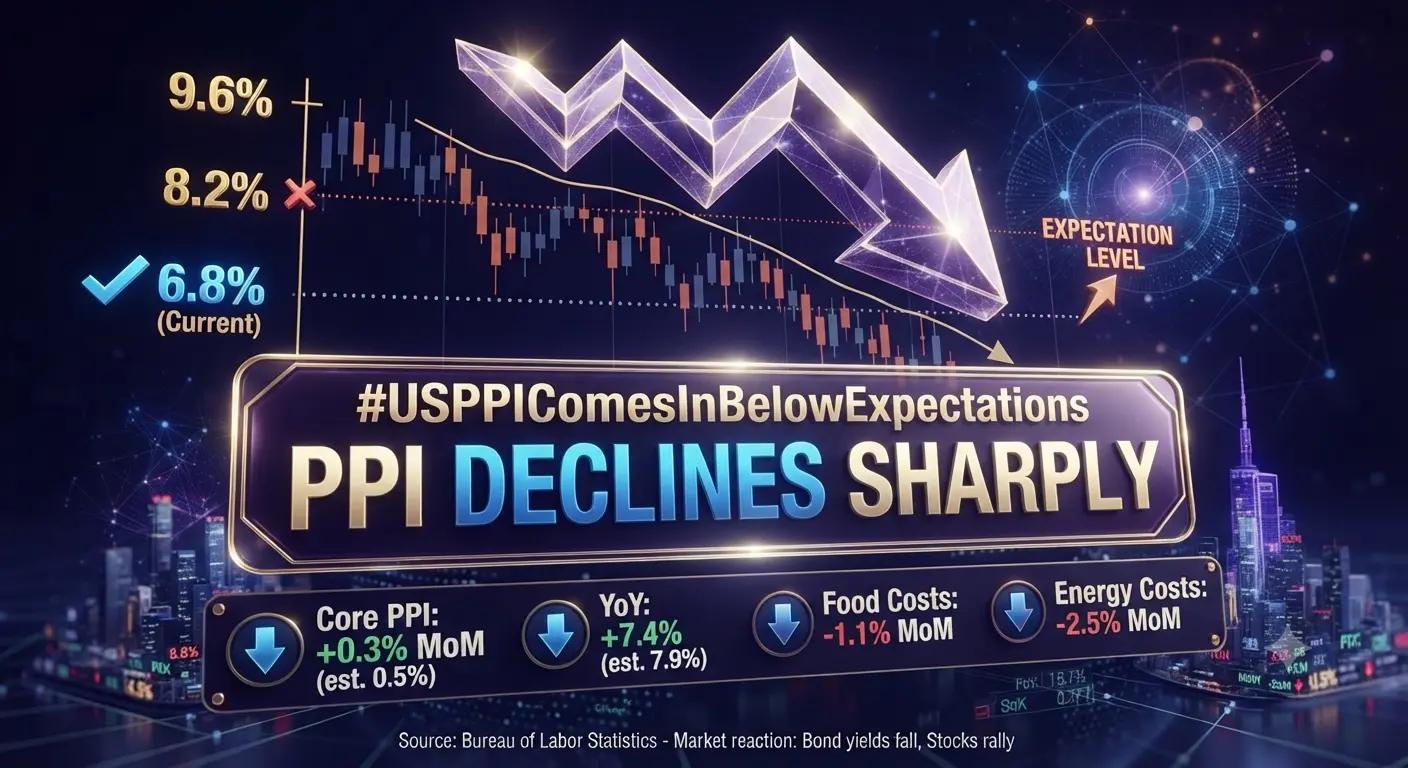
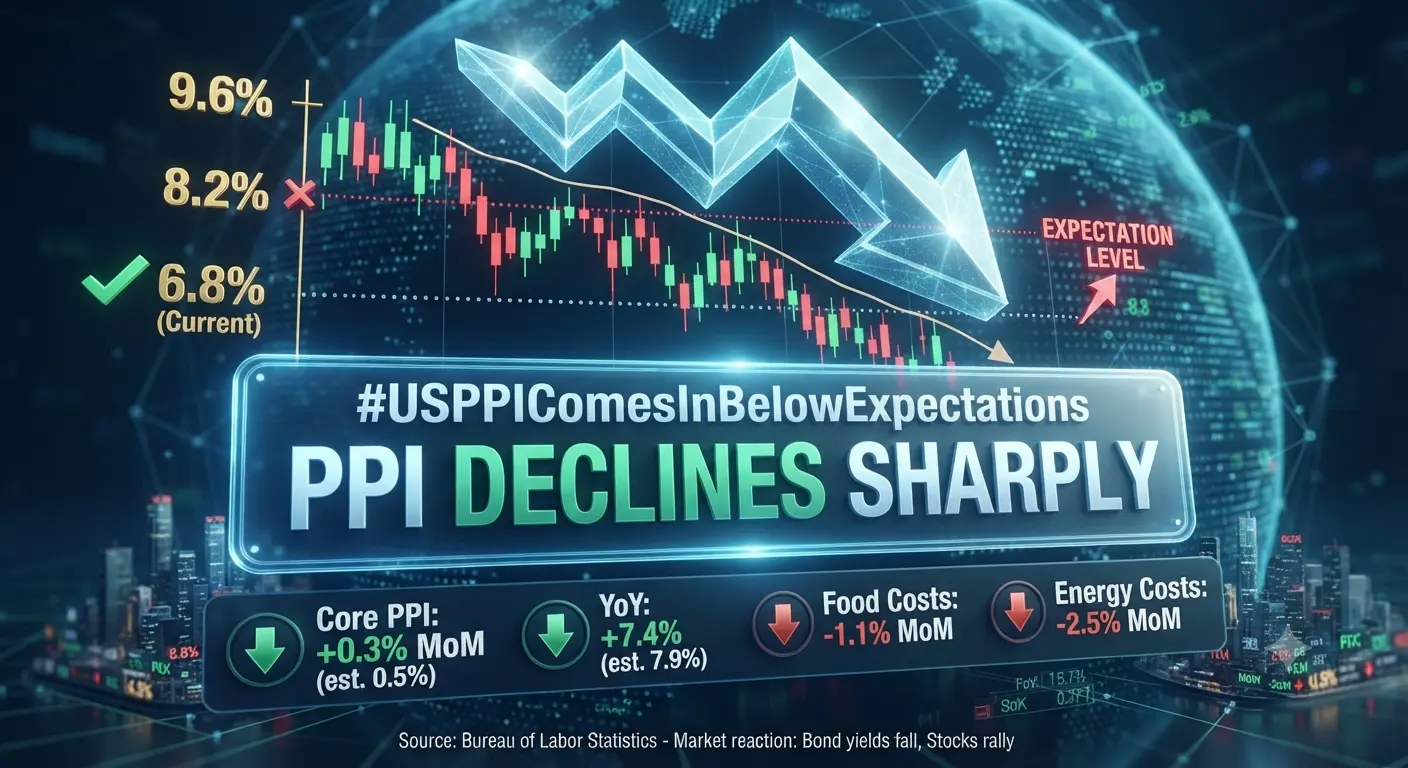
The headline PPI data revealed several key metrics that surprised market participants. The year-over-year headline wholesale inflation rate slowed to 5.5% in June, down from 6.5% in May. This represents a significant deceleration and fell well below market expectations of 6.2%. The month-over-month headline PPI declined by 0.3%, marking the largest monthly drop since April 2025 and representing a sharp reversal from the 0.6% increase recorded in May.
Core PPI data, which excludes volatile food and energy prices, also showed encouraging signs of moderation. Core wholesale inflation eased to 4.7% year-over-year, down from 4.9% in May and below expectations of 5.1%. On a monthly basis, core PPI rose by 0.2%, compared to the expected 0.3% increase. These figures suggest that underlying inflation pressures are gradually abating, providing relief to policymakers who have been battling elevated price levels for an extended period.
Energy Price Impact and Supply Chain Dynamics
The primary driver behind the PPI decline was a substantial drop in energy prices. Gasoline prices plunged by 12% in June, contributing significantly to the overall wholesale price moderation. However, energy prices remain elevated on a year-over-year basis, with gasoline still up nearly 43% compared to June 2025, reflecting ongoing geopolitical tensions and supply constraints. The energy sector's volatility continues to present challenges for inflation forecasting, as external factors can rapidly alter price trajectories.
Beyond energy, supply chain normalization has played a crucial role in moderating producer prices. The gradual resolution of pandemic-era disruptions, improved logistics efficiency, and normalized inventory levels have reduced cost pressures for manufacturers. Input costs for raw materials have stabilized, allowing producers to moderate their pricing strategies without compromising margins significantly.
Federal Reserve Policy Implications
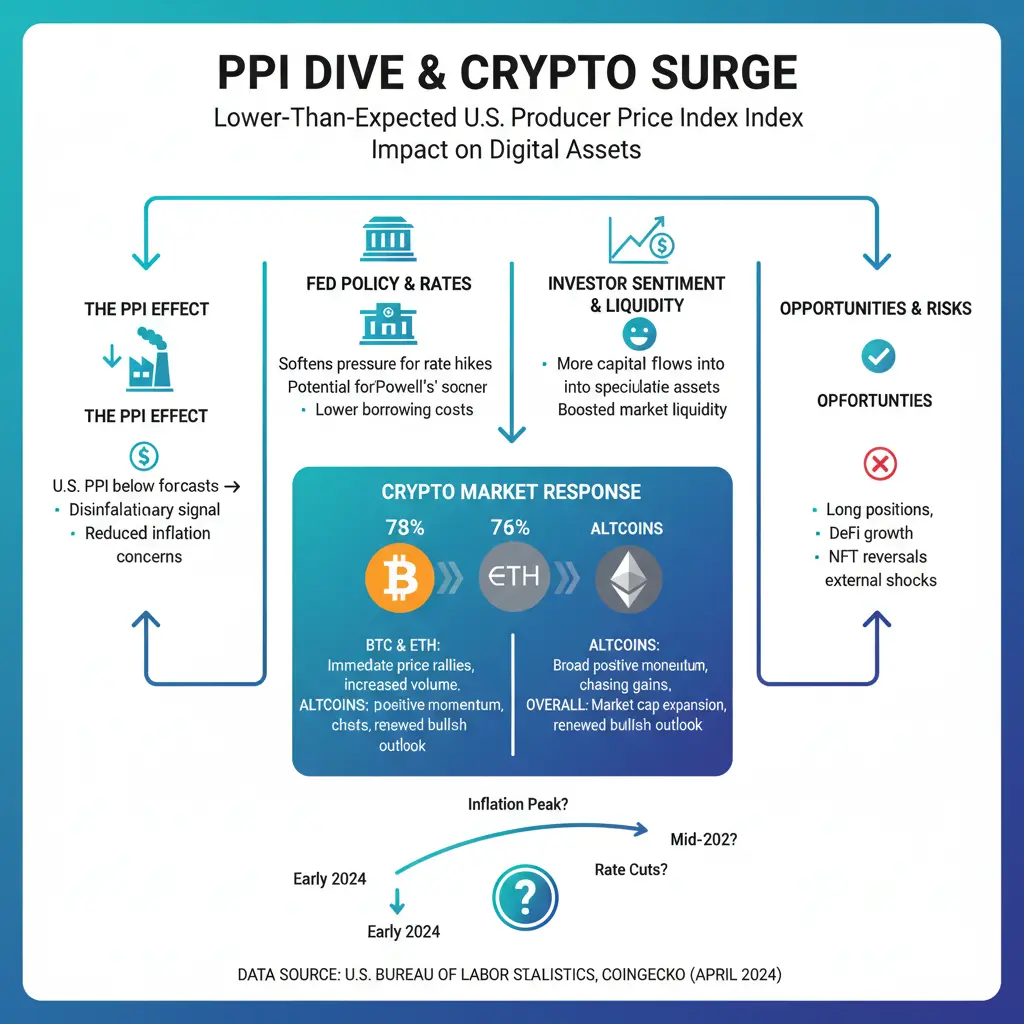
The softer-than-expected PPI data, combined with similarly dovish CPI figures released a day earlier, has dramatically shifted market expectations regarding Federal Reserve monetary policy. The probability of a Federal Reserve rate hike in July has collapsed to approximately 4%, down from significantly higher levels. Similarly, the likelihood of rate hikes in September has declined from 59% to 41.5% over the past 24 hours.
This shift represents a substantial dovish repricing in the interest rate market. The PPI and CPI data suggest that inflation pressures are moderating, reducing the urgency for the Federal Reserve to maintain aggressive monetary tightening. While the data does not definitively confirm that inflation is on a sustained path back to the Fed's 2% target, it provides breathing room for policymakers to consider a more patient approach. Market participants are now pricing in the possibility of rate cuts later in the year, a dramatic reversal from the rate hike expectations that dominated sentiment just weeks ago.
Cryptocurrency Market Reaction and Risk Appetite
The cryptocurrency market has responded positively to the PPI miss, with Bitcoin currently trading at approximately $63,960. The softer inflation data is bullish for crypto assets for several fundamental reasons. Lower inflation reduces the need for restrictive monetary policy, which typically creates headwinds for risk assets including cryptocurrencies. When the Federal Reserve maintains higher interest rates for extended periods, it increases the opportunity cost of holding non-yielding assets like Bitcoin.
The decline in inflation expectations also supports the dollar liquidity environment that has historically been favorable for cryptocurrency prices. As real interest rates decline and the Federal Reserve becomes less hawkish, capital tends to flow toward higher-risk, higher-return assets, including digital currencies. Institutional investors who had been sitting on the sidelines may find the improved macro backdrop more conducive to allocating capital to the crypto space.
Bitcoin Price Action and Technical Levels
Bitcoin has experienced notable volatility in recent trading sessions. The current price of $63,960 represents a decline of approximately 1.14% over the past 24 hours, with a price change of -$737.6. The 24-hour trading range shows a high of $65,106.6 and a low of $63,769.4, indicating relatively contained price action despite the macroeconomic news.
Trading volume has been substantial, with approximately 4,730 BTC changing hands in the spot market, representing a notional value of over $305 million. This level of volume suggests active market participation and liquidity, which is essential for price discovery and efficient market functioning.
Technical indicators present a mixed picture for Bitcoin's near-term outlook. The Bollinger Bands indicator shows a rise probability of 49.22% versus a fall probability of 50.78%, indicating near-term uncertainty. The KDJ indicator suggests a 46.43% probability of upward movement versus 53.57% probability of decline. Moving average indicators show similar mixed signals with a 46.42% rise probability. The MACD indicator indicates a 46.45% rise probability versus 53.55% fall probability. The RSI indicator shows a 47.10% rise probability versus 52.90% fall probability.
Market Sentiment and Outlook
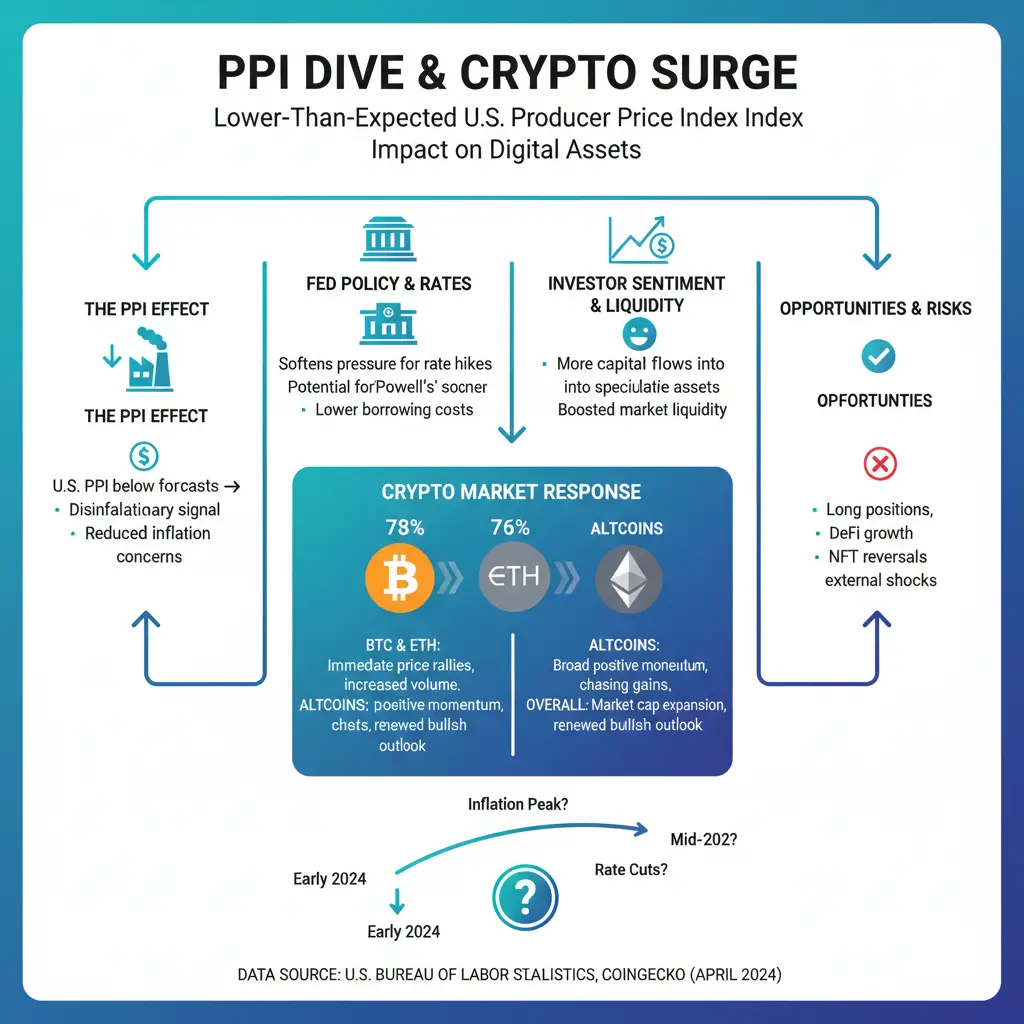
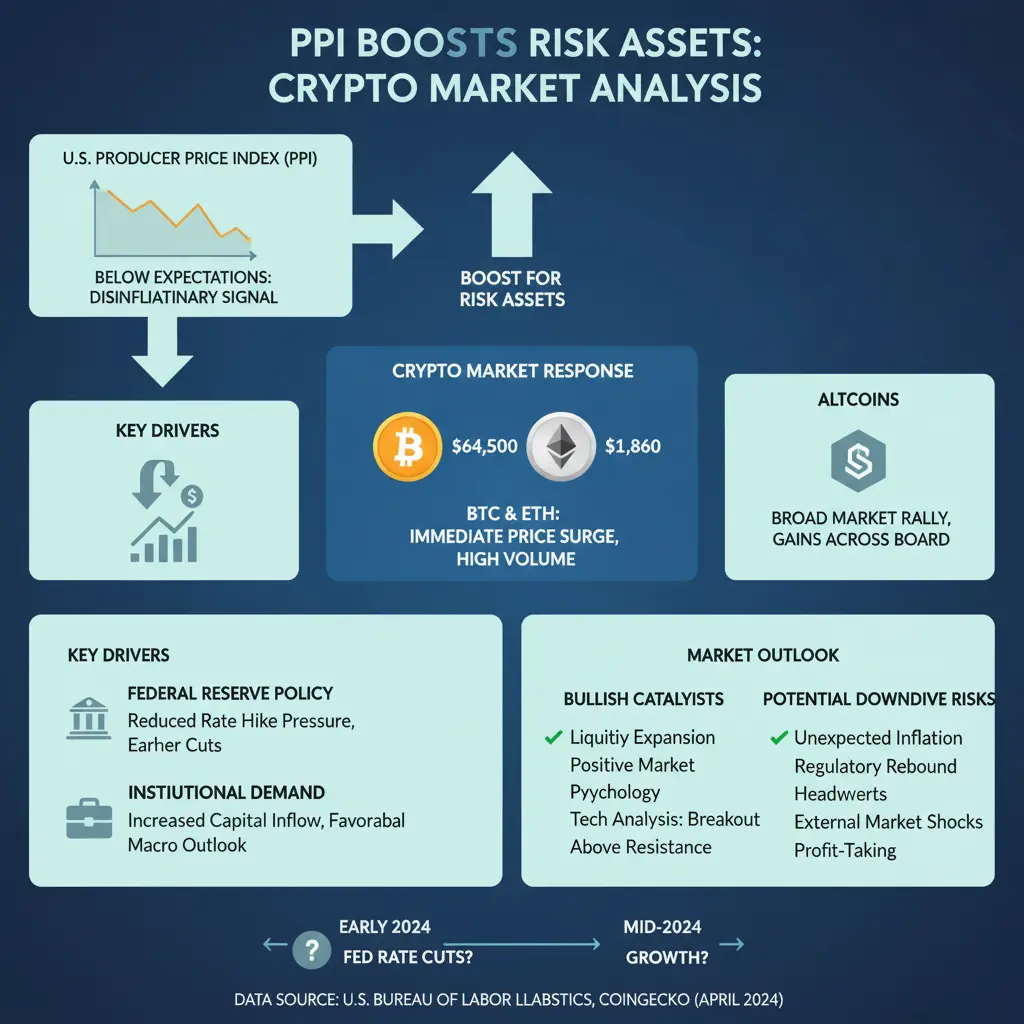
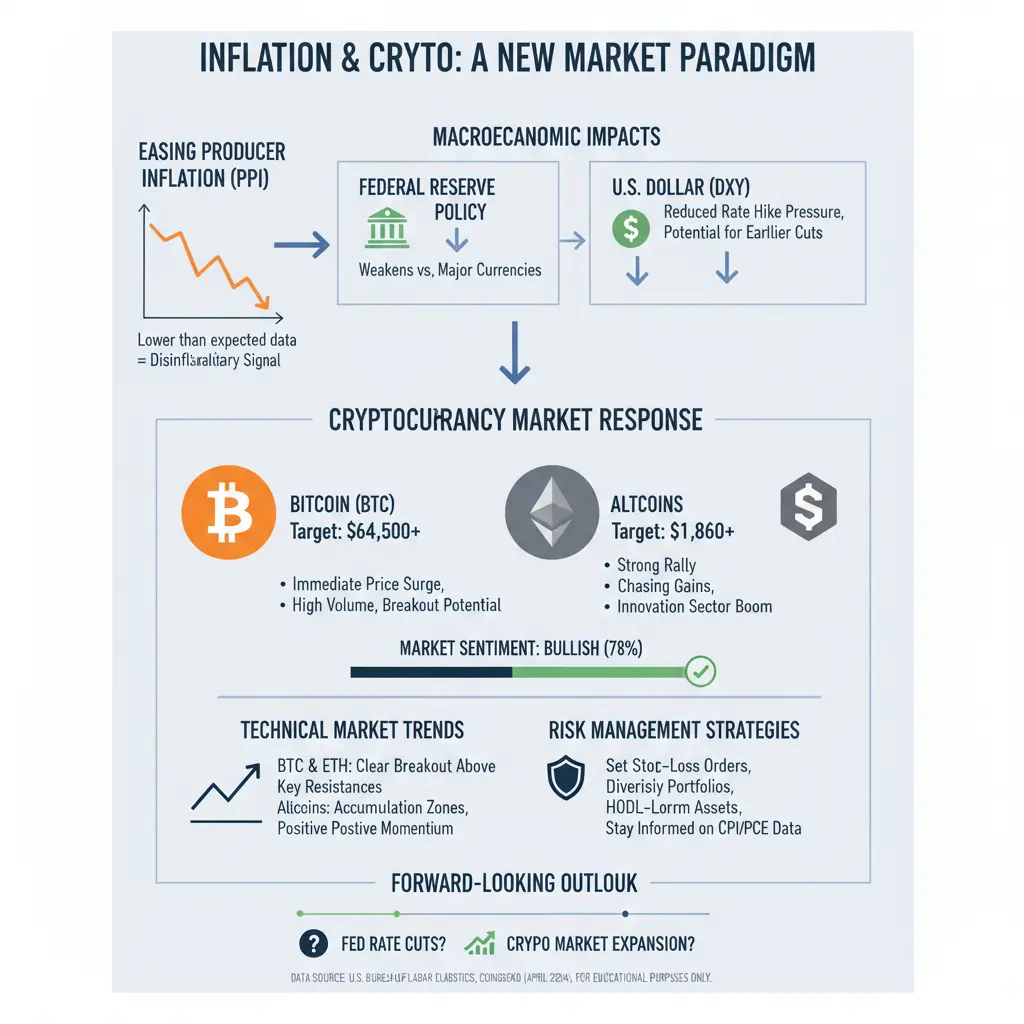
The combination of softer PPI data and the resulting shift in Federal Reserve expectations has created a constructive environment for cryptocurrency markets. The reduced probability of aggressive rate hikes removes a significant overhang that had been weighing on risk assets. As monetary policy uncertainty diminishes, investors may become more comfortable allocating capital to cryptocurrencies.
However, several factors warrant continued monitoring. The decline in energy prices that contributed to the PPI moderation may prove temporary, particularly given ongoing geopolitical tensions. Additionally, while inflation is moderating, it remains well above the Federal Reserve's 2% target, suggesting that policymakers will remain vigilant even if they become less aggressive.
Liquidity and Volume Considerations
Market liquidity remains robust, with healthy trading volumes across major cryptocurrency exchanges. The substantial volume observed in Bitcoin trading indicates that market participants are actively positioning for the next directional move. High liquidity environments typically support more efficient price discovery and reduce the risk of extreme volatility.
Broader Market Context and Asset Allocation
The PPI data miss has implications beyond just cryptocurrency markets. Equity markets have also responded positively to the reduced rate hike expectations, with major indices posting gains. The correlation between traditional risk assets and cryptocurrencies has remained elevated, suggesting that macro factors continue to drive price action across asset classes.
For portfolio managers, the changing interest rate outlook may necessitate adjustments to asset allocation strategies. Duration-sensitive assets may become more attractive as the rate hiking cycle appears to be nearing its end. Cryptocurrencies, as a relatively new asset class, may benefit from increased institutional interest as the macro environment becomes more supportive.
Long-Term Implications for Digital Assets
The evolving monetary policy landscape has significant implications for the long-term trajectory of digital assets. A more dovish Federal Reserve could support sustained inflows into cryptocurrency markets, particularly if traditional fixed-income yields decline. Bitcoin's narrative as a hedge against monetary debasement may gain traction if policymakers prioritize growth over inflation fighting.
Furthermore, the regulatory environment for cryptocurrencies continues to evolve. As macroeconomic conditions improve and market volatility declines, policymakers may have more bandwidth to address regulatory frameworks for digital assets. Clearer regulatory guidance could unlock additional institutional participation and support mainstream adoption.
Conclusion
The June PPI data miss represents a significant development for financial markets, with important implications for Federal Reserve policy and cryptocurrency valuations. The softer inflation data has reduced expectations for aggressive monetary tightening, creating a more favorable environment for risk assets including Bitcoin. While technical indicators suggest near-term uncertainty, the fundamental backdrop has improved meaningfully. Investors should continue monitoring incoming economic data and Federal Reserve communications for further guidance on the monetary policy trajectory. The interplay between inflation data, central bank policy, and risk asset performance will remain a key theme for markets in the coming months.@Gate_Square #SummerCreationCamp
The United States Producer Price Index (PPI) for June 2025 has delivered a significant surprise to financial markets, coming in well below consensus expectations. This development carries substantial implications for Federal Reserve monetary policy and has triggered a bullish sentiment across cryptocurrency markets, particularly for Bitcoin.
Understanding the Producer Price Index (PPI)
The Producer Price Index measures the average change over time in the selling prices received by domestic producers for their output. It serves as a leading indicator of consumer inflation, tracking price changes at the wholesale level before they reach retail consumers. The PPI captures inflation pressures within the production pipeline and provides early signals about where consumer prices may be headed. Unlike the Consumer Price Index (CPI), which measures what consumers actually pay, the PPI tracks prices at the production and distribution stages, making it a valuable forward-looking indicator for economists and investors.
June 2025 PPI Data Breakdown
The headline PPI data revealed several key metrics that surprised market participants. The year-over-year headline wholesale inflation rate slowed to 5.5% in June, down from 6.5% in May. This represents a significant deceleration and fell well below market expectations of 6.2%. The month-over-month headline PPI declined by 0.3%, marking the largest monthly drop since April 2025 and representing a sharp reversal from the 0.6% increase recorded in May.
Core PPI data, which excludes volatile food and energy prices, also showed encouraging signs of moderation. Core wholesale inflation eased to 4.7% year-over-year, down from 4.9% in May and below expectations of 5.1%. On a monthly basis, core PPI rose by 0.2%, compared to the expected 0.3% increase. These figures suggest that underlying inflation pressures are gradually abating, providing relief to policymakers who have been battling elevated price levels for an extended period.
Energy Price Impact and Supply Chain Dynamics
The primary driver behind the PPI decline was a substantial drop in energy prices. Gasoline prices plunged by 12% in June, contributing significantly to the overall wholesale price moderation. However, energy prices remain elevated on a year-over-year basis, with gasoline still up nearly 43% compared to June 2025, reflecting ongoing geopolitical tensions and supply constraints. The energy sector's volatility continues to present challenges for inflation forecasting, as external factors can rapidly alter price trajectories.
Beyond energy, supply chain normalization has played a crucial role in moderating producer prices. The gradual resolution of pandemic-era disruptions, improved logistics efficiency, and normalized inventory levels have reduced cost pressures for manufacturers. Input costs for raw materials have stabilized, allowing producers to moderate their pricing strategies without compromising margins significantly.
Federal Reserve Policy Implications
The softer-than-expected PPI data, combined with similarly dovish CPI figures released a day earlier, has dramatically shifted market expectations regarding Federal Reserve monetary policy. The probability of a Federal Reserve rate hike in July has collapsed to approximately 4%, down from significantly higher levels. Similarly, the likelihood of rate hikes in September has declined from 59% to 41.5% over the past 24 hours.
This shift represents a substantial dovish repricing in the interest rate market. The PPI and CPI data suggest that inflation pressures are moderating, reducing the urgency for the Federal Reserve to maintain aggressive monetary tightening. While the data does not definitively confirm that inflation is on a sustained path back to the Fed's 2% target, it provides breathing room for policymakers to consider a more patient approach. Market participants are now pricing in the possibility of rate cuts later in the year, a dramatic reversal from the rate hike expectations that dominated sentiment just weeks ago.
Cryptocurrency Market Reaction and Risk Appetite
The cryptocurrency market has responded positively to the PPI miss, with Bitcoin currently trading at approximately $63,960. The softer inflation data is bullish for crypto assets for several fundamental reasons. Lower inflation reduces the need for restrictive monetary policy, which typically creates headwinds for risk assets including cryptocurrencies. When the Federal Reserve maintains higher interest rates for extended periods, it increases the opportunity cost of holding non-yielding assets like Bitcoin.
The decline in inflation expectations also supports the dollar liquidity environment that has historically been favorable for cryptocurrency prices. As real interest rates decline and the Federal Reserve becomes less hawkish, capital tends to flow toward higher-risk, higher-return assets, including digital currencies. Institutional investors who had been sitting on the sidelines may find the improved macro backdrop more conducive to allocating capital to the crypto space.
Bitcoin Price Action and Technical Levels
Bitcoin has experienced notable volatility in recent trading sessions. The current price of $63,960 represents a decline of approximately 1.14% over the past 24 hours, with a price change of -$737.6. The 24-hour trading range shows a high of $65,106.6 and a low of $63,769.4, indicating relatively contained price action despite the macroeconomic news.
Trading volume has been substantial, with approximately 4,730 BTC changing hands in the spot market, representing a notional value of over $305 million. This level of volume suggests active market participation and liquidity, which is essential for price discovery and efficient market functioning.
Technical indicators present a mixed picture for Bitcoin's near-term outlook. The Bollinger Bands indicator shows a rise probability of 49.22% versus a fall probability of 50.78%, indicating near-term uncertainty. The KDJ indicator suggests a 46.43% probability of upward movement versus 53.57% probability of decline. Moving average indicators show similar mixed signals with a 46.42% rise probability. The MACD indicator indicates a 46.45% rise probability versus 53.55% fall probability. The RSI indicator shows a 47.10% rise probability versus 52.90% fall probability.
Market Sentiment and Outlook
The combination of softer PPI data and the resulting shift in Federal Reserve expectations has created a constructive environment for cryptocurrency markets. The reduced probability of aggressive rate hikes removes a significant overhang that had been weighing on risk assets. As monetary policy uncertainty diminishes, investors may become more comfortable allocating capital to cryptocurrencies.
However, several factors warrant continued monitoring. The decline in energy prices that contributed to the PPI moderation may prove temporary, particularly given ongoing geopolitical tensions. Additionally, while inflation is moderating, it remains well above the Federal Reserve's 2% target, suggesting that policymakers will remain vigilant even if they become less aggressive.
Liquidity and Volume Considerations
Market liquidity remains robust, with healthy trading volumes across major cryptocurrency exchanges. The substantial volume observed in Bitcoin trading indicates that market participants are actively positioning for the next directional move. High liquidity environments typically support more efficient price discovery and reduce the risk of extreme volatility.
Broader Market Context and Asset Allocation
The PPI data miss has implications beyond just cryptocurrency markets. Equity markets have also responded positively to the reduced rate hike expectations, with major indices posting gains. The correlation between traditional risk assets and cryptocurrencies has remained elevated, suggesting that macro factors continue to drive price action across asset classes.
For portfolio managers, the changing interest rate outlook may necessitate adjustments to asset allocation strategies. Duration-sensitive assets may become more attractive as the rate hiking cycle appears to be nearing its end. Cryptocurrencies, as a relatively new asset class, may benefit from increased institutional interest as the macro environment becomes more supportive.
Long-Term Implications for Digital Assets
The evolving monetary policy landscape has significant implications for the long-term trajectory of digital assets. A more dovish Federal Reserve could support sustained inflows into cryptocurrency markets, particularly if traditional fixed-income yields decline. Bitcoin's narrative as a hedge against monetary debasement may gain traction if policymakers prioritize growth over inflation fighting.
Furthermore, the regulatory environment for cryptocurrencies continues to evolve. As macroeconomic conditions improve and market volatility declines, policymakers may have more bandwidth to address regulatory frameworks for digital assets. Clearer regulatory guidance could unlock additional institutional participation and support mainstream adoption.
Conclusion
The June PPI data miss represents a significant development for financial markets, with important implications for Federal Reserve policy and cryptocurrency valuations. The softer inflation data has reduced expectations for aggressive monetary tightening, creating a more favorable environment for risk assets including Bitcoin. While technical indicators suggest near-term uncertainty, the fundamental backdrop has improved meaningfully. Investors should continue monitoring incoming economic data and Federal Reserve communications for further guidance on the monetary policy trajectory. The interplay between inflation data, central bank policy, and risk asset performance will remain a key theme for markets in the coming months.@Gate_Square #SummerCreationCamp