




# SECPushesFor24HourTrading

25.29K

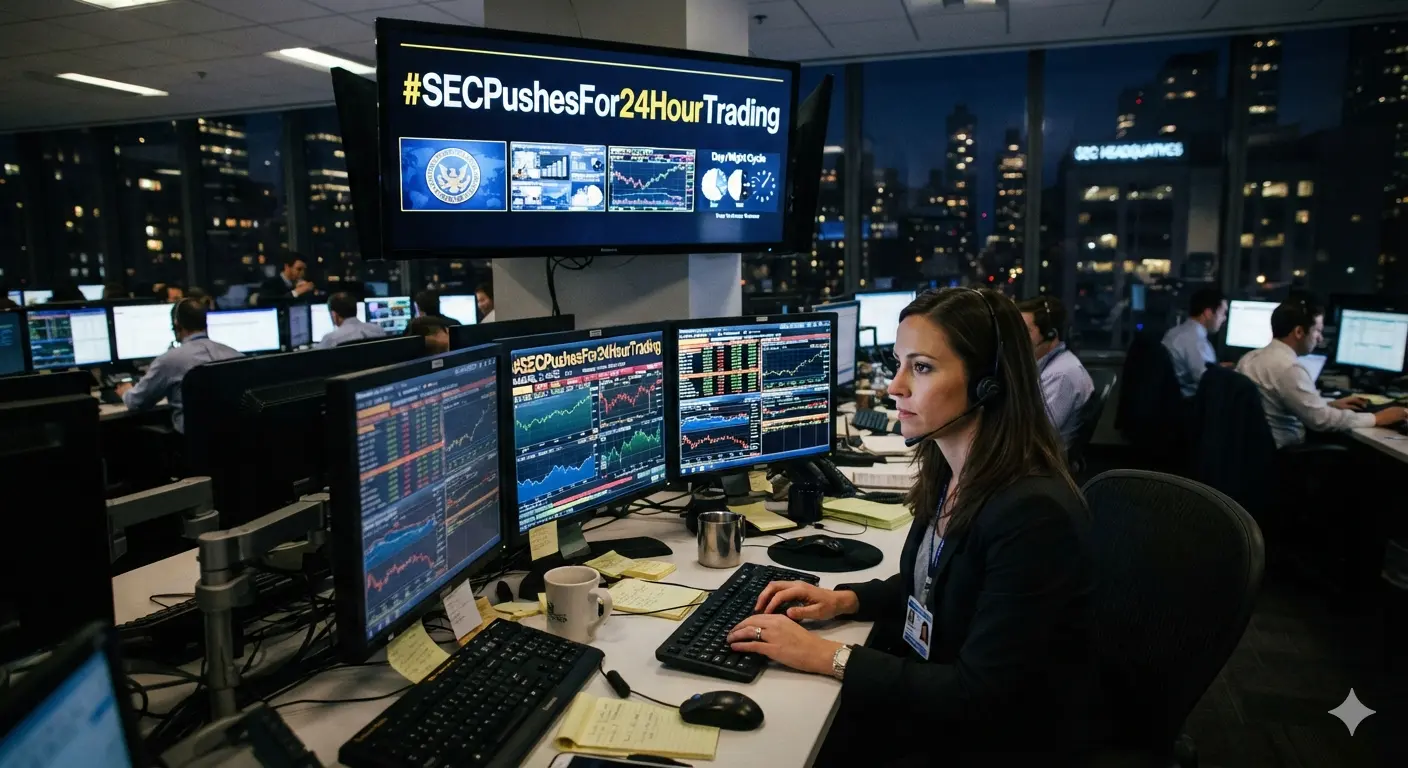
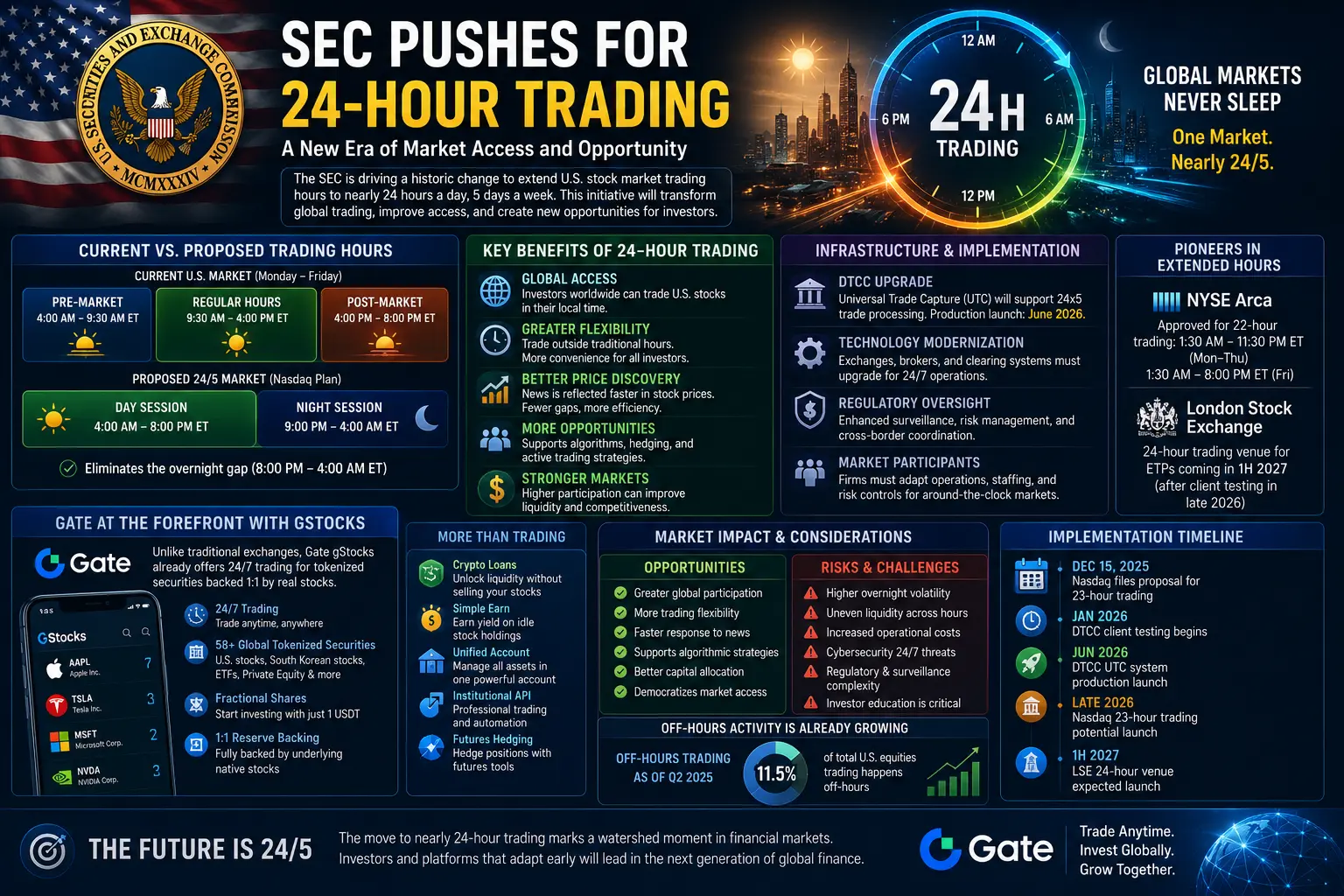
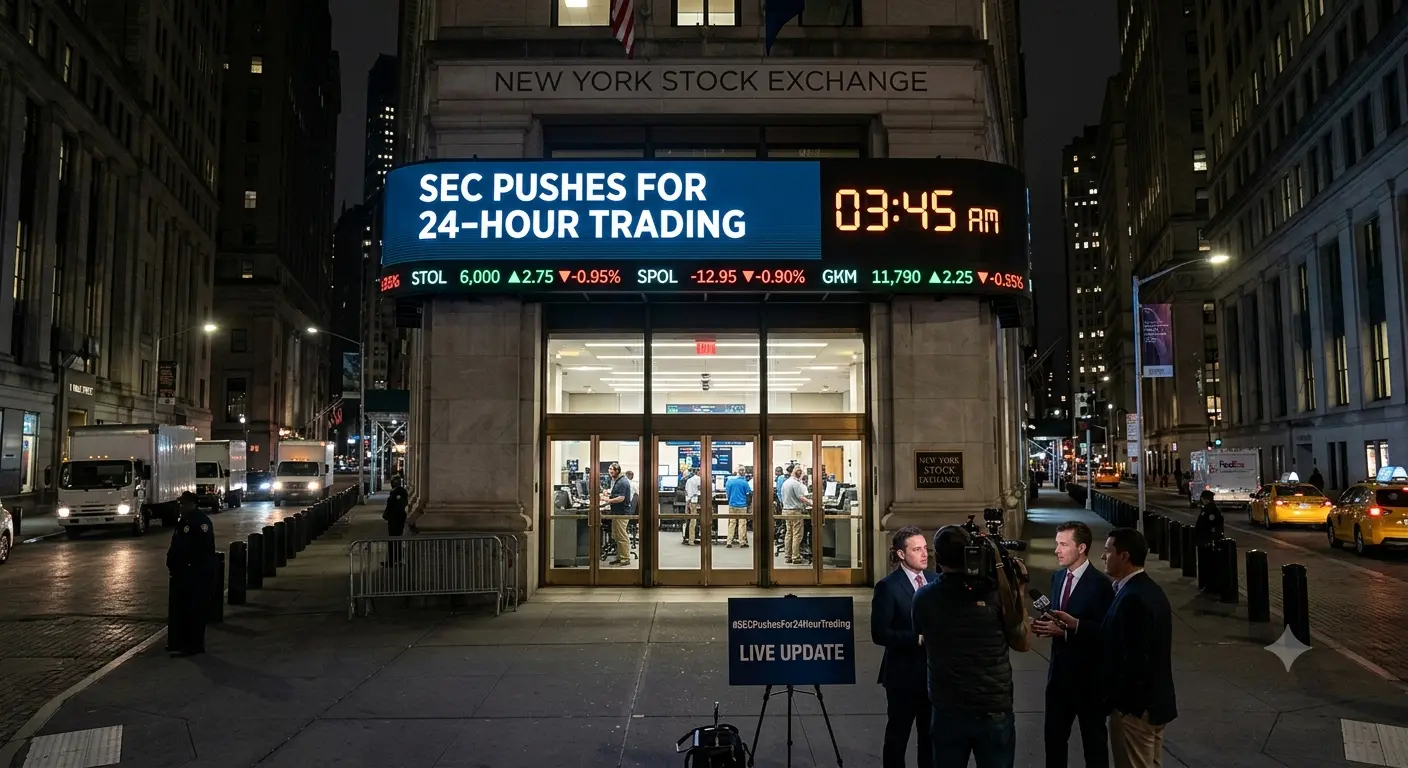
The SEC announced a public roundtable on September 17 to discuss the transition to 24-hour trading in U.S. equity markets, covering overnight trading preparations, market resiliency, and expansion challenges. Chairman Paul Atkins said: "We are moving towards a new day – and night – in the U.S. equity markets," aligning U.S. markets with global continuous trading. The SEC has already approved 24X Exchange for 23-hour trading, with NYSE, Nasdaq, and Cboe all filing proposals to extend trading hours. Crypto's 24/7 model is pushing traditional finance beyond its time boundaries.

🌍 The Future of Finance May Never Sleep: Why 24-Hour Markets Could Change Investing Forever
For decades, investors have built their routines around opening bells and closing bells. Markets opened for a few hours, trading stopped, and everyone waited for the next session to react to breaking news.
That model worked in a world where information moved slowly.
Today's world is different.
Economic data, geopolitical developments, corporate announcements, and market-moving events happen every minute of the day. Capital moves across continents in seconds, yet many traditional stock exchanges still o
BTC0.36%
  • Reward
  • 22
  • Repost
  • Share
Psycho:
To The Moon 🌕
View More
#SECPushesFor24HourTrading
🔥𝗦𝗘𝗖𝗣𝘂𝘀𝗵𝗲𝘀𝗙𝗼𝗿𝟮𝟰𝗛𝗼𝘂𝗿𝗧𝗿𝗮𝗱𝗶𝗻𝗴 𝗧𝗵𝗲 𝗨.𝗦. 𝗠𝗮𝗿𝗸𝗲𝘁 𝗖𝗼𝘂𝗹𝗱 𝗕𝗲 𝗛𝗲𝗮𝗱𝗶𝗻𝗴 𝗧𝗼𝘄𝗮𝗿𝗱 𝗮 𝟮𝟰/𝟳 𝗙𝘂𝘁𝘂𝗿𝗲
The conversation around 24-hour trading in U.S. financial markets is getting harder to ignore, and if this direction becomes reality, it could represent one of the biggest structural changes in how global markets operate. For decades, traditional U.S. stock markets have followed fixed trading hours, creating a clear separation between the opening bell, regular sessions, and the market close. But the rise of electronic tr
post-image
post-image
  • Reward
  • 11
  • Repost
  • Share
SelekStone:
A vibe for 1000x 🤑
View More
#SECPushesFor24HourTrading
The Era of 24-Hour Markets: A New Chapter for Global Investing
For generations, financial markets have followed a familiar rhythm. Trading began with the opening bell, ended with the closing bell, and investors accepted that any major news released after hours would have to wait until the next trading session. That system served the financial world well for decades, but today's global economy moves far faster than traditional market schedules.
Information now travels instantly. Economic reports, earnings announcements, central bank decisions, geopolitical events, an
BTC0.36%
ETH1.81%
post-image
  • Reward
  • 6
  • Repost
  • Share
HelalChowdhury:
To The Moon 🌕
View More
#SECPushesFor24HourTrading

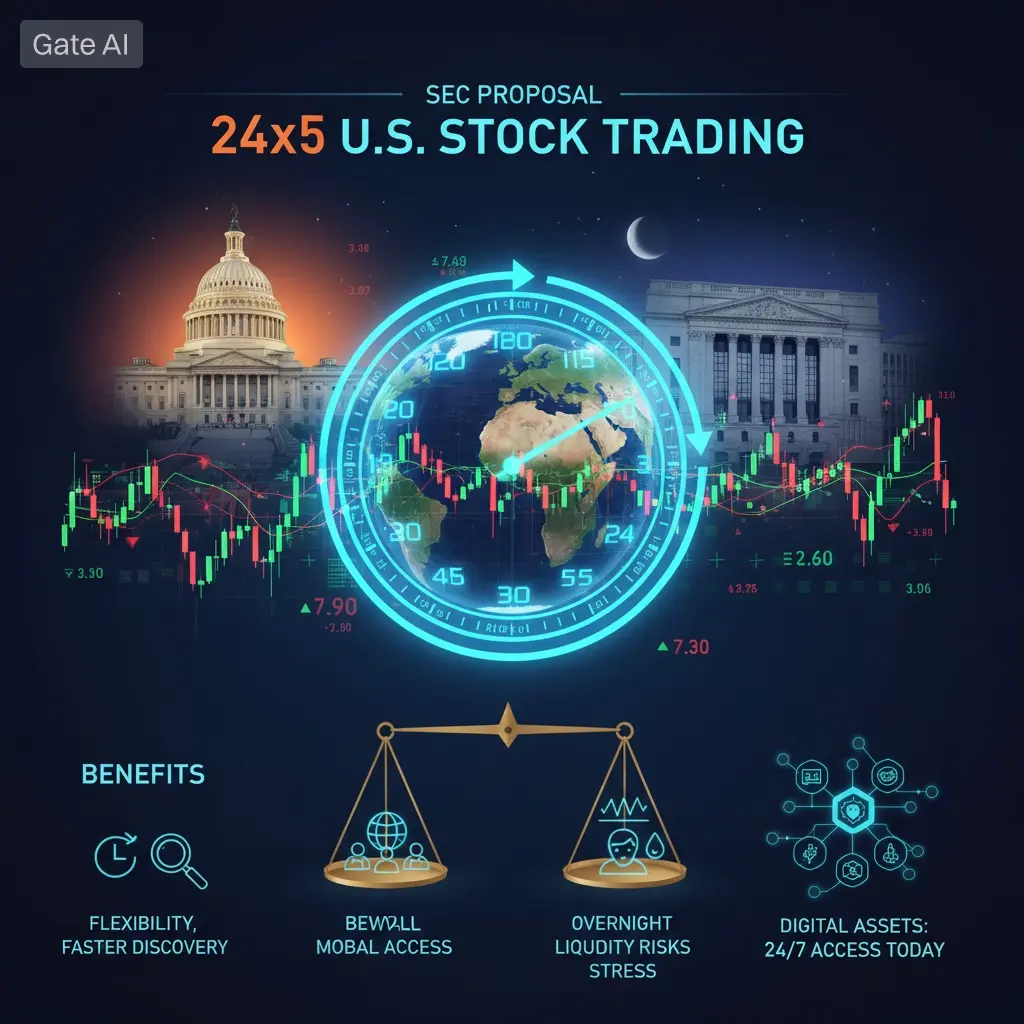
The Securities and Exchange Commission (SEC) is moving toward one of the biggest structural changes in modern financial market history by supporting the expansion of U.S. stock trading to nearly 24 hours a day, five days a week.
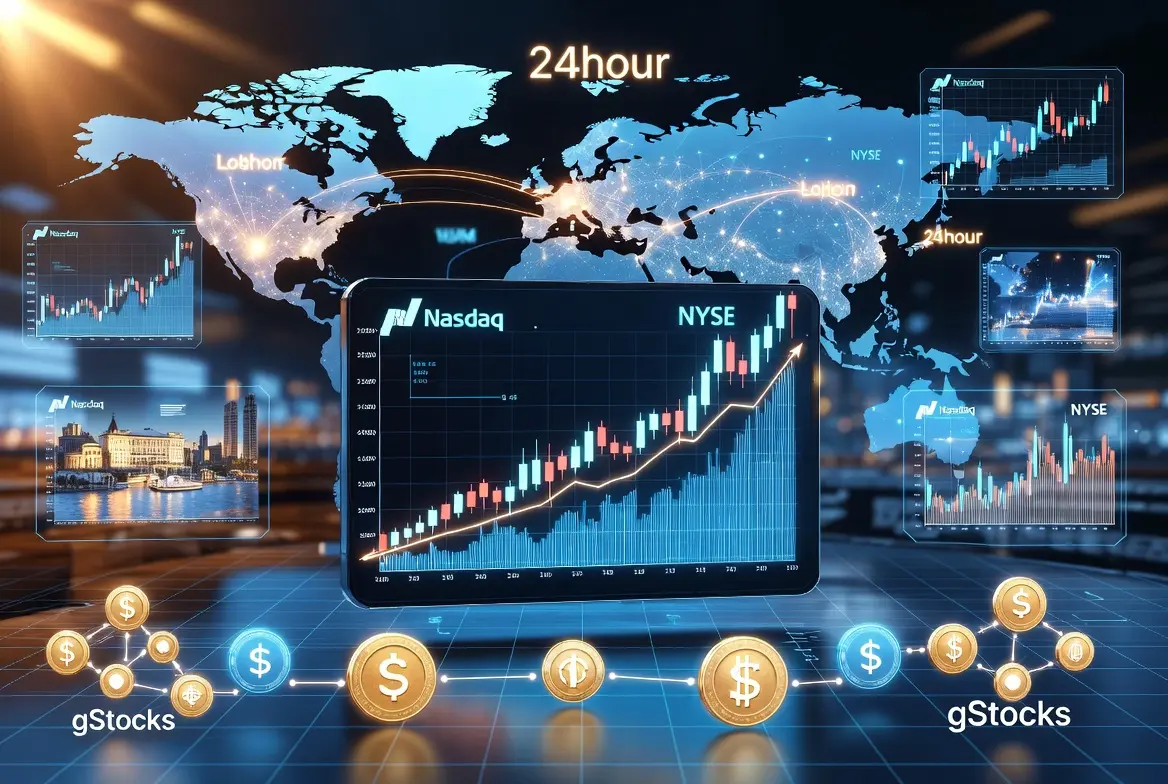
Nasdaq formally filed its proposal on December 15, 2025, seeking approval for 23-hour daily trading sessions, with implementation expected as early as late 2026. The initiative reflects growing global demand for continuous access to U.S. equity markets as international investors increasingly require flexibility beyond traditional Wall Str
post-image
post-image
post-image
  • Reward
  • 26
  • Repost
  • Share
Psycho:
LFG 🔥
View More
#SECPushesFor24HourTrading
The financial world may be on the verge of one of its biggest transformations in decades. Reports that the U.S. Securities and Exchange Commission is exploring the possibility of 24-hour stock trading have sparked widespread discussion across Wall Street, the crypto industry, and global financial markets.
For years, cryptocurrency has operated 24/7, allowing investors to trade at any time, regardless of weekends or holidays. Traditional stock markets, however, have remained tied to fixed trading sessions. If the SEC moves toward a 24-hour trading framework, that lon
post-image
  • Reward
  • 16
  • Repost
  • Share
CryptoEye:
To The Moon 🌕
View More
#SECPushesFor24HourTrading
The SEC Is Seriously Talking About 24-Hour Stock Trading
Something that used to sound like a distant idea is now on an actual calendar. The SEC has scheduled a public roundtable for September 17 to discuss moving U.S. equity markets closer to continuous trading. The agenda covers overnight sessions, market resiliency, and the practical problems of expanding hours.
Chairman Paul Atkins put it bluntly: “We are moving towards a new day – and night – in the U.S. equity markets.” That is not the language of a regulator who is merely exploring a concept.
What Has Already
NDAQ2.18%
CBOE0.69%
post-image
post-image
  • Reward
  • 15
  • Repost
  • Share
GateUser-349e04e6:
Totally agree with your analysis! Thanks for the valuable info. 💯
View More
#SECPushesFor24HourTrading
24-Hour Stock Trading: The Future of Wall Street or a New Set of Challenges?
The push toward 24-hour stock trading could become one of the most significant transformations in modern financial markets. As investors demand greater flexibility in an always-connected world, regulators are exploring whether equities should move closer to the 24/7 model that cryptocurrency markets have followed for years.
Continuous trading would allow investors to react instantly to major events such as earnings reports, geopolitical developments, and economic data, regardless of time zo
post-image
  • Reward
  • 9
  • Repost
  • Share
Adamsaiba:
August 2026 let's go, to the moon to the moon
View More
#SECPushesFor24HourTrading
The conversation around #SECPushesFor24HourTrading is generating significant interest across global financial markets. As technology continues to reshape investing, the idea of 24-hour trading reflects a future where markets become more accessible, efficient, and responsive to real-time global events
Psycho
#SECPushesFor24HourTrading
The conversation around #SECPushesFor24HourTrading is generating significant interest across global financial markets. As technology continues to reshape investing, the idea of 24-hour trading reflects a future where markets become more accessible, efficient, and responsive to real-time global events.
Today's financial world never truly sleeps. Economic data, geopolitical developments, corporate earnings, and crypto market movements happen around the clock. Extending trading hours could allow investors to react more quickly to breaking news instead of waiting for the next market session to open.
For crypto traders, 24/7 market access has always been the standard. Bitcoin, Ethereum, and other digital assets trade continuously, providing flexibility and opportunities at any time of day. If traditional financial markets move closer to this model, it could further narrow the gap between TradFi and the digital asset ecosystem.
While longer trading hours may improve market accessibility and price discovery, they also introduce new challenges. Increased volatility, liquidity management, operational risks, and investor protection will remain key topics for regulators, exchanges, and market participants to address.
As financial markets continue to evolve, innovation must be balanced with transparency, fairness, and effective regulation. Whether you're trading stocks or cryptocurrencies, staying informed and practicing disciplined risk management will always be more important than chasing short-term market movements.
The future of investing is becoming increasingly connected, digital, and global. Every new development brings fresh opportunities to learn, adapt, and grow alongside the rapidly changing financial landscape.
💬 What are your thoughts? Would you welcome 24-hour trading in traditional financial markets, or do you believe current trading hours are sufficient? Share your perspective in the comments!
#SECPushesFor24HourTrading #GateSquare @Gate_Square

repost-content-media
  • Reward
  • 19
  • Repost
  • Share
Psycho:
Diamond Hands 💎
View More
#SECPushesFor24HourTrading
SEC PUSHES FOR 24-HOUR TRADING: THE NEXT EVOLUTION OF GLOBAL FINANCIAL MARKETS
Financial markets are continuously evolving to meet the demands of a digital, interconnected world. The discussion around the SEC pushing for 24-hour trading represents one of the most significant potential changes to modern capital markets. If implemented on a broad scale, extended trading could reshape how investors access markets, manage risk, and respond to global economic events. In an era where cryptocurrencies already trade 24 hours a day, seven days a week, traditional financial m
Luna_Star
#SECPushesFor24HourTrading
SEC PUSHES FOR 24-HOUR TRADING: THE NEXT EVOLUTION OF GLOBAL FINANCIAL MARKETS
Financial markets are continuously evolving to meet the demands of a digital, interconnected world. The discussion around the SEC pushing for 24-hour trading represents one of the most significant potential changes to modern capital markets. If implemented on a broad scale, extended trading could reshape how investors access markets, manage risk, and respond to global economic events. In an era where cryptocurrencies already trade 24 hours a day, seven days a week, traditional financial markets are increasingly exploring ways to offer greater flexibility and accessibility.
Today's investors receive market-moving information at every hour of the day. Corporate announcements, geopolitical developments, economic reports, and technological breakthroughs rarely occur only during traditional market hours. A 24-hour trading model aims to reduce the delay between important news and market participation, allowing investors to react more efficiently regardless of their location or time zone.
WHY 24-HOUR TRADING MATTERS
Traditional stock markets operate during fixed business hours, while digital asset markets remain open around the clock. Extending trading hours could narrow this gap and create a more connected financial system.
Potential advantages include:
Greater flexibility for investors.
Faster reaction to breaking news.
Improved global market access.
Reduced overnight pricing gaps.
Better liquidity across different time zones.
More convenient trading opportunities for international participants.
As financial markets become increasingly digital, continuous access is viewed by many as a natural progression.
BENEFITS FOR GLOBAL INVESTORS
A longer trading window could create new opportunities for investors worldwide.
Possible benefits include:
Participation across multiple time zones.
Immediate response to earnings announcements.
Faster adjustment to economic data.
Improved access for retail investors.
Enhanced portfolio management.
Greater alignment with global financial markets.
Investors in Asia, Europe, the Middle East, and other regions may find extended trading particularly useful when accessing U.S. financial markets.
THE CONNECTION WITH CRYPTO MARKETS
Cryptocurrency markets have demonstrated that continuous trading is technically possible.
Digital assets already operate:
24 hours a day.
7 days a week.
365 days a year.
This model allows prices to adjust continuously as new information enters the market. Traditional financial institutions are increasingly studying how similar flexibility could improve market efficiency while maintaining investor protection.
CHALLENGES OF ROUND-THE-CLOCK TRADING
Despite its advantages, continuous trading introduces important operational and regulatory considerations.
Key challenges include:
Maintaining market liquidity.
Monitoring cybersecurity.
Managing operational costs.
Ensuring fair price discovery.
Strengthening regulatory oversight.
Protecting retail investors.
Supporting reliable technology infrastructure.
Addressing these issues will be essential before any large-scale implementation.
WHAT THIS COULD MEAN FOR MARKET PARTICIPANTS
If 24-hour trading becomes more widely available, different groups may experience different benefits.
Retail investors may gain greater scheduling flexibility.
Institutional investors may improve global portfolio management.
International traders may access markets more conveniently.
Market makers may adapt liquidity strategies.
Technology providers may expand automated trading infrastructure.
The evolution of financial markets will likely encourage innovation across the entire investment ecosystem.
TECHNOLOGY DRIVING THE CHANGE
Advances in financial technology continue making longer trading hours increasingly practical.
Important innovations include:
Cloud computing.
Artificial intelligence.
Algorithmic trading.
Real-time settlement systems.
Blockchain infrastructure.
Advanced cybersecurity.
Automated compliance monitoring.
These technologies help support modern financial markets that operate with greater speed, efficiency, and resilience.
THE LONG-TERM OUTLOOK
Global financial markets are moving toward greater digitalization, automation, and accessibility. While traditional exchanges have operated with fixed schedules for decades, investor expectations are changing as technology removes many historical limitations. Continuous trading could eventually become a defining feature of future financial markets, provided regulators, exchanges, and market participants can maintain transparency, liquidity, and investor protection.
As the boundaries between traditional finance and digital assets continue to narrow, innovations such as 24-hour trading may create a more responsive and globally connected financial system.
FINAL THOUGHTS
The discussion surrounding the SEC's push for 24-hour trading reflects the broader transformation taking place across global financial markets. Continuous access could improve flexibility, enhance international participation, and allow markets to respond more efficiently to worldwide events. At the same time, successful implementation will require strong regulatory oversight, reliable technology, robust cybersecurity, and effective risk management. As financial innovation continues accelerating, extended trading hours could become another major step toward building a more modern, efficient, and globally accessible investment landscape.
repost-content-media
  • Reward
  • 13
  • Repost
  • Share
ThisIsTranslateContent::
DYOR 🤓
View More
#SEC
24-HOUR TRADING IS MOVING CLOSER TO REALITY
The discussion around continuous trading in U.S. financial markets has accelerated in 2026. The U.S. Securities and Exchange Commission (SEC) has announced a public roundtable scheduled for September 17, 2026, focused on the future of extended and overnight trading for U.S. equity markets.
The objective is to evaluate how markets can expand trading hours while maintaining fair access, operational resilience, and strong investor protections. The discussion reflects a broader trend as traditional financial markets adapt to an increasingly global
NDAQ2.18%
post-image
post-image
  • Reward
  • 13
  • Repost
  • Share
ThisIsTranslateContent::
DYOR 🤓
View More
Load More

Join 40 M users in our growing community

⚡️ Join 40 M users in the crypto craze discussion
💬 Engage with your favorite top creators
👍 See what interests you
  • Pinned