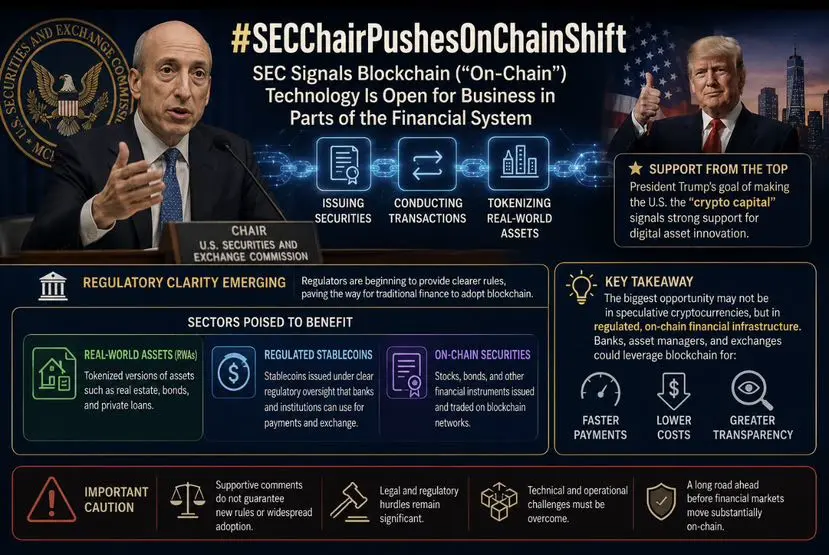
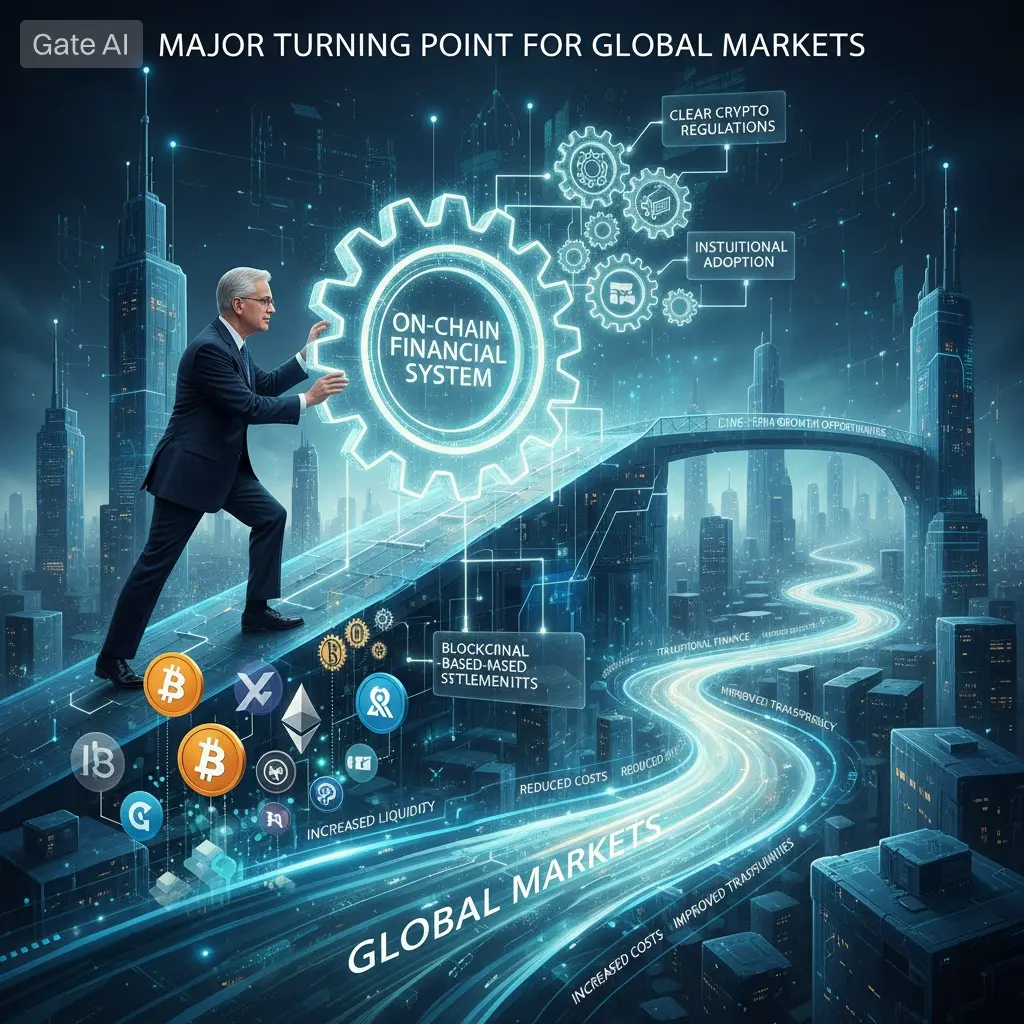
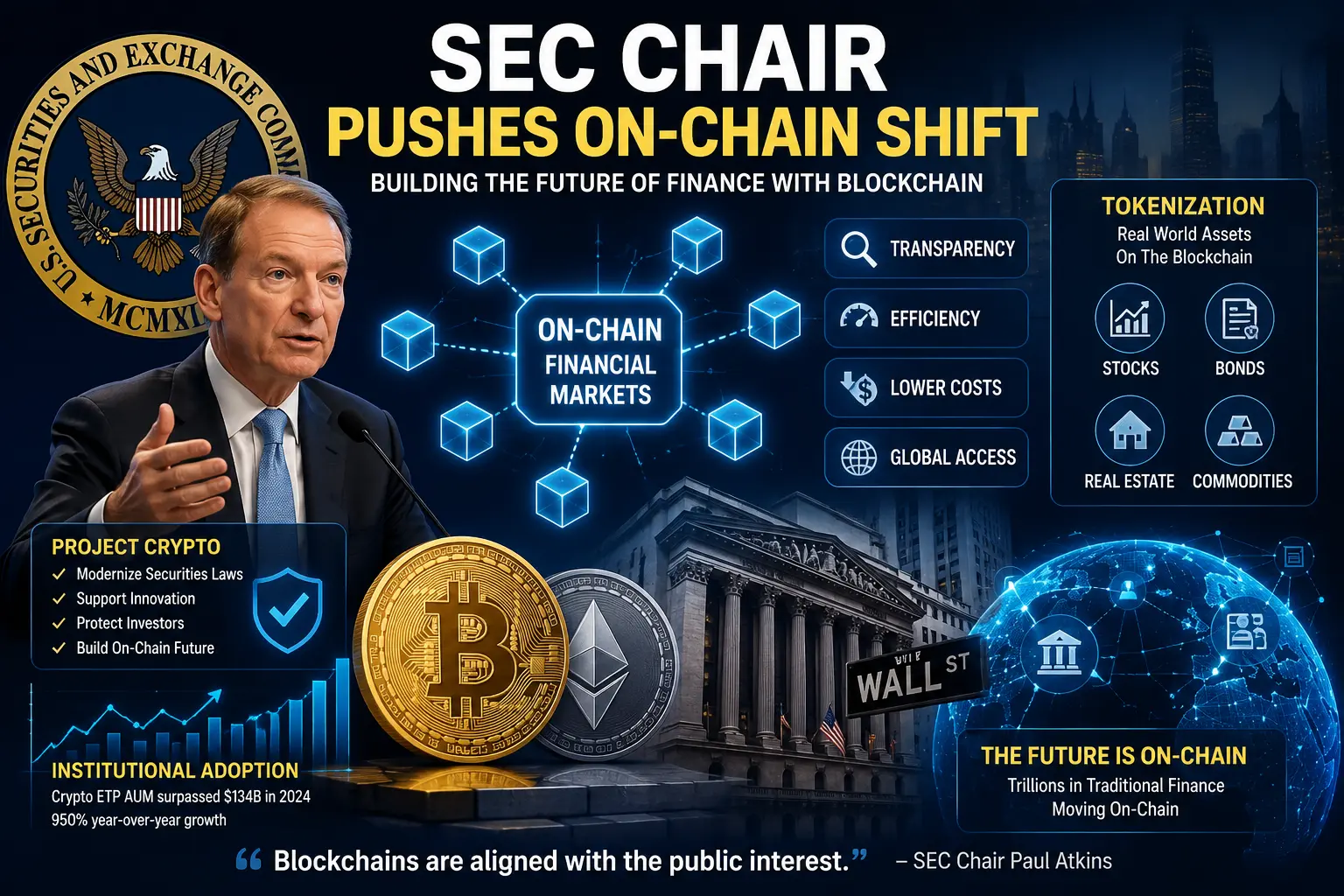
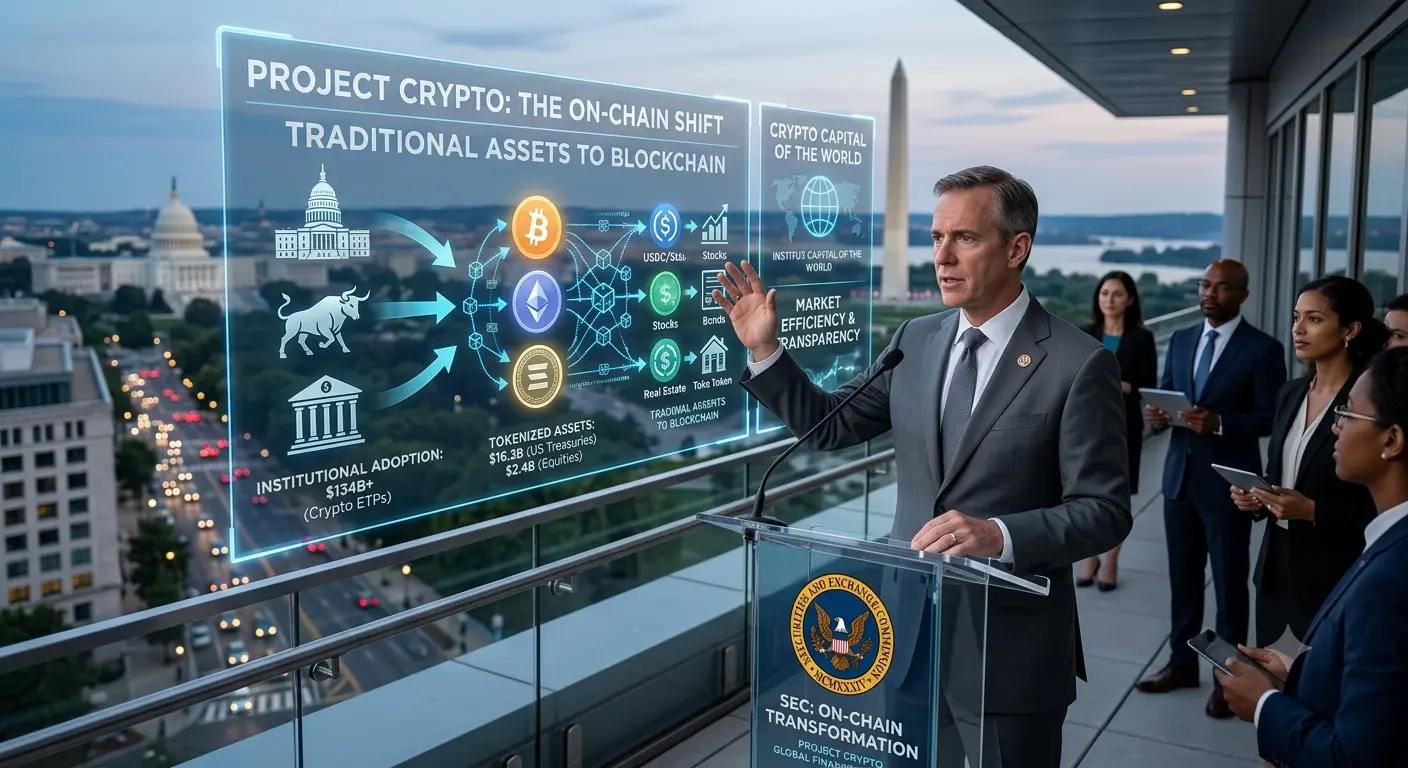
#SEC主席称将促进市场向链上转移 SEC Chairman Paul Atkins' proposed "Project Crypto" and the vision of "markets moving on-chain" are centered on promoting the tokenization, on-chain trading, and compliance of traditional financial assets (RWA). Under this macro trend, the following sectors will become core beneficiaries:
1. Traditional Financial Asset Tokenization (RWA) Sector
This is the most direct and largest beneficiary sector of on-chain migration, mainly focusing on the on-chain reconstruction of traditional financial assets:
Tokenized Treasuries and Money Market Funds: As high-quality underlying assets for on-chain settlement, tokenized treasuries (e.g., BlackRock's BUIDL) and on-chain money market funds, benefiting from high liquidity, low barriers, and 24/7 trading, are experiencing explosive growth in scale, serving as the "cash base" for on-chain finance.
Tokenized Stocks and ETFs: With the advancement of the SEC's "innovation exemption" rules, the compliance channels for third-party permissionless tokenized stocks (tracking U.S. stocks, etc.) and on-chain ETFs are being opened, greatly benefiting related tokenization platforms (e.g., Ondo Finance) and compliant asset issuers.
Tokenized Repo Market: The on-chain migration of the repo market (with massive daily exposure) will significantly revitalize collateral liquidity and reduce settlement risks, providing incremental space for related on-chain collateral and clearing protocols.
Other Traditional Assets: Tokenization of corporate bonds, ABS, private credit, and other assets, as well as public tokenization, will also see increased demand due to the simplification of multi-layer custody processes.
2. On-Chain Financial Infrastructure and Compliance Services Sector
Asset tokenization relies on underlying technical support and compliance guarantees, highlighting the value of related infrastructure sectors:
On-Chain Clearing and Settlement (DVP) Infrastructure: On-chain clearing systems supporting delivery-versus-payment (T+0), compliant wallets (e.g., DTCC token pilot), and on-chain asset registration systems, which can significantly reduce settlement risks for traditional finance, will become essential for institutional on-boarding.
Compliance Bridges and Custody Services: Custodians, compliance platforms (e.g., compliant wallets, KYC/AML service providers), and compliance bridging projects that help traditional financial assets transition securely and compliantly on-chain will see significant business opportunities by resolving the compliance friction between traditional finance and the on-chain world.
On-Chain Financial "Super Apps": "Super app" platforms integrating trading, clearing, custody, staking, lending, and other functions, offering one-stop on-chain financial services, will become the entry point for the next generation of financial traffic.
3. Core Layer 1/Layer 2 Blockchains and Payment Infrastructure (Stablecoins) Sector
Core L1/L2 Blockchains: Large-scale tokenization of traditional financial assets will generate massive demand for highly scalable and secure underlying blockchains (e.g., Ethereum, Solana, and compliant L2s), directly benefiting these blockchains and their ecosystem infrastructure.
Compliant Stablecoins: As the payment infrastructure ("water, electricity, and gas") for on-chain asset trading, compliant stablecoins (e.g., USDC, USDT, and stablecoins issued by compliant institutions), providing the cash vehicle for on-chain settlement, will see their underlying support value amplified by the surge in on-chain transaction volumes.
4. Decentralized Finance (DeFi) and On-Chain Derivatives Sector
On-Chain Lending and Derivatives: Tokenized assets (e.g., tokenized treasuries) used as underlying collateral, integrated into on-chain lending protocols (e.g., Aave, Sky) or for on-chain derivatives trading, will greatly unlock the financial derivative value of these assets, providing abundant on-chain assets as liquidity for related DeFi protocols.
The on-chain migration is not about shifting to permissionless full decentralization, but rather an on-chain transformation under "institutional permission" and "compliance." Therefore, institutions and projects with compliance qualifications that can address pain points of traditional finance (e.g., settlement efficiency, collateral circulation) will hold an absolute advantage.
1. Traditional Financial Asset Tokenization (RWA) Sector
This is the most direct and largest beneficiary sector of on-chain migration, mainly focusing on the on-chain reconstruction of traditional financial assets:
Tokenized Treasuries and Money Market Funds: As high-quality underlying assets for on-chain settlement, tokenized treasuries (e.g., BlackRock's BUIDL) and on-chain money market funds, benefiting from high liquidity, low barriers, and 24/7 trading, are experiencing explosive growth in scale, serving as the "cash base" for on-chain finance.
Tokenized Stocks and ETFs: With the advancement of the SEC's "innovation exemption" rules, the compliance channels for third-party permissionless tokenized stocks (tracking U.S. stocks, etc.) and on-chain ETFs are being opened, greatly benefiting related tokenization platforms (e.g., Ondo Finance) and compliant asset issuers.
Tokenized Repo Market: The on-chain migration of the repo market (with massive daily exposure) will significantly revitalize collateral liquidity and reduce settlement risks, providing incremental space for related on-chain collateral and clearing protocols.
Other Traditional Assets: Tokenization of corporate bonds, ABS, private credit, and other assets, as well as public tokenization, will also see increased demand due to the simplification of multi-layer custody processes.
2. On-Chain Financial Infrastructure and Compliance Services Sector
Asset tokenization relies on underlying technical support and compliance guarantees, highlighting the value of related infrastructure sectors:
On-Chain Clearing and Settlement (DVP) Infrastructure: On-chain clearing systems supporting delivery-versus-payment (T+0), compliant wallets (e.g., DTCC token pilot), and on-chain asset registration systems, which can significantly reduce settlement risks for traditional finance, will become essential for institutional on-boarding.
Compliance Bridges and Custody Services: Custodians, compliance platforms (e.g., compliant wallets, KYC/AML service providers), and compliance bridging projects that help traditional financial assets transition securely and compliantly on-chain will see significant business opportunities by resolving the compliance friction between traditional finance and the on-chain world.
On-Chain Financial "Super Apps": "Super app" platforms integrating trading, clearing, custody, staking, lending, and other functions, offering one-stop on-chain financial services, will become the entry point for the next generation of financial traffic.
3. Core Layer 1/Layer 2 Blockchains and Payment Infrastructure (Stablecoins) Sector
Core L1/L2 Blockchains: Large-scale tokenization of traditional financial assets will generate massive demand for highly scalable and secure underlying blockchains (e.g., Ethereum, Solana, and compliant L2s), directly benefiting these blockchains and their ecosystem infrastructure.
Compliant Stablecoins: As the payment infrastructure ("water, electricity, and gas") for on-chain asset trading, compliant stablecoins (e.g., USDC, USDT, and stablecoins issued by compliant institutions), providing the cash vehicle for on-chain settlement, will see their underlying support value amplified by the surge in on-chain transaction volumes.
4. Decentralized Finance (DeFi) and On-Chain Derivatives Sector
On-Chain Lending and Derivatives: Tokenized assets (e.g., tokenized treasuries) used as underlying collateral, integrated into on-chain lending protocols (e.g., Aave, Sky) or for on-chain derivatives trading, will greatly unlock the financial derivative value of these assets, providing abundant on-chain assets as liquidity for related DeFi protocols.
The on-chain migration is not about shifting to permissionless full decentralization, but rather an on-chain transformation under "institutional permission" and "compliance." Therefore, institutions and projects with compliance qualifications that can address pain points of traditional finance (e.g., settlement efficiency, collateral circulation) will hold an absolute advantage.