EntropyCapitalManagement

vip
Futures Trading Strategist
Crypto Market Researcher
Market Analyst
Experienced veteran in the crypto circle, mainly following trend-based orders, everything speaks with data.
Traders who can truly make long-term big money often possess four skills: mathematics, finance, psychology, and philosophy. Mathematics tells them where the probabilities are; finance tells them what the rules are; psychology teaches them how to control themselves; philosophy shows them how to face uncertainty. Therefore, what trading truly teaches people may not be how to make money, but how to face a world full of uncertainty: admit that you will be wrong, accept that the world is uncontrollable, bet within probabilities, and stay calm amidst the outcomes.
View Original
post-image
post-image
  • Reward
  • Comment
  • 1
  • Share
I’d rather go a little slower than jump in one step early
Many losses aren’t because you don’t understand—they’re because you’re too impatient.
You haven’t really seen anything; you just feel like it’s “almost there,” and you start trading.
As soon as the market jitters even slightly, your mindset falls apart.
No structure means no basis for opening a position.
Without a basis, later you can only rely on emotions to handle it.
Trading isn’t about who gets in first.
Getting in early but wrong means you’re constantly cutting losses;
Getting in later but seeing clearly makes it easier to hold on.
View Original
post-image
post-image
  • Reward
  • Comment
  • Repost
  • Share
Wanting both is a big taboo in trading
The most unrealistic idea in trading is wanting both and having both.
Want to ride the trend but not want a pullback.
Want to preserve profits but also want to take the full move.
Want low risk but also want high returns.
The market won't cooperate with you this way.
For short-term trading, accept quick in and out.
For trend trading, accept mid-term pullbacks.
For oscillation trading, accept repeated sideways movements.
Every method of making money has the cost that must be paid.
If you don't accept the cost, you won't earn that kind of money.
View Original
  • Reward
  • Comment
  • Repost
  • Share
Traders who survive long-term all know what they are doing.
Trading isn't about always getting it right.
The ones who can truly survive over the long run rely on knowing what they are doing every time.
Why did I enter?
What if I was wrong, how do I exit?
If I made a profit, how do I take it?
Under what circumstances does the market change?
What kind of money does this trade really aim to make?
The clearer these questions are, the simpler trading becomes.
The market's biggest punishment is for those who get overly excited before entering and then change their plan on the spot
View Original
post-image
post-image
  • Reward
  • 2
  • Repost
  • Share
BtcsosSignalSharing:
First, compare with the historical trend.
View More
When trading, have you ever experienced this—struggling to hold onto your positions when making money, only taking small profits, but when losing money, you can't stop the losses, watching the negative amounts pour out helplessly?
Such situations of earning little and losing much are especially common among novice traders. Today, let's talk about how to overcome this psychological issue.
First, the reason traders develop this mindset is because beginners tend to be shortsighted—they always focus on the immediate trading results, unwilling to accept failure when losing, and eager to prove t
View Original
[The user has shared his/her trading data. Go to the App to view more.]
  • Reward
  • Comment
  • Repost
  • Share
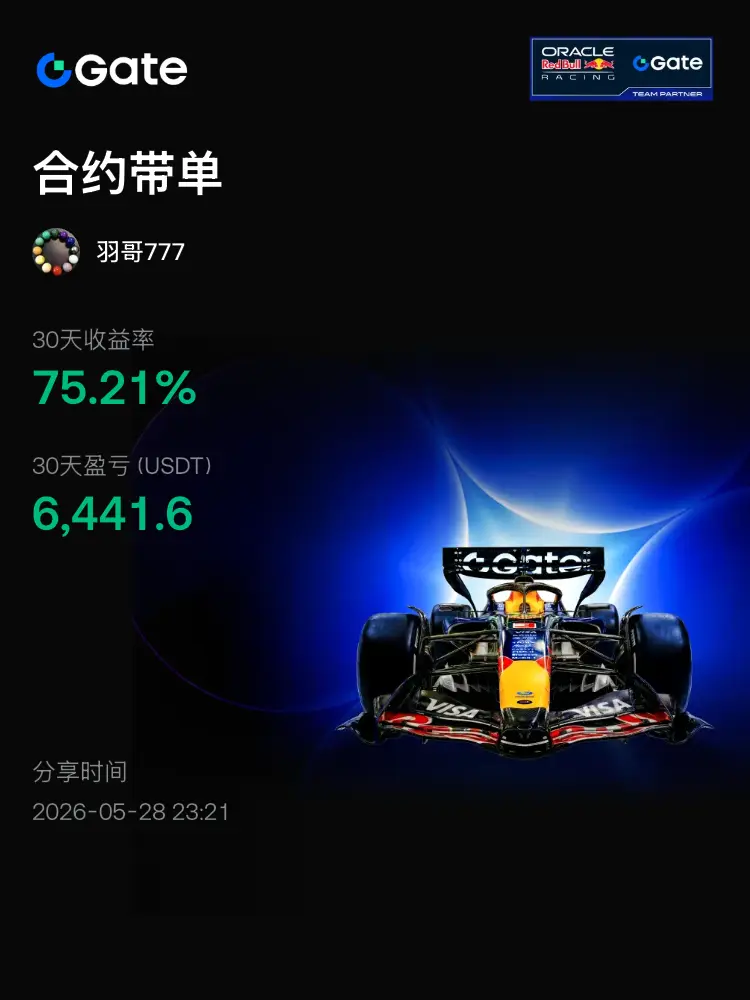
Recently been busy with things, making the little ones wait long. Everything is based on real data, no fluff.
View Original
post-image
post-image
[The user has shared his/her trading data. Go to the App to view more.]
  • Reward
  • Comment
  • Repost
  • Share