Last_Satoshi

vip
Peak Tier 0
Diamond Hands
Crypto Market Researcher
I'm back
#MyGateTradeStory
#TRB
TRB/USDT: The Coiled Spring - The Calm Before a Breakout?
Tellor $TRB has been holding its breath in the $13.53 - $14.20 range for the last 3 days. Looking at the big picture, there is a slight pullback of about 1.22%, but that is not the whole story.
The price is currently around $13.79, in the lower-middle part of the range, at a 38.8% price position. Exactly that frustrating gray zone where neither bulls nor bears have won.
What we see on the chart is a recovery after a battlefield. Around June 4th it took a hard wick down from $17.03 to $12.18, then accumulated at
TRB0.21%
discovery
#MyGateTradeStory
#TRB
TRB/USDT: The Coiled Spring - The Calm Before a Breakout?
Tellor $TRB has been holding its breath in the $13.53 - $14.20 range for the last 3 days. Looking at the big picture, there is a slight pullback of about 1.22%, but that is not the whole story.
The price is currently around $13.79, in the lower-middle part of the range, at a 38.8% price position. Exactly that frustrating gray zone where neither bulls nor bears have won.
What we see on the chart is a recovery after a battlefield. Around June 4th it took a hard wick down from $17.03 to $12.18, then accumulated at the bottom for a long time. On June 17th it tried an attack above $15, got rejected, and is now squeezing again.
What does the technical pulse say?
1. RSI 36.5: Weak but dangerous territory
Not oversold, but tired. This level is usually where either a final shakeout starts, or a reversal wick begins.
2. Volume +35.30%: Someone is quietly accumulating
Volume is exploding while the price moves sideways. Daily candles are turning green. This could be a sign of smart money inflow, not panic selling. On the Gate screenshot, 24h volume is 2.25K TRB / 31.15K USDT, turnover is rising while volatility contracts.
3. Moving averages are knotted
On the 4h chart MA5: 13.83, MA10: 13.79, MA30: 13.82. All three are at almost the same point. So the spring is coiled to the max. MACD is at 0.00, DIF/DEA at -0.03, a true decision moment.
This is not indecision, this is energy building up. TRB is that kind of coin. It sleeps and sleeps, then jumps 40% in one day.
2 levels to watch • Upside breakout trigger: $14.20
The top of the 3-day range. If we get a high-volume 4h close above, the previous rejection zone at $14.77 - $15.10 will be tested quickly. • Downside stop zone: $13.53
The bottom of the range. If it breaks, the last low on the chart at $12.18 comes back on the radar. RSI is already weak, so this is critical.
In short: TRB is not undecided right now, it is getting ready to decide. RSI is weak, but volume is rising. Price is lurking at the bottom of the range. This squeeze will not last long.
This is not financial advice. TRB is a high-volatility oracle token, stay away from leverage, and do your own research.
#MyGateTradingMoment #我的Gate交易时刻
@Gate_Square

repost-content-media
  • Reward
  • Comment
  • Repost
  • Share
#MyGateTradeStory
#GT$GT..
GT/USDT: GateToken is quietly outperforming, but the short-term is blinking yellow
GateToken $GT is not screaming, it is grinding. Over the last 24h it held a tight $6.65 - $6.86 range, up about 0.89%, currently trading around $6.74 / +1.05% on spot.
That is a small move, but the structure underneath is what makes this interesting.
The divergence setup
GT is in a classic multi-timeframe tug of war:
• Daily + 15-min trend: Still up. The broader uptrend from the $5.97 low on June 6th is intact. GT has reclaimed its 4h MAs and is outperforming BTC by 0.66% on the day.
GT-1.04%
BTC-1.39%
discovery
#MyGateTradeStory
#GT$GT..
GT/USDT: GateToken is quietly outperforming, but the short-term is blinking yellow
GateToken $GT is not screaming, it is grinding. Over the last 24h it held a tight $6.65 - $6.86 range, up about 0.89%, currently trading around $6.74 / +1.05% on spot.
That is a small move, but the structure underneath is what makes this interesting.
The divergence setup
GT is in a classic multi-timeframe tug of war:
• Daily + 15-min trend: Still up. The broader uptrend from the $5.97 low on June 6th is intact. GT has reclaimed its 4h MAs and is outperforming BTC by 0.66% on the day. • 4h cycle: Bullish alignment holding. On your chart MA5: 6.76, MA10: 6.72, MA30: 6.67, price at 6.74, all stacked cleanly. That is why the 4h is still bullish. • 15-min: The warning light. The close slipped below the 15-min MA20 at $6.7540. That is short-term weakness, a cool-off, not a trend break.
In other words: the big picture buyers are still in control, the scalpers just took a breather.
Why GT looks strong here 1. Volume and OI are expanding, not fading. 24h spot volume is 56.82K GT / $383.35K turnover, and contract open interest is up 11.36%. Price up + OI up = new money coming in, not just shorts covering. 2. Higher lows are holding. After the May 29 spike to $7.55 and the flush to $5.97, GT has put in a clean series of higher lows. The last dip on June 20 held well above $6.40, and buyers stepped back in immediately. 3. Exchange token beta. GT is ranked No.2 Exchange Token on Gate. At $6.74 it is still sitting well below that $7.17 average price tag marked on your chart, with the $7.55 swing high still open above. Levels to watch for GT • Reclaim trigger: $6.754 - $6.76
That is the 15-min MA20 / 4h MA5 confluence. A reclaim and hold here kills the short-term weakness and opens a retest of the range high at $6.86. • Range defense: $6.65
The 24h low. Lose that and the next intraday support is the 4h MA30 at $6.67 / $6.60 area. • Breakout zone: $6.86 - $7.17
A clean break of $6.86 puts the $7.17 avg price back in play, then the $7.55 top.
GT is outperforming BTC, OI is building, and the 4h trend is still bullish. The only blemish is that 15-min MA slip. If bulls take back $6.75 quickly, this tight $6.65-$6.86 coil pops to the upside. Lose $6.65 and expect a deeper cool-off.
This is not financial advice. GT is an exchange token with event-driven volatility, manage risk and do your own research.
#MyGateTradingMoment @Gate_Square
repost-content-media
  • Reward
  • Comment
  • Repost
  • Share
#MyGateTradeStory
#vdr $VDR ‌📊 VDR/USDT – Vodra Technical and Project Note
June 23, 2026
1. What is the project? Vodra / VDR is a decentralized donation and crowdfunding platform for content creators.
• Goal: To let creators pursue their passions while being fairly compensated, shifting online entertainment revenue to a direct creator-to-audience model • VDR is the native utility token used for zero-fee donations to creators, voting, fundraising / crowdfunding, and content rewards • It is an Ethereum ERC20 token, also listed in the Solana ecosystem • Creators and audiences can set up monthl
VDR5.38%
ETH-1.40%
SOL-4.08%
BTC-1.39%
discovery
#MyGateTradeStory
#vdr $VDR ‌📊 VDR/USDT – Vodra Technical and Project Note
June 23, 2026
1. What is the project? Vodra / VDR is a decentralized donation and crowdfunding platform for content creators.
• Goal: To let creators pursue their passions while being fairly compensated, shifting online entertainment revenue to a direct creator-to-audience model • VDR is the native utility token used for zero-fee donations to creators, voting, fundraising / crowdfunding, and content rewards • It is an Ethereum ERC20 token, also listed in the Solana ecosystem • Creators and audiences can set up monthly donations / pledges, with benefits such as exclusive content, NFTs, and other rewards • The platform is also described as a decentralized live advertising / governance and creator rewards infrastructure
In short, a crypto version of Patreon / Twitch donations, with a zero-fee claim.
2. What does the VDR price usually react to? For a creator token of this size, moves usually come from:
• Exchange liquidity: VDR is a micro cap. On the Gate screenshot I saw, 24h turnover was only 5.23K USDT, 1.95M VDR. A single large order can move it 10-20% • Listing / delisting news: A new CEX/DEX listing, bridge opening, market maker change • Project side: New creator onboarding to the Vodra platform, platform updates, changes to staking / rewards mechanics • Token supply: Circulating supply is reported low, with old unlocks that can hit price hard • General altcoin sentiment: BTC / ETH direction, Solana ecosystem news •
• Last 24h: 0.00252 – 0.00287 range, +6.47% • Last 3 days: +23.97% • RSI 100, severely overbought • Bollinger Bands expanding, volatility 39.4% • Volume declining for 3 days, price-volume divergence
On my screenshot the price was 0.0027432, +6.58%, 24h high 0.0028693 / low 0.0025560. So in line with the analysis.
This picture means: vertical rally, momentum is tired, pullback risk is high. RSI 100 cannot last long, and with high volatility the reversal is also sharp.
4. What to watch out for? • Liquidity trap: With $5k daily turnover, your stop may not fill, spreads can widen • Price-volume divergence: Price is rising while volume has been falling for 3 days, this is usually not sustainable • Overbought conditions: RSI 100, outside the Bollinger Bands, do not chase with FOMO • Project tracking: Is there real user / creator growth on Vodra, what is the token unlock / vesting schedule, check these. Price alone is not the project • Micro cap risk: Market cap has historically been listed in the $3-5 million range, with much lower levels seen in older data. So very volatile • Security: Only use the official contract / official exchanges, fake VDR contracts are common
Summary: VDR is a creator-economy focused, zero-fee donation token. It ran hard in the last 3 days, technicals are overheated, volume is weak. For a coin this size, newsflow and liquidity matter more than the chart.
Not financial advice. For informational / tracking purposes only.
repost-content-media
  • Reward
  • Comment
  • Repost
  • Share
#MyGateTradeStory
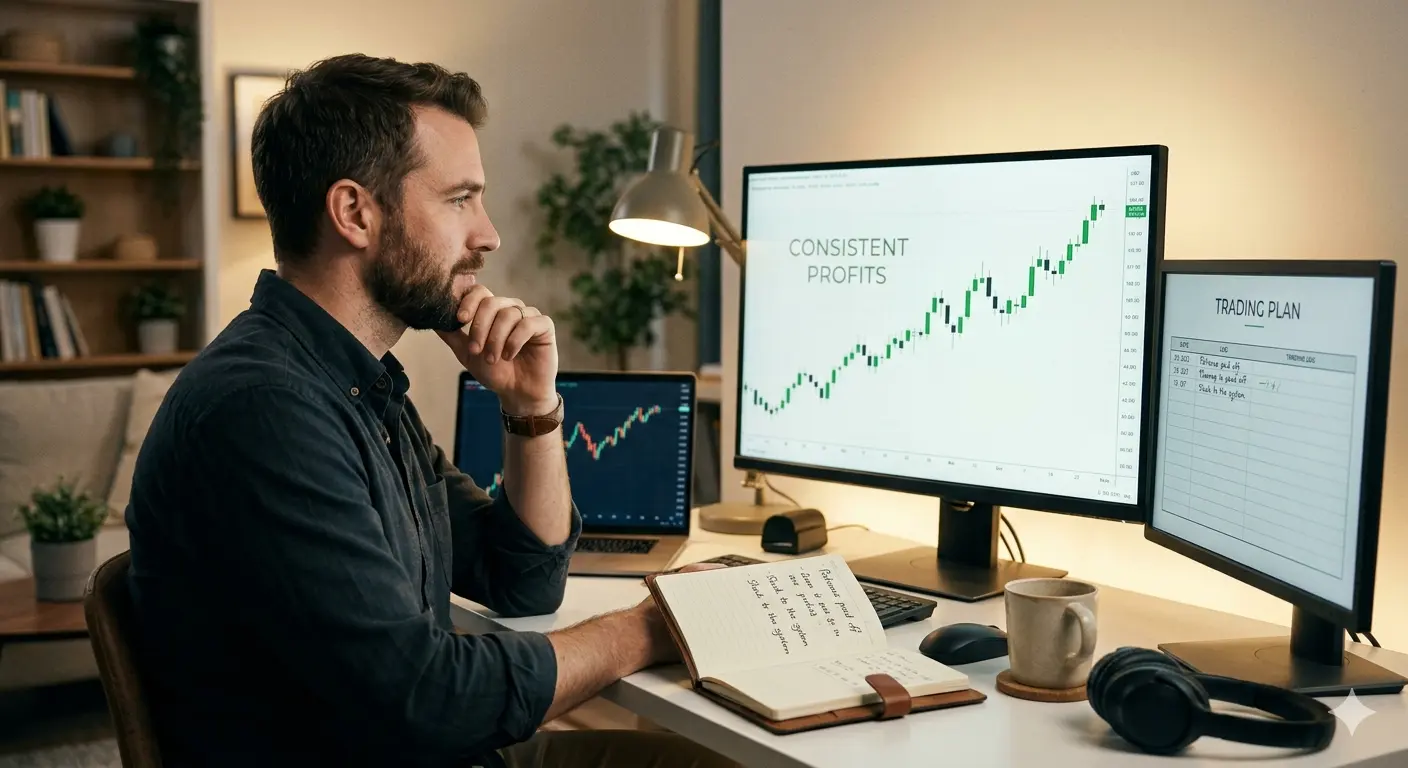
The Psychology Behind Consistent Profits: My Journey From Emotional Trading to Disciplined Execution
Introduction
When I first entered the world of trading, I believed that profitability was primarily determined by technical analysis, indicators, and market knowledge. I spent countless hours studying charts, learning patterns, and searching for the perfect strategy that would guarantee success.
However, after months of trading, I noticed something strange.
I could identify good setups.
I understood support and resistance.
I knew basic risk management.
Yet my results remained
Vortex_King
#MyGateTradeStory
The Psychology Behind Consistent Profits: My Journey From Emotional Trading to Disciplined Execution
Introduction
When I first entered the world of trading, I believed that profitability was primarily determined by technical analysis, indicators, and market knowledge. I spent countless hours studying charts, learning patterns, and searching for the perfect strategy that would guarantee success.
However, after months of trading, I noticed something strange.
I could identify good setups.
I understood support and resistance.
I knew basic risk management.
Yet my results remained inconsistent.
Some weeks were profitable, while others erased all previous gains. The problem wasn't a lack of market knowledge. The problem was something much deeper.
It was psychology.
Over time, I realized that trading is not simply a battle against the market. It is a battle against emotions, impulses, fear, greed, impatience, and overconfidence.
This is the story of how understanding trading psychology helped me move from emotional decision-making toward more consistent profitability.
The Excitement of Early Trading
Like many beginners, I entered the market with high expectations.
Every price movement felt exciting.
Every opportunity looked like a potential winning trade.
I checked charts constantly throughout the day.
When the market moved, I wanted to participate.
When others posted profits, I wanted similar results.
My focus was entirely on making money.
At the time, I thought more trades meant more opportunities.
In reality, more trades often meant more mistakes.
The desire to constantly be involved in the market became one of my biggest psychological weaknesses.
Instead of waiting for quality setups, I forced trades simply because I wanted action.
That behavior would eventually teach me one of the most important lessons of my trading career.
The Hidden Cost of FOMO
One of the strongest emotions I experienced was FOMO—Fear of Missing Out.
Whenever a market moved sharply upward, I felt pressure to enter.
I feared missing potential profits.
I worried that if I waited, the opportunity would disappear.
As a result, I often entered trades late.
Many times, I bought near local tops because I was reacting emotionally rather than following a plan.
The same thing happened during market declines.
Fear caused me to exit positions too early.
I would watch profits disappear because I lacked confidence in my analysis.
Eventually, I realized that FOMO is not caused by market movement.
It is caused by a lack of discipline.
The market presents opportunities every day.
Missing one trade is not important.
Losing discipline is.
Learning this lesson reduced many unnecessary losses and improved my decision-making significantly.
When Winning Became Dangerous
Most traders expect losses to create problems.
What surprised me was that some of my biggest mistakes occurred after winning trades.
A few successful positions created confidence.
Too much confidence created overconfidence.
After a series of wins, I started believing I could predict the market more accurately than I actually could.
I began increasing position sizes.
I ignored parts of my trading plan.
I entered trades more aggressively.
For a short period, everything seemed to work.
Then the market reminded me of a harsh reality.
Success does not eliminate risk.
One poorly managed trade erased a large portion of previous gains.
That experience taught me that confidence is valuable, but overconfidence is dangerous.
Consistent traders remain disciplined whether they win or lose.
The Emotional Impact of Losses
Losses affect every trader.
The difference lies in how traders respond to them.
Earlier in my journey, losses felt personal.
A losing trade felt like failure.
Instead of accepting losses as part of the process, I tried to recover immediately.
This often led to revenge trading.
After losing money, I would search aggressively for another setup.
I wanted to recover losses quickly.
Unfortunately, emotional trades rarely produce good results.
Instead of improving my situation, revenge trading often increased losses.
After reviewing many trades, I discovered a pattern.
The majority of my worst decisions occurred immediately after emotional reactions.
The solution was simple but difficult.
I needed to separate emotions from execution.
Developing a Trading Process
Everything began changing when I shifted my focus away from individual trades.
Previously, every trade felt extremely important.
Now I began focusing on the overall process.
Instead of asking:
"Will this trade make money?"
I started asking:
"Did I follow my plan correctly?"
This change transformed my mindset.
A profitable trade executed poorly became unacceptable.
A losing trade executed correctly became acceptable.
The goal was no longer perfection.
The goal was consistency.
This process-oriented mindset reduced emotional pressure and improved long-term performance.
Learning the Power of Patience
Patience became one of the most profitable skills I developed.
Many people associate trading with constant activity.
My experience taught the opposite lesson.
The best opportunities often appear when traders are willing to wait.
Before developing patience, I constantly searched for reasons to enter the market.
After developing patience, I searched for reasons to stay out.
This subtle shift improved trade quality dramatically.
Fewer trades produced better results.
Stress decreased.
Confidence increased.
Most importantly, I stopped feeling the need to force opportunities.
The market would provide setups eventually.
My responsibility was simply to wait for them.
Building Emotional Control
Emotional control is often misunderstood.
Many people believe successful traders feel no emotions.
That is not true.
I still feel excitement when a trade works.
I still feel disappointment when a trade fails.
The difference is that emotions no longer control decisions.
Instead of reacting immediately, I learned to rely on predefined rules.
Rules create stability when emotions become unstable.
This became especially important during volatile market conditions.
When prices moved aggressively, my plan remained unchanged.
Having a structured approach prevented emotional decisions and reduced unnecessary mistakes.
Why Consistency Matters More Than Big Wins
Earlier in my journey, I dreamed about extraordinary trades.
I wanted huge profits.
I wanted dramatic account growth.
I wanted to catch every major market move.
Over time, my priorities changed.
I realized that professional trading is not built on occasional massive wins.
It is built on consistent execution.
Small profits accumulated over time.
Controlled losses protected capital.
Disciplined decision-making created stability.
The objective shifted from excitement to sustainability.
That change improved both my trading results and my overall mindset.
The Habits That Improved My Trading Psychology
Several habits helped strengthen my mental approach:
Trade Journaling
Recording trades revealed recurring mistakes and emotional patterns.
Risk Management
Knowing maximum risk before entering reduced anxiety.
Patience
Waiting for quality setups improved overall performance.
Acceptance of Losses
Understanding that losses are unavoidable reduced emotional reactions.
Continuous Learning
Reviewing both successful and unsuccessful trades accelerated improvement.
These habits gradually strengthened my psychological foundation.
The Biggest Lesson I Learned
If someone had asked me during my early trading days what creates profitability, I would have answered:
"Strategy."
Today my answer would be different.
A strategy is important.
Knowledge is important.
Analysis is important.
But psychology determines whether those tools are used effectively.
Many traders know what they should do.
Far fewer consistently do it.
The difference often comes down to emotional control and discipline.
Conclusion
My journey taught me that consistent profits are not produced by perfect predictions.
They are produced by consistent behavior.
The market will always be uncertain.
There will always be unexpected news, volatility, and losing trades.
What traders can control is their mindset, discipline, and execution.
The greatest improvement in my trading did not come from discovering a new indicator or strategy.
It came from understanding myself.
Once I learned to control fear, greed, impatience, and overconfidence, my results became more stable and my decision-making improved dramatically.
The psychology behind consistent profits is not about eliminating emotions.
It is about ensuring that emotions never control your actions.
repost-content-media
  • Reward
  • Comment
  • Repost
  • Share
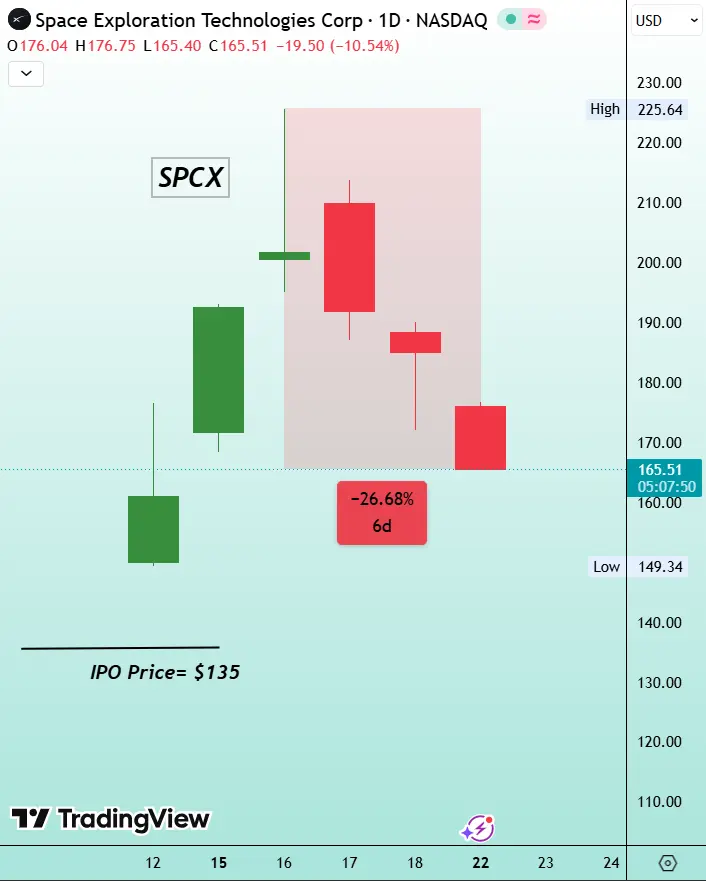
Correction in $SPCX continues 3rd day, down 10% today.
The stock has dropped 26% from its all-time high, erasing nearly $780 billion in market cap.
Still trading 22% above IPO price.
Early post-IPO volatility playing out as expected for one of the largest listings in history..
NileshRohilla
Correction in $SPCX continues 3rd day, down 10% today.
The stock has dropped 26% from its all-time high, erasing nearly $780 billion in market cap.
Still trading 22% above IPO price.
Early post-IPO volatility playing out as expected for one of the largest listings in history..
repost-content-media
  • Reward
  • Comment
  • Repost
  • Share
#MyGateTradeStory
The Attention Economy of Crypto: Understanding Why Meme Tokens Keep Defying Expectations
Few sectors in cryptocurrency generate as much debate, excitement, and volatility as meme tokens. While many investors focus on technological innovation, decentralized finance, or blockchain infrastructure, meme tokens continue to capture a remarkable share of market attention. Their ability to attract massive communities and create rapid market movements has transformed them from internet jokes into a significant force within the digital asset ecosystem.
The rise of meme tokens demonstr
MEME-4.28%
CryptoChampion
#MyGateTradeStory
The Attention Economy of Crypto: Understanding Why Meme Tokens Keep Defying Expectations
Few sectors in cryptocurrency generate as much debate, excitement, and volatility as meme tokens. While many investors focus on technological innovation, decentralized finance, or blockchain infrastructure, meme tokens continue to capture a remarkable share of market attention. Their ability to attract massive communities and create rapid market movements has transformed them from internet jokes into a significant force within the digital asset ecosystem.
The rise of meme tokens demonstrates an important reality about modern financial markets: attention itself has become a valuable asset. In traditional investing, company earnings, revenue growth, and economic indicators often drive valuation. In the meme token sector, community engagement, social media momentum, cultural relevance, and market sentiment can play an equally powerful role in determining price direction.
One reason meme tokens remain popular is their accessibility. Many newcomers entering crypto find complex blockchain concepts difficult to understand at first. Meme-based projects often present a simpler narrative. A recognizable theme, a memorable brand, and an active online community can make participation feel less intimidating for beginners. This lower barrier to entry helps attract users who may eventually explore broader areas of the cryptocurrency market.
Another major factor is the speed at which information spreads in the digital age. A single viral post, trending hashtag, influential community member, or major exchange listing can instantly place a previously unknown token in front of millions of people. Unlike traditional markets, where information often moves through institutional channels, meme token narratives can spread globally within hours.
However, the same forces that fuel rapid growth also create substantial risks. Price movements in the meme token sector can be extremely unpredictable. Strong rallies frequently attract speculative traders seeking quick profits, which can push prices significantly higher in a short period. Yet these gains are often followed by equally aggressive corrections when momentum slows or market sentiment shifts.
For this reason, risk management remains one of the most important skills for participants in this sector. Successful traders often focus on position sizing, capital preservation, and emotional discipline rather than attempting to chase every trending asset. Understanding when to enter a trade is important, but understanding when to exit can be even more critical.
An interesting trend emerging in recent market cycles is the evolution of meme token projects beyond pure speculation. Some teams are actively developing ecosystem features, community-driven applications, staking mechanisms, gaming integrations, and other forms of utility. While not every project succeeds, these efforts reflect a broader attempt to build sustainable value rather than relying solely on short-term hype.
Community strength has also become a defining characteristic of successful meme projects. In many cases, highly engaged supporters act as marketers, educators, and promoters, helping expand awareness without traditional advertising budgets. This grassroots growth model has allowed certain projects to maintain relevance long after their initial launch.
Looking ahead, meme tokens are likely to remain an influential part of the cryptocurrency landscape. Whether viewed as speculative assets, cultural phenomena, or community-driven experiments, they continue to shape market behavior and attract significant attention from traders worldwide.
The biggest lesson may be that crypto markets are not driven solely by technology or fundamentals. Human psychology, collective behavior, and attention dynamics often play an equally important role. For anyone navigating the meme token sector, understanding these factors may provide insights that charts alone cannot reveal.
#MyGateTradingMoment @Gate_Square #GateSquare
repost-content-media
  • Reward
  • Comment
  • Repost
  • Share
#MyGateTradeStory
I Learned to Manage My Own Finance Before the Markets: An Investor's Journey of Risk, Strategy, and Discipline
When entering the world of investing, most people first try to understand the markets.
Why did Bitcoin rise? Why did gold gain value? Which stock will boom? Which project will be the leader of the future?
But the most important thing I realized over time is this:
Before understanding global markets, you need to understand your own financial system.
Because the biggest investment mistakes often stem not from choosing the wrong project, but from acting at the wrong ti
BTC-1.39%
User_any
#MyGateTradeStory
I Learned to Manage My Own Finance Before the Markets: An Investor's Journey of Risk, Strategy, and Discipline
When entering the world of investing, most people first try to understand the markets.
Why did Bitcoin rise? Why did gold gain value? Which stock will boom? Which project will be the leader of the future?
But the most important thing I realized over time is this:
Before understanding global markets, you need to understand your own financial system.
Because the biggest investment mistakes often stem not from choosing the wrong project, but from acting at the wrong time, with the wrong amount, and with the wrong psychology.
An investor's first market is actually their own economy.
Income pattern, cash flow, risk capacity, goals, and tolerance for loss…
Any investment made without understanding these becomes more of an expectation than a decision.
My First Priority in Investing: Survival
Over time, my investment logic has changed.
Previously, my focus was more on the question of "how much can I earn?"
Then a more important question arose:
“How much loss will I incur if it goes wrong, and can I continue after that loss?”
Because opportunities in the market never end.
But if capital runs out, the power to seize opportunities also ends.
Therefore, in my investment approach, I now prioritize sustainability over growth.
Project Selection: Reality Before Story
Especially in the crypto market, there are too many projects, too many stories, and too many expectations.
Every new project can present itself as the technology of the future.
However, before investing, I ask myself some questions:
What problem does this project solve?
Is there a real user need?
Who is on the team?
What is the token economy like?
What differentiates it from its competitors?
Is it just hype, or is there real use?
Because not every well-marketed project is a good investment.
As an investor, my job is not to believe the story, but to investigate the value behind the story.
Risk Management: Calculating Loss Before Winning
One of the biggest areas of improvement in my investing career has been risk management.
Before entering a position, I no longer just think about the target price.
I also answer the question:
“What will I do in the wrong scenario?”
Every investment should have an exit plan.
Because investing without a plan leads to making decisions based on market movements.
And the market is managed with discipline, not emotions.
Stop Loss: Strategy, Not Failure
Many investors see using stop loss as losing.
However, for me, stop loss is not a defeat.
It's a risk control mechanism.
Because not every analysis is correct.
Even the best investors can make wrong decisions.
The important thing is to prevent a single wrong decision from affecting the entire portfolio.
An investor who can stay in the market for a long time is not always the most knowledgeable person.
Most of the time, they are the best risk manager.
Investment Amount: Based on Risk Level, Not Confidence Level
Believing in a project is one thing, committing all your capital is another.
One of the most important things I've learned over time:
Just because an investment opportunity is good doesn't mean you should allocate unlimited capital to it.
Portfolio management is essentially expectation management.
Some investments have high potential but also high risk.
Some are more stable.
The important thing is knowing the place of each investment within the portfolio.
Finding Your Own Investment Style
Not everyone has to be the same investor.
Some are long-term investors.
Some take advantage of short-term opportunities.
Some focus on technology projects.
Some invest in value.
The most important point here is:
Instead of copying someone else's strategy, create a system that suits your own character.
Because investment is not just about financial knowledge, it's also about psychology.
Conclusion: The Biggest Investment is Building Your Own System
Today, my investment approach isn't just about price charts.
First, I manage my own finances.
Then I determine my risk level.
Next, I analyze the project, create my entry plan, and determine my exit strategy.
Because markets change.
Trends change.
Projects change.
But a disciplined investment approach retains its value in every period.
The main goal in investing is not just to make money;
it is to establish a system that allows you to make the right decisions at the right time while protecting your capital.
repost-content-media
  • Reward
  • Comment
  • Repost
  • Share
Chokepoint Capitalism?
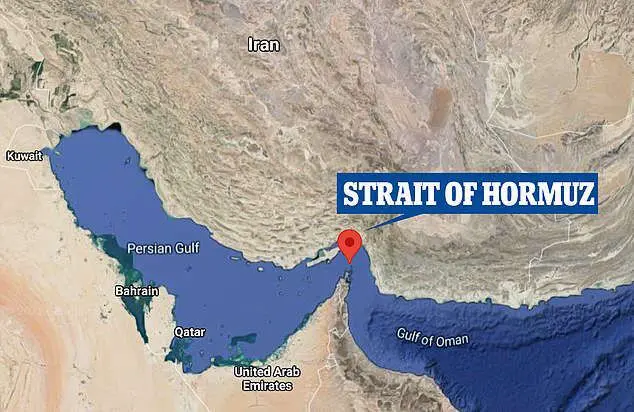
One narrow strait. Twenty percent of the world's oil. A single geopolitical tremor in the Persian Gulf rewrites energy prices, inflates grocery bills, and forces central banks to tighten their grip. The Middle East is not a regional story. It is the macro variable that every portfolio answers to.
🔹 Hormuz: The Valve That Controls the Global Economy
The Strait of Hormuz reopened on June 21 after the U.S.-Iran 14-point Memorandum of Understanding was signed in Switzerland. The closure, which began in late February, had choked off roughly 11 million barrels per day of Midd
XAUT-1.72%
XCU-1.66%
User_any
Chokepoint Capitalism?
One narrow strait. Twenty percent of the world's oil. A single geopolitical tremor in the Persian Gulf rewrites energy prices, inflates grocery bills, and forces central banks to tighten their grip. The Middle East is not a regional story. It is the macro variable that every portfolio answers to.
🔹 Hormuz: The Valve That Controls the Global Economy
The Strait of Hormuz reopened on June 21 after the U.S.-Iran 14-point Memorandum of Understanding was signed in Switzerland. The closure, which began in late February, had choked off roughly 11 million barrels per day of Middle Eastern production at its peak. Brent crude spiked to $96. WTI kissed $92. The reopening sent Brent tumbling back toward the mid-$70s, a direct pressure release on global inflation. Senator Lindsey Graham has already warned that if diplomacy fails, the U.S. will take the strait by force and impose transit fees, a scenario no energy model has yet priced.
🔹 Oil's Whiplash Becomes Everyone's Problem
Diesel and jet fuel wholesale prices surged over 60% in the first half of 2026, feeding directly into May's 4.2% CPI print. When crude spikes, freight costs follow. Shelf prices rise. Central banks lose flexibility. The Federal Reserve responded by holding rates at 3.5%–3.75%, with nine of 18 members now signaling hikes. The Iran ceasefire cooled the oil fever, but the risk premium will return the moment the strait faces another threat. Energy is not just a commodity; it is the transmission belt from geopolitics to monetary policy.
🔹 Gold Crashes as War Premium Evaporates
Spot gold just printed its worst weekly decline since 1983, shedding over 7% as the peace deal erased the fear bid. The metal that had surged on safe-haven demand during the conflict's peak is now facing a firmer dollar and rising real yields. XAUT tracked the physical collapse, with daily RSI plunging into oversold territory. Central banks, which have been buying 12 tonnes a month for three years, now face a test of conviction. Peace is bullish for growth but bearish for fear assets, and gold is the purest expression of that trade.
🔹 Silver Caught Between War and Industry
Silver dropped 1.2% to $64.70, mirroring gold's retreat, but the industrial floor beneath it is strengthening. Solar panel production, EV manufacturing, and AI data center construction are consuming silver at a pace that has created a 46-million-ounce annual supply deficit. The metal is balancing two identities: a monetary safe haven pressured by peace, and an industrial necessity supported by electrification. The $62 double-bottom is the line that separates a healthy correction from a deeper unwind.
🔹 The Broader Commodity Complex Recalibrates
Copper, trading near $6.54 on XCU, reflects the long-term demand story of green energy and AI infrastructure, less sensitive to Hormuz headlines but still tied to global growth expectations. A sustained peace in the Middle East would lower energy input costs across mining and manufacturing, potentially unlocking margin expansion across the commodity sector. The alternative, a return to conflict, would reignite the cost-push inflation that has haunted markets since February.
🔹 Israel-Palestine and the Lebanon Wildcard
The MOU includes ceasefire provisions extending to Lebanon, where Israeli operations have been a persistent source of regional friction. Iran explicitly linked previous Hormuz closures to Israel's actions. A durable peace requires calming both the nuclear file and the northern front. The Swiss talks, which continued through Sunday and into Monday, focused heavily on Lebanon friction prevention mechanisms. The oil market is pricing success. The region is still proving it.
The Middle East remains the world's most expensive chessboard. A signed agreement in Switzerland can send oil lower and equities higher. A single escalation can reverse it all. Commodities are the scoreboard, and every barrel, every ounce, and every contract is watching the same horizon.
Friends, do you believe the ceasefire holds through summer, or is another supply shock already brewing beneath the surface?
#MyGateTradeStory
repost-content-media
  • Reward
  • Comment
  • Repost
  • Share
The sharp pullback in SpaceX shares over the past 24 hours has caught investors' attention. The SPCX price fell by approximately 13%, experiencing strong short-term selling pressure. While relative performance was weak in comparison to Bitcoin, the increase in trading volume strengthened the possibility of profit-taking in the market.
📌 So what's behind this decline?
🔹 IPO Excitement and Initial Pricing Effect
In companies like SpaceX, which generate high expectations, strong buying interest can be seen in the initial period after an IPO. However, when expectations are met, some investors ma
BTC-1.39%
User_any
The sharp pullback in SpaceX shares over the past 24 hours has caught investors' attention. The SPCX price fell by approximately 13%, experiencing strong short-term selling pressure. While relative performance was weak in comparison to Bitcoin, the increase in trading volume strengthened the possibility of profit-taking in the market.
📌 So what's behind this decline?
🔹 IPO Excitement and Initial Pricing Effect
In companies like SpaceX, which generate high expectations, strong buying interest can be seen in the initial period after an IPO. However, when expectations are met, some investors may re-evaluate their positions.
A common scenario in the market: Expectation → strong rise → news realization → short-term profit-taking
🔹 Valuation Debates
SpaceX is seen as a company with great potential in areas such as space technologies, Starlink, and the future of internet infrastructure.
However, high growth expectations also bring with them high valuation debates. The main question for investors is:
"To what extent has the current price already priced in future growth?"
🔹 Post-Institutional Purchases Balancing
Index inclusions, fund inflows, or large investor interest can periodically generate strong demand. When these mechanical purchases end, the market may retest the true supply-demand balance.
🔹 Macroeconomic Effects
A high interest rate environment can often put pressure on the valuations of high-growth companies. Investors are now focusing more on factors such as:
• Revenue growth • Profitability expectations • Interest rate environment • Global risk appetite
and more.
📊 Points to watch in the coming period:
• SpaceX financial performance • Starlink growth • Institutional investor interest • Expectations for the first major earnings report • Overall market risk appetite
My view: These kinds of movements may be part of the price discovery process frequently seen after IPOs in companies with high expectations. However, long-term growth data will determine the real direction.
Do you think the SPCX decline is just short-term profit-taking or a repricing of valuation?
Share your opinions in the comments.
#SpaceX #SPCX #Stocks #MyGateTradeStory #MarketAnalysis
repost-content-media
  • Reward
  • Comment
  • Repost
  • Share
Happy Father's Day. ❤️
Whether you're a father watching the market or a father who just taught your child how to read candlestick charts, today is a day to take a break.
Have a meal with your family, or take your dad out for a nice meal. The market is always there, but some moments, once gone, never come back.
Gate Plaza, wishing you a happy Father's Day.
GateSquare
Happy Father's Day. ❤️
Whether you're a father watching the market or a father who just taught your child how to read candlestick charts, today is a day to take a break.
Have a meal with your family, or take your dad out for a nice meal. The market is always there, but some moments, once gone, never come back.
Gate Plaza, wishing you a happy Father's Day.
repost-content-media
  • Reward
  • Comment
  • Repost
  • Share
#我的Gate交易时刻 Countdown 2 days
If you can only leave one piece of content,
Which transaction would you most like to share?
The one with the biggest profit?
Or the one with the biggest loss?
Many times,
What truly changes your investment mindset,
Is not the most profitable trade,
But the one that helps us grow the fastest.
🚀 The event is ending soon
💰 Total prize pool exceeds 30,000 USDT
🏆 The highest individual reward is 1,000 USDT
🎁 X Platform and Gate Square double prize pools are open simultaneously
Don’t miss your last chance to participate with your trading story.
Details: https://ww
GateSquare
#我的Gate交易时刻 Countdown 2 days
If you can only leave one piece of content,
Which transaction would you most like to share?
The one with the biggest profit?
Or the one with the biggest loss?
Many times,
What truly changes your investment mindset,
Is not the most profitable trade,
But the one that helps us grow the fastest.
🚀 The event is ending soon
💰 Total prize pool exceeds 30,000 USDT
🏆 The highest individual reward is 1,000 USDT
🎁 X Platform and Gate Square double prize pools are open simultaneously
Don’t miss your last chance to participate with your trading story.
Details: https://www.gate.com/zh/announcements/article/51617
#MyGateTradeStory
repost-content-media
  • Reward
  • Comment
  • Repost
  • Share
📢 The latest round of red envelope rain in the square is here, 100% guaranteed for newcomers!
Talking about the World Cup while wildly distributing red envelopes, the top post has exploded up to 10U ETH!
🎁 Limited-time benefits
✅ Newcomer gift: First post, 100% guaranteed red envelope!
✅ Posting rewards: Includes ETH, GT, Meme coins, position experience vouchers, the more you post, the more you earn!
✅ Climb the leaderboard: Win limited edition World Cup gift boxes, WCTC exclusive T-shirts, and up to $1,000U!
Take action now, share your World Cup predictions and results
👉️ https://www.gate.
ETH-1.40%
GT-1.04%
MEME-4.28%
BTC-1.39%
GateSquare
📢 The latest round of red envelope rain in the square is here, 100% guaranteed for newcomers!
Talking about the World Cup while wildly distributing red envelopes, the top post has exploded up to 10U ETH!
🎁 Limited-time benefits
✅ Newcomer gift: First post, 100% guaranteed red envelope!
✅ Posting rewards: Includes ETH, GT, Meme coins, position experience vouchers, the more you post, the more you earn!
✅ Climb the leaderboard: Win limited edition World Cup gift boxes, WCTC exclusive T-shirts, and up to $1,000U!
Take action now, share your World Cup predictions and results
👉️ https://www.gate.com/post
Details: https://www.gate.com/announcements/article/100168
#BTC #ETH #GT
repost-content-media
  • Reward
  • Comment
  • Repost
  • Share
Quiet Yield?
Bitcoin just endured a historic ETF exodus. Altcoins are flashing oversold. And USDY? It ticked up another 0.59% this week. No drama. No liquidations. Just a steady, grinding 4.4% APY backed by short-term U.S. Treasury bills. In a market starved of safe havens, the boring trade is quietly winning.
🔹 A Token That Pays You to Wait
USDY is not a stablecoin frozen at $1. It is a yield-bearing note whose redemption value climbs every day as interest accrues. Each token is a claim on a pool of Treasuries maturing in under six months, plus insured bank deposits. The price hovers around
BTC-1.39%
USDY0.14%
ETH-1.40%
SOL-4.08%
ARB-2.85%
User_any
Quiet Yield?
Bitcoin just endured a historic ETF exodus. Altcoins are flashing oversold. And USDY? It ticked up another 0.59% this week. No drama. No liquidations. Just a steady, grinding 4.4% APY backed by short-term U.S. Treasury bills. In a market starved of safe havens, the boring trade is quietly winning.
🔹 A Token That Pays You to Wait
USDY is not a stablecoin frozen at $1. It is a yield-bearing note whose redemption value climbs every day as interest accrues. Each token is a claim on a pool of Treasuries maturing in under six months, plus insured bank deposits. The price hovers around $1.14 — where the premium is the earned yield baked in. No staking, no claims, no separate rewards token. You hold, it grows.
🔹 $700 Million and Spreading
Over $700 million in USDY now circulates across eight blockchains. Ethereum, Solana, Arbitrum, Sui, Aptos, Mantle, Polygon, and Cosmos — no other tokenized Treasury product reaches that far. Ondo Finance, the issuer, commands over $2.5 billion in total value locked across its suite, making it the largest onchain Treasury provider. This is no experiment. This is infrastructure.
🔹 While Markets Panic, Demand Compounds
Trading volume sat near 404K in the last 24 hours, slightly above the weekly average. No panic spikes. No volume explosions. Capital is arriving calmly, almost invisibly. The broader crypto market is nursing a Fear & Greed Index of 8 and a spot volume collapse to $700 billion. Meanwhile, USDY has absorbed steady inflows, its supply expanding as investors rotate from volatile assets into something that pays them to sleep.
🔹 Accessible, Regulated, and Borderless
The minimum entry is $500. Compare that to institutional Treasury products with $100K floors. USDY is open to non-U.S. investors, structured under Reg S, and after a short holding period, the tokens move freely onchain. It is a bridge from government debt markets to the decentralized economy, and it is already carrying serious weight.
In a market chasing 100x moonshots, a 4.4% annual yield feels almost radical. The quiet climb has no influencers, no chart breakouts — just compound interest, chain by chain.
Friends, do you see tokenized Treasuries becoming a core portfolio allocation, or do you remain fully deployed in the volatility arena?
Did you see 👀 Gate Launchpool Issue 364 ?
Stake $SPCXON $USDY to earn 1,046 $SPCXON
🔹 Estimated annualized rate up to 191.74%, rewards are automatically credited every hour
🔹 Stake early, receive rewards immediately after the activity starts
📅 June 18th 20:00 - July 3rd 20:00 (UTC+8)
Stake now: https://www.gate.com/zh/launchpool/516
More details: https://www.gate.com/zh/announcements/article/100221
#MyGateTradeStory
⚠️ Not financial advice.
repost-content-media
  • Reward
  • Comment
  • Repost
  • Share
June 16, 2026. The Bank of Japan raised its policy interest rate from 0.75% to 1%. With a 7 to 1 vote. The highest level since 1995. Thirty-one years.
And Bitcoin hardly reacted at all.
This is as important as the story itself.
Because when looking at history, the picture appears very different. After the first increase in March 2024, Bitcoin fell 18%. In July 2024, down 30%. In January 2025, down 31%. In December 2025, down 32%. An average 27% decline with each increase. And now, a similar-sized increase occurred, the price stayed around $66,000, briefly dropped 2% in the short term, then rec
BTC-1.39%
USDJPY0.04%
JPN225-3.62%
GBPJPY-0.03%
M谋ngYueZen
June 16, 2026. The Bank of Japan raised its policy interest rate from 0.75% to 1%. With a 7 to 1 vote. The highest level since 1995. Thirty-one years.
And Bitcoin hardly reacted at all.
This is as important as the story itself.
Because when looking at history, the picture appears very different. After the first increase in March 2024, Bitcoin fell 18%. In July 2024, down 30%. In January 2025, down 31%. In December 2025, down 32%. An average 27% decline with each increase. And now, a similar-sized increase occurred, the price stayed around $66,000, briefly dropped 2% in the short term, then recovered.
Why was this time different? There are four reasons, and all four deserve understanding.
First is pricing. Previous increases were either surprises or semi-surprises. This increase was priced in by the market with a 98% probability. Out of 49 economists, 51 expected a hike. Polymarket was almost certain. The expected bad news hits as hard as unexpected bad news. The market had digested this weeks in advance.
Second, leverage had already been cleared. In the past 13 days, $225B flowed out of Bitcoin ETFs. Large liquidation waves occurred in previous weeks. Before the increase, market leverage was largely unwound. No positions remained to be squeezed.
Third is the BOJ balancing move. While raising rates, the BOJ also announced it would pause its bond purchase reduction program starting April 2027. This, on one hand, makes money more expensive, while on the other, slows long-term liquidity withdrawal. The market interpreted this as a hawkish hike offset by dovish signals. Bitcoin experienced $2.02T in short liquidations the same day, meaning those betting on a decline were wrong on this balancing news.
Fourth is that real interest rates are still negative. With a 1% policy rate and a 2.8% core inflation, Japan’s real interest rate remains negative. This does not mean the carry trade has completely collapsed.
Now, let’s delve deeper into the carry trade issue.
Japan has lent at near-zero or negative interest rates for decades. In this environment, investors from around the world borrowed cheaply in yen. They moved these yen into higher-yielding assets. U.S. Treasury bonds, stocks, and crypto.
How big is this trade? Japan is the largest foreign holder of U.S. Treasury securities. A stock of $1.24 trillion. A significant part of this is financed by cheap yen borrowing. Global hedge funds’ yen short positions as of June 2026 are near a nine-year high, around 145,000 contracts.
What happens when these positions are closed? Investors buy yen, sell high-yield assets. This selling pressure impacts stocks, bonds, and crypto. Bitcoin’s 24/7 trading and deep derivatives market cause this effect to be reflected in other assets first.
But right now, the carry trade dynamic is working differently than in previous increases.
USD/JPY remains between 159 and 160. The yen has not strengthened despite the 1% interest rate. Why? Because the Fed is holding at 3.75%. The interest rate differential between the U.S. and Japan is still very large. Until this gap narrows, the pressure to unwind carry trades remains limited.
Historically, a disruptive unwind of carry trades occurs when two conditions happen simultaneously: the yen sharply appreciates and markets are full of leverage. August 2024 saw exactly this scenario. The yen gained 8% in a week, and Bitcoin dropped from 65,000 to 49,000. Currently, neither the yen has moved that sharply nor is leverage that intense.
But the danger has not passed.
One thing analysts point out is that the actual effects of BOJ hikes often appear weeks later, not on the news day. Because carry trade positions don’t unwind immediately. They gradually, step by step, unwind. And this process of unwinding manifests as a delayed but persistent selling pressure in the market.
The Nikkei 225 rose above 70,000 after this increase. This strong reaction is significant. Japanese stocks interpreted the BOJ’s hike as a sign of economic normalization. This suggests the market sees Japan’s structural recovery more than a carry trade concern.
The impact on the global economy can be summarized as follows:
The BOJ hike marginally tightens global liquidity conditions. Yen borrowing costs increase. This slows the expansion of carry trades. Some of the money flowing from Japan into U.S. Treasuries may start returning. This pushes up U.S. Treasury yields and puts pressure on the dollar. If the dollar strengthens, additional pressure builds on real assets and crypto.
But this effect is directly linked to the Fed cycle. If the Fed raises rates in 2026, as indicated by the dot plot, and the U.S.-Japan interest differential narrows, the unwind of carry trades accelerates. This is the most critical scenario.
Oil plays a balancing role in this equation. With the Strait of Hormuz opening, oil prices fell below $81. This reduces energy inflation. When energy costs decline, inflation pressures in both Japan and the U.S. ease. This could mean both central banks can tighten less.
What do I take away from all this?
In the short term, the impact of the BOJ’s hike has been more limited than expected. That’s good. But history shows: the real effect doesn’t happen immediately. Carry trade positions unwind gradually. Over the next 4 to 8 weeks, we need to monitor yen movements. If USD/JPY drops below 155, it indicates an accelerated unwind of carry trades. In that scenario, risk assets could face renewed sharp pressure.
In the medium term, two central banks are tightening simultaneously. The BOJ at 1%. The Fed at 3.75%, signaling further hikes. This pushes global liquidity conditions to their tightest since early 2024.
But at the same time, oil prices are falling, the Iran deal holds, trade war risks have diminished, on-chain accumulation continues, and the CLARITY Act is imminent.
Amid these conflicting pressures, markets are searching for direction. I am too.
My positions are open on Gate. Sizes are aligned with my plan. I am watching yen movements, oil data, and July’s CPI.
I am prepared.
#MyGateTradeStory $USDJPY $JPN225 $GBPJPY
⚠️ Not financial advice.
  • Reward
  • Comment
  • Repost
  • Share
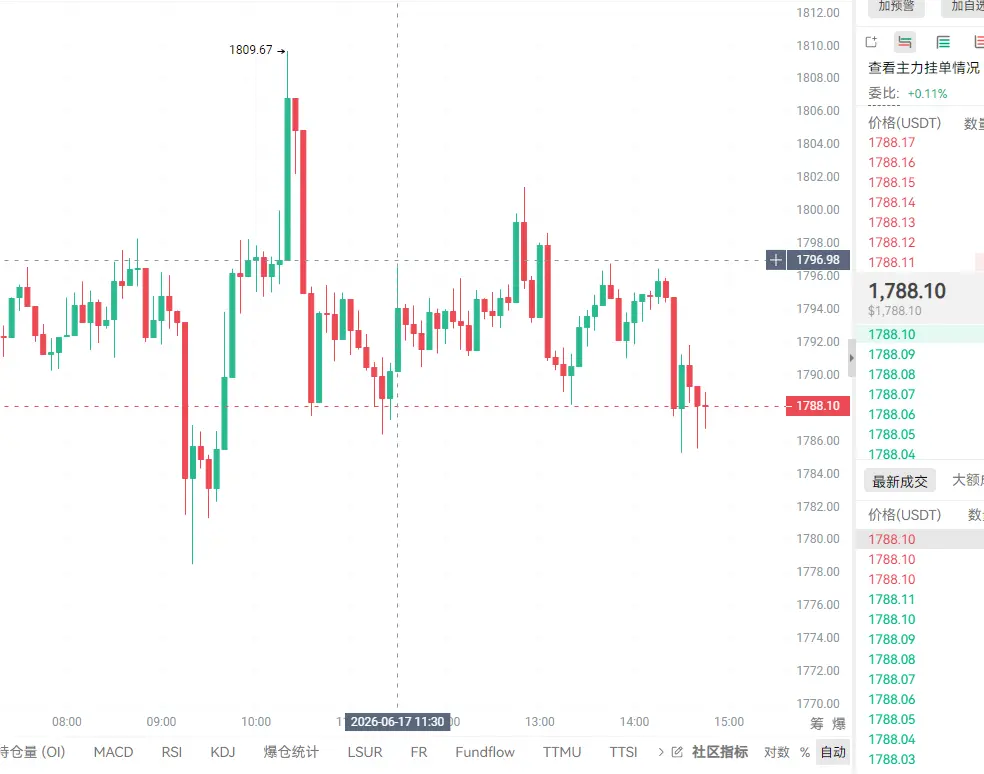
Second pancake afternoon
Entry: around 1783-1788
Stop loss: below 1775
Target: 1800-1810$ETH #美伊14点备忘录曝光
ETH-1.40%
SummerScarlet
Second pancake afternoon
Entry: around 1783-1788
Stop loss: below 1775
Target: 1800-1810$ETH #美伊14点备忘录曝光
repost-content-media
  • Reward
  • Comment
  • Repost
  • Share
Don't miss out: Your first plaza benefit is right here! 🧧
Chat World Cup and get red envelopes, post 100% winning, up to 10U ETH!
💰 What's the most cost-effective way to claim?
1️⃣ Post your first plaza creation, red envelope credited directly!
2️⃣ Share your World Cup predictions, the more posts, the bigger the red envelope!
3️⃣ Top 100 will receive prizes, Gate World Cup gift boxes waiting for you!
🗓 The event runs until June 30th, participate early for a better chance at the leaderboard!
Details: https://www.gate.com/announcements/article/100168
#BTC #ETH #HYPE #SEC
ETH-1.40%
BTC-1.39%
HYPE-1.69%
CryptoChampion
Don't miss out: Your first plaza benefit is right here! 🧧
Chat World Cup and get red envelopes, post 100% winning, up to 10U ETH!
💰 What's the most cost-effective way to claim?
1️⃣ Post your first plaza creation, red envelope credited directly!
2️⃣ Share your World Cup predictions, the more posts, the bigger the red envelope!
3️⃣ Top 100 will receive prizes, Gate World Cup gift boxes waiting for you!
🗓 The event runs until June 30th, participate early for a better chance at the leaderboard!
Details: https://www.gate.com/announcements/article/100168
#BTC #ETH #HYPE #SEC
repost-content-media
  • Reward
  • Comment
  • Repost
  • Share
#𝐅𝐄𝐃 🔍
That 2‑year yield move from 3.95 to 4.208 is massive. Not just the number but the speed. That is institutional money moving in minutes not hours. And when bonds sell off that hard gold gets crushed because gold has no yield and suddenly risk‑free paper is paying 4.2 percent. So you get that 3.63 percent drop in two hours. That is a liquidation not a correction.
The Nasdaq down 1.35 feels almost mild compared to the bond move. But look under the hood. Tech stocks are duration bets. They rely on low rates for future earnings to be worth something today. When the 2‑year spikes that hig
BTC-1.39%
User_any
#𝐅𝐄𝐃 🔍
That 2‑year yield move from 3.95 to 4.208 is massive. Not just the number but the speed. That is institutional money moving in minutes not hours. And when bonds sell off that hard gold gets crushed because gold has no yield and suddenly risk‑free paper is paying 4.2 percent. So you get that 3.63 percent drop in two hours. That is a liquidation not a correction.
The Nasdaq down 1.35 feels almost mild compared to the bond move. But look under the hood. Tech stocks are duration bets. They rely on low rates for future earnings to be worth something today. When the 2‑year spikes that high the discount rate goes up and the present value of all those future cash flows drops. So the selloff makes sense. It could have been worse honestly.
Bitcoin dropping to 64000 is the interesting one. It held above that 65000 support for a while. Then the press conference happened and it just cracked. Not a crash. But a clean break. The reason is simple – Bitcoin trades like a risk‑on asset in this macro environment. When the Fed signals hikes risk comes off the table. And that 64k level was the last line before 62k and 60k. So now we watch to see if it becomes resistance or if it reclaims.
The three reasons you listed are spot on. But let me add one layer that makes it even more confusing.
Warsh not submitting his dot plot is not just symbolic. It removes the single most important forward guidance tool that markets used to anchor expectations. Now nobody knows what the chair actually thinks about rates. The other 18 dots are out there but they are from regional presidents and governors – their views matter but they are not the chair. So bond traders are essentially flying blind on the chair's personal rate path. That adds uncertainty premium into yields. And uncertainty premium pushes yields higher not lower.
Also the statement rewrite is shorter but it removed language about “achieving the 2 percent inflation goal” and “balancing risks”. That language was dovish in tone. Taking it out tells the market the Fed is no longer leaning toward easing. That is a hawkish shift by omission.
One more thing – the dollar ripped higher on all this. When the dollar goes up commodities get hit harder. Gold got hit. Oil has been under pressure from the Iran deal anyway but the dollar strength adds another headwind. And emerging markets are going to feel that dollar squeeze.
So what does this mean for tomorrow. If the 2‑year stays above 4.2 overnight then risk assets are going to open lower. If it drifts back down we might see a relief bounce. But the Fed is done guiding. So expect more volatility. More whipsaw. More watching bond moves before anything else.
summary captured the chain reaction perfectly. I would just add that this is day one of the Warsh era. And he has already broken more norms than Powell did in four years. That is not bearish or bullish. It is just uncertain. And markets hate uncertainty more than they hate bad news.
#MyGateTradeStory
This content is for informational purposes only and does not constitute financial advice.
repost-content-media
  • Reward
  • Comment
  • Repost
  • Share
Trading on Fed days is sometimes playing against algorithms, not the market. And these algorithms know where you're placing your stop-loss orders.
What exactly happened?
The decision came. But the dot plot changed the expectation of a rate cut to an expectation of a rate hike. The market first tried to digest this. Then Warsh started speaking. And then came that famous "first down, then up" movement. In a single candle, they hunted down the longs first. Then the shorts.
$58 million evaporated in one hour.
Longs lost $37.7 million. Shorts lost $20.3 million. So the market punished both bulls an
User_any
Trading on Fed days is sometimes playing against algorithms, not the market. And these algorithms know where you're placing your stop-loss orders.
What exactly happened?
The decision came. But the dot plot changed the expectation of a rate cut to an expectation of a rate hike. The market first tried to digest this. Then Warsh started speaking. And then came that famous "first down, then up" movement. In a single candle, they hunted down the longs first. Then the shorts.
$58 million evaporated in one hour.
Longs lost $37.7 million. Shorts lost $20.3 million. So the market punished both bulls and bears in a single evening. This was a complete liquidation hunt. Not a search for direction. It was a cleanup operation.
On days like these, the most profitable trade is sometimes not trading at all.
I've seen this many times. You take a position on Fed day. The decision comes. Everything seems logical. Then Powell or Warsh reverses everything with a single sentence. And while you're following your stop-loss order, you fall into the liquidation pool.
This time, what Warsh did was historic. He killed forward guidance. He didn't put his own projection into the dot plot. He reduced the statement to 130 words. The market was bewildered. And the algorithms exploited that bewilderment.
The market hasn't yet determined a direction. It's just cleaning up.
This is a very important point. Today's move wasn't the start of a trend. It was a liquidation event. Weak hands were cleaned out. Longs were cleaned out. Shorts were cleaned out. Now the market will start price discovery again. But not this morning. Maybe not tomorrow. First, everyone needs to understand what happened.
My lessons from this:
First, reduce your trade size on Fed days. Or don't enter at all. Second, keep your stop-loss level wider than usual. Algorithms hunt for narrow stop-loss orders. Third, watch the first 30 minutes after the decision, but don't trade. The market reacts first. Then it reacts in reverse. Then the real direction emerges. You need to wait for these three stages.
What happened today? The market hasn't yet determined a direction. It's just cleaning up. And that cleanup cost $58 million.
Tomorrow is a new day. But today's lesson is lasting: Sometimes the best thing to do is not to act.
#MyGateTradeStory
This content is for informational purposes only and does not constitute financial advice.
repost-content-media
  • Reward
  • Comment
  • Repost
  • Share
#MyGateTradeStory
#PAXG, $PAXG ‌Current Situation
Price bounced hard from the 4,025.82 low and is now at 4,334.51, up 0.04% today. The structure shows a clear V-recovery after a steep drop from 4,586.98. MA5 is 4,329.90, MA10 is 4,326.76, and MA30 is 4,257.60. Price holds above all three, so short-term control is with buyers. The 24h high is 4,347.74 and the low is 4,299.03, showing tight range compression. Volume is 14.37, below the MA5 of 42.18. The move up needs stronger volume to be trusted.
Key Levels
• Support: 4,326–4,330 is the first floor where MA5 and MA10 meet. Below that, 4,2
PAXG-1.77%
YamahaBlue
#MyGateTradeStory
#PAXG, $PAXG ‌Current Situation
Price bounced hard from the 4,025.82 low and is now at 4,334.51, up 0.04% today. The structure shows a clear V-recovery after a steep drop from 4,586.98. MA5 is 4,329.90, MA10 is 4,326.76, and MA30 is 4,257.60. Price holds above all three, so short-term control is with buyers. The 24h high is 4,347.74 and the low is 4,299.03, showing tight range compression. Volume is 14.37, below the MA5 of 42.18. The move up needs stronger volume to be trusted.
Key Levels
• Support: 4,326–4,330 is the first floor where MA5 and MA10 meet. Below that, 4,299–4,306 was the last consolidation base. The major structure point is 4,025–4,050. A close under it cancels the recovery. • Resistance: 4,347–4,350 is the immediate cap and daily high. The next supply zone is 4,470–4,475, where the last breakdown started. The major top is 4,586.98.
The 4,300–4,350 area is the decision zone. Holding above it keeps momentum toward 4,470. Rejection sends price back to test 4,257.
Project Basics
This asset is backed by physical gold, with each unit representing a set amount held in custody. Because of that, price tracks the global gold market closely. Key drivers are interest rate decisions, inflation data, central bank gold buying, and geopolitical risk. Unlike speculative tokens, it has less hype-driven volatility but reacts fast to macro news. Liquidity is deeper than most digital assets, yet weekend gaps can still occur when gold markets are closed.
Investor Psychology
Entries near 4,025 are now in strong profit and may start securing gains around 4,340–4,370. Holders from 4,580 are still at a loss and likely to sell near 4,470–4,500 to reduce positions. The crowd is cautious here. After a 7% bounce, fear of giving back gains competes with fear of missing further upside. A break above 4,350 with volume would shift sentiment to greed. A drop under 4,300 would trigger quick exits from short-term buyers. Watch 4,257, because MA30 sits there and losing it would flip short-term bias.
Event Reactions
Interest rate cuts or weak dollar data usually push this asset up fast, as gold is a safe-haven play. Inflation spikes also act as a catalyst. Geopolitical tension or bank stress leads to sharp demand. On the other hand, strong jobs data or hawkish central bank talk pressures price, since higher yields compete with non-yielding gold. During physical market holidays, liquidity thins and spreads widen, causing fake moves.
Strategy Notes
This is not advice, only a trader’s checklist. Staying above 4,326–4,330 keeps the bounce structure alive. A 4H close above 4,350 with volume over the 42.18 average would open 4,470. Rejection at 4,350 without volume points back to 4,257 MA30 support. For a broader trend shift, price needs acceptance above 4,475, which was the prior breakdown point. The 4,025 low is the main invalidation level.
Risk management matters here. Because this tracks gold, sudden macro headlines can override technicals in seconds. Position sizing should account for gaps outside regular market hours. Waiting for confirmation beats chasing, especially near round levels like 4,350.
  • Reward
  • Comment
  • 1
  • Share
  • Pinned