AuroraStone

vip
Age 0.1 Year
Peak Tier 0
I prefer a calm combination of macro analysis and on-chain data, and I like to observe the real demand at the settlement layer. When the market gets noisy, I turn to Aurora.
After I muted the group, the world suddenly became much quieter...
Losing the constant刺激 of "XX is about to take off" actually allows me to patiently look at some underlying things.
Terms like data availability, ordering, finality sound intimidating, but honestly, I focus on one main thread:
Can this chain ultimately allow you to "settle definitively," and is the process verifiable and traceable?
Being able to clearly account for the transactions and explain the order is the real need; otherwise, it's just noise.
Recently, hardware wallets are out of stock again, phishing links are e
View Original
  • Reward
  • Comment
  • Repost
  • Share
Gate's quality this time is good, recommend taking a screenshot to save.
View Original
TradingHeights
𝐋𝐈𝐐𝐔𝐈𝐃𝐀𝐓𝐈𝐎𝐍 𝐌𝐀𝐂𝐇𝐈𝐍𝐄
⚠️ 𝐓𝐇𝐄 𝐌𝐀𝐑𝐊𝐄𝐓 𝐑𝐔𝐍𝐒 𝐎𝐍 𝐋𝐄𝐕𝐄𝐑𝐀𝐆𝐄
Liquidation events are not accidents — they are part of the system.
🔶 Long liquidations create downward momentum
🔶 Short liquidations create upward spikes
🔶 Both provide liquidity for continuation
📊 The market moves toward liquidation clusters
👉 Insight:
Price is drawn to where traders are overexposed
👉 Strategy:
Avoid crowded trades
The biggest moves happen where most traders are wrong
#GateSquareMayTradingShare
  • Reward
  • Comment
  • Repost
  • Share
Short-term focus on macroeconomics, long-term focus on adoption, both ends must be grasped
View Original
TradingHeights
𝐂𝐑𝐘𝐏𝐓𝐎 𝐌𝐀𝐑𝐊𝐄𝐓 𝐅𝐎𝐂𝐔𝐒 𝐍𝐎𝐖 𝐒𝐇𝐈𝐅𝐓𝐒 𝐓𝐎 𝐌𝐀𝐂𝐑𝐎 𝐃𝐀𝐓𝐀 📊⚠️
The next major move in crypto may no longer depend only on charts.
Markets are now heavily focused on upcoming macroeconomic data because inflation, interest rates, and liquidity conditions are increasingly controlling risk appetite across all financial markets.
Right now, traders are closely watching: 🔶 inflation expectations
🔶 Federal Reserve policy
🔶 bond yields
🔶 labor market data
🔶 liquidity conditions
Why does this matter for crypto?
Because Bitcoin has evolved into a macro-sensitive asset.
When liquidity expands and interest rate expectations ease: ▫️ risk assets usually perform better ▫️ institutional flows increase ▫️ crypto demand improves ▫️ speculative capital returns
But when inflation rises unexpectedly or central banks become more hawkish: ⚠️ yields climb ⚠️ liquidity tightens ⚠️ risk appetite weakens ⚠️ leveraged assets face pressure
This is exactly why recent inflation expectation data created concern across markets.
Rising inflation expectations could potentially delay future rate cuts, and markets always react aggressively when liquidity conditions become uncertain.
At the same time: 🔶 ETF inflows remain strong 🔶 institutional adoption continues 🔶 stablecoin narratives expand 🔶 crypto infrastructure keeps growing
That creates a complex environment where long-term fundamentals appear bullish while short-term macro risks still remain elevated.
The crypto market is increasingly behaving like a global macro asset class rather than a purely speculative industry.
This is why traders now monitor: ▫️ CPI reports ▫️ PCE inflation ▫️ Federal Reserve speeches ▫️ Treasury yields ▫️ employment data
almost as closely as crypto-specific developments themselves.
The next few weeks could become extremely important because macro data may determine whether markets enter: ➡️ continuation expansion or ➡️ another defensive consolidation phase
Volatility around major economic releases is likely to remain elevated.
𝐓𝐑𝐀𝐃𝐈𝐍𝐆 𝐇𝐄𝐈𝐆𝐇𝐓𝐒 𝐕𝐄𝐑𝐃𝐈𝐂𝐓 ⚡
Crypto’s long-term adoption story remains strong.
But short-term direction is increasingly tied to macro liquidity and Federal Reserve expectations.
#GateSquareMayTradingShare
  • Reward
  • Comment
  • Repost
  • Share
This article explains the liquidity logic thoroughly, save it.
View Original
TradingHeights
𝐓𝐇𝐄 𝐍𝐄𝐗𝐓 𝐂𝐑𝐘𝐏𝐓𝐎 𝐑𝐀𝐋𝐋𝐘 𝐌𝐀𝐘 𝐃𝐄𝐏𝐄𝐍𝐃 𝐎𝐍 𝐋𝐈𝐐𝐔𝐈𝐃𝐈𝐓𝐘 💰📈
One of the most important forces driving crypto markets right now is global liquidity.
Not hype.
Not memes.
Not even technical analysis alone.
Liquidity is becoming the real engine behind market direction.
When central banks maintain easier financial conditions and liquidity expands: 🔶 risk assets usually rise
🔶 speculative capital increases
🔶 institutional flows strengthen
🔶 crypto demand accelerates
But when liquidity tightens: ⚠️ leverage gets punished ⚠️ volatility increases ⚠️ risk appetite weakens ⚠️ markets become defensive
This is why crypto traders are now watching: ▫️ Federal Reserve policy
▫️ inflation expectations
▫️ Treasury yields
▫️ money supply conditions
▫️ global capital flows
almost as closely as Bitcoin charts themselves.
The relationship between liquidity and crypto has become much stronger over time because institutional participation has increased dramatically.
Earlier crypto cycles were more isolated.
Today, digital assets behave increasingly like global macro-sensitive risk assets.
That means: 🔶 easier monetary conditions often support rallies 🔶 tighter conditions usually pressure markets 🔶 macro narratives influence crypto faster 🔶 global risk sentiment matters more than ever
Right now, markets are trying to determine whether liquidity conditions may improve later this year through: ▫️ potential rate cuts ▫️ easing inflation pressure ▫️ stronger institutional demand ▫️ expanding ETF participation
This optimism is partly why Bitcoin recently reclaimed important support zones despite ongoing uncertainty.
However, traders should remain careful.
If inflation expectations rise again or central banks become more hawkish: ⚠️ yields could spike ⚠️ liquidity could tighten ⚠️ volatility could return aggressively
That is why the next major crypto rally may depend less on hype and more on macro liquidity expansion itself.
In many ways, crypto is increasingly becoming a liquidity-driven market.
𝐓𝐑𝐀𝐃𝐈𝐍𝐆 𝐇𝐄𝐈𝐆𝐇𝐓𝐒 𝐕𝐄𝐑𝐃𝐈𝐂𝐓 ⚡
The future direction of crypto may depend more on global liquidity conditions than on short-term narratives alone.
#GateSquareMayTradingShare
  • Reward
  • Comment
  • Repost
  • Share
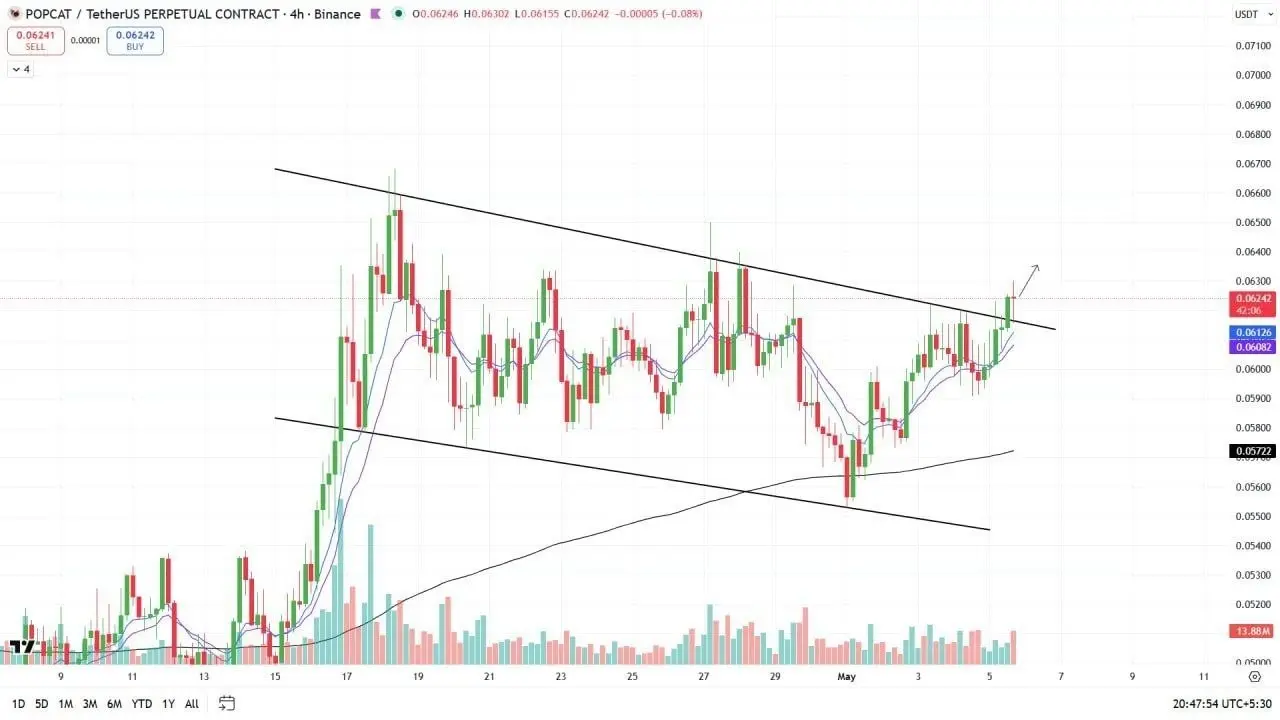
POPCAT's breakout with increased volume really looks legit; I'm on board.
POPCAT-3.05%
View Original
MarcusCorvinus
$POPCAT just woke up again and this breakout looks real. 👀
Clean resistance break with volume stepping in.
Momentum across the market is turning bullish.
Meme coins are starting to heat up again.
If this structure holds, upside could get violent fast.
This is the kind of setup that catches everyone late.
Opening a long here and watching closely. 🚀
#GateSquareMayTradingShare
repost-content-media
  • Reward
  • Comment
  • Repost
  • Share
$SOL Community spirit, true colors show in a bear market
SOL1.28%
View Original
ExtremeWayBit
$SOL Indeed, holding the coin is like guarding a widow, but stay firm in your faith! We won't lose, keep going!
repost-content-media
  • Reward
  • Comment
  • Repost
  • Share
Choosing the wrong path and stubbornly persisting, that's called passion; choosing the right path and hesitating, that's called internal conflict. $GT This time, I stand with the clear-headed faction.
GT3.01%
View Original
ExtremeWayBit
Choosing is easy, giving up is hard; this is a question many people have internally but don't want to speak out loud or admit. Everyone knows that persistence, perseverance, and loyalty are the paths to the hall of glory, but persisting in the wrong way is just being stubborn. 😂 Is the path you're sticking to the right one? $GT
repost-content-media
  • Reward
  • Comment
  • Repost
  • Share
I realize that my biggest problem isn't misreading the direction, but that once I get overleveraged, it turns into "either I can't hold the spot position or I hold the futures to the point of explosion." To put it plainly, position management is just straightforward: first, make sure you can survive until tomorrow, then talk about making money or not. Don't use "emotional positions" for spot trading; if you want to hold long-term, set aside the part that can stay untouched for half a year. For futures, treat it as a temperamental tool, keep the position small enough that you can sleep well, se
View Original
  • Reward
  • Comment
  • Repost
  • Share
8% red line implemented, Grab Indonesia's motorcycle ride-hailing business under pressure. Regulatory crackdown vs platform model, an old script in emerging markets.
View Original
CryptoFrontier
Grab Adjusts Indonesia Business After 8% Commission Cap
Grab announced it will adjust its Indonesia business following President Prabowo Subianto's government decision to cap ride-hailing commissions at 8%, down from approximately 20%, according to Bloomberg. The change is expected to primarily affect the company's two-wheel motorbike services in its
  • Reward
  • Comment
  • Repost
  • Share
Recently, people have been asking me again how I adjust my positions. To put it simply, I first look at two “main switches”: interest rates and risk appetite. When interest rates rise, money becomes more selective—so the portion willing to take risks shrinks. That’s when I make my position a bit lighter and keep some room/capital. When interest rates fall or market sentiment relaxes, I’m willing to gradually add—but I don’t chase after the noisy, headline-grabbing price increases.
These days, Layer 2 is once again out there comparing TPS, fees, and subsidies, arguing like it’s a competition—or
View Original
  • Reward
  • Comment
  • Repost
  • Share
Recently looked at several DAO proposals, on the surface they are written to sound like they are "good for the ecosystem," but I now have a habit of first checking those lines about incentives: where the money is going, who it’s given to, and how the conditions are written. Frankly, voting is not just about "agree or disagree," but more like stamping the power structure—who can propose, who can change parameters, who receives subsidies, and ultimately, who has the long-term authority to decide.
Developers are very excited about the narrative around modularization and the DAO layer this wave of
View Original
  • Reward
  • Comment
  • Repost
  • Share
Recently, several NFT communities have been arguing about floor prices and royalties, basically because when liquidity is insufficient, everyone wants to be the first to run. When the floor drops, no matter how hot the narrative is, it can instantly cool down; but if royalties are cut, creators and operators have no money to keep going, making it more like chronic bleeding in the long run. Anyway, I don’t really believe in “slogans” when it comes to NFTs now; I prefer to focus on real on-chain transactions and holder structures—who’s buying in, whether they continue to buy after buying in, it’
View Original
  • Reward
  • Comment
  • Repost
  • Share
Recently, someone called AMM "lying down and collecting fees," and I couldn't help but laugh... The curve is right there, and when the price fluctuates, impermanent loss is no longer mysticism, especially in pools with high volatility, the fees earned might not even cover the losses. To put it simply, market making is selling volatility; if you get the direction wrong, don't blame the mechanism for being cold.
AI agents, automated trading, these narratives are also quite noisy now. On-chain interactions have indeed increased, but what I care more about is: who is seriously working on risk cont
View Original
  • Reward
  • Comment
  • Repost
  • Share
I've been lurking in the group for a long time, but I still can't help but say: when liquidity is really scarce, think first about how to survive, don't rush to prove you can bottom fish. Honestly, during that stage when "nobody has money to take over," whether prices fall or not is no longer a logical issue, it's about who is forced to liquidate first.
Recently, with extreme funding rates, everyone is arguing whether to reverse or continue to squeeze the bubble. I actually want to look more at whether the real needs at the settlement layer have changed: on-chain transfers, stablecoin flows, a
View Original
  • Reward
  • Comment
  • Repost
  • Share
These days, I've been watching L2s argue again: TPS, fees, subsidies—who's louder. Frankly, what end users really care about are two things: Will my money get stuck or lost when I transfer it out, and who am I settling with when I click confirm.
As for modularity, for someone like me who just wants to tinker less, the biggest change isn't "faster," but that after splitting execution, data, and settlement, wallets and applications can hide the process in the front end: cross-chain, bridges, network swaps—these actions are increasingly like backend synchronization. You use the same entry point,
View Original
  • Reward
  • Comment
  • Repost
  • Share
When I look at whether a project is actually doing serious work, I end up checking first to see whether the treasury expenditures and milestones line up: spending money slowly isn’t necessarily good, but spending it fast and wrapping it all in those big “operations cooperation” and “ecosystem incentives” buckets—at that point, you pretty much know what’s going on inside. Even more important is whether the milestones have verifiable, on-the-ground execution, such as a mainnet launch, upgrades, audit reports, and on-chain data you can see reflecting real usage fluctuations—rather than a pile of
View Original
  • Reward
  • Comment
  • Repost
  • Share
The most intense expression of affection: starting to worry about losing you, rather than enjoying being chased by you.
View Original
God-givenTeam
How to tell if a woman has truly fallen in love?
repost-content-media
  • Reward
  • Comment
  • Repost
  • Share
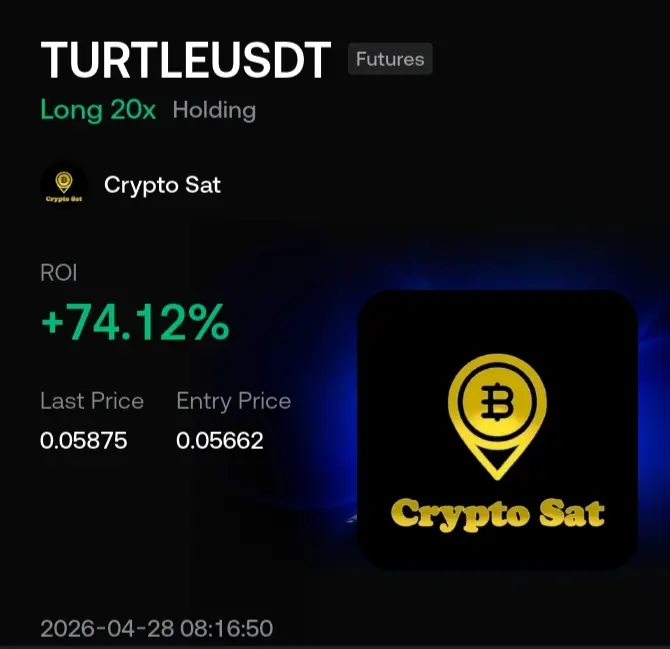
Goal one completed, your execution ability is impressive.
View Original
CryptoSat
$TURTLE 1st Target completed 🎯
repost-content-media
  • Reward
  • Comment
  • Repost
  • Share
Benefits are back = Time to stay up late interacting again, I'm used to it
View Original
Original content no longer visible
  • Reward
  • Comment
  • Repost
  • Share
Releasing liquidity is a good thing, but it depends on the pace and purpose of the release; details determine success or failure.
View Original
Original content no longer visible
  • Reward
  • Comment
  • Repost
  • Share
  • Pin