PaperImperium

vip
Age 1.7 Year
Peak Tier 0
No content yet
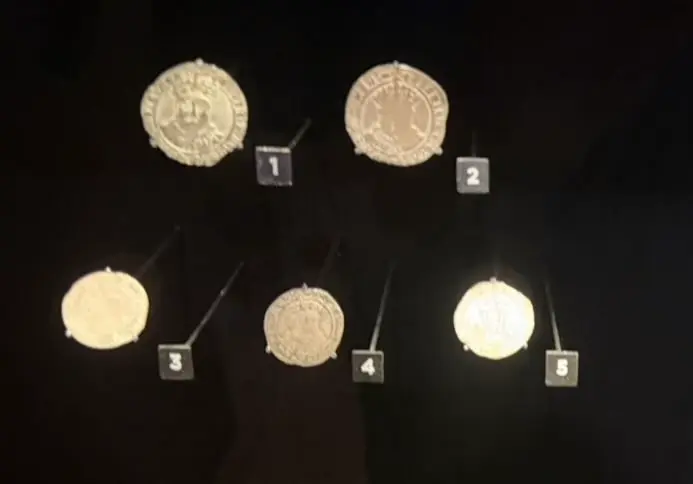
Those who follow me know that I think there is a lot to learn about stablecoins by going deep into the history of money (both private and public, both fiat and commodity). Today, let’s talk about debasement.
For modern fiat currency, we don’t think about debasement much, which is more of a journey, and focus on the destination, which is inflation. This is because there’s not much to actually debase for a fiat currency.
But debasement used to be a major concern for metallic money. Florins, Ducats, Shekels, and (the most successful though dollarizing Spanish trade and the United States) the Doll
CRCLX1.69%
UNI2.87%
post-image
  • Reward
  • Comment
  • Repost
  • Share
Anyone have recommendations on best way to safely and reasonably quickly rate a Pokemon card? One of my kids has an alternate artwork card they want to get graded
  • Reward
  • Comment
  • Repost
  • Share
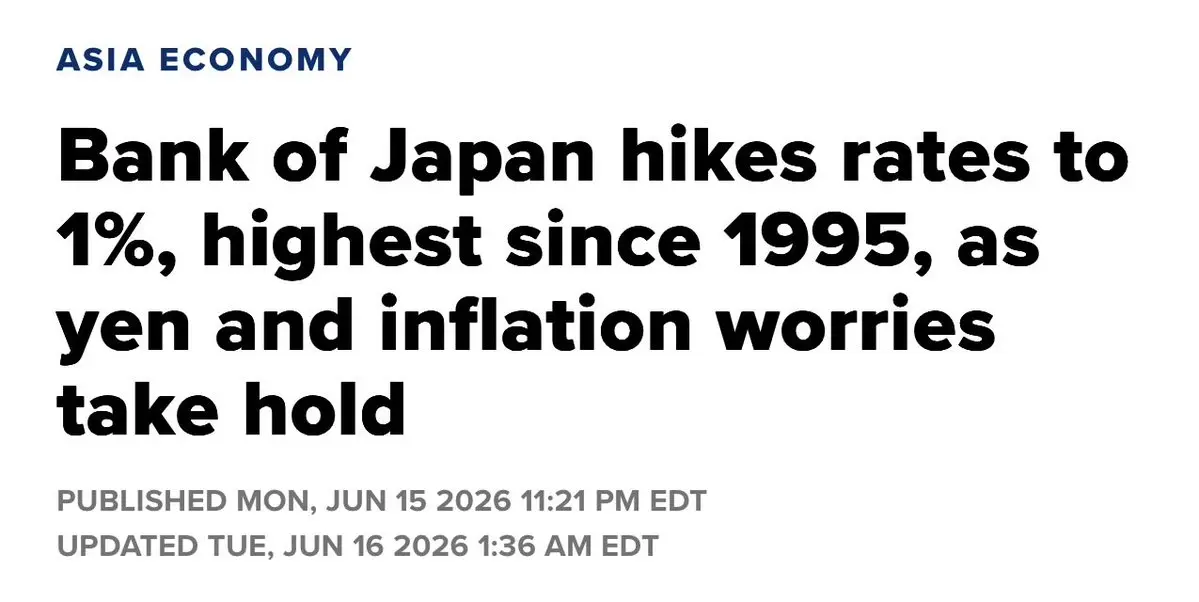
The headline actually undersells this, because the last time Japan had 1% rates, it was in the context of a rate cutting cycle from 6% down to 0.5% in the early 1990s. So only people who were around in 1989/90 or before have experienced a tightening cycle in Japan, notwithstanding brief hikes up to 0.75% in the sunup to the Great Financial Crisis.
Interest rates play an especially important role in countries that depend upon either trade surpluses or capital flows surpluses. In the case of Japan, the yen is very weak right now compared to 1995 (about 160 yen/USD vs 80 back then). The Bank of J
post-image
  • Reward
  • Comment
  • Repost
  • Share
Real talk: The index of CCC and lower bonds yields <14%.
If you think you need more than distressed bonds pay just to engage in DeFi, maybe your risk models need tuning and DeFi isn’t for you.
  • Reward
  • Comment
  • Repost
  • Share
People tend to think of dollarization as a kind of American agenda. But it’s worth remembering that America itself was dollarized by Spanish 🇪🇸 dollars (we don’t use pounds and shillings).
Even the yuan 🇨🇳 and yen 🇯🇵 were dollarization.
  • Reward
  • Comment
  • Repost
  • Share
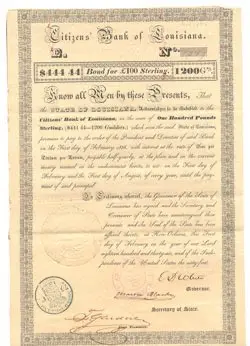
One of the darker periods in financial innovation was the securitization of loans using human collateral. While lending against slaves, serfs, and unfree labor doubtlessly occurred wherever unfree labor was institutionalized throughout history, the late 1700s and early 1800s brought new, complex structures as global finance exploded.
The use of American slaves was so prevalent that in at least one county one in four slaves was serving not just as labor in the fields, but as collateral pledged to a loan. Loans were generally either purchase-money mortgages (to acquire a slave) or equity mortgag
post-image
  • Reward
  • Comment
  • Repost
  • Share
A stablecoin should be thought of as being tripartite: an entry, an exit, and circulation in between.
The exit has to come first in the order of operations. Ironically, many stables have limited exit. MakerDAO/Sky has the best one - permissionless swaps to USDC. Only improvement would be permissionless swaps to an external USD account.
The circulation is hard. Most stablecoins fall back on yield, and never get much further. Maybe it’s collateral. But rarely a settlement asset or unit of account.
I think most stables do badly here because they go wide and not deep. Crypto allows you to launch e
SKY6.46%
  • Reward
  • Comment
  • Repost
  • Share
Successful stablecoin-like products historically solved for a major problem, and giving yield to users wasn’t it.
Tether: shortage of USD on blockchains and emerging markets
Feng Piao Notes: shortage of local currency in 1920s Manchuria
UK Private Coinage: shortage of small-denomination GBP
Wildcat Banknotes: shortage of currency in US hinterlands and frontiers
Swedish Banknotes: shortage of SEK currency
You’ll notice that all of these tackled a common problem that led to their adoption - a shortage of currency and local liquidity.
This is why I’m so bullish on stablecoins as a category but b
USDS-0.08%
PYUSD0.03%
post-image
  • Reward
  • 2
  • Repost
  • Share
XSEAM:
JUST IN: JPMorgan Asia Pacific strategist cautions that overhyped AI expectations sparked a pullback in Asian tech, noting one quarter’s results don’t signal a broader inflection. $AI? Not yet.
View More
Potential LP: I have a 15% hurdle rate
Me: That’s about what a bond for Zambia yields. Seems high.
LP: Fine. 13% because I always enjoy your tweets.
Me: So you’re saying that LPing into this overcollateralized vault with instant liquidations is as risky as holding a Pakistani bond?
LP: You’re busting my balls here! 12% is best I can do. And I keep any interest earned.
Me: My own credit card is only 11.5%…
LP: Yes, and an unsecured loan to you is safer than LPing into an overcollateralized vault with instant liquidations!
Me: …
LP: …
Me: Are you serious?
LP: Absolutely. Everyone knows you’re no
  • Reward
  • Comment
  • Repost
  • Share
People are focused on crypto banks (PayPal, World Liberty) and fintech banks (Mercury, Nubank, Affirm). But there’s been half a dozen bank applications in the last two months, so bank formation in general is up.
I would not be shocked to see the increased competition for deposits to hit some banks hard - and then have them say it was because of stablecoins 🤪
  • Reward
  • Comment
  • Repost
  • Share
A mistake I see over and over is conflating backing with reserves. Backing ≠ reserves.
Reserves are for managing liquidity. A fully reserved stablecoin or bank can meet 100% of possible withdrawal requests within a few days.
In practice, I think the Reservoir unwinding half a year ago is one of the only times I’ve seen a stablecoin unwind ~100% as designed.
So being fully reserved is typically seen as overkill, and usually it exists mainly to remove the temptation of an asset issuer to accept low-quality backing. You can’t engage in bad underwriting if you don’t engage in any underwriting at
DAM5.00%
  • Reward
  • Comment
  • Repost
  • Share
When people mention private money, they usually think of private banknotes. I’ve also pointed out time and again that most money today is private money, in the form of bank deposits.
But there’s also the curious case of private coinage in the 1700s & 1800s UK.
At the time, coinage was minted by bringing the metal (gold, silver, or copper in the case of the British Royal Mint) to the mint and paying a striking fee.
This of course meant you lost a little money to mint money (not unlike many stablecoins). You also had to physically transport your guineas, shillings, pennies, farthings, etc, so co
post-image
  • Reward
  • 1
  • Repost
  • Share
CryptoResearchExpert:
threatened.
Below you can see one of the early high-quality Druid tokens.
One interesting thing that may come out of the Strategy BTC sale @Polymarket is a court test of whether these markets represent contracts of adhesion.
Insurance contracts are a familiar example of these - they are take it or leave it.
US courts pretty consistently favor the weaker party when it comes to ambiguity of terms to avoid the drafter of the contract from benefitting from trick language.
But Polymarket is I think in Panama, so I’m not sure how this kind of “gotcha” language is handled in contracts of adhesion in other jurisdictions.
A good test case would help sort that out and remov
BTC1.23%
  • Reward
  • Comment
  • Repost
  • Share
I suspect the next 12 months provide us a major expansion in DeFi and CeDeFi lending activity.
Pretty much every lending protocol of note (and some who are not) has just released or will soon release a new version.
I’m not sure those new versions will themselves provide much of a Cambrian Explosion of new lending structures, but it means there’s a window where the accumulated Lindy of most players in the DeFi lending market will be reset.
Assuming there are enough new features to lure depositors away from Morpho v1 and Aave v3, then the arms race will be on, since a new entrant is unlikely to
MORPHO5.66%
AAVE2.55%
  • Reward
  • Comment
  • Repost
  • Share
I am so, so sad that NES Nobunaga’s Ambition is finally on Switch… but it’s only on Switch 2.
I’ve put out an RFP to my kids to see which will let me rent time on their devices the cheapest. Other than Final Fantasy, the NES game I spent the most hours on bc of replayability
post-image
  • Reward
  • Comment
  • Repost
  • Share
How much do you read to learn?
I always assumed everyone is curious and never stops learning in areas they find interesting, but maybe not?
Assume 10 peer reviewed articles = 1 book. Fiction discouraged, but will leave to your judgement if it was with intent to learn.
  • Reward
  • Comment
  • Repost
  • Share
  • Pinned