GateUser-373e0984

vip
Age 10.6 Year
Peak Tier 2
No content yet
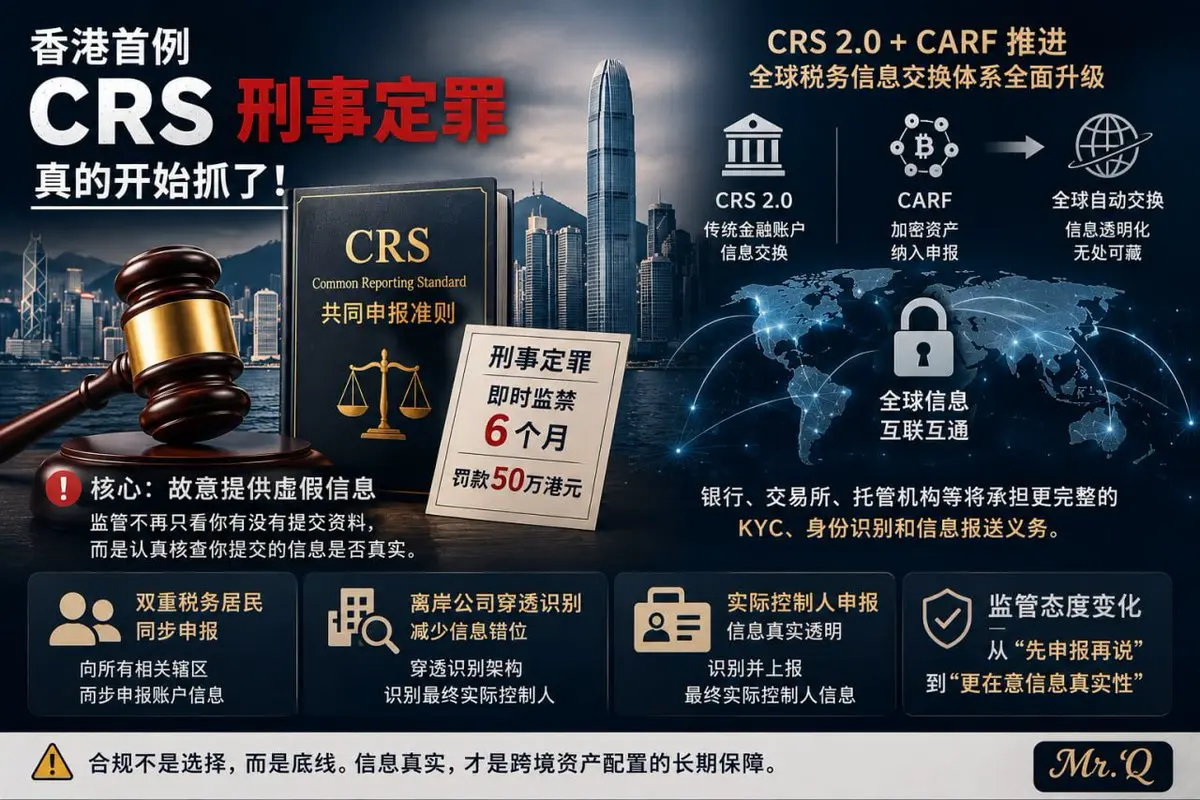
Hong Kong's first criminal conviction under CRS this time, what's worth noting is not actually the fine amount, but that they are really starting to crack down.
In the past, many people viewed CRS more as a long-standing rule with less enforcement strength. Especially when it involved overseas accounts and tax residency information, many would hold a fluke mentality, thinking that if they filled out incorrectly or underreported, at most they would just need to supplement the information later or face account restrictions.
But this time, there was a direct criminal conviction, and immediate
View Original
post-image
  • Reward
  • Comment
  • Repost
  • Share
Nice, people haven't arrived yet, but the competition has already started secretly😂
View Original
post-image
  • Reward
  • Comment
  • Repost
  • Share
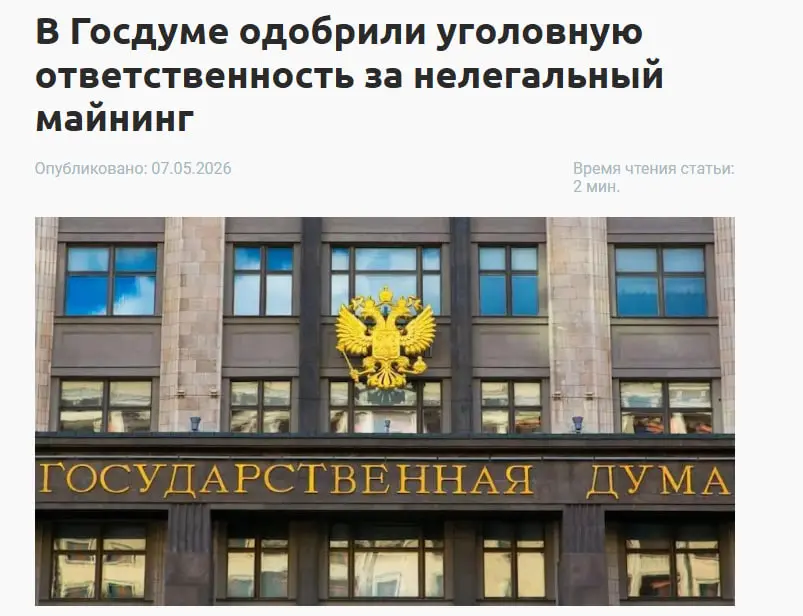
Russia is now planning to explicitly include illegal mining in criminal law, which makes me feel like mining is no longer considered a fringe industry.
In the past, many places implicitly tolerated mining as long as it wasn't too high-profile, and they generally didn't enforce strict regulations because the scale wasn't as large as it is now.
But now, things are different.
The Russian government’s own data indicates that approximately 50k entities are involved in mining, but only 1,489 are officially registered.
This means that the vast majority of mining farms have always operated out
BTC1.16%
View Original
post-image
  • Reward
  • Comment
  • Repost
  • Share
Many people who do Ferra's Yapping don’t get results. Fundamentally, it’s not that they didn’t write well—it’s that they didn’t break down a real use case into details of a single end-to-end execution.
If you just use it briefly and then summarize with something like “it’s fine,” it’s hard for this kind of content to be competitive because it lacks information density.
A truly effective Yapping’s core is explaining the pathway clearly: which type of liquidity structure you’re using, such as DLMM or DAMM; whether you select a stable-asset portfolio or a high-volatility portfolio; and whethe
View Original
post-image
  • Reward
  • Comment
  • Repost
  • Share
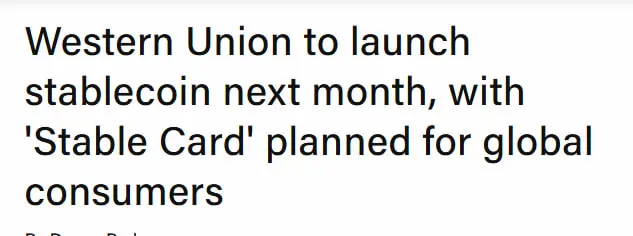
Western Union announces it will launch a stablecoin based on Solana, $USDPT , to replace its internal settlement network. It will also connect crypto wallets with offline outlets and plans to roll out a stablecoin card so users can spend directly with the stablecoin.
On the surface, this looks like product development; in reality, it’s a change to the settlement structure. Western Union in the past relied on pre-funded balances in different locations to keep remittance efficient—funds were long-term dispersed and the cost to coordinate them was high.
After shifting to on-chain stablecoins,
USDC-0.01%
View Original
post-image
  • Reward
  • Comment
  • Repost
  • Share
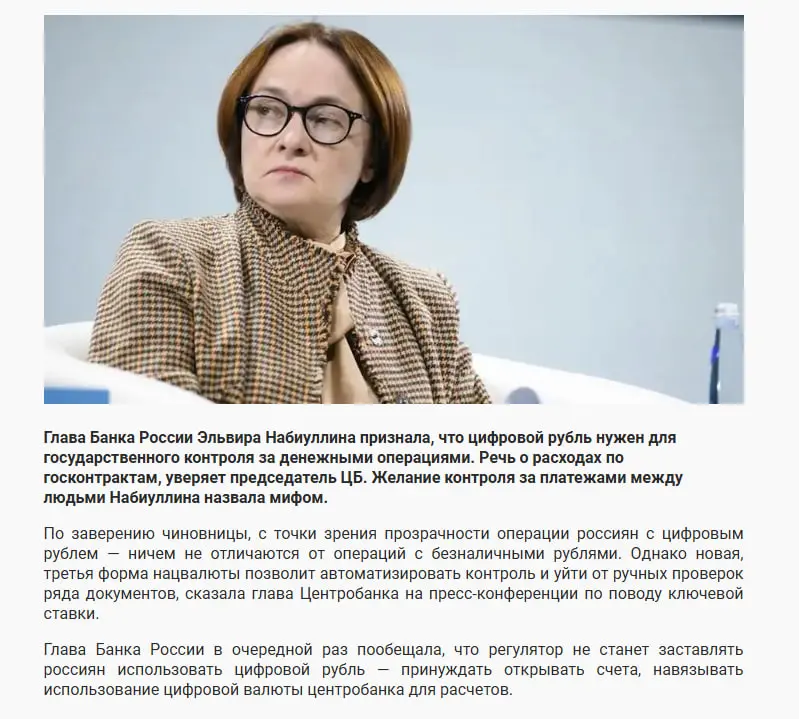
The Governor of the Central Bank of Russia, Elvira Nabiullina, recently responded to the digital ruble by stating that its goal is to enhance the transparency of government fund flows and automate review efficiency, rather than monitoring individual payments, and it will not be forcibly promoted.
But the focus of this matter is not actually about clarifying misunderstandings, but about a deeper change — the rules for funds are beginning to be embedded into the system.
The past problem was not the lack of rules, but that enforcement relied on people. After funds are allocated, whether they
View Original
post-image
  • Reward
  • Comment
  • Repost
  • Share
Many people, when they first see @ferra_protocol, might think that doing long assets on-chain with 50x leverage isn't new.
But in practice, it feels like it's not adding new features, but rather cutting out and rebuilding the entire fragmented trading process.
In the past, if you wanted to make cross-asset judgments, like expecting inflation to rise and wanting to move simultaneously in gold and tech stocks, it was actually quite discouraging to operate.
You'd either switch back and forth between different platforms or give up and just stick to the most convenient target.
It's not that you can
View Original
post-image
  • Reward
  • Comment
  • Repost
  • Share
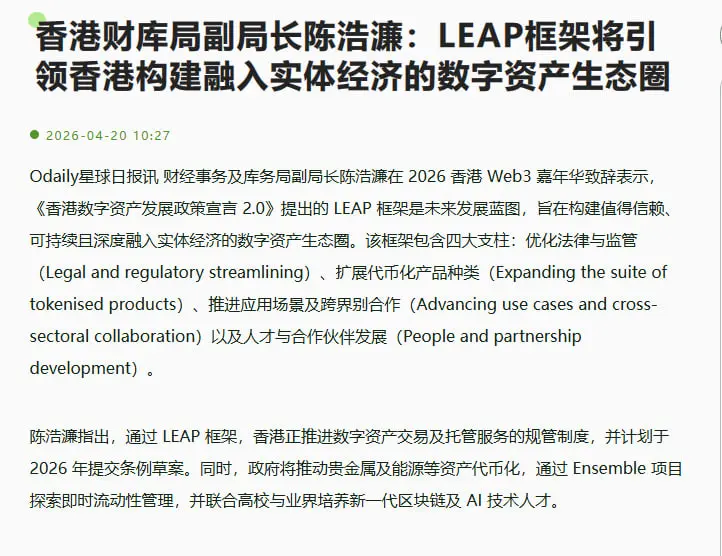
At the Hong Kong Web3 Carnival 2026, Chen Haolian clearly explained the LEAP framework of the "Hong Kong Digital Asset Development Policy Declaration 2.0," but the true market significance of this matter can be viewed as a single thread: Hong Kong is simultaneously filling three gaps—RWA, capital flow, and regulatory structure.
These three areas may not be new when looked at separately, but advancing them together creates a different impact.
First is the asset side. The mention of precious metals, energy, and other assets means that more stable, priceable targets are beginning to be introd
View Original
post-image
  • Reward
  • Comment
  • Repost
  • Share
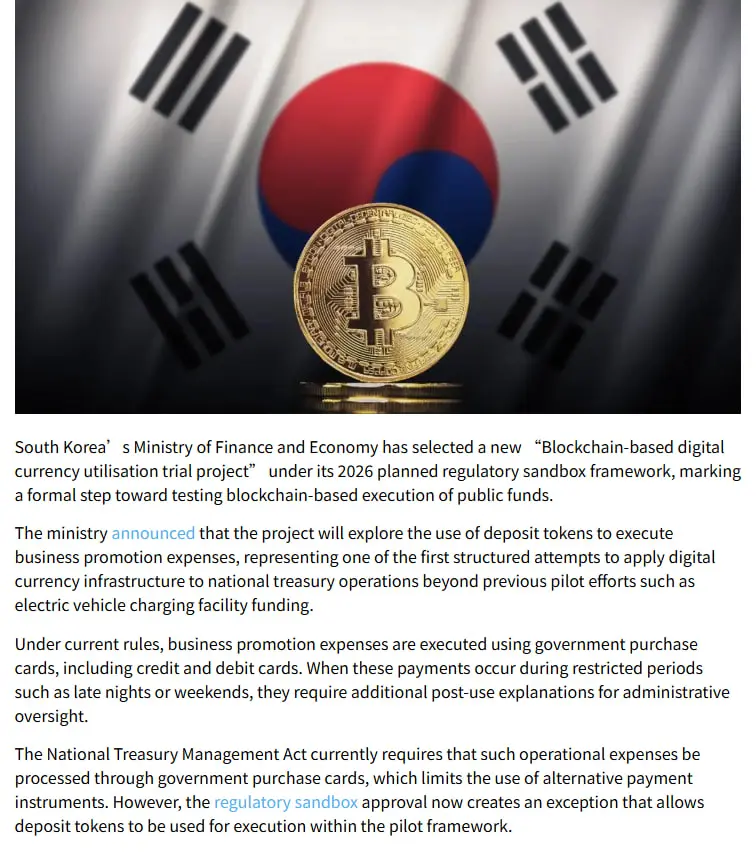
South Korea this time included deposit tokens in the pilot program for business promotion expenses, focusing not on blockchain itself but on changing the way fiscal expenditure constraints are implemented.
Previously, money was spent first, then explanations were provided. There were regulations on timing and purpose, but execution still relied on human judgment and supplementary explanations, leading to ongoing tension between efficiency and oversight.
Now, these restrictions are directly embedded into the funds; if the timing isn't allowed or industry conditions aren't met, the money can
View Original
post-image
  • Reward
  • Comment
  • Repost
  • Share
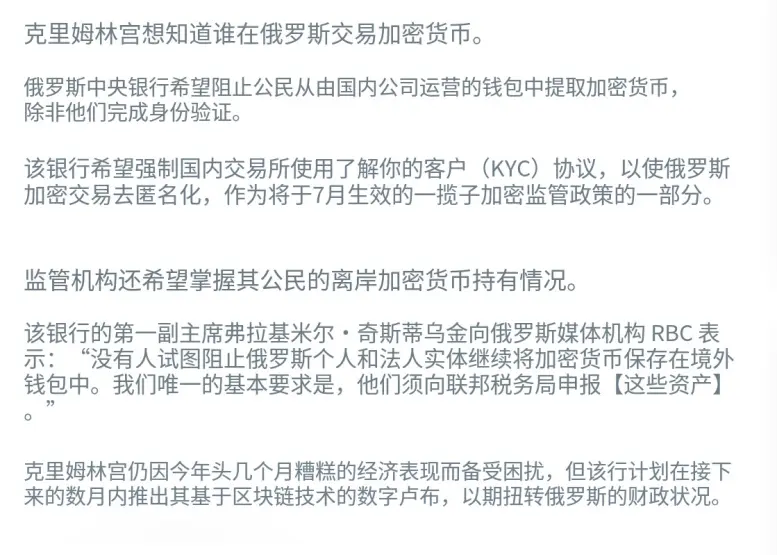
The Russian Central Bank has recently proposed new regulations: requiring all crypto traders to complete KYC real-name verification, restricting unverified users from withdrawing assets from domestic platforms, and banning funds from flowing from domestic custodial wallets to overseas non-custodial wallets.
At the same time, it will also require residents to declare the crypto assets they hold overseas, and the relevant rules are expected to take effect this July.
If you look at these provisions only, you might feel that they are tightening controls, but in fact they are redoing something
View Original
post-image
  • Reward
  • Comment
  • Repost
  • Share
Korea payment service provider NHN KCP and Ava Labs are collaborating to create a dedicated Layer 1 for payments, used for faster authorization, on-chain data, and later for stablecoin settlements and cross-border scenarios. Launch depends on the progress of Korean regulations.
If you look at this from the perspective of another chain, it loses meaning. The key point is simple: it’s not about the payment action, but about clearing.
Front-end experiences like card swipes and QR codes have long been competitive, and users hardly perceive any delay. The real slow, expensive, and convoluted pa
View Original
post-image
  • Reward
  • Comment
  • Repost
  • Share
欧洲央行表示,支持将所有加密资产服务商 (CASPs) 的授权、监测和执法权力从成员国监管机构转移至ESMA,将确保监管趋同,减少市场碎片化并缓解跨境风险。
欧洲央行这次的表态,看是在支持把监管权集中到European Securities and Markets Authority,但其实是在补MiCA留下的牌照套利口子。
MiCA 的设计是单一牌照,全欧通行,先把市场跑起来。但问题在于,牌照入口在各成员国,监管标准、执行力度和实际态度都存在差异。
这就导致一个结果,企业的注册地选择,会在一定程度上影响它实际面对的监管强度。
所以像Kraken、Coinbase、Bitpanda分布在不同司法辖区,本身未必是刻意套利,但客观上确实形成了空间差异,而这种差异,在统一市场下是会被放大的。
问题也就出在这里:市场是统一的,但监管是分散的,风险却是跨境流动的。
一旦出现流动性或合规问题,影响不会停留在单一国家,而是顺着业务直接扩散到整个欧盟。
这也是为什么ECB会强调,银行与加密之间的联系在加深,资金、资产和风险已经开始互相传导。
在这种背景下,把CASPs的授权、监测和执法权统一交给ESMA,本质不是简单加强监管,而是把原本分散的入口收紧,削弱不同司法辖区之间的监管差异,从源头压缩可利用空间。
这一步,不是为了多管,而是为了少漏。
如果这套机制落地,欧盟持牌门槛会抬高,审批更集中、更一
COINON3.35%
post-image
  • Reward
  • Comment
  • Repost
  • Share
欧洲央行表示,支持将所有加密资产服务商 (CASPs) 的授权、监测和执法权力从成员国监管机构转移至ESMA,将确保监管趋同,减少市场碎片化并缓解跨境风险。
欧洲央行这次的表态,表面上是在支持把监管权集中到European Securities and Markets Authority,但核心其实是在补MiCA留下的牌照套利口子。
MiCA 的设计是单一牌照,全欧通行,先把市场跑起来。但问题在于,牌照入口在各成员国,监管标准、执行力度和实际态度都存在差异。这就导致一个结果,企业的注册地选择,会在一定程度上影响它实际面对的监管强度。
所以像Kraken、Coinbase、Bitpanda分布在不同司法辖区,本身未必是刻意套利,但客观上确实形成了空间差异,而这种差异,在统一市场下是会被放大的。
问题也就出在这里:市场是统一的,但监管是分散的,风险却是跨境流动的。
一旦出现流动性或合规问题,影响不会停留在单一国家,而是顺着业务直接扩散到整个欧盟。这也是为什么ECB会强调,银行与加密之间的联系在加深,资金、资产和风险已经开始互相传导。
在这种背景下,把CASPs的授权、监测和执法权统一交给ESMA,本质不是简单加强监管,而是把原本分散的入口收紧,削弱不同司法辖区之间的监管差异,从源头压缩可利用空间。
这一步,不是为了多管,而是为了少漏。
如果这套机制落地,欧盟持牌门槛会抬高,审批更集中、
COINON3.35%
post-image
  • Reward
  • Comment
  • Repost
  • Share
Many people look at the Sui ecosystem and still stay at the level of "new chain + high performance," but if you dig a layer deeper, you'll find that what’s truly starting to compete is liquidity itself.
What @ferra_protocol is doing can be simply understood as: not just building a DEX, but trying to become the liquidity distribution layer on Sui.
The core lies in three fee-issuing designs: DLMM, DAMM, CLMM.
First, let's talk about DLMM (Discrete Liquidity Market Maker).
Its essence is to split liquidity into a series of price range grids, each of which can be priced and distributed ind
SUI-6.03%
View Original
post-image
  • Reward
  • 1
  • Repost
  • Share
IndianOldSparrow:
Long-term, SUI coin still has unlimited potential and is very powerful!
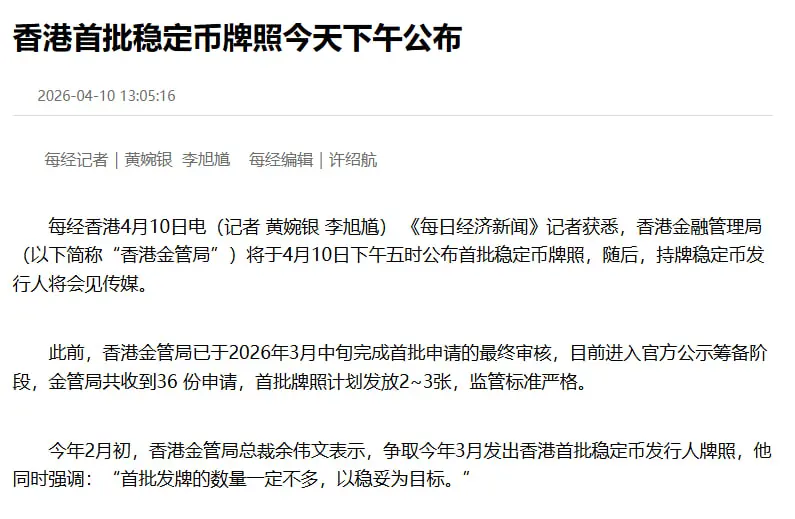
The Hong Kong Monetary Authority will announce the first batch of stablecoin issuer licenses at 5 p.m. today.
36 applications, only 2–3 licenses issued, and even after the initial review, strict control of issuance volume remains. This indicates that the screening criteria are not about whether one can do it, but whether one can back it up.
Once stablecoins are incorporated into the regulatory system, they face not only on-chain liquidity issues but also trust pressures in the real world. If they lose their peg or experience a bank run, who bears the responsibility, and what assets are use
View Original
post-image
  • Reward
  • Comment
  • Repost
  • Share
The U.S. Department of the Treasury is about to release proposed rules requiring stablecoin issuers to establish standards for combating money laundering and sanctions violations.
This version of stablecoin regulations continues to strengthen the compliance obligations of issuers. Based on the GENIUS Act, driven by the Financial Crimes Enforcement Network (FinCEN) and the Office of Foreign Assets Control (OFAC), the focus is on two main points: first, issuers must have the capability to handle suspicious transactions (such as suspending or rejecting them); second, they must cooperate with sc
View Original
post-image
  • Reward
  • Comment
  • Repost
  • Share
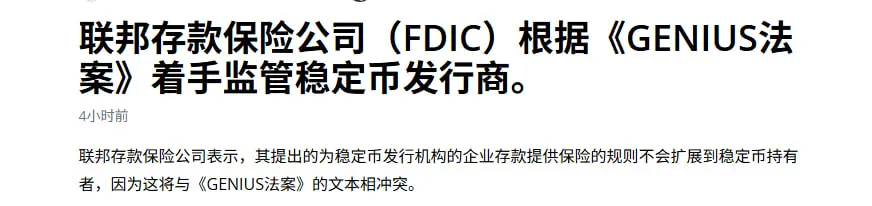
The Federal Deposit Insurance Corporation (FDIC) has released a draft regulation on stablecoins, based on the GENIUS Act. It proposes requirements for issuers within its scope, including reserves, redemption, capital, risk management, and custody. It also clarifies that reserve deposits are insured, but the stablecoin itself is not covered by insurance. The public comment period is currently open for 60 days.
The key point of this draft isn't just the specific provisions, but that it dissects the credit structure of stablecoins.
In the past, the market defaulted to the assumption that stableco
View Original
post-image
  • Reward
  • Comment
  • Repost
  • Share
Today I saw a news report that the U.S. Securities and Exchange Commission has submitted the crypto safe harbor proposal to the White House for review. The core idea is to allow projects to raise funds without immediately needing to complete registration.
In the past, compliance came first, then action, but the problem is that early-stage crypto projects are often not fully developed yet, making it difficult to apply a mature financial framework to them. As a result, many projects get stuck at the starting line—either going overseas or simply not proceeding.
This safe harbor essentially pr
View Original
post-image
  • Reward
  • Comment
  • Repost
  • Share
Today I came across two pieces of news. One is the delay in licensing for stablecoins in Hong Kong, and the other is Hong Kong's upcoming legislation on a crypto asset reporting framework. At first, I thought these two pieces of information were unrelated, but after some reflection, I realized they are connected.
Let's start with the licensing. Originally, the first batch was supposed to be issued in March, but it hasn't happened yet. The market has been speculating whether HSBC or Standard Chartered will get the license. However, based on the information released, the regulators are still rep
View Original
post-image
  • Reward
  • Comment
  • Repost
  • Share
Ant Group's acquisition of Hong Kong stablecoin concept stock Yao Cai Securities has officially completed the transaction, taking a 50.55% stake for HKD 2.814 billion.
This move is actually quite bold.
Ant doesn't lack a brokerage license; what it truly needs is a compliant container that can connect stablecoins, capital flows, and user accounts. Yao Cai Securities just happens to be that interface.
Many people still see stablecoins as a substitute for US dollars on the chain, but in the eyes of players like Ant, they are more like a settlement layer tool.
In the past, cross-border capital flo
View Original
post-image
  • Reward
  • Comment
  • Repost
  • Share
  • Pinned