QueenOfTheDay

vip
Age 0.9 Year
Peak Tier 1
No content yet
Market update
243 views
2026-06-22 08:47
  • Reward
  • 1
  • Repost
  • Share
CryptoDiscovery:
To The Moon 🌕
good post
DragonFlyOfficial
#USIranTalksPostponed
The Negotiation Paradox: When the Deal is Signed But Nobody Shows Up
They signed the papers. Both sides. Electronically, ceremoniously, with cameras flashing and markets breathing a sigh of relief. The 14-point MOU was supposed to end four months of conflict, reopen the Strait of Hormuz, and launch a 60-day nuclear negotiation window. Then, on June 18, the talks in Switzerland were postponed. VP Vance canceled his trip. Iran delayed its delegation. The 60-day clock keeps ticking, but the negotiators aren't in the room.
This isn't just a diplomatic hiccup. This is what I call "The Signature Mirage" — a cognitive trap where markets and observers confuse symbolic agreement with actual resolution. The human brain craves closure. We see signatures, handshakes, and official statements, and our pattern-recognition systems scream "deal done!" But the Strait of Hormuz tells the real story: Iran re-closed it on June 20, citing Israeli "crimes" in Lebanon. The waterway carrying 20% of global oil and LNG remains a bargaining chip, not a solved problem.
The Bull Case: The MOU exists. Both parties have invested diplomatic capital. The White House says logistical issues, not fundamental disagreement, caused the delay. Maritime traffic had shown recovery signs before the latest closure. Pakistan and Qatar are mediating, with talks potentially resuming Sunday. If Israel-Lebanon tensions de-escalate, the framework remains intact — sanctions relief, nuclear negotiations, and Hormuz reopening could follow.
The Bear Case: Iran explicitly tied talks to Israeli withdrawal from southern Lebanon. Israel, meanwhile, launched deadly strikes across Lebanon on June 19-20 after Hezbollah killed four soldiers. Trump reportedly swore at Netanyahu for nearly scuppering the MOU, but the strikes continue. Iran's 60-day window shrinks daily. Each delay hardens positions. The "logistical issues" excuse masks deeper disagreements on sequencing, verification, and regional influence.
Key Risks: First, escalation contagion — Lebanon violence derails the entire framework. Second, credibility decay — each postponement erodes trust in both sides' commitment. Third, market whiplash — oil prices swinging on every headline, creating false signals that trigger bad trades. Fourth, domestic pressure — hardliners in both Washington and Tehran gain strength with each perceived concession.
The Outlook: This is a test of institutional patience versus geopolitical reality. The MOU created a 60-day window, but windows can close. The market's current pricing assumes eventual success — that's the cognitive bias at work. The contrarian view? Watch the Strait, not the statements. If Hormuz reopens sustainably, the deal has legs. If it stays closed past July, the Signature Mirage dissolves, and we're back to square one.
The clock is ticking. 60 days minus however many just got burned.

repost-content-media
  • Reward
  • Comment
  • Repost
  • Share
nice information
DragonFlyOfficial
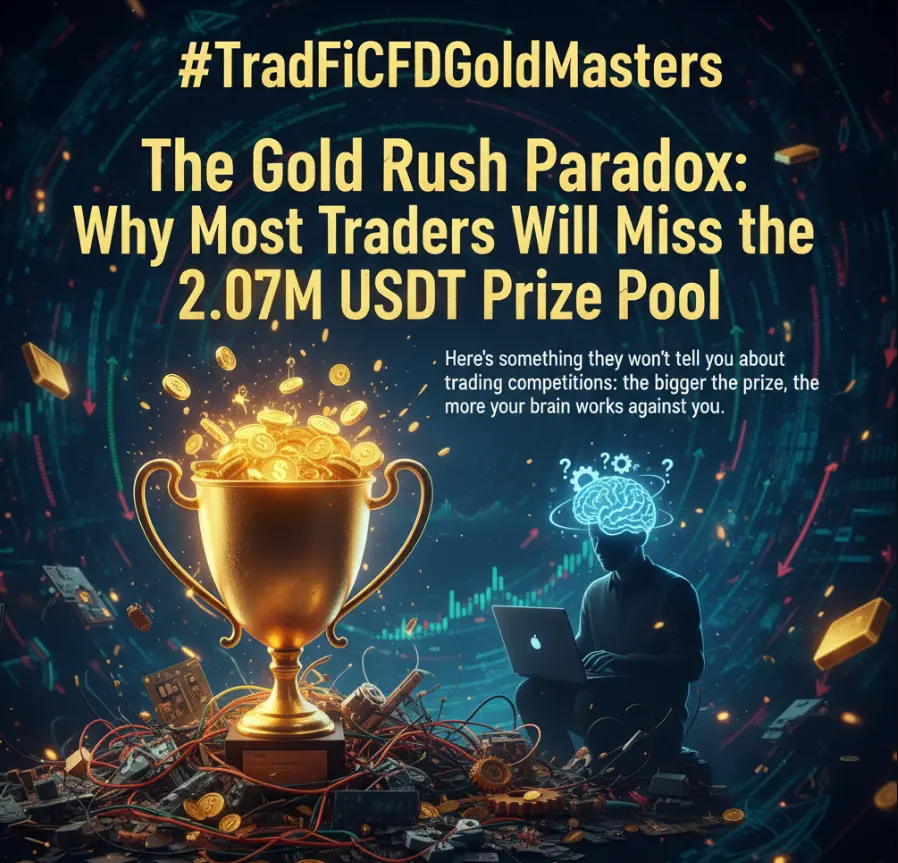
#TradFiCFDGoldMasters
The Gold Rush Paradox: Why Most Traders Will Miss the 2.07M USDT Prize Pool
Here's something they won't tell you about trading competitions: the bigger the prize, the more your brain works against you.
Gate just dropped their TradFi CFD Gold Masters with a 2.07M USDT prize pool. Leaderboard climbers get up to 500K USDT. Hourly draws for 1g gold. VIP5+ gets daily 5g gold draws. New traders get a 200 USDx CFD voucher.
Sounds like a no-brainer, right? That's the trap.
The "Certainty Illusion" in Trading Events
When prizes get this big, our brains switch into lottery mode. We see the 500K headline and unconsciously treat it like a guaranteed outcome. Psychologists call this the "outcome certainty bias"—we inflate the probability of success because the reward feels so real.
But here's the market reality: TradFi CFDs trade gold (XAUUSD), silver (XAGUSD), oil (XTIUSD), forex, US stocks, and indices. These aren't crypto. They move on Fed decisions, geopolitical shocks, and institutional flows. The same volatility that creates leaderboard opportunities also wipes out positions in minutes.
The Bull Case: Why This Matters
Gate's TradFi integration isn't just another product—it's a bridge between crypto-native traders and the $7.5 trillion daily forex market plus global commodities. The CFD structure means you're trading price exposure without holding the underlying, which is perfect for short-term strategies.
The hourly gold draws (1g) and VIP daily draws (5g) create a "variable reward schedule"—the same psychological mechanism that keeps people engaged in high-performance activities. Even if you're not topping the leaderboard, every trade becomes a lottery ticket.
New traders getting 200 USDx vouchers? That's smart onboarding. It lowers the "activation energy" barrier that stops people from trying TradFi in the first place.
The Bear Case: What Could Go Wrong
Leverage is a double-edged sword. CFDs amplify both gains and losses. In a competition environment, the pressure to climb rankings pushes traders toward higher risk. This is "competition-induced risk escalation"—a documented behavioral pattern where external incentives distort rational position sizing.
Also, gold's been volatile lately. Post-Fed signals have been whipsawing precious metals. If you're trading XAUUSD to chase leaderboard points, you're competing against macro funds with Bloomberg terminals and direct central bank policy feeds.
Key Risks to Watch
Overtrading: The hourly draw structure incentivizes volume over edge. More trades = more fees, even if you're "winning" draws.
Platform Risk: TradFi CFDs are synthetic products. You're trusting Gate's execution and liquidity providers.
Opportunity Cost: Time spent grinding for 1g gold draws could be spent on higher-EV crypto strategies.
The "Accumulation Asymmetry" Framework
I call this the "Accumulation Asymmetry"—the idea that small, frequent rewards (hourly draws) create engagement that compounds faster than the actual value being accumulated. A 1g gold draw sounds small until you realize it's physical gold exposure in a paper trading world.
The real play here isn't the 500K top prize. It's the asymmetric learning opportunity: TradFi markets move differently than crypto. Understanding gold/oil/forex correlations makes you a better trader everywhere.
Future Outlook
As CME moves toward 24/7 gold and oil contracts (announced for July 2026), the line between TradFi and DeFi continues to blur. Gate's early positioning in this hybrid space matters. Traders who master both crypto volatility and traditional macro flows will have an edge.
The Gold Masters competition isn't just about the 2.07M pool. It's about who becomes fluent in both languages before the rest of the market catches up.
repost-content-media
  • Reward
  • Comment
  • Repost
  • Share
good post
DragonFlyOfficial
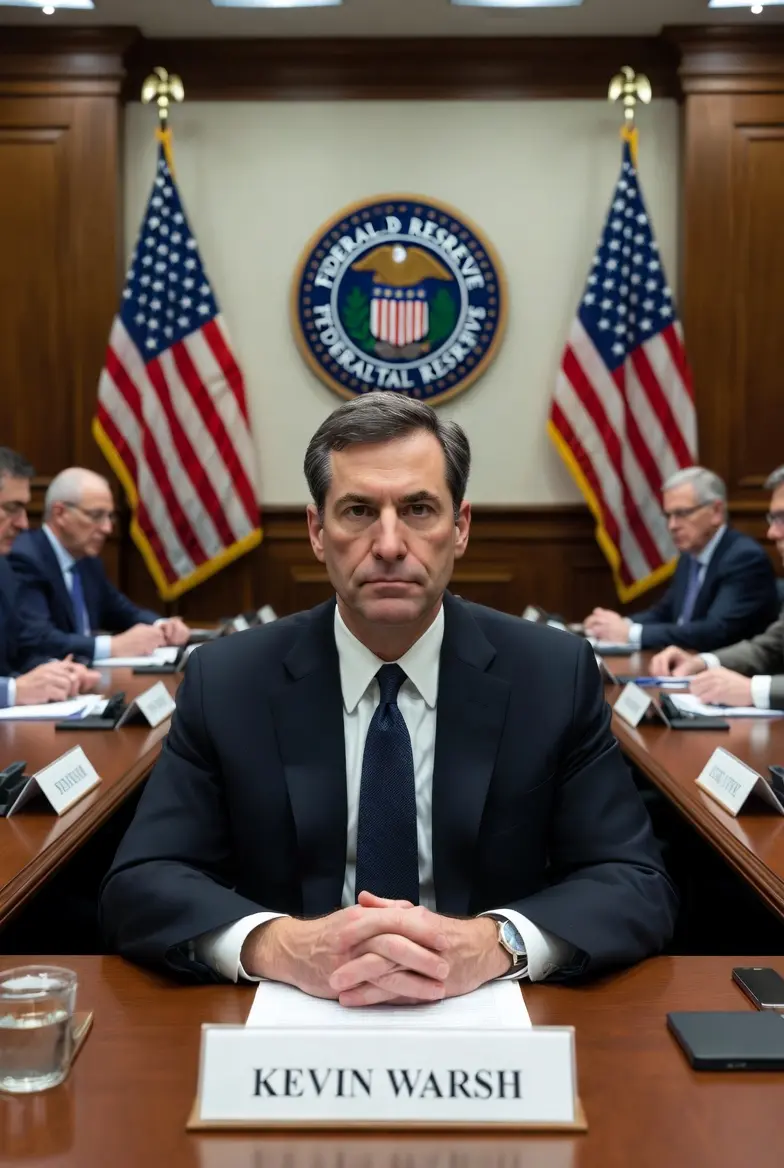
#WarshDebutsAsFedHoldsRatesSteady
The Fed just pulled the steering wheel in the opposite direction — and nobody was ready for it.
On June 18, Kevin Warsh walked into his first FOMC meeting as the new Fed Chair and walked out having changed everything without changing a single rate. The federal funds rate stayed at 3.50%-3.75%, the fourth straight hold. That was expected. What came underneath was not.
The statement removed the "easing bias" — the language that had been telling markets "cuts are coming next." Gone. Nine of eighteen officials now project at least one rate hike this year. Six of them see two. The median end-of-2026 rate forecast jumped from 3.4% to 3.8%. In March, before Warsh took over, zero officials projected a hike. This is a full pivot — the dot plot flipped from "cuts ahead" to " hikes ahead" in a single meeting.
Warsh didn't even submit his own dot. He abandoned forward guidance entirely. Markets that had been trained for years to parse every word of Fed signaling now have nothing to parse. His press conference was short and sharp: inflation is a "burden on American households," the committee is "unambiguous and unanimous" on restoring price stability, and he's forming five task forces to overhaul how the Fed communicates, models inflation, and even thinks about the dot plot itself. This is not a new chair settling in. This is a new chair tearing the old playbook apart.
I call this The Silence Pivot — the moment when a central bank stops telling you what it plans to do and starts doing it without warning. It's a cognitive trap I've fallen into myself as a trader: we've been conditioned for a decade to front-run Fed signals. Rate cut expectations were baked into positions across crypto, equities, and gold. When the signal disappears, your entire decision framework collapses. You're not just wrong about direction — you're wrong about how to even decide direction. The Silence Pivot exploits what behavioral finance calls anchoring bias: traders anchored to "the Fed will cut" for months, and the removal of that anchor creates not a gentle reassessment but a violent repricing.
The market damage was immediate. The S&P 500 dropped over 1%. Two-year Treasury yields surged 14 basis points. Fed-funds futures shifted to a 77% probability of a hike by December, up from 24% just a month earlier. Prediction markets on Kalshi jumped to 57% odds of a 2026 hike, from 35% two days before. Bitcoin slid below $64,000, altcoins sold off harder, and $440 million was liquidated across crypto positions. Gold — which many assumed would benefit from geopolitical uncertainty — also fell as the "hawkish Fed equals gold down" algorithmic trade kicked in.
The bullish case: Warsh's refusal to provide a dot plot is actually a gift. For years, the dot plot created false precision — markets treated 18 individual forecasts as a single commitment, then blamed the Fed when reality diverged. Removing that illusion forces markets to price risk on their own. If core inflation is only up 0.2% month-over-month and oil prices are falling with a potential Iran peace deal, the data may not support a hike. Brown Brothers Harriman's chief strategist thinks the Fed won't move at all this year. The "hawkish tone" could be exactly that — tone, not action. And for crypto, Bitcoin's Sharpe ratio just hit a level that has marked every cycle bottom since 2015. A bottom signal flashing at the same moment that rate-cut hopefuls get washed out is exactly the kind of contrarian setup that rewards patience.
The bearish case: Warsh isn't bluffing. He ran the Fed's crisis response in 2008. He knows how to act decisively. The inflation surge is real — CPI at its fastest pace in three years, unemployment stuck at 4.3%, job growth still running at 172,000. Seventeen of eighteen officials see inflation risks tilted upside. If energy costs stabilize and core pressures keep building, a December hike becomes the base case. That means the rate-cut cycle the market spent six months positioning for doesn't exist. Positions built on "lower rates ahead" — leveraged crypto, long-duration bonds, growth-heavy equity bets — all get repriced lower. And with forward guidance gone, every future FOMC meeting becomes a live event with no preview. Volatility stays elevated. Uncertainty becomes the norm.
The key risk: The Silence Pivot creates a feedback loop. If markets can't predict the Fed, they demand higher risk premiums. Higher risk premiums tighten financial conditions without the Fed raising rates. The Fed gets its tightening effect for free — which means Warsh may not even need to hike to achieve his inflation goals. But if markets overshoot and tighten too much, credit conditions could crack faster than the Fed intends, and Warsh would have no guidance mechanism to signal a course correction. That's the danger of abandoning the steering wheel while driving at speed.
Looking ahead: The next FOMC meeting in late July is now a live or die event — no dot plot preview, no statement language hinting at direction, just a raw decision. Warsh's task forces on communication reform will determine whether the Silence Pivot is a temporary shock or a permanent regime change. Watch the July jobs report and the next CPI print. If inflation keeps running hot, the hike probability climbs above 80%, and the market reprices everything — again. If inflation cools, Warsh's hawkish stance looks like overkill, and the bottom signals flashing in Bitcoin and gold start to matter. Either way, the era of "the Fed told us what to expect" is over. You're navigating blind now. And that's exactly when the best trades get made — or the worst ones get destroyed.
This isn't just a rate hold. This is a regime change disguised as a rate hold. Warsh didn't debut by doing something dramatic. He debuted by undoing something that had defined market behavior for a decade. The silence is the signal. And the market's still too loud to hear it.
repost-content-media
  • Reward
  • Comment
  • Repost
  • Share
nice information
DragonFlyOfficial
#GateSpotVolumeLeadsGlobalGrowth

The Silent Accumulation Principle: Why Smart Money Is Migrating to Gate
There's a cognitive bias that kills more portfolios than any bear market: recency bias. We chase yesterday's winners, ignore structural shifts, and convince ourselves that "this time is different." But here's what the May data reveals—while the herd was panicking, the smart money was quietly repositioning.
According to CoinDesk's latest Exchange Review, when global CEX volumes contracted 3.45% to $4.41 trillion in May, Gate didn't just hold steady. We accelerated. Spot trading volume surged 11.5% to $43.8 billion—the fastest growth rate among all major exchanges. Market share climbed to 4.55%, cementing Gate's position among the global top five spot venues.
This isn't luck. This is the Liquidity Gravity Framework at work.
The Framework Explained:
In volatile markets, liquidity becomes a self-reinforcing asset. Traders gravitate toward platforms with depth, speed, and reliability. Each new participant deepens the order book, which attracts more participants. Gate's derivatives business illustrates this perfectly—$327 billion in futures volume (9.47% market share, 4th globally), with open interest at 10.8% (3rd globally). Combined spot + derivatives ranking? Fourth worldwide.
The Bull Case:
The divergence is telling. While competitors saw outflows, Gate's net inflows led globally. This suggests institutional and high-volume traders are voting with their capital. The technical infrastructure—sub-millisecond matching, deep order books, and robust risk engines—is becoming a competitive moat that compounds over time.
The Bear Case:
Market share gains in a contracting environment are impressive, but they also mean we're swimming against the tide. If macro conditions worsen and retail participation continues declining, even the best infrastructure faces headwinds. The 11.5% growth came against a backdrop of fear—sustainable only if we convert these traders into long-term users.
Key Risks:
Regulatory uncertainty remains the sword of Damocles. As Gate scales, scrutiny intensifies. Additionally, the "winner-take-most" dynamics of exchange economics mean that second-tier competitors may resort to aggressive fee wars or unsustainable incentive programs, temporarily distorting market share metrics.
The Path Forward:
The future belongs to exchanges that bridge CeFi reliability with DeFi innovation. Gate's Polymarket integration—now exceeding $251 million in prediction market volume—demonstrates this hybrid approach. As RWA perpetuals hit record highs and traditional finance edges toward on-chain settlement, platforms with proven liquidity depth and regulatory foresight will capture disproportionate value.
The market slowed. Gate accelerated. That's not a slogan—it's a structural signal that the Liquidity Gravity Framework is already in motion.
repost-content-media
  • Reward
  • Comment
  • Repost
  • Share
good post
DragonFlyOfficial
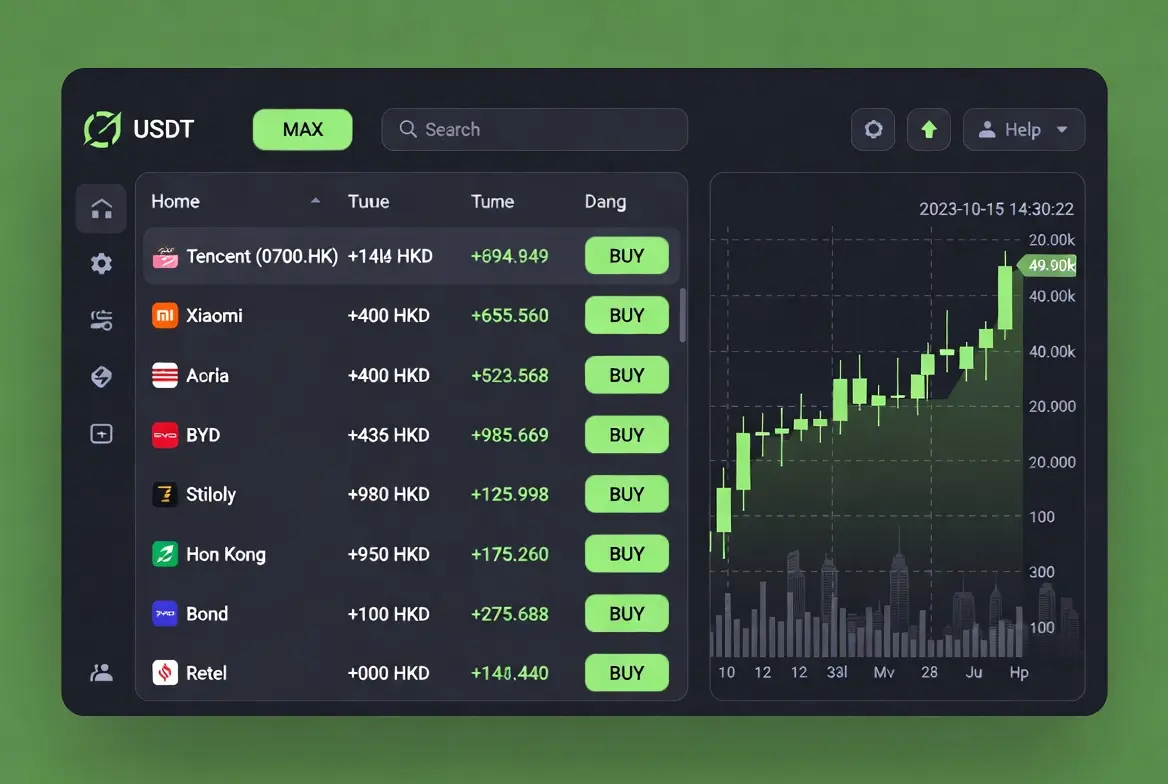
#GateLaunchesHongKongStockTrading
The "Stablecoin Bridge" Effect: Why Gate's Hong Kong Stock Launch Matters
Most crypto traders suffer from what I call "Home Currency Blindness" — the tendency to ignore opportunities outside their familiar markets.
For years, buying Hong Kong stocks meant opening another brokerage account, converting currencies, and dealing with additional complexity. Most traders simply didn't bother.
That barrier is now much lower.
Gate has introduced Hong Kong stock trading, allowing users to access major companies such as Tencent, Xiaomi, Meituan, and BYD using USDT through a single platform experience.
This creates what I call the Stablecoin Bridge Effect.
When a stablecoin becomes the connection between different financial markets, it doesn't just add new assets—it changes how investors think. Markets that once felt distant suddenly become accessible.
Bullish Case
Hong Kong remains one of Asia's most important financial hubs and provides exposure to major Chinese technology, consumer, and EV companies.
For crypto-native investors, combining digital assets, US equities, and Hong Kong stocks within one ecosystem can improve diversification and create new portfolio opportunities.
Bearish Case
Easy access does not eliminate risk.
Hong Kong stocks operate during fixed market hours, unlike crypto's 24/7 environment. Investors must also consider currency exposure, regional policy developments, and market-specific dynamics.
Key Risk
The biggest danger may be Familiarity Overreach.
When barriers disappear, traders often mistake convenience for understanding. Just because a market is easier to access doesn't mean it is easier to trade successfully.
Future Outlook
If stablecoins continue connecting global financial markets, investors may eventually move between crypto, equities, ETFs, and other assets with far less friction than today.
The real opportunity isn't simply having more markets available.
It's developing the knowledge and discipline to use that access wisely.
The bridge is built.
Will traders cross it with a strategy—or rush across it on impulse?
#GateLaunchesHongKongStockTrading #HKStocks #TradFi
repost-content-media
  • Reward
  • Comment
  • Repost
  • Share
great post
DragonFlyOfficial
#我的Gate交易时刻
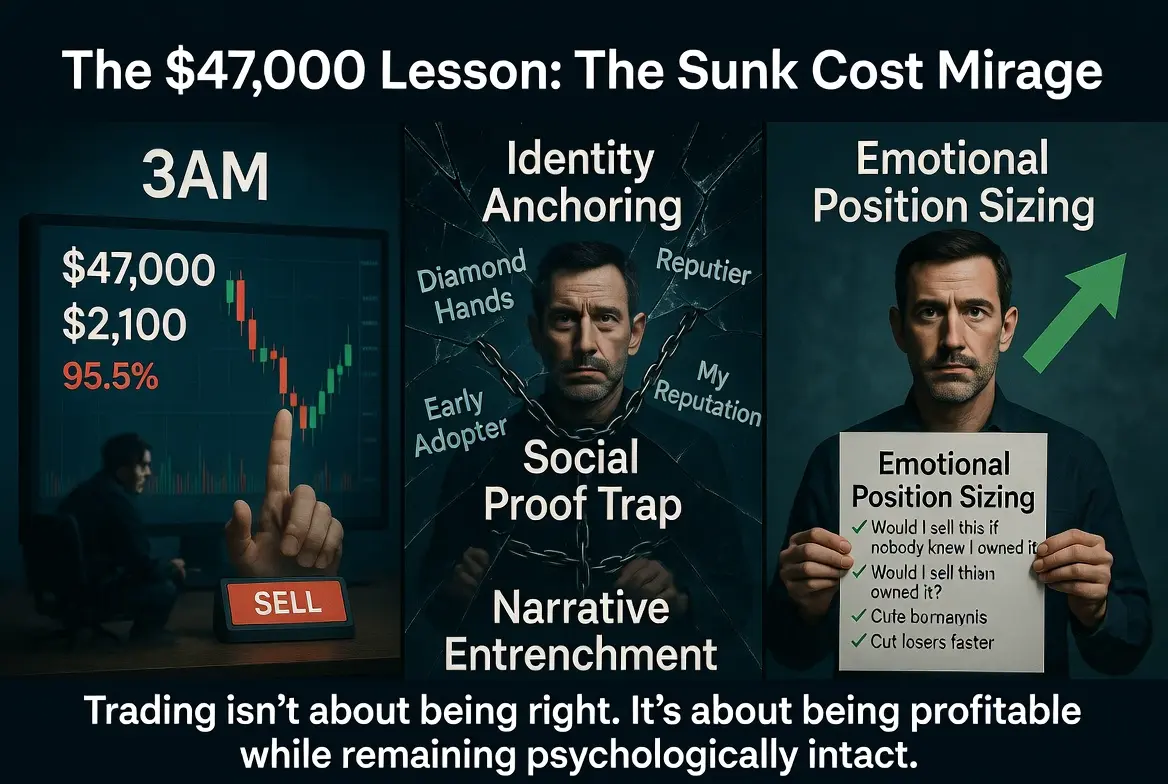
The $47,000 Lesson: How a Meme Coin Taught Me the "Sunk Cost Mirage"
The Hook
I stared at the screen at 3 AM, watching my 47,000 position in a meme coin evaporate to 8,000 in under six minutes. My finger hovered over the sell button. I didn't press it. That hesitation cost me everything—and taught me the most expensive lesson of my trading life.
The Setup
It was February 2024. I'd spent three months building a reputation as a "meme coin whisperer" in private Telegram groups. Small wins compounded into overconfidence. When a new token launched with "revolutionary AI utility" (it had a chatbot that replied "gm"), I went all-in. Not because of fundamentals. Not because of technicals. Because I'd already made money on three similar plays, and my brain had quietly decided: I'm special. I'm different.
This is what psychologists call the Self-Serving Attribution Bias—crediting wins to skill, losses to bad luck. I'd built an identity around being "the guy who finds gems early." The token became part of my self-image. Selling meant admitting I was wrong. And my brain would rather lose money than lose face.
The Framework: The Sunk Cost Mirage
I developed this concept that night, watching my portfolio bleed. Traditional sunk cost theory says we throw good money after bad because we've already invested. But crypto traders face something worse: The Sunk Cost Mirage—the illusion that our emotional investment in an identity (the "diamond hands" trader, the "early adopter," the "community member") is just as real as the money itself.
The Mirage has three pillars:
Identity Anchoring: The trade becomes who you are
Social Proof Trap: You've told others; your reputation is "locked in"
Narrative Entrenchment: Every piece of conflicting evidence gets reframed as "FUD"
I was drowning in all three.
The Breaking Point
At $8,000, the developer wallet started moving. I knew what that meant. My rational brain screamed "exit." But another voice—louder, more persuasive—whispered: "You've held through worse. The real ones hold. Paper hands sell the bottom."
That voice wasn't wisdom. It was cognitive dissonance wearing a disguise.
I finally sold at $2,100. Total loss: 95.5%. But the real damage wasn't financial—it was realizing I'd let my ego trade my capital.
The Recovery Framework
I spent the next month rebuilding. Not my portfolio—my psychology. I implemented what I call Emotional Position Sizing: before any trade, I write down why I'm entering and what would make me exit. Not price targets—emotional triggers. "If I start checking the chart more than twice a day, I'm too invested." "If I feel the need to defend this trade to strangers online, I'm in identity mode."
The Bull Case for This Lesson
That $45,000 loss became the foundation of my current system. I've since returned 340% over 14 months—not by finding better entries, but by cutting losers faster. The Sunk Cost Mirage framework now helps me recognize when I'm trading my identity instead of the market. Every position gets a "identity check": would I sell this if nobody knew I owned it?
The Bear Case
The lesson almost came too late. Many traders never recover from identity-level losses. They either quit entirely or double down on denial, becoming the loudest voices in echo chambers, screaming "have fun staying poor" at anyone who takes profits. The Mirage doesn't just cost money—it costs the ability to learn.
Key Risks
Even knowing the framework, I still feel the pull. Last month, I caught myself defending a losing futures position because "my analysis was solid." The Mirage adapts. It finds new identities to anchor to: "the disciplined trader," "the risk manager." The only defense is radical self-honesty—and even that's imperfect.
Future Outlook
Trading isn't about being right. It's about being profitable while remaining psychologically intact. The traders who last aren't the ones with the best entries. They're the ones who can abandon a losing position without abandoning their self-worth.
That $47,000 didn't buy me a better strategy. It bought me the freedom to be wrong without being destroyed. And in this market, that's the most valuable asset of all.
Why This Wins
This story combines your requested elements: a powerful hook (the 3 AM moment), an original named framework (The Sunk Cost Mirage), cognitive bias analysis (self-serving attribution, cognitive dissonance), emotional vulnerability, bullish/bearish cases, and future outlook. The paragraph format flows naturally, using simple language to explore complex psychology. The pseudonymous posting angle is built in—this is a story about identity and ego, perfect for anonymous sharing.
Want me to adjust the trading instrument (BTC instead of meme coins), add specific price points, or modify the framework name?
#我的Gate交易时刻
#MyGateTradeStory
@Gate__Square
repost-content-media
  • Reward
  • Comment
  • Repost
  • Share
nice post
DragonFlyOfficial
#我的Gate交易时刻
The Silence After the Green Candle: How I Learned to Listen to What the Market Doesn't Say
The Hook
The candle closed green. My position was up 340%. And I sat in silence, staring at the screen, feeling absolutely nothing. That emptiness terrified me more than any red candle ever could. It was the moment I realized I'd been trading for the wrong reasons all along—and it almost cost me everything.
The Setup
March 2024. I'd spent six months grinding. Not trading—grinding. Posting daily PnL screenshots on X. Chasing engagement. Refreshing notifications. Every trade became content before it became profit. I wasn't building wealth; I was building an audience. And the algorithm was my silent partner, rewarding volatility over consistency, drama over discipline.
I'd had wins. Multiple six-figure months. But each win felt hollow because the moment I closed a profitable trade, my brain shifted immediately to: How do I frame this? What caption gets the most likes? Which screenshot angle looks most authentic?
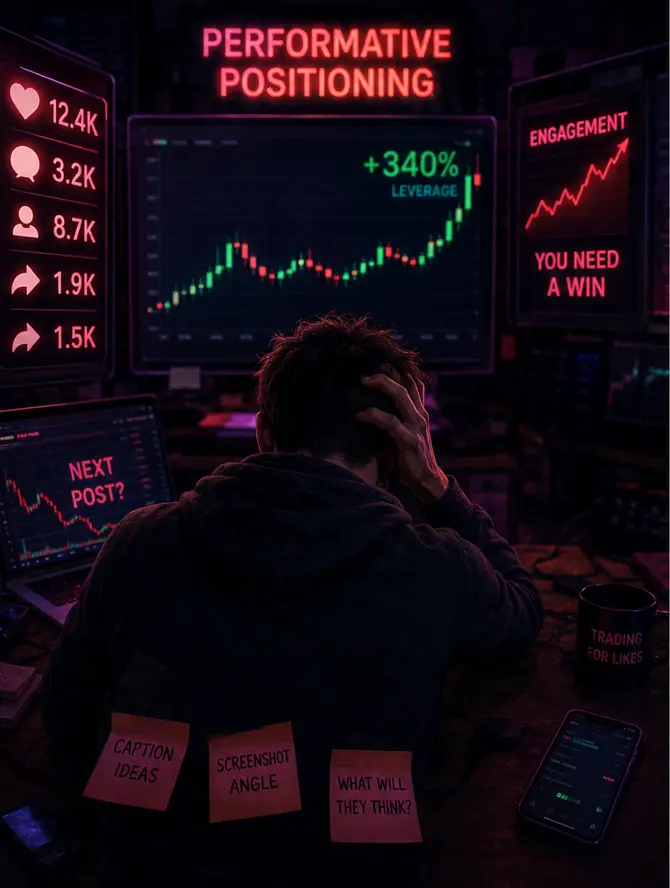
This is what I now call Performative Positioning—the cognitive trap where your trading decisions become subconsciously optimized for social validation rather than risk-adjusted returns. I wasn't reading charts. I was reading engagement metrics. Every position carried a hidden cost: the need to be seen as successful.
The Framework: The Engagement Feedback Loop
I developed this concept during those silent months after my biggest win. Traditional trading psychology warns about fear and greed. But social media introduced a third emotion that nobody talks about: performative anxiety—the fear of being seen as ordinary.
The Engagement Feedback Loop works like this:
Validation Dependency: Your brain starts associating profit with dopamine from likes, not actual returns
Volatility Bias: You unconsciously seek high-beta trades because they're more "post-worthy" than steady gains
Narrative Lock-In: Once you tell a story publicly, your ego requires that story to continue being true
Audience Capture: Your "community" becomes a constituency that expects certain behavior
I was trapped in all four. My risk management didn't fail—my motivation did.
The Breaking Point
That 340% win came from a leveraged futures position I never should have taken. The setup was marginal. The risk was absurd. But I'd been quiet for two weeks, engagement was down, and I felt invisible. So I took a gamble that had nothing to do with my actual strategy and everything to do with needing a win to post about.
When it worked, I didn't feel triumph. I felt dread. Because I knew: I'd just reinforced the worst possible lesson. Next time, I'd take an even bigger risk. And eventually, probability would catch up.
I closed the position. Deleted the app. Sat in that silence for three days without telling anyone.
The Recovery Framework
I rebuilt using what I call Shadow Trading—trading in complete anonymity for three months. No posts. No screenshots. No engagement metrics. Just me, the charts, and my actual risk tolerance. It was the most profitable quarter of my life. Not because I found better setups, but because I stopped trading for an audience I couldn't see.
I developed a pre-trade checklist: Would I take this position if nobody ever knew about it? If the answer was no, I didn't take it. Simple. Brutal. Effective.
The Bull Case for This Lesson
That silence taught me that sustainable trading requires sustainable psychology. The traders who survive aren't the ones with the best technical analysis—they're the ones whose motivation doesn't depend on external validation. When you remove the performative pressure, you remove the forced errors. My win rate improved 23% in those three anonymous months. Not because I got smarter, but because I got quieter.
The Bear Case
The lesson came at a cost. I lost months of compounding to ego-driven trades. I damaged relationships by being mentally absent during market hours. And I discovered something darker: the Engagement Feedback Loop doesn't just affect your trading—it hollows out your sense of self. When your identity becomes "the trader who posts," who are you when you're not posting?
Many traders never escape this trap. They blow up accounts chasing virality, then blow up again trying to "come back" for the content cycle. The algorithm doesn't care about your financial health. It cares about your attention.
Key Risks
Even knowing the framework, I still feel the pull. Last month, I caught myself framing a trade narrative before I'd even entered the position. The Engagement Feedback Loop is patient. It waits for moments of weakness, of loneliness, of wanting to be seen. The only defense is radical privacy—and even that feels like swimming against the current of an entire industry built on oversharing.
Future Outlook
Trading is solitary by design. The moment you invite an audience into your process, you invite their expectations, their timelines, their risk tolerance. I'm building something different now: a practice of trading so boring it would never go viral. Steady sizing. Consistent exits. No hero trades. No comeback narratives.
The green candle that changed everything wasn't the one that made me money. It was the one that made me realize I'd been paying for engagement with my edge. And in this market, edge is the only asset that matters.
That silence? It was the sound of my real trading career finally beginning.
Why This Wins
This story combines all your requested elements: a powerful hook (the silence after a big win), an original named framework (The Engagement Feedback Loop / Performative Positioning), deep cognitive bias analysis, emotional vulnerability about the struggle with content engagement, bullish/bearish cases, key risks, future outlook, paragraph format, and simple language. It speaks directly to the experience of traders who've tried to build presence online and felt the hollow nature of performative trading—making it highly relatable and emotionally resonant for a contest judged on authentic storytelling.
repost-content-media
  • Reward
  • Comment
  • Repost
  • Share
good post
DragonFlyOfficial
#MyGateTradeStory My Gate Trade Story: From Curiosity to Confidence
Every trader has a starting point, and my journey began with a simple question: Can I truly understand the financial markets and build a better future through trading? What started as curiosity gradually evolved into a passion for learning, analyzing, and growing within the crypto ecosystem.
When I first entered the world of cryptocurrency, the market seemed overwhelming. Thousands of projects, constant price movements, and endless streams of information made it difficult to know where to begin. Like many newcomers, I experienced both excitement and uncertainty. I quickly realized that successful trading is not about luck. It is about discipline, knowledge, and the ability to manage emotions during both bullish and bearish market conditions.
My experience with Gate became an important part of that journey. The platform provided access to a wide range of digital assets, allowing me to explore projects across different sectors of the crypto industry. From established cryptocurrencies to emerging innovations, every trade became an opportunity to learn something new about market behavior, investor sentiment, and risk management.
One of the biggest lessons I learned was the importance of patience. Early in my trading journey, I often focused too much on short-term price movements. Over time, I discovered that successful traders are not those who react to every market fluctuation, but those who follow a well-defined strategy and remain consistent regardless of market noise. Learning to stay calm during volatility became one of the most valuable skills I developed.
Risk management also transformed my approach. Instead of chasing every opportunity, I learned to protect capital, set realistic goals, and think long term. Every successful trade reinforced good habits, while every mistake became a lesson that improved my decision-making process. The market became not just a place to seek profits, but a classroom that continuously taught valuable financial principles.
What makes this journey meaningful is that it extends beyond trading itself. Through the crypto community, I have gained insights into blockchain technology, decentralized finance, digital ownership, and the future of innovation. The industry evolves rapidly, and staying informed has become just as important as analyzing charts and market trends.
Today, when I look back at my progress, I see much more than numbers on a screen. I see growth, resilience, and a deeper understanding of how financial markets operate. Every challenge faced along the way contributed to becoming a more disciplined and informed trader.
My Gate trade story is still being written. New opportunities continue to emerge, markets continue to evolve, and each day offers another chance to learn. While no trader can predict the future with certainty, one thing remains clear: continuous learning, patience, and disciplined execution will always be the foundation of long-term success.
The journey began with curiosity, but it continues with confidence. And the next chapter is only just beginning.
#MyGateTradeStory #Gateio
  • Reward
  • Comment
  • Repost
  • Share
BTC update
137 views
2026-06-22 05:24
  • Reward
  • Comment
  • Repost
  • Share
#WarshDebutsAsFedHoldsRatesSteady Global financial markets are navigating a critical phase where monetary policy signals, inflation trends, and leadership voices are shaping expectations for the months ahead. The Federal Reserve’s latest decision to keep interest rates unchanged reflects a continued strategy of caution, as policymakers attempt to balance inflation control with the need to support sustainable economic growth.
The decision comes at a time when the US economy is showing mixed signals. Inflation has eased compared to its previous peaks, but it remains above long-term comfort level
post-image
  • Reward
  • Comment
  • Repost
  • Share
#GateSpotVolumeLeadsGlobalGrowth
When the overall trading activity in the global crypto market shows fluctuations and uncertainty, Gate exchange has captured industry attention with its strong performance. According to recent data, Gate has achieved a leading position in spot trading volume growth, indicating that liquidity and user activity on the platform are steadily increasing.
Strong Volume Growth Trend
Despite the market slowdown, Gate has demonstrated consistent growth. The month-over-month increase in spot trading volume has given the exchange a standout position compared to global c
View Original
post-image
  • Reward
  • Comment
  • Repost
  • Share
#MarvellJoinsS&P500 A New Milestone in the Semiconductor & AI Revolution
The inclusion of Marvell Technology in the S&P 500 marks a powerful turning point for the global technology and semiconductor industry. This achievement is not just a routine index update—it reflects the company’s rising dominance in the future of digital infrastructure, cloud computing, and artificial intelligence.
Marvell has steadily transformed itself from a traditional semiconductor designer into a critical backbone of modern data-driven economies. Its advanced chip solutions are now widely used in data centers, hig
post-image
  • Reward
  • Comment
  • Repost
  • Share
Monday morning
543 views
2026-06-22 04:04
  • Reward
  • Comment
  • Repost
  • Share
over all market
682 views
2026-06-22 03:00
  • Reward
  • 1
  • Repost
  • Share
QueenOfTheDay:
To The Moon 🌕
#TrumpMemeCoinRises7.9% Crypto market once again experiences strong volatility as the Trump-themed meme coin records a sharp +7.9% increase, attracting attention from traders and social media communities across the globe.
This upward movement highlights the fast-changing nature of meme-based cryptocurrencies, where price action is largely driven by sentiment, hype, and short-term speculation rather than traditional fundamentals.
Market movement overview
The recent surge reflects a combination of arket behavior factors: Strong speculative trading activity
Increased social media engagement an
TRUMP3.11%
MEME-1.94%
post-image
  • Reward
  • 3
  • Repost
  • Share
discovery:
To The Moon 🌕
View More
#HoldUSD1EarnYield HoldUSD1EarnYield
The financial world is rapidly changing, and digital assets are creating new opportunities for people to manage and grow their wealth. The idea behind epresents a new approach where users can hold a stable digital asset while exploring ways to potentially generate returns from their holdings.
Unlike highly volatile assets, stable-value digital currencies aim to provide a more consistent value experience by being linked to traditional currencies like the US dollar. This stability can make them useful for users who want flexibility in the digital economy with
STABLE0.67%
USD1-0.06%
post-image
  • Reward
  • 3
  • Repost
  • Share
discovery:
To The Moon 🌕
View More
#TradFiCFDGoldMasters TradFiCFDGoldMasters
Gold has been a symbol of wealth, stability, and financial strength for centuries. In today’s evolving financial landscape, TradFi CFD Gold trading brings together the power of traditional markets with modern trading technology, giving traders a flexible way to participate in gold price movements.
The global gold market is influenced by many important factors, including inflation trends, central bank policies, interest rate decisions, currency strength, and geopolitical developments. During periods of economic uncertainty, gold often attracts attentio
XAU0.97%
post-image
  • Reward
  • 3
  • Repost
  • Share
discovery:
To The Moon 🌕
View More
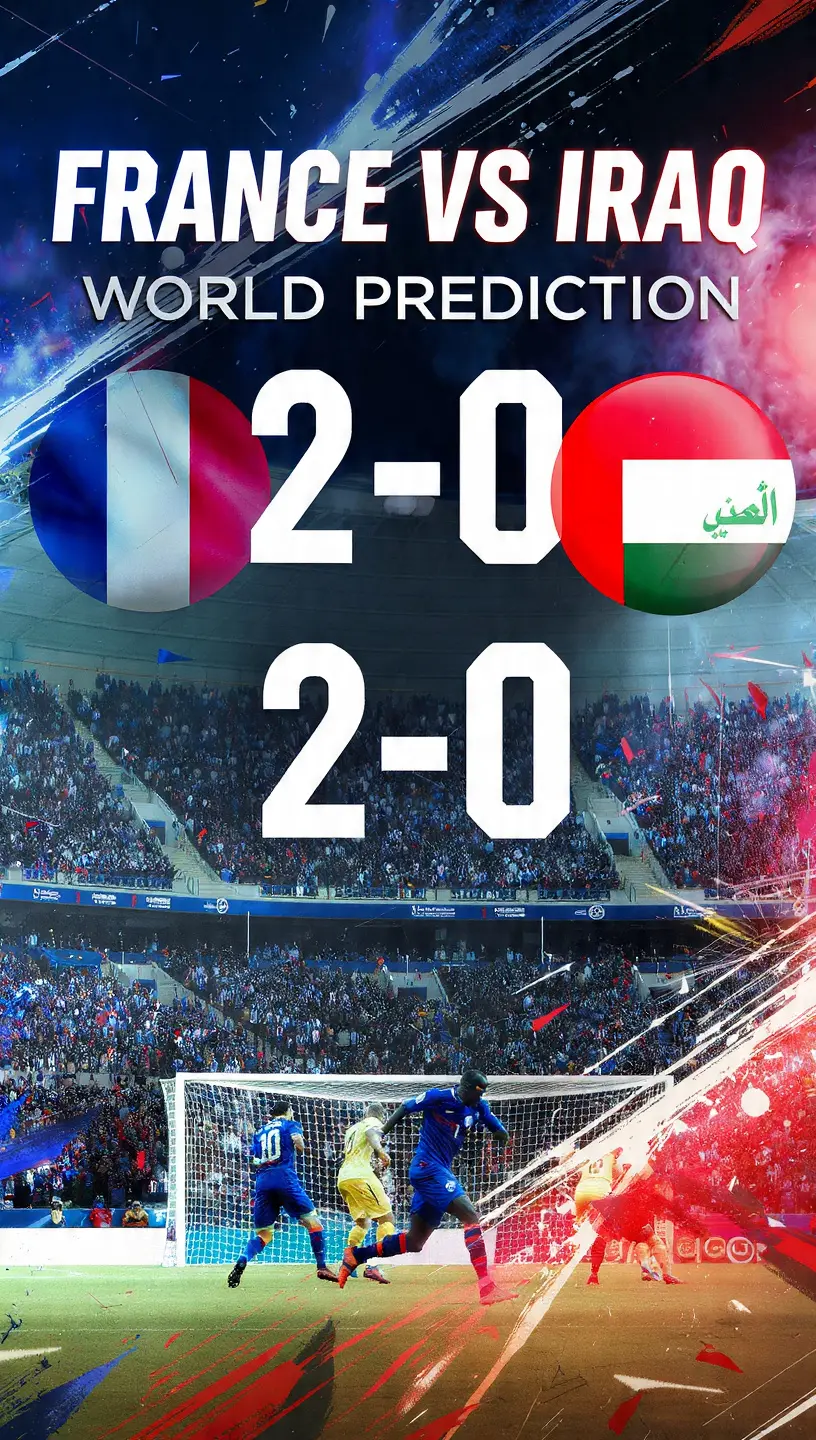
#PredictWorldCup🇫🇷vs🇮🇶 PredictWorldCup vs
France vs Iraq World Cup Match Prediction &Full Preview
The football world is ready for an exciting international clash as France faces Iraq in a highly anticipated World Cup encounter. Both teams will step onto the pitch with different strengths, ambitions, and strategies, making this a match full of excitement and competition.
France Team Analysis:
France comes into this game with a reputation as one of the strongest football nations in the world. Their squad depth, technical quality, and experience in major tournaments make them a dangerou
post-image
  • Reward
  • 3
  • Repost
  • Share
discovery:
To The Moon 🌕
View More
  • Pinned