GateUser-cc4a2fbd

vip
Active for: 0.2y
Peak Tier 0
No content yet
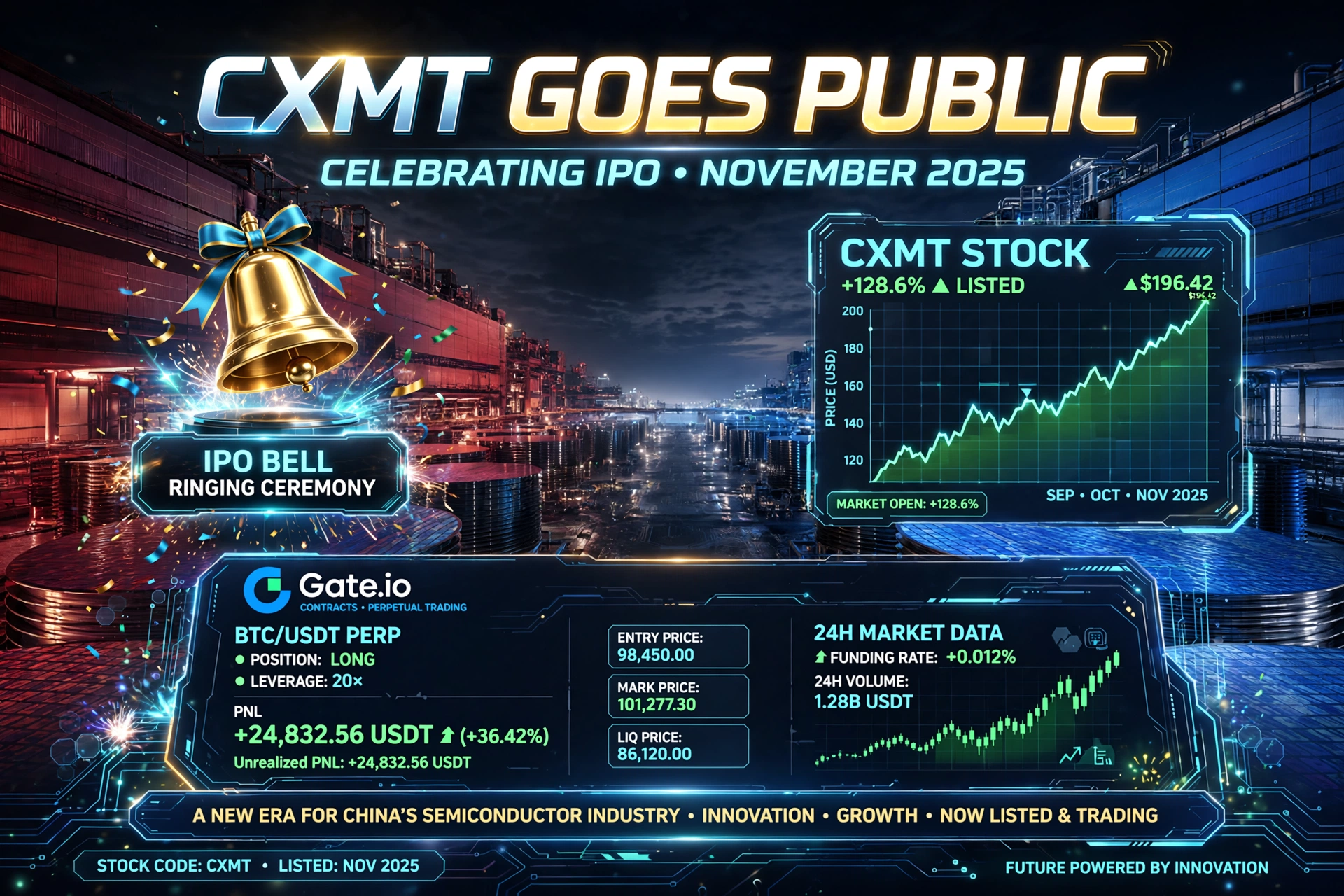
#CXMTGoesPublicGateContractTradingGainsEarlyMomentum
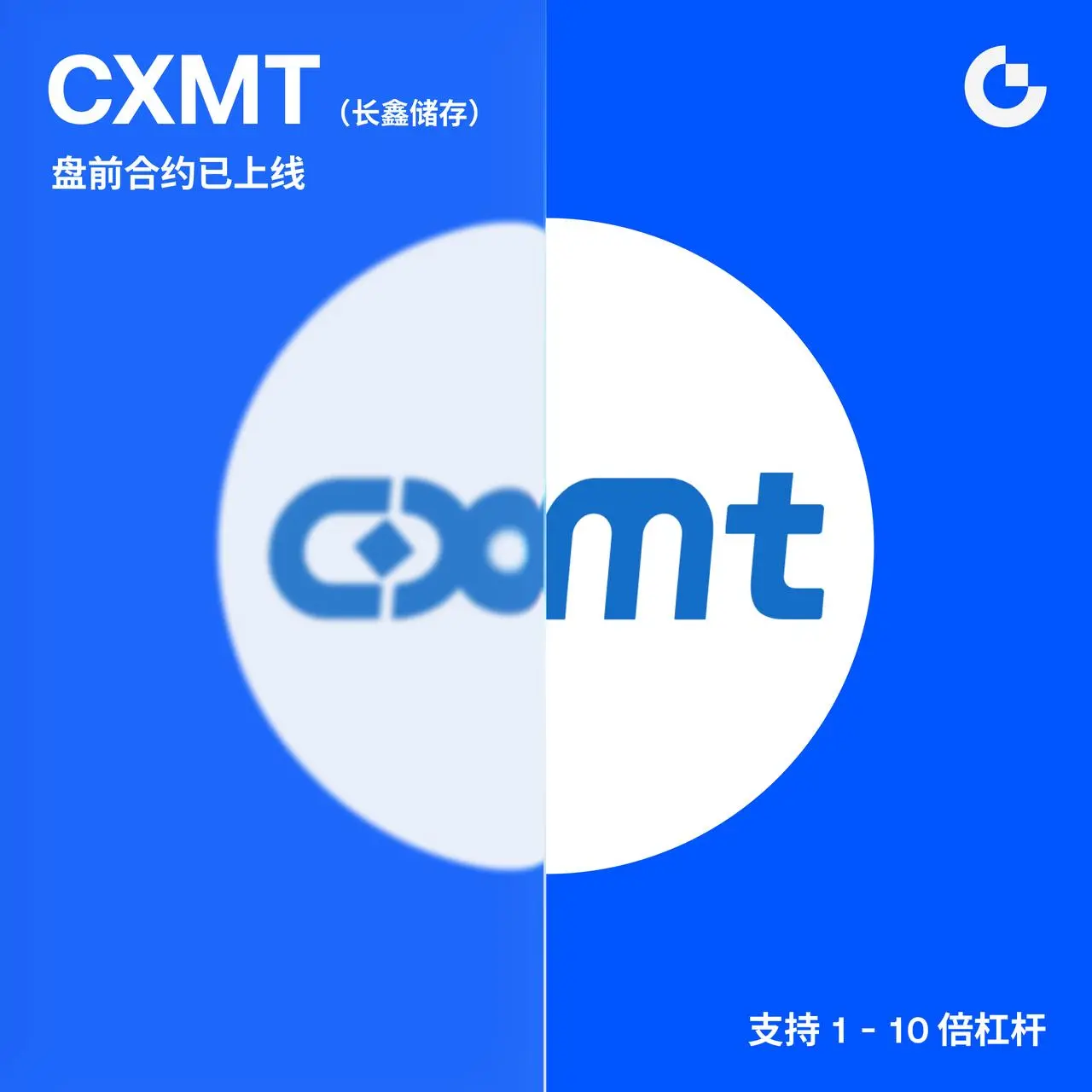
Gate Pre-Market Contracts Launch: $CXMT (Changxin Storage) 📈
Gate has launched pre-market contracts for $CXMT (Changxin Storage), giving traders a new way to take positions based on their market outlook.
🔹 Long & Short Trading
Traders can take either long or short positions, depending on their expectations for the market.
🔹 1x–10x Leverage
Choose leverage from 1x up to 10x when placing your order, allowing you to adjust your position according to your trading strategy and risk tolerance.
🔹 Flexible Positioning
Whether you expect the pri
CXMT5.59%
EagleEye
#CXMTGoesPublicGateContractTradingGainsEarlyMomentum
Gate Pre-Market Contracts Launch: $CXMT (Changxin Storage) 📈
Gate has launched pre-market contracts for $CXMT (Changxin Storage), giving traders a new way to take positions based on their market outlook.
🔹 Long & Short Trading
Traders can take either long or short positions, depending on their expectations for the market.
🔹 1x–10x Leverage
Choose leverage from 1x up to 10x when placing your order, allowing you to adjust your position according to your trading strategy and risk tolerance.
🔹 Flexible Positioning
Whether you expect the price to move higher or lower, pre-market contracts provide an opportunity to express your market view through long or short positions.
📊 Trade $CXMT Pre-Market Contracts:
📢 Learn More:
🔥 Keep an eye on $CXMT and the latest developments in the market!
⚠️ Futures and leveraged trading carry significant risk and can result in substantial losses. Leverage magnifies both potential gains and losses. Please understand the product, manage your risk carefully, and trade responsibly.
repost-content-media
  • Reward
  • Comment
  • Repost
  • Share
The CLARITY Act Enters Its Final Critical Stage — Why the Next Step Could Matter for Crypto
The cryptocurrency industry has reached another important moment as the CLARITY Act enters what could be one of the most closely watched stages of its legislative journey.
For years, one of the biggest challenges facing the crypto industry has been regulatory uncertainty. Investors, developers, exchanges, and financial institutions have often had to operate in an environment where the rules surrounding digital assets were not always clear.
The CLARITY Act has attracted significant attention because legi
BTC1.55%
ETH4.46%
EagleEye
The CLARITY Act Enters Its Final Critical Stage — Why the Next Step Could Matter for Crypto
The cryptocurrency industry has reached another important moment as the CLARITY Act enters what could be one of the most closely watched stages of its legislative journey.
For years, one of the biggest challenges facing the crypto industry has been regulatory uncertainty. Investors, developers, exchanges, and financial institutions have often had to operate in an environment where the rules surrounding digital assets were not always clear.
The CLARITY Act has attracted significant attention because legislation that provides clearer regulatory frameworks could have a major impact on how the crypto industry develops in the years ahead.
At this stage, the focus is no longer simply on the existence of the bill. The bigger question is what happens next — how the legislation moves through the final stages, what provisions ultimately remain, and how regulators and market participants respond.
🏛️ Why This Moment Matters
Regulation has always been one of the biggest forces influencing the crypto market.
When regulatory uncertainty increases, investors can become cautious. Companies may delay launching products or expanding into new markets. Developers may face uncertainty about how their projects could be classified or regulated.
On the other hand, clearer rules can potentially create a more predictable environment.
From my perspective, this is one of the most important reasons why the CLARITY Act is being watched so closely.
The crypto industry has grown significantly, but the regulatory framework surrounding digital assets has not always developed at the same speed.
A clearer framework could potentially help businesses understand where they stand, while giving investors and market participants greater visibility into the rules of the game.
💰 What Could It Mean for the Market?
If the CLARITY Act ultimately advances in a way that the market views as positive, it could become an important catalyst for sentiment.
Crypto markets are heavily influenced by narratives.
When investors believe that regulatory uncertainty is decreasing, confidence can improve. This can encourage more capital to enter the market and potentially increase interest in digital assets.
Institutional investors may also pay closer attention to regulatory developments.
For large financial institutions, regulatory clarity is extremely important. Before allocating significant capital, institutions generally want to understand the legal and compliance environment surrounding an asset.
If the regulatory framework becomes clearer, it could potentially make it easier for traditional financial players to explore crypto-related products and services.
That does not mean the market will automatically move higher.
But it could remove one of the major barriers that has historically made some investors cautious.
📈 Could This Be a Turning Point?
In my view, the most interesting aspect of the CLARITY Act is the possibility that it could contribute to a broader shift in how digital assets are viewed.
Crypto has spent years moving from a niche technology into a global financial industry.
Today, Bitcoin, Ethereum, stablecoins, tokenization, decentralized finance, and blockchain infrastructure are increasingly part of mainstream financial discussions.
The next stage of growth may depend not only on technology but also on regulation.
Innovation needs room to develop, but markets also need clear rules.
Finding the right balance between these two objectives could be critical for the future of the industry.
🔥 The Market Is Watching
As the CLARITY Act enters its final critical stage, traders and investors are likely to watch every major development closely.
Regulatory headlines can create significant volatility in crypto markets.
Positive news can quickly increase optimism, while unexpected changes or delays can lead to uncertainty.
This is why I believe traders should avoid making decisions based solely on headlines.
A regulatory development can create short-term excitement, but the long-term impact depends on the details of the legislation and how it is implemented.
The difference between a strong market narrative and a sustainable fundamental shift is something investors need to understand.
🧠 My Perspective
Personally, I see regulatory clarity as one of the most important pieces of the crypto industry's long-term growth puzzle.
Technology can create incredible opportunities, but without a predictable regulatory environment, large-scale adoption can remain difficult.
If the CLARITY Act successfully moves forward and provides greater certainty for the industry, it could potentially encourage innovation, investment, and institutional participation.
But I also believe the market should remain realistic.
Regulation is not a magic button that guarantees higher prices.
The crypto market will still face volatility, macroeconomic pressures, liquidity cycles, technological risks, and changing investor sentiment.
What regulation can potentially provide is a stronger foundation.
And a stronger foundation could be extremely valuable for an industry that is still evolving.
🌍 The Bigger Picture
The debate around the CLARITY Act is ultimately bigger than one piece of legislation.
It represents a broader conversation about the future of digital assets and their role in the global financial system.
Will crypto become fully integrated into traditional finance?
Will blockchain technology transform payments and financial infrastructure?
Will tokenized assets become a major part of capital markets?
How will regulators balance investor protection with innovation?
These are questions that will shape the next decade of the industry.
The decisions being made today could influence how crypto businesses operate, how investors access digital assets, and how blockchain technology develops in the future.
🚀 Final Thoughts
The CLARITY Act entering its final critical stage is a moment worth watching closely.
For the crypto industry, regulatory clarity could be one of the biggest catalysts for mainstream adoption.
For investors, it could represent a potential shift in market sentiment.
For institutions, it could provide greater confidence to explore digital assets.
And for developers and entrepreneurs, it could help create a more predictable environment for innovation.
But the final outcome still matters.
The details, implementation, and regulatory response will ultimately determine how significant the impact becomes.
For now, the crypto community is watching.
The market is watching.
And the next major development could have implications far beyond today's headlines.
🔥 My takeaway: The crypto industry's next major growth phase may not be driven by price alone. It could be driven by the combination of technology, institutional adoption, and regulatory clarity.
As the #CLARITYActEntersFinalCriticalStage, the next chapter of crypto regulation could be closer than ever.
repost-content-media
  • Reward
  • Comment
  • Repost
  • Share
#IntelQ2RevenueSurges25%
The CLARITY Act Enters Its Final Critical Stage Why the Next Step Could Matter for Crypto
The cryptocurrency industry has reached another important moment as the CLARITY Act enters what could be one of the most closely watched stages of its legislative journey.
For years, one of the biggest challenges facing the crypto industry has been regulatory uncertainty. Investors, developers, exchanges, and financial institutions have often had to operate in an environment where the rules surrounding digital assets were not always clear.
The CLARITY Act has attracted significan
BTC1.55%
ETH4.46%
EagleEye
#IntelQ2RevenueSurges25%
The CLARITY Act Enters Its Final Critical Stage Why the Next Step Could Matter for Crypto
The cryptocurrency industry has reached another important moment as the CLARITY Act enters what could be one of the most closely watched stages of its legislative journey.
For years, one of the biggest challenges facing the crypto industry has been regulatory uncertainty. Investors, developers, exchanges, and financial institutions have often had to operate in an environment where the rules surrounding digital assets were not always clear.
The CLARITY Act has attracted significant attention because legislation that provides clearer regulatory frameworks could have a major impact on how the crypto industry develops in the years ahead.
At this stage, the focus is no longer simply on the existence of the bill. The bigger question is what happens next — how the legislation moves through the final stages, what provisions ultimately remain, and how regulators and market participants respond.
🏛️ Why This Moment Matters
Regulation has always been one of the biggest forces influencing the crypto market.
When regulatory uncertainty increases, investors can become cautious. Companies may delay launching products or expanding into new markets. Developers may face uncertainty about how their projects could be classified or regulated.
On the other hand, clearer rules can potentially create a more predictable environment.
From my perspective, this is one of the most important reasons why the CLARITY Act is being watched so closely.
The crypto industry has grown significantly, but the regulatory framework surrounding digital assets has not always developed at the same speed.
A clearer framework could potentially help businesses understand where they stand, while giving investors and market participants greater visibility into the rules of the game.
💰 What Could It Mean for the Market?
If the CLARITY Act ultimately advances in a way that the market views as positive, it could become an important catalyst for sentiment.
Crypto markets are heavily influenced by narratives.
When investors believe that regulatory uncertainty is decreasing, confidence can improve. This can encourage more capital to enter the market and potentially increase interest in digital assets.
Institutional investors may also pay closer attention to regulatory developments.
For large financial institutions, regulatory clarity is extremely important. Before allocating significant capital, institutions generally want to understand the legal and compliance environment surrounding an asset.
If the regulatory framework becomes clearer, it could potentially make it easier for traditional financial players to explore crypto-related products and services.
That does not mean the market will automatically move higher.
But it could remove one of the major barriers that has historically made some investors cautious.
📈 Could This Be a Turning Point?
In my view, the most interesting aspect of the CLARITY Act is the possibility that it could contribute to a broader shift in how digital assets are viewed.
Crypto has spent years moving from a niche technology into a global financial industry.
Today, Bitcoin, Ethereum, stablecoins, tokenization, decentralized finance, and blockchain infrastructure are increasingly part of mainstream financial discussions.
The next stage of growth may depend not only on technology but also on regulation.
Innovation needs room to develop, but markets also need clear rules.
Finding the right balance between these two objectives could be critical for the future of the industry.
🔥 The Market Is Watching
As the CLARITY Act enters its final critical stage, traders and investors are likely to watch every major development closely.
Regulatory headlines can create significant volatility in crypto markets.
Positive news can quickly increase optimism, while unexpected changes or delays can lead to uncertainty.
This is why I believe traders should avoid making decisions based solely on headlines.
A regulatory development can create short-term excitement, but the long-term impact depends on the details of the legislation and how it is implemented.
The difference between a strong market narrative and a sustainable fundamental shift is something investors need to understand.
🧠 My Perspective
Personally, I see regulatory clarity as one of the most important pieces of the crypto industry's long-term growth puzzle.
Technology can create incredible opportunities, but without a predictable regulatory environment, large-scale adoption can remain difficult.
If the CLARITY Act successfully moves forward and provides greater certainty for the industry, it could potentially encourage innovation, investment, and institutional participation.
But I also believe the market should remain realistic.
Regulation is not a magic button that guarantees higher prices.
The crypto market will still face volatility, macroeconomic pressures, liquidity cycles, technological risks, and changing investor sentiment.
What regulation can potentially provide is a stronger foundation.
And a stronger foundation could be extremely valuable for an industry that is still evolving.
🌍 The Bigger Picture
The debate around the CLARITY Act is ultimately bigger than one piece of legislation.
It represents a broader conversation about the future of digital assets and their role in the global financial system.
Will crypto become fully integrated into traditional finance?
Will blockchain technology transform payments and financial infrastructure?
Will tokenized assets become a major part of capital markets?
How will regulators balance investor protection with innovation?
These are questions that will shape the next decade of the industry.
The decisions being made today could influence how crypto businesses operate, how investors access digital assets, and how blockchain technology develops in the future.
🚀 Final Thoughts
The CLARITY Act entering its final critical stage is a moment worth watching closely.
For the crypto industry, regulatory clarity could be one of the biggest catalysts for mainstream adoption.
For investors, it could represent a potential shift in market sentiment.
For institutions, it could provide greater confidence to explore digital assets.
And for developers and entrepreneurs, it could help create a more predictable environment for innovation.
But the final outcome still matters.
The details, implementation, and regulatory response will ultimately determine how significant the impact becomes.
For now, the crypto community is watching.
The market is watching.
And the next major development could have implications far beyond today's headlines.
🔥 My takeaway: The crypto industry's next major growth phase may not be driven by price alone. It could be driven by the combination of technology, institutional adoption, and regulatory clarity.
As the #CLARITYActEntersFinalCriticalStage, the next chapter of crypto regulation could be closer than ever
repost-content-media
  • Reward
  • Comment
  • Repost
  • Share
#IntelQ2RevenueSurges25%
Intel’s Q2 Revenue Surges 25% A Strong Signal for the Semiconductor and AI Market
The semiconductor industry is once again in the spotlight as Intel reports a significant 25% surge in second-quarter revenue, highlighting renewed momentum for one of the world's most recognized chipmakers.
For me, this kind of growth is important because Intel's performance is not just about one company. It reflects the broader transformation happening across the technology industry.
The demand for computing power is increasing rapidly.
Artificial intelligence is expanding.
Data center
EagleEye
#IntelQ2RevenueSurges25%
Intel’s Q2 Revenue Surges 25% A Strong Signal for the Semiconductor and AI Market
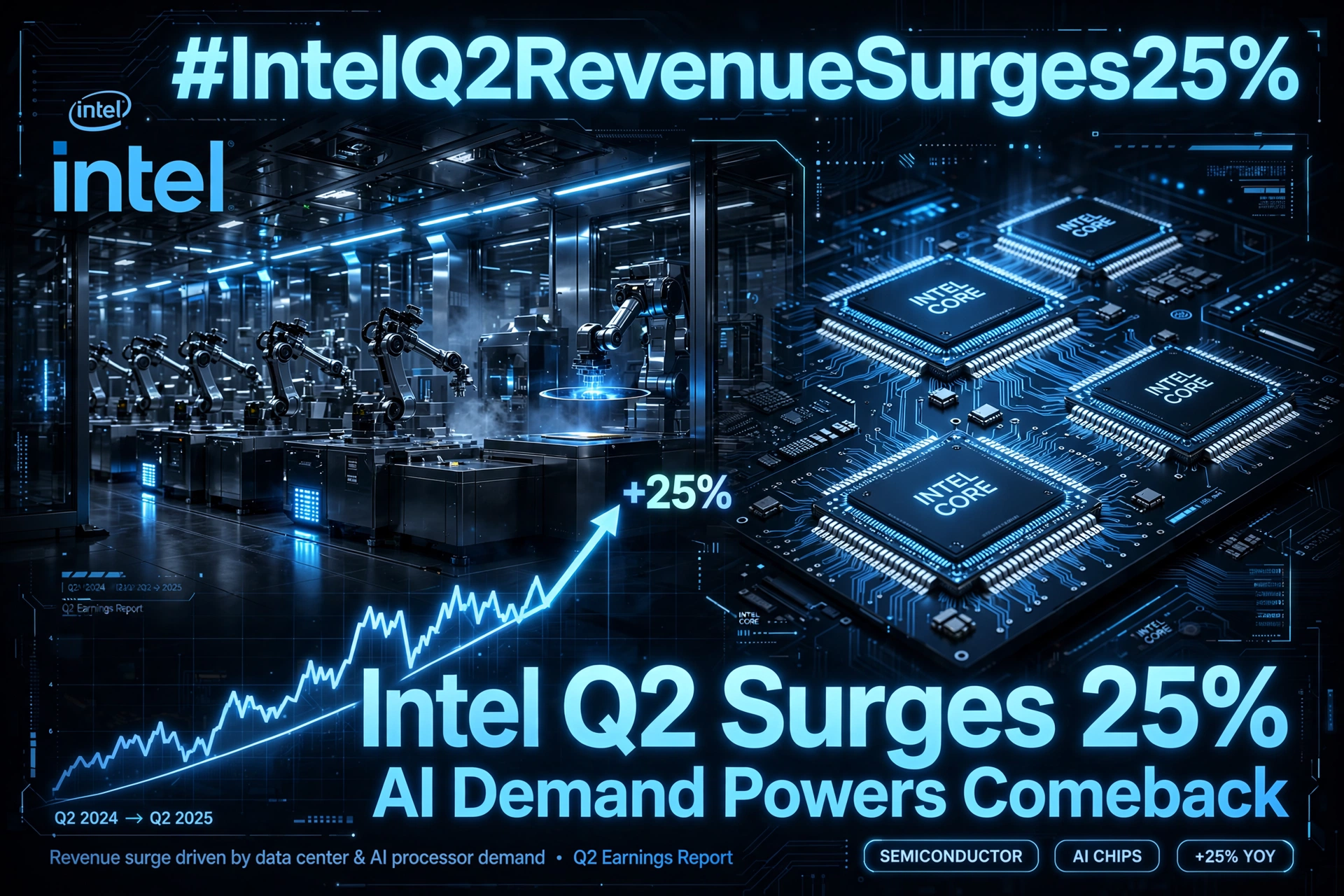
The semiconductor industry is once again in the spotlight as Intel reports a significant 25% surge in second-quarter revenue, highlighting renewed momentum for one of the world's most recognized chipmakers.
For me, this kind of growth is important because Intel's performance is not just about one company. It reflects the broader transformation happening across the technology industry.
The demand for computing power is increasing rapidly.
Artificial intelligence is expanding.
Data centers are becoming more important.
Cloud computing continues to grow.
And companies around the world are investing heavily in the infrastructure needed to support the next generation of technology.
All of these trends are creating opportunities — and intense competition — across the semiconductor industry.
📈 Why Intel's Revenue Growth Matters
A 25% increase in quarterly revenue is a significant development, especially for a company operating in such a competitive industry.
Intel has been working to strengthen its position across multiple areas of the semiconductor market, including processors, data centers, manufacturing, and advanced chip technologies.
The company's performance can therefore provide investors with valuable insight into the current state of the broader technology sector.
From my perspective, the most interesting question is not simply:
"Did Intel's revenue increase?"
The bigger question is:
"What is driving that growth, and can it continue?"
Sustainable growth is usually more important than a single strong quarter.
Investors will naturally want to understand whether the increase is being driven by stronger demand, improved product performance, data-center growth, AI-related spending, or other factors.
🤖 AI Is Changing the Semiconductor Industry
One of the biggest forces shaping the semiconductor market today is artificial intelligence.
The AI boom has created enormous demand for advanced computing infrastructure.
From powerful processors and accelerators to data-center hardware and networking infrastructure, the AI ecosystem requires massive amounts of computing power.
This has created opportunities for chipmakers across the industry.
Companies that can successfully develop and manufacture high-performance chips may benefit from this long-term trend.
However, the competition is intense.
Intel is competing in an industry where technological innovation moves extremely quickly, and companies must continuously invest in research, development, manufacturing capacity, and next-generation products.
This makes revenue growth encouraging, but it also means investors will be watching the company's execution very closely.
🏭 Manufacturing Could Be a Major Part of the Story
Another area that makes Intel particularly interesting is its manufacturing strategy.
The global semiconductor industry has become increasingly focused on supply-chain resilience and advanced chip manufacturing.
Governments and companies are investing heavily in domestic semiconductor production because chips are critical to everything from smartphones and computers to cars, data centers, and AI systems.
Intel's ambitions in semiconductor manufacturing could therefore have strategic importance beyond its own financial performance.
If the company can successfully execute its manufacturing plans and attract customers, it could potentially strengthen its position in the global chip industry.
But manufacturing is also an extremely capital-intensive business.
Building advanced semiconductor facilities requires enormous investment, and achieving competitive performance requires years of technological development.
This is why execution will remain a key factor.
💰 What Could This Mean for Investors?
From an investor's perspective, a 25% revenue surge can certainly attract attention.
Strong financial results can improve market sentiment and encourage investors to reconsider a company's future growth potential.
However, revenue is only one part of the equation.
Investors also need to look at profitability, margins, cash flow, debt, capital expenditure, future guidance, and the company's competitive position.
A company can grow revenue quickly while still facing significant financial challenges.
That is why I believe the smartest approach is to look at the full picture rather than focusing on one headline number.
🔥 My Perspective
Personally, I think Intel's reported revenue growth is an encouraging development for the company and an interesting signal for the wider semiconductor market.
The global demand for computing is unlikely to disappear.
If anything, AI and cloud computing are pushing demand for advanced infrastructure even higher.
The real challenge for Intel will be converting this market opportunity into sustainable long-term growth.
Can the company continue growing revenue?
Can it improve profitability?
Can it compete effectively in AI and data-center markets?
Can it execute its manufacturing strategy?
And most importantly, can it maintain technological competitiveness in an industry where innovation never stops?
These are the questions that I believe investors should be asking.
🌍 The Bigger Technology Picture
The semiconductor industry is becoming increasingly important to the global economy.
Chips are now essential infrastructure.
They power everything from consumer electronics to industrial systems, electric vehicles, cloud platforms, and artificial intelligence.
This means semiconductor companies are not simply technology businesses anymore.
They are becoming strategic assets for governments and economies around the world.
As AI adoption accelerates, the demand for computing power could continue to increase.
This could create long-term opportunities for companies that successfully position themselves in the semiconductor supply chain.
At the same time, competition will remain fierce.
Companies must innovate faster, manufacture more efficiently, and adapt to changing technology trends.
🚀 Final Thoughts
The 25% Q2 revenue surge is certainly a headline worth watching, but I believe the bigger story is what it could mean for Intel's future.
The semiconductor industry is entering a new era driven by AI, cloud computing, advanced manufacturing, and growing demand for computing infrastructure.
Intel has an opportunity to benefit from these trends, but the company will need to execute effectively to turn short-term momentum into long-term success.
For investors, this is a story worth following closely.
Strong revenue growth can create optimism, but sustainable performance ultimately depends on much more than one quarter.
My takeaway: The AI and semiconductor race is far from over. Intel's latest growth could be an important step forward, but the real test will be whether the company can maintain this momentum and translate rising demand into sustainable profits and long-term shareholder value.
The next few quarters could tell us a lot.
🚀 The semiconductor battle is heating up — and Intel is back in the spotlight.
repost-content-media
  • Reward
  • Comment
  • Repost
  • Share
#IntelQ2RevenueSurges25%
IntelQ2RevenueSurges25% 🚀
Intel just gave the semiconductor market something to talk about.
A 25% surge in Q2 revenue is not the kind of number investors simply scroll past. In a market where every major chip company is fighting for a bigger piece of the AI and computing economy, strong revenue growth can change the conversation around a company very quickly.
For me, the most interesting part of this story isn't just the 25% figure.
It's what this number could represent.
The world is entering a period where computing power is becoming one of the most valuable resourc
EagleEye
#IntelQ2RevenueSurges25%
IntelQ2RevenueSurges25% 🚀
Intel just gave the semiconductor market something to talk about.
A 25% surge in Q2 revenue is not the kind of number investors simply scroll past. In a market where every major chip company is fighting for a bigger piece of the AI and computing economy, strong revenue growth can change the conversation around a company very quickly.
For me, the most interesting part of this story isn't just the 25% figure.
It's what this number could represent.
The world is entering a period where computing power is becoming one of the most valuable resources in the global economy. Artificial intelligence is expanding at an incredible pace, data centers are consuming more computing capacity, cloud platforms continue to grow, and businesses are spending billions to upgrade their technology infrastructure.
Behind all of this is one thing:
Chips.
And that's where companies like Intel become extremely important.
For years, Intel has been one of the biggest names in the semiconductor industry. But the rise of AI has completely changed the competitive landscape. The market is no longer just about who can make the fastest traditional processor. The competition is now about AI infrastructure, data centers, advanced manufacturing, energy efficiency, high-performance computing, and the ability to deliver technology at massive scale.
That is why I see Intel's latest revenue growth as more than just another quarterly headline.
It raises a much bigger question:
Could Intel be entering a new phase of growth?
Of course, one strong quarter doesn't prove that everything has suddenly changed.
But markets are often about expectations.
When a company starts showing stronger financial performance at a time when an entire industry is experiencing structural growth, investors naturally begin looking at the bigger picture.
And the bigger picture for semiconductors is extremely interesting.
🤖 AI Is Creating a Massive Demand for Computing
The AI revolution is still in its early stages.
Every new AI model, application, automated service, and intelligent platform requires infrastructure. Companies need more powerful chips, larger data centers, faster networks, and more efficient computing systems.
This creates a huge opportunity for the semiconductor industry.
But it also creates a huge battlefield.
Intel is competing in an environment where technological leadership can translate into billions of dollars in revenue—and where falling behind can be incredibly expensive.
That makes execution critical.
If Intel can successfully capture more demand from AI, data centers, cloud computing, and advanced computing, the company's long-term opportunity could be much larger than what today's revenue numbers suggest.
💰 Why Investors May Be Paying Attention
From an investor's perspective, revenue growth is important because it shows that customers are spending more money on a company's products and services.
But personally, I would not look at the 25% growth and immediately assume that Intel is suddenly the next big winner in the AI race.
That's not how I see it.
I see it as a signal worth investigating.
The next questions are much more important:
Can Intel maintain this growth?
Can it improve margins?
Can it turn increased revenue into stronger profits?
Can it compete with the industry's most powerful players?
Can its manufacturing strategy deliver results?
And can it become a meaningful player in the AI infrastructure boom?
Those answers will ultimately matter more than one quarterly number.
🏭 The Manufacturing Story Could Be Huge
One aspect of Intel that I find particularly interesting is its manufacturing ambitions.
The global semiconductor industry is becoming strategically important. Governments around the world are increasingly focused on building domestic chip manufacturing capacity because modern economies cannot function without semiconductors.
AI, electric vehicles, smartphones, defense technology, cloud computing, and even everyday consumer electronics all depend on chips.
That makes advanced semiconductor manufacturing a strategic asset.
If Intel can strengthen its manufacturing capabilities and successfully compete in advanced chip production, the potential opportunity could extend far beyond traditional PC processors.
But this is also where the risk becomes clear.
Semiconductor manufacturing requires enormous amounts of capital.
It requires advanced technology.
It requires highly skilled talent.
And it requires flawless execution.
So while the opportunity is massive, the cost of failure can be equally significant.
📈 My Personal Take
My view is that Intel's 25% revenue growth deserves attention, but I would be more interested in watching what happens next.
One quarter can create excitement.
Several quarters of consistent execution can create a trend.
If Intel continues to deliver stronger revenue, improves profitability, expands its position in AI and data centers, and successfully executes its manufacturing strategy, then the market may begin to view the company differently.
That could potentially create a much stronger long-term narrative around Intel.
But if revenue growth slows, margins remain under pressure, or competitors continue to dominate the most profitable areas of the AI market, investors may quickly become less optimistic.
This is why I believe the next few quarters could be much more important than this single result.
🌍 The Bigger Opportunity
The semiconductor industry is entering one of the most important periods in its history.
AI is changing how businesses operate.
Cloud computing is expanding.
Data centers are becoming critical infrastructure.
Robotics is developing rapidly.
Autonomous systems are improving.
And the demand for computing power continues to grow.
All of these trends require more advanced semiconductor technology.
The companies that successfully position themselves at the center of this transformation could potentially benefit for years.
Intel has a long history in this industry, and now the company has another opportunity to prove that it can compete in the next generation of computing.
The question is whether Intel can turn this 25% revenue surge into sustainable momentum.
🔥 Final Thought
For me, the real story behind #IntelQ2RevenueSurges25% isn't simply that Intel had a strong quarter.
The real story is the possibility that the semiconductor industry is entering another massive growth cycle—and Intel is trying to make sure it has a place at the table.
The AI race is still wide open.
The demand for computing is growing.
The global chip industry is becoming more strategically important every year.
And the companies that can combine technology, manufacturing, scale, and execution could become some of the biggest winners of the next decade.
Intel now has an opportunity.
The question is whether it can turn this momentum into something much bigger.
25% growth is impressive.
But sustainable growth is what could truly change the story.
And that's what I'll be watching next. 👀📈
repost-content-media
  • Reward
  • Comment
  • Repost
  • Share
The Market Is Moving. But That’s Not the Real Story.
Bitcoin is back above $65K.
Ethereum is moving faster.
Solana is waking up.
Gold is sitting above $4,000.
And yet…
The market is still scared.
That sounds strange, doesn't it?
But that's exactly what makes today's market interesting.
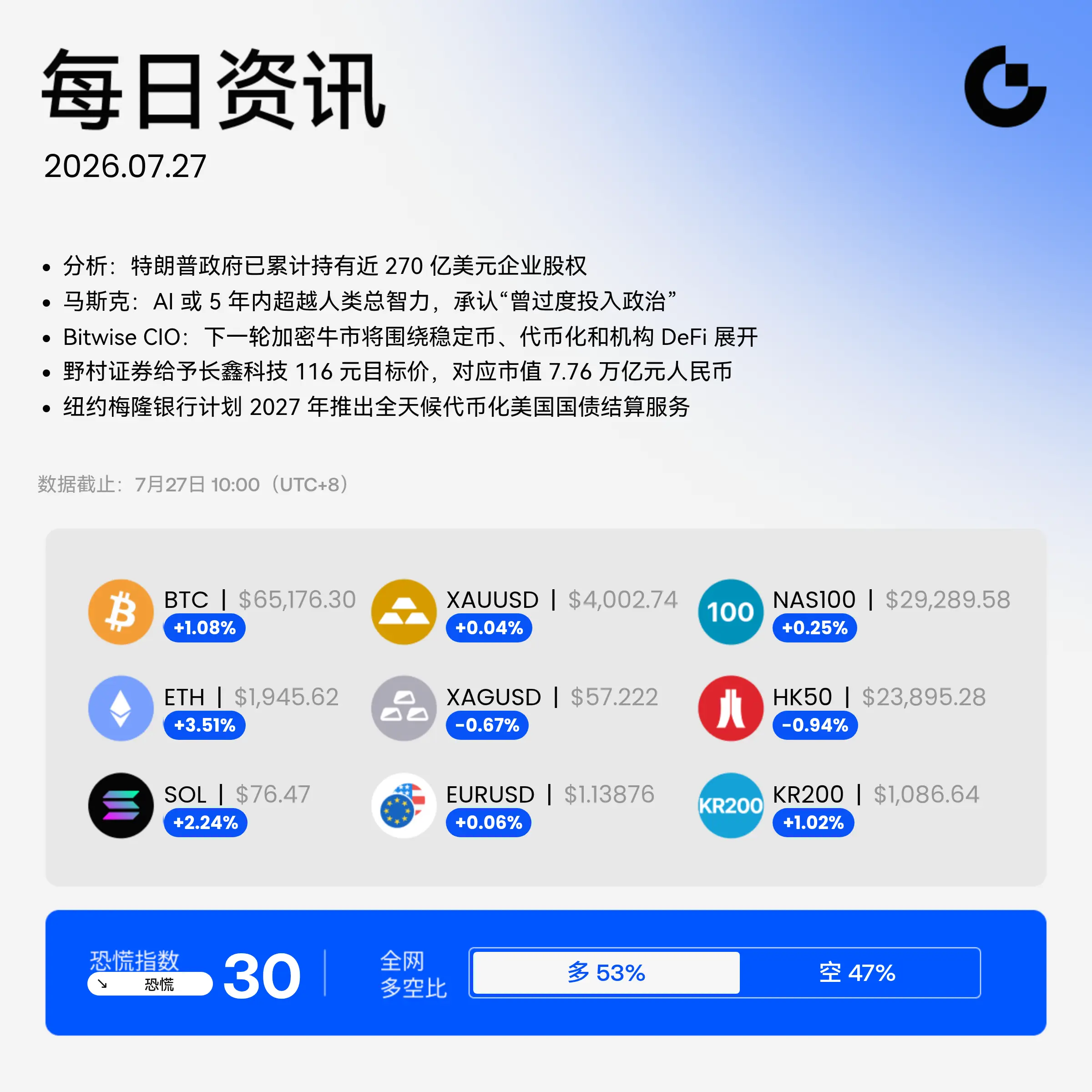
As of the latest snapshot, Bitcoin was around $65,176, up 1.08%. Ethereum was near $1,945, gaining 3.51%, while Solana was around $76.47, up 2.24%.
Gold was almost unchanged at around $4,002.74, while silver slipped roughly 0.67%.
The Nasdaq 100 was slightly higher at 29,289.58, up about 0.25%.
Across Asia, the
EagleEye
The Market Is Moving. But That’s Not the Real Story.
Bitcoin is back above $65K.
Ethereum is moving faster.
Solana is waking up.
Gold is sitting above $4,000.
And yet…
The market is still scared.
That sounds strange, doesn't it?
But that's exactly what makes today's market interesting.
As of the latest snapshot, Bitcoin was around $65,176, up 1.08%. Ethereum was near $1,945, gaining 3.51%, while Solana was around $76.47, up 2.24%.
Gold was almost unchanged at around $4,002.74, while silver slipped roughly 0.67%.
The Nasdaq 100 was slightly higher at 29,289.58, up about 0.25%.
Across Asia, the picture was mixed. The Hang Seng was down around 0.94%, while KR200 gained about 1.02%.
In currencies, EUR/USD was around 1.13876, showing a modest 0.06% gain.
Nothing here screams "euphoria."
In fact, the Fear & Greed Index was sitting at 30 — still in Fear territory.
The market is moving up.
But investors are still looking over their shoulders.
And maybe that's the most important thing to understand.
---
Because the real story isn't just Bitcoin.
The bigger story is what is happening around Bitcoin.
Stablecoins are becoming more important.
Tokenization is moving closer to mainstream finance.
Institutional DeFi is becoming a serious conversation.
And the world's biggest financial institutions are no longer watching from the sidelines.
They are building.
---
Look at JPMorgan.
The bank is reportedly planning a 24/7 tokenized settlement service for US government bonds in 2027.
Think about what that means.
For decades, global finance has operated around trading hours, banking windows and traditional settlement systems.
Now, one of the world's largest financial institutions is looking toward a world where financial assets can potentially move and settle around the clock.
That's not just a crypto story.
That's a financial infrastructure story.
And it's a much bigger deal.
---
Then comes the tokenization story.
According to the view highlighted by Bitwise's CIO, the next major phase of crypto may not be driven by another meme coin or another speculative frenzy.
It could be driven by Stablecoins. Tokenization. Institutional DeFi.
In other words:
The next big crypto wave may be less about people buying digital coins…
…and more about the financial system itself becoming digital.
Imagine bonds, funds and other real-world assets represented digitally on blockchain networks.
Imagine money moving through stablecoins.
Imagine institutions using blockchain rails without even calling it "crypto."
That future is becoming easier to imagine.
---
And then there is AI.
Elon Musk has suggested that AI could potentially surpass human intelligence within the next five years.
Whether that exact timeline proves right or wrong, one thing is obvious:
AI is moving faster than most people expected.
Now put AI and blockchain in the same picture.
AI can analyze.
AI can automate.
Blockchain can record.
Tokenization can digitize ownership.
Stablecoins can move money.
And institutions can bring all of it into the mainstream financial system.
That's where the real story starts getting interesting.
---
Even Nomura is looking at the technology story through a different lens.
The market update highlighted a 116 yuan target price from Nomura Securities for a technology company, alongside a potential market value of around 7.76 trillion yuan.
Whether individual targets are ultimately achieved is another question.
But the message from the market is clear:
Investors are still willing to place enormous value on technology when they believe a company sits on the right side of the future.
And right now, the "future" is increasingly being defined by AI, digital assets, semiconductors, cloud infrastructure and financial technology.
---
Then there is the $270 billion question.
The market update also highlighted discussion around approximately $270 billion in corporate equity holdings connected to the Trump administration.
The exact nature and structure of such holdings matters, so the number should be viewed in context rather than as a simple headline.
But the broader point is impossible to ignore:
Politics, money and markets are now deeply connected.
A policy decision in Washington can move markets in Asia.
A central-bank signal can move Bitcoin.
An AI announcement can move technology stocks.
A regulatory decision can change the future of stablecoins.
And a bank like JPMorgan exploring tokenized settlement can influence how the entire financial industry thinks about blockchain.
Everything is connected.
---
And that's why the Fear & Greed Index matters.
The index is at 30.
Fear.
Not greed.
Not euphoria.
Fear.
At the same time, the Global Long/Short Ratio is showing approximately 53% Long versus 47% Short.
So the market isn't completely bearish.
But it isn't confident either.
It's cautious.
It's waiting.
It's watching.
And perhaps that's exactly what markets do before a major shift becomes obvious.
---
So, what should we take away from all of this?
Maybe the biggest mistake is to look at today's market and ask only:
"Will Bitcoin go up or down?"
That's too small a question.
The bigger question is:
What is the financial system becoming?
Because while everyone is watching Bitcoin at $65K, something much bigger is happening underneath.
Banks are exploring tokenized assets.
Stablecoins are becoming part of the financial conversation.
Institutional DeFi is moving closer to the mainstream.
AI is advancing at an extraordinary speed.
Technology companies are being valued on the promise of the next decade.
And traditional markets are still trying to balance growth with fear.
So yes…
Watch Bitcoin.
Watch Ethereum.
Watch Solana.
Watch Gold.
Watch the Nasdaq.
But also watch the infrastructure being built behind the scenes.
Because the next big financial revolution may not arrive with a loud announcement.
It may arrive quietly—
inside a bank,
inside a blockchain,
inside an AI model,
or inside a tokenized asset—
until one day we look back and realize that the financial system we knew has already changed.
The market isn't just moving.
The market is evolving.
And perhaps, that's the real story.
#SummerCreationCamp
repost-content-media
  • Reward
  • Comment
  • Repost
  • Share
The Market Is Telling Two Stories at the Same Time — And Most People Are Only Listening to One
Bitcoin is back around $65,176.
Ethereum is moving faster at $1,945, up 3.51%.
Solana is also catching a bid at $76.47, up 2.24%.
Gold is holding above $4,000.
The Nasdaq 100 is sitting near 29,289.
And yet, the Fear & Greed Index is still at 30 — Fear.
That combination is interesting.
The market is moving, but confidence hasn't fully returned.
The Long/Short ratio is almost balanced too: 53% Long versus 47% Short.
So this isn't a market where everyone is jumping in with their eyes closed.
It's a mar
BTC1.55%
ETH4.46%
SOL3.04%
NAS1000.88%
EagleEye
The Market Is Telling Two Stories at the Same Time — And Most People Are Only Listening to One
Bitcoin is back around $65,176.
Ethereum is moving faster at $1,945, up 3.51%.
Solana is also catching a bid at $76.47, up 2.24%.
Gold is holding above $4,000.
The Nasdaq 100 is sitting near 29,289.
And yet, the Fear & Greed Index is still at 30 — Fear.
That combination is interesting.
The market is moving, but confidence hasn't fully returned.
The Long/Short ratio is almost balanced too: 53% Long versus 47% Short.
So this isn't a market where everyone is jumping in with their eyes closed.
It's a market where people are watching closely.
And perhaps that's exactly why the next few months could be more interesting than the last few weeks.
Because underneath these daily price movements, something much bigger is quietly taking shape.
The financial world is beginning to change its plumbing.
---
Look at the crypto market.
For years, the conversation was mostly about Bitcoin's price.
$20K.
$40K.
$60K.
$100K.
But the conversation is changing.
Now we're talking about Stablecoins. Tokenization. Institutional DeFi.
That's not just a change in vocabulary.
It's a change in direction.
The next phase of digital assets may be less about people trading coins on exchanges and more about financial institutions using blockchain technology to move money, settle transactions and represent real-world assets digitally.
And this is where things start getting serious.
---
JPMorgan Chase is reportedly looking toward a 24/7 tokenized settlement service for US government bonds in 2027.
Think about that for a second.
The same financial system that spent decades operating through traditional settlement windows is now exploring a world where financial assets could potentially move through digital infrastructure around the clock.
That's a much bigger story than crypto prices.
It's about how money itself moves.
---
Bitwise's CIO is also pointing toward three themes that could shape the next crypto cycle:
Stablecoins.
Tokenization.
Institutional DeFi.
Put those three together and you get a very different picture of the future.
Stablecoins can provide digital money.
Tokenization can bring traditional assets onto blockchain rails.
Institutional DeFi can connect that infrastructure with the world's financial institutions.
Suddenly, the question isn't:
"Will banks use crypto?"
The question becomes:
"How much of modern finance will quietly run on blockchain infrastructure?"
That's a much more interesting question.
---
And then there's AI.
Elon Musk has suggested that AI could potentially surpass human intelligence within the next five years.
Maybe the timeline will be right.
Maybe it won't.
But the direction is difficult to ignore.
AI is advancing rapidly, and the financial industry will be one of the biggest places where that intelligence gets deployed.
Now imagine what happens when AI meets blockchain.
AI can analyze enormous amounts of information.
Blockchain can create verifiable digital records.
Tokenization can turn real-world assets into digital instruments.
Stablecoins can move value digitally.
And institutions like JPMorgan can build the infrastructure around it.
That combination could be far more important than any single Bitcoin rally.
---
Then there's Nomura Securities, with the market update highlighting a 116 yuan target price for a technology company and a potential 7.76 trillion yuan market value.
Whether any individual target is ultimately achieved is something the market will decide.
But the message is clear:
Capital is still chasing the future.
And the future investors are looking at isn't just one thing.
It's AI.
It's semiconductors.
It's cloud infrastructure.
It's blockchain.
It's digital finance.
The biggest opportunities may increasingly appear where these worlds overlap.
---
Then comes the political side of the equation.
The market update also highlights discussion around approximately $270 billion in corporate equity holdings connected to the Trump administration.
The exact structure and nature of those holdings matter, so the figure deserves careful context.
But the broader point remains:
Politics and markets are no longer separate conversations.
A decision in Washington can move technology stocks.
A regulatory change can reshape stablecoins.
A central-bank policy shift can affect Bitcoin.
A major bank's blockchain strategy can influence the future of tokenization.
Everything is connected.
---
And perhaps that's why the market still feels uneasy.
Bitcoin is up.
Ethereum is up more.
Solana is moving.
Gold remains strong around $4,002.
Silver is around $57.22.
The Nasdaq 100 is slightly positive.
EUR/USD is near 1.13876.
The Hang Seng is down around 0.94%, while KR200 is up roughly 1.02%.
Different markets.
Different signals.
One global economy.
And right now, the signals aren't telling one simple story.
They're telling us that investors are trying to figure out what comes next.
---
Maybe that's the real headline.
Not Bitcoin at $65K.
Not Ethereum up 3.51%.
Not even Fear & Greed at 30.
The real story is that the old financial system and the new financial system are slowly beginning to overlap.
The bank is looking at blockchain.
The blockchain is looking toward institutions.
AI is moving into finance.
Traditional assets are being considered for tokenization.
Stablecoins are becoming more relevant.
And investors are standing somewhere in the middle—interested, but still cautious.
That's why I don't think the most important question right now is:
"Where will Bitcoin go next?"
I think the better question is:
"What will the financial system look like when all of these technologies finally start working together?"
Because when that happens, the biggest opportunity may not be the next coin that pumps.
It may be the infrastructure that nobody is paying attention to today.
The market is giving us the prices.
The technology is giving us the direction.
And the next chapter is being built quietly—right in front of us.
  • Reward
  • Comment
  • Repost
  • Share
crypto market update
480 views
2026-07-27 06:32
  • Reward
  • 1
  • Repost
  • Share
GateUser-37edc23c:
nice stream friend 👍👍👍👍
#Web3SecurityGuide
🛡️ #Web3SecurityGuide
As the Web3 ecosystem continues to expand, security has become more important than ever. Millions of users are now interacting with decentralized applications (dApps), crypto wallets, NFTs, DeFi platforms, and blockchain networks every day. While Web3 offers greater financial freedom, transparency, and digital ownership, it also requires users to take personal responsibility for protecting their assets. Unlike traditional financial systems, blockchain transactions are often irreversible, making prevention the best defense against fraud and cyber threa
  • Reward
  • Comment
  • Repost
  • Share
#SECPushesFor24HourTrading
📈 #SECPushesFor24HourTrading
The discussion around 24-hour stock market trading is gaining momentum as financial markets continue evolving in an increasingly digital and interconnected world. Reports that regulators are exploring the possibility of extending trading hours have sparked widespread debate among investors, brokers, and financial institutions. A move toward round-the-clock trading could fundamentally change how global markets operate, offering greater flexibility while also introducing new challenges for market participants.
Today's financial markets ar
  • Reward
  • Comment
  • Repost
  • Share
#SECPushesFor24HourTrading
📈 #SECPushesFor24HourTrading
The discussion around 24-hour stock market trading is gaining momentum as financial markets continue evolving in an increasingly digital and interconnected world. Reports that regulators are exploring the possibility of extending trading hours have sparked widespread debate among investors, brokers, and financial institutions. A move toward round-the-clock trading could fundamentally change how global markets operate, offering greater flexibility while also introducing new challenges for market participants.
Today's financial markets ar
  • Reward
  • Comment
  • Repost
  • Share
#GUSDYieldRisesto3.8%
💰 #GUSDYieldRisesto3.8%
The increase in GUSD's yield to 3.8% marks another significant milestone in the evolution of digital finance, highlighting the growing demand for stable, yield-generating crypto assets. As the cryptocurrency market matures, investors are increasingly seeking opportunities that combine the price stability of regulated stablecoins with the potential to earn passive returns. A higher yield can make GUSD a more attractive option for users looking to optimize their idle digital assets while maintaining lower exposure to the volatility commonly associa
GUSD0.07%
STABLE-0.27%
  • Reward
  • Comment
  • Repost
  • Share
#EsportsTradingSeason
🎮 #EsportsTradingSeason
The world of esports is evolving faster than ever, and a new trading season brings fresh opportunities for gamers, traders, and digital asset enthusiasts alike. As competitive gaming continues to attract millions of fans worldwide, esports is becoming more than just entertainment—it's transforming into a global industry driven by innovation, technology, and community engagement. With tournaments growing larger, prize pools reaching record highs, and blockchain technology creating new possibilities, the connection between esports and digital finan
ESPORTS-14.80%
  • Reward
  • Comment
  • Repost
  • Share
#UStoImpose10To12.5PercentTariffsOn60Economies
Writing
🚨 #UStoImpose10To12.5PercentTariffsOn60Economies
Reports that the United States could impose tariffs ranging from 10% to 12.5% on imports from nearly 60 economies have once again drawn global attention to international trade and its potential impact on financial markets. If implemented, these measures could reshape global supply chains, increase production costs for businesses, and influence inflation, trade flows, and economic growth across multiple regions.
Tariffs are designed to protect domestic industries by making imported goods mo
BTC1.55%
  • Reward
  • Comment
  • Repost
  • Share
#IntelQ2RevenueSurges25%
🚀 #IntelQ2RevenueSurges25%
Intel's remarkable 25% surge in Q2 revenue represents more than just a strong quarterly earnings report—it signals renewed momentum for one of the world's most influential semiconductor companies and highlights the accelerating demand for advanced computing technologies. As artificial intelligence, cloud computing, high-performance processors, and enterprise infrastructure continue to reshape industries worldwide, Intel's improved financial performance suggests that the semiconductor market is entering a new phase of growth driven by innova
INTC1.89%
  • Reward
  • Comment
  • Repost
  • Share
#BrentReturnsTo100
🚀 #BrentReturnsTo100
The possibility of Brent crude oil returning to the $100 per barrel level is once again becoming a major topic across global financial markets. Rising geopolitical tensions, tightening supply conditions, OPEC+ production strategies, and stronger-than-expected energy demand have all contributed to renewed bullish sentiment in the oil market. While prices remain volatile, many analysts believe that if current supply disruptions continue and demand remains resilient, Brent could challenge the $100 milestone in the coming months.
A move back to $100 oil wo
BTC1.55%
  • Reward
  • Comment
  • Repost
  • Share
#EventContractsLaunch
🚀 #EventContractsLaunch
The launch of Event Contracts marks an exciting step forward for the digital trading ecosystem, giving users a brand-new and innovative way to trade the outcomes of real-world events. No longer limited to trading traditional assets, traders can now trade based on the likelihood of specific events occurring—blending market knowledge, research and analysis, and trading strategies into a whole, delivering a completely new trading experience.
Event Contracts opens up new opportunities across multiple domains, including cryptocurrencies, financial mar
View Original
  • Reward
  • Comment
  • Repost
  • Share
#SummerCreationCamp
Writing
#SummerCreationCamp ☀️🌊
Summer is a season of sunshine, adventure, and new beginnings, but for creators, it is much more than that. It is the perfect opportunity to discover hidden potential, develop new skills, and transform imagination into reality. Every sunrise reminds us that we have another chance to create something meaningful, inspire others, and move one step closer to our dreams.
Creativity is not about being perfect—it is about expressing yourself with passion and authenticity. Every photo you capture, every video you edit, every livestream you host, ev
  • Reward
  • Comment
  • Repost
  • Share
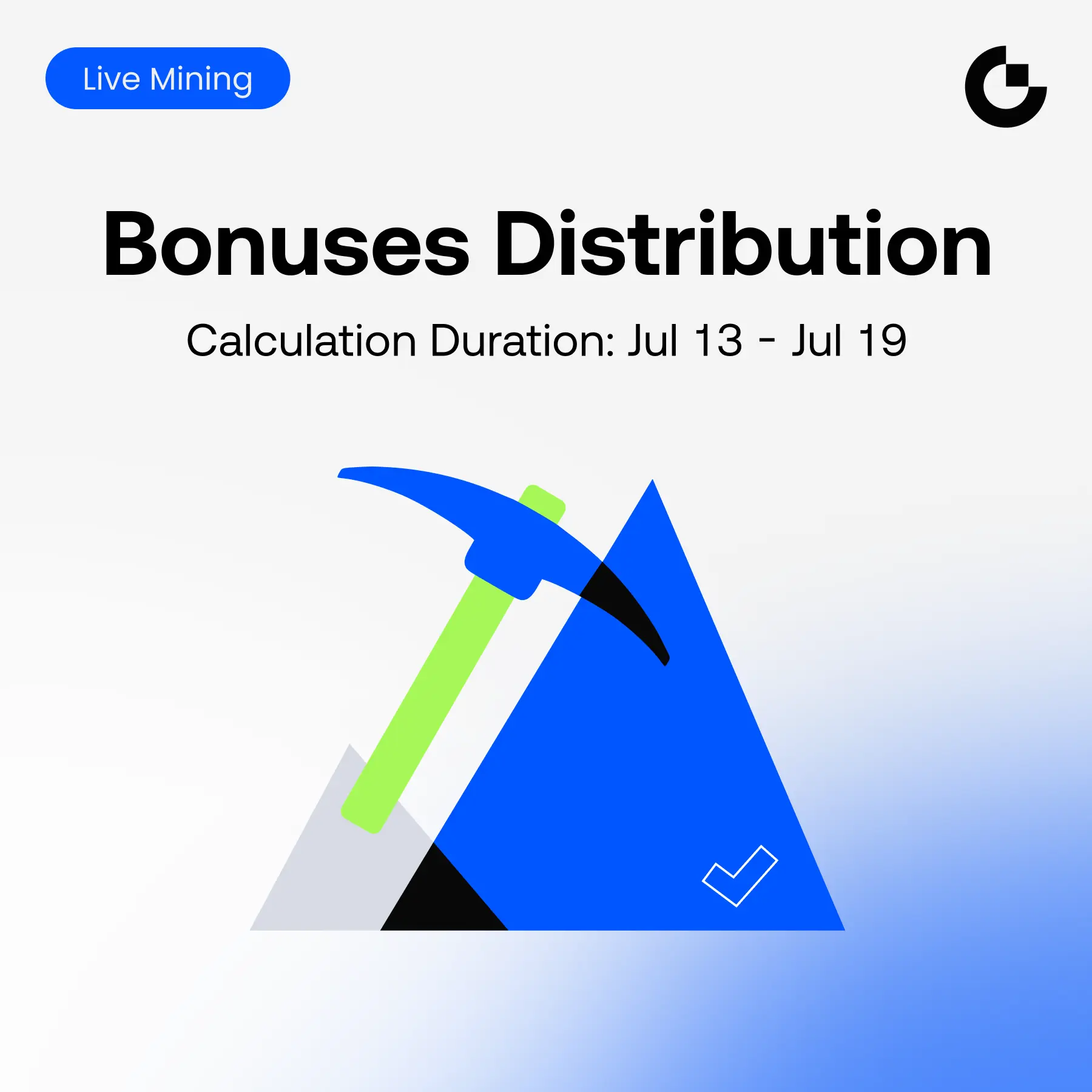
Gate Live Mining Bonuses Distribution Announcement (July 13 - July 19)
Check here: https://www.gate.com/social-mining-commission
▶Distributed Token: USDT
▶Distributed Date: July 24
▶View method: Assets - Spot
Learn about Live Mining Program: https://www.gate.com/announcements/article/49565
GateLive
Gate Live Mining Bonuses Distribution Announcement (July 13 - July 19)
Check here: https://www.gate.com/social-mining-commission
▶Distributed Token: USDT
▶Distributed Date: July 24
▶View method: Assets - Spot
Learn about Live Mining Program: https://www.gate.com/announcements/article/49565
repost-content-media
  • Reward
  • Comment
  • Repost
  • Share
  • Pinned