Key Takeaways
- Core Positioning of PayFi: PayFi is a systematic financial framework for payments. It leverages stablecoins as the underlying medium, integrating account systems, clearing and settlement, yield management, and compliance layers. Its goal is to bring crypto payments into the mainstream and serve as a bridge between Web2 and Web3.
- Paradigm Shift from Payment to Finance: By introducing the BNPN model, PayFi combines payment behavior with capital appreciation, enabling every unit of capital to generate yield—fundamentally transforming the traditional model of “idle capital.”
- Solving Industry Pain Points: PayFi addresses three structural challenges of traditional payment systems: high fees (reducing costs to less than one-tenth of traditional rails via on-chain settlement), long clearing cycles (enabling T+0 instant settlement), and financial exclusion (offering “accountless” access so the unbanked population worldwide can participate in financial services).
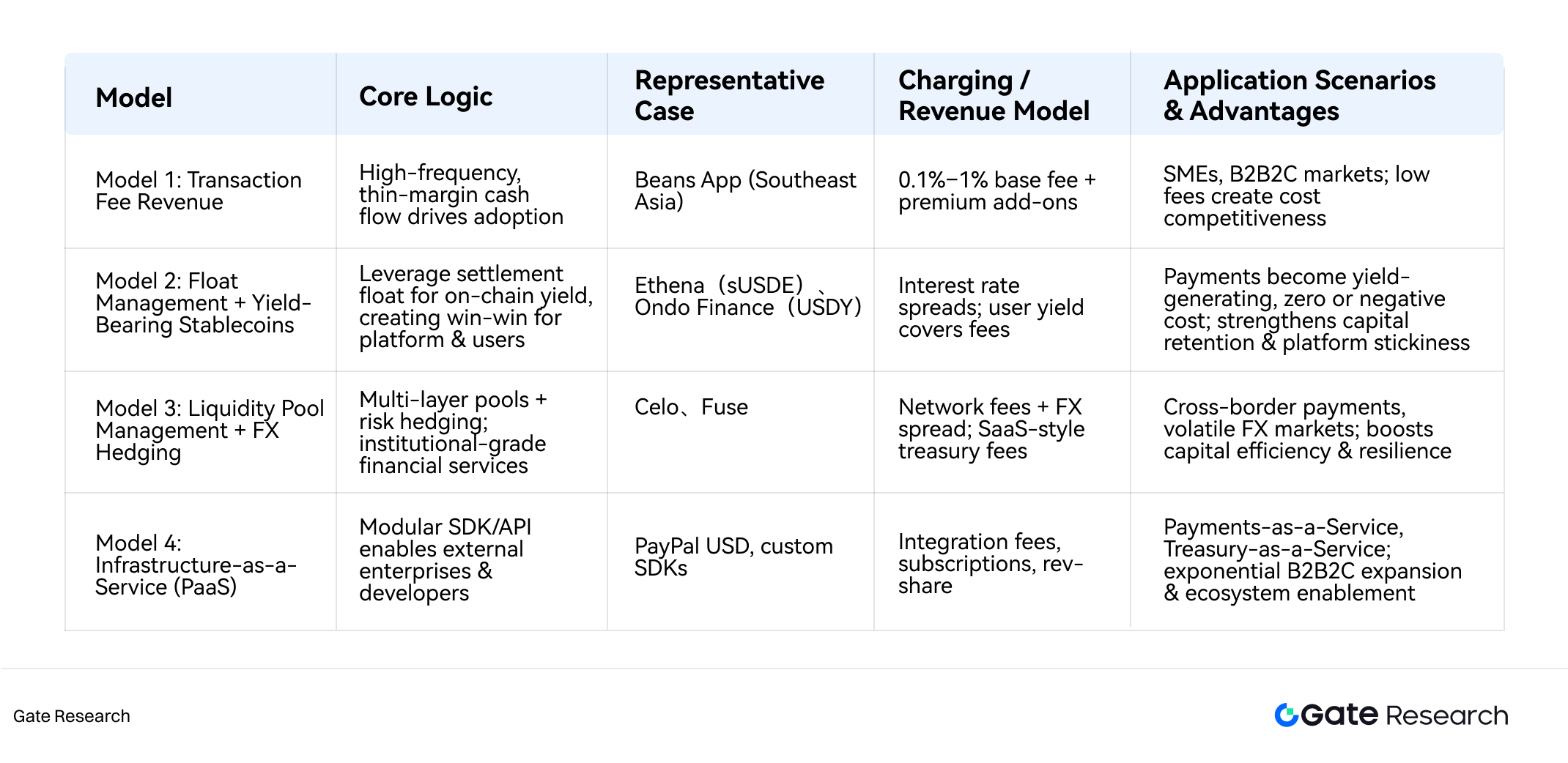
- Four Core Business Models: PayFi’s multi-layered, progressive business model drives revenue through four engines. First, it builds stable cash flow with ultra-low transaction fees under a “small margin, high frequency” strategy. Second, it reinvests settlement float into yield-bearing stablecoins, creating a profitability flywheel for both the platform and users. Third, it provides institutional-grade services such as liquidity pool management and FX hedging to capture higher-value revenues. Finally, it modularizes core capabilities into Payment-as-a-Service (PaaS) solutions, empowering external enterprises and driving ecosystem expansion.
- Three-Phase Rollout Strategy: PayFi’s roadmap follows a three-step strategy: Phase 1 (within 1 year) focuses on building core cash flow and user adoption; Phase 2 (1–2 years) expands financial services and API capabilities; Phase 3 (2–3 years) evolves into an industry-level infrastructure provider, enabling broader ecosystem growth.
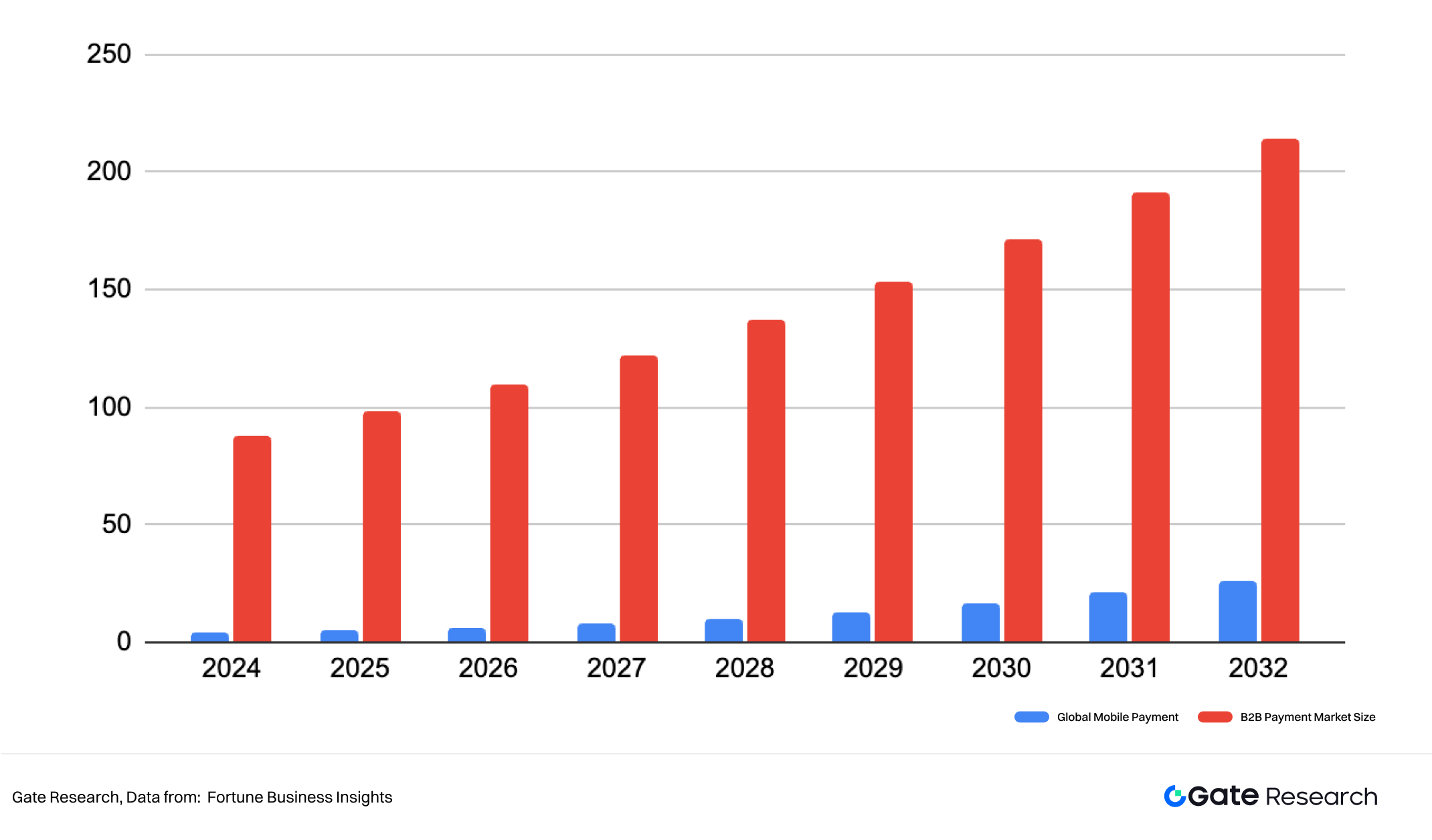
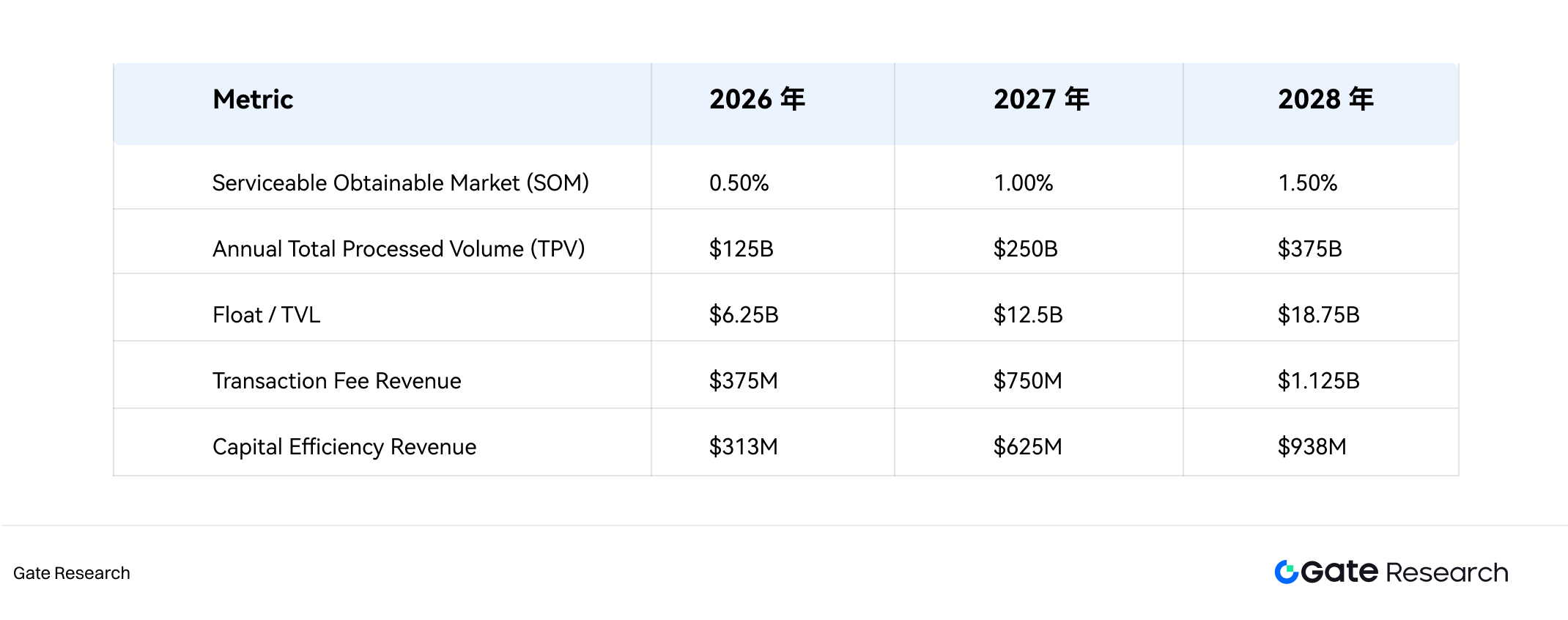
- Market Potential: PayFi targets the multi-trillion-dollar global payments market. By 2032, the digital payments and B2B payments markets are projected to reach $26.53 trillion and $213.28 trillion, respectively. Within key segments, PayFi’s serviceable market is estimated at $25–30 trillion. As crypto payment adoption accelerates, PayFi’s serviceable obtainable market (SOM) could reach hundreds of billions in transaction volume over the next 3–5 years, generating multi-billion-dollar revenue opportunities.
- Opportunities and Challenges: PayFi benefits from regulatory clarity around stablecoins and advances in infrastructure technologies . However, it also faces challenges such as regulatory uncertainty, security risks, and user onboarding barriers, which must be addressed through compliance and technological innovation.
(Click below to access the full report)Gate Research is a comprehensive blockchain and crypto research platform that provides readers with in-depth content, including technical analysis, hot insights, market reviews, industry research, trend forecasts, and macroeconomic policy analysis.
Disclaimer
Investing in the cryptocurrency market involves high risk. Users are advised to conduct independent research and fully understand the nature of the assets and products before making any investment decisions. Gate is not responsible for any losses or damages arising from such investment decisions.
Author: Ember
Reviewer(s): Puffy, Shirley
Disclaimer
* The information is not intended to be and does not constitute financial advice or any other recommendation of any sort offered or endorsed by Gate.
* This article may not be reproduced, transmitted or copied without referencing Gate. Contravention is an infringement of Copyright Act and may be subject to legal action.