Top Cryptocurrencies for Staking
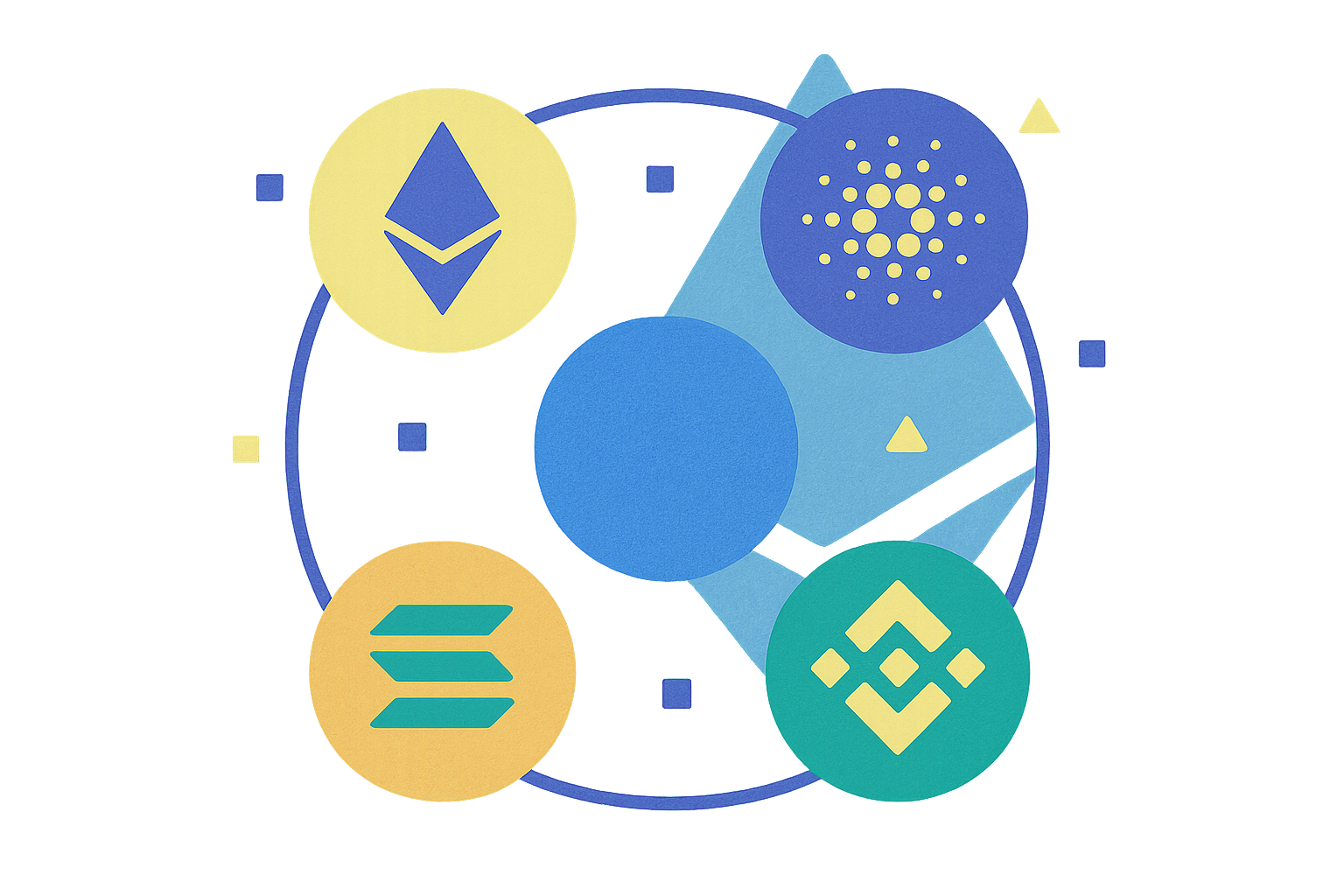
What Is Cryptocurrency Staking
Cryptocurrency staking is a passive income strategy where digital assets are locked in blockchain networks that use the Proof-of-Stake (PoS) consensus mechanism. Unlike traditional mining—which demands substantial computing power and high energy costs—staking allows network participants to earn rewards simply by holding and locking their coins.
Staking works by having cryptocurrency holders lock a specific number of tokens as collateral, signaling their commitment to network security and stability. In exchange, they receive rewards in new tokens, distributed proportionally to the size and duration of their stake. This approach not only delivers passive income to investors but also strengthens decentralization and security in blockchain networks.
Staking yields can fluctuate based on several factors: the cryptocurrency you choose, the amount you stake, the platform’s rules, and overall market conditions. Some projects offer fixed interest rates, while others use dynamic reward models.
How to Earn with Cryptocurrency Staking
There are several staking methods, each with distinct features, benefits, and requirements.
Solo Staking with Your Own Node
The first—and most technically intensive—approach involves setting up your own network node to act as a validator. Validators are essential for blockchain network operations: they verify transactions, create new blocks, and maintain consensus.
Running your own node demands technical expertise and considerable upfront capital. For example, solo staking on the Ethereum network requires locking at least 32 ETH, which is a substantial investment. Moreover, validators must keep their equipment running continuously; downtime can result in penalties and partial loss of staked funds.
Solo staking gives you full control, eliminates third-party fees, and maximizes rewards. However, it’s best suited for advanced users with sufficient capital and strong technical skills.
Delegated Staking
The second option is delegating your coins to existing validators through Staking-as-a-Service platforms. This method is much simpler and more accessible for most users. Here, investors transfer their tokens to a validator who already has the required infrastructure and technical capabilities.
Delegated staking doesn’t require technical knowledge or a large initial investment. Users simply choose a reputable validator on a specialized platform and delegate their funds. Validators charge a small fee for their services (typically 5–20% of earned rewards), and the rest goes to the delegator.
Careful validator selection is critical—consider their reputation, uptime, commission rate, and total staked funds. Some validators may offer extra bonuses or more favorable terms to attract delegators.
Staking Through Pools
The third option is joining staking pools, which aggregate funds from many users to meet minimum staking thresholds. This method is ideal for those wanting to start with a small amount. Pools let you stake virtually any quantity of coins, making staking highly accessible.
Staking pools operate collectively: multiple users combine their funds, which are staked as a single large deposit. Rewards are distributed proportionally to each participant’s contribution. Pool operators typically charge a small management fee.
Pools offer a low entry threshold, ease of use, and diversification. Still, it’s vital to choose reputable, trustworthy pools to minimize risk.
Top Cryptocurrencies for Staking
Selecting the right cryptocurrency for staking is crucial for successful investing. Here are some of the most promising and popular options.
Ethereum
Ethereum remains one of the most compelling cryptocurrencies for staking after transitioning to the Proof-of-Stake algorithm. The second-largest cryptocurrency by market capitalization offers a robust ecosystem and numerous staking solutions.
Base ETH staking yields are approximately 3–5% per year for solo staking. With specialized platforms and liquid staking protocols, returns can rise significantly. Some services provide additional rewards in their own tokens, boosting total yields to 8–12% annually.
Ethereum staking benefits include high liquidity, a mature DeFi ecosystem, and relative project stability. Ethereum’s strong development team and wide industry recognition lower long-term investment risks.
Cardano
Cardano (ADA) is recognized for its scientific approach to blockchain development and offers one of the most user-friendly staking mechanisms. The project was designed with staking in mind, making the process straightforward and secure.
Typical ADA staking yields range from 4–6% per year. A key feature of Cardano is the absence of a lock-up period—users can withdraw funds at any time without penalties. ADA staking doesn’t require transferring tokens to a validator; coins remain in the user’s wallet, which enhances security.
Cardano offers stable yields and relatively low risk thanks to its well-architected design and active ecosystem growth. The project is regularly updated, delivering new features and improved network performance.
Bitcoin and Other Alternatives
While Bitcoin uses Proof-of-Work and doesn’t support native staking, wrapped BTC and specialized protocols make it possible to earn from holding bitcoins. However, yields for these solutions are typically lower than classic PoS cryptocurrencies, at about 1–3% per year.
Beyond Ethereum and Cardano, the market features many other promising staking projects. Each comes with unique features, benefits, and risks to consider.
Staking Statistics and Trends
Reviewing current staking trends helps investors make informed decisions and identify the most promising projects.
Popular Coins for Staking
Besides Ethereum and Cardano, leading staking cryptocurrencies include Solana, Sui, and BNB. These projects draw investors with high yields, technological innovation, and rapid ecosystem development.
Solana stands out for fast transaction processing and a growing DeFi ecosystem. SOL staking offers 6–8% annual yields and minimal technical requirements. BNB—the native token of one of the largest blockchain platforms—delivers stable 3–5% yields and broad utility for staked tokens across its ecosystem.
Highest Reward Projects
Some of the highest staking rewards are offered by relatively new projects like MANTRA, Cosmos Hub, and Bittensor. These platforms can provide yields from 15% to 30% per year, appealing to investors who accept higher risks for potentially greater returns.
However, high yields often mean increased risks. New projects may encounter technical issues, token price volatility, or limited liquidity. Before investing in high-yield projects, carefully research their technology, development team, and roadmap.
Staking Participation Levels
Bittensor leads in the share of staked coins relative to total supply, with a large proportion of tokens locked. Aptos and Saga rank second and third—next-generation projects with innovative consensus and reward distribution methods.
A high percentage of staked tokens typically signals strong community trust and long-term holder commitment. This can enhance token price stability and reduce volatility.
Staking Benefits and Risks
Understanding both the advantages and potential risks of staking is vital for informed investment decisions.
Primary Benefits
Staking provides several key benefits for investors. It’s a straightforward way to earn passive income without active trading or deep technical expertise. Staking also encourages long-term investment and helps reduce the urge to sell assets during short-term market swings.
Participating in staking supports blockchain network security and decentralization—important factors for crypto industry growth. Many projects grant stakers extra privileges, such as protocol governance voting rights or access to exclusive features.
Potential Risks
Staking isn’t risk-free. The main risk is price volatility of the staked cryptocurrency. Even with steady staking yields, a sharp token price drop can result in net losses. For instance, a 10% annual yield won’t offset a 30% asset price decline.
Technical risks include bugs in smart contracts, validator failures, or network attacks. Slashing—penalties for validator misconduct—can also lead to loss of staked funds. When choosing delegated staking, thoroughly vet the validator’s reputation.
Liquidity is another risk. Many projects require tokens to be locked for a set period, during which funds can’t be withdrawn. This may be problematic for urgent asset sales or sudden market changes.
FAQ
What Is Cryptocurrency Staking and How Does It Work?
Staking involves locking your cryptocurrency tokens in a blockchain network to validate transactions and secure the network. Participants earn rewards in additional tokens for supporting network operations.
Which Cryptocurrencies Are Best for Staking in 2024?
Ethereum (ETH) and Cardano (ADA) lead in staking due to their robust networks and high rewards. Polkadot (DOT) and Solana (SOL) also offer attractive staking returns, backed by strong communities and expanding ecosystems.
What Annual Percentage Yield (APY) Do Different Cryptocurrencies Offer for Staking?
Ethereum 2.0 provides 5–6% APY; stablecoins like USDT can offer up to 20% APY on lending platforms. Rates depend on market demand and DeFi platform policies. Always check current rates on reputable platforms.
What Risks Are Involved with Cryptocurrency Staking? What Should You Watch For?
Staking carries risks such as market volatility, penalties for violations, validator failures, and reward dilution. Key considerations include key security, choosing a reliable validator, and monitoring regulatory changes to protect your assets.
How Do You Start Staking? What Is the Minimum Investment?
To stake ETH, you need at least 32 ETH for solo staking or as little as 0.01 ETH through liquid staking platforms. Rocket Pool also lets you start with 10.4 ETH via mini-pools.
Staking vs. Mining: What’s the Difference and Which Is More Profitable?
Staking and mining are both ways to earn with cryptocurrencies. Staking is energy-efficient, delivers stable returns (5–10% per year), and doesn’t require specialized equipment. Mining can yield higher profits but needs powerful hardware and high electricity costs. For most investors, staking is more profitable and convenient.
Share
Content
How to Buy Cryptocurrency


Trending Cryptocurrencies



Ethereum 2.0 in 2025: Staking, Scalability, and Environmental Impact

2025 best encryption staking platform recommendation: secure and profitable

How to Buy Crypto: A Step-by-Step Guide with Gate.com

Crypto Assets Stake Full Analysis: How to Earn Passive Income Through Tokens

MemeBox Price and Airdrop Guide 2025: What You Need to Know
Can AI Companions (AIC) Reach $0.2729 in Price Prediction?
What is FYN: A Comprehensive Guide to Understanding the Fyn Protein Tyrosine Kinase and Its Role in Cell Signaling
What is NBOT: A Comprehensive Guide to Neural Bot Technology and Its Applications in Modern Business
How to Earn Money with Cryptocurrencies and Bitcoin?
2026 LONG Price Prediction: Expert Analysis and Market Forecast for the Next Generation Cryptocurrency Asset

2026 FYN Price Prediction: Expert Analysis and Market Forecast for the Coming Year