BICITY vs SNX: A Comprehensive Comparison of Two Leading Blockchain-Based Mobility Solutions
Introduction: Investment Comparison Between BICITY and SNX
In the cryptocurrency market, the comparison between BICITY vs SNX has become a topic that investors cannot overlook. Both show significant differences in market cap ranking, application scenarios, and price performance, representing distinct positioning within the crypto asset landscape.
BICITY (BICITY): Launched in May 2024, this project has gained market attention through its focus on AI-powered digital content creation, offering tools for generating articles, visuals, and audio content.
SNX (SNX): Since its launch in March 2018 (formerly known as Havven), it has been recognized for enabling synthetic assets, supporting various instruments including fiat currencies, precious metals, indices, and other cryptocurrencies within a decentralized network.
This article will provide a comprehensive analysis of the BICITY vs SNX investment value comparison, examining historical price trends, supply mechanisms, institutional adoption, technical ecosystems, and future outlook, attempting to address the question that concerns investors most:
"Which is the better buy right now?"
I. Historical Price Comparison and Current Market Status
BICITY and SNX Historical Price Trends
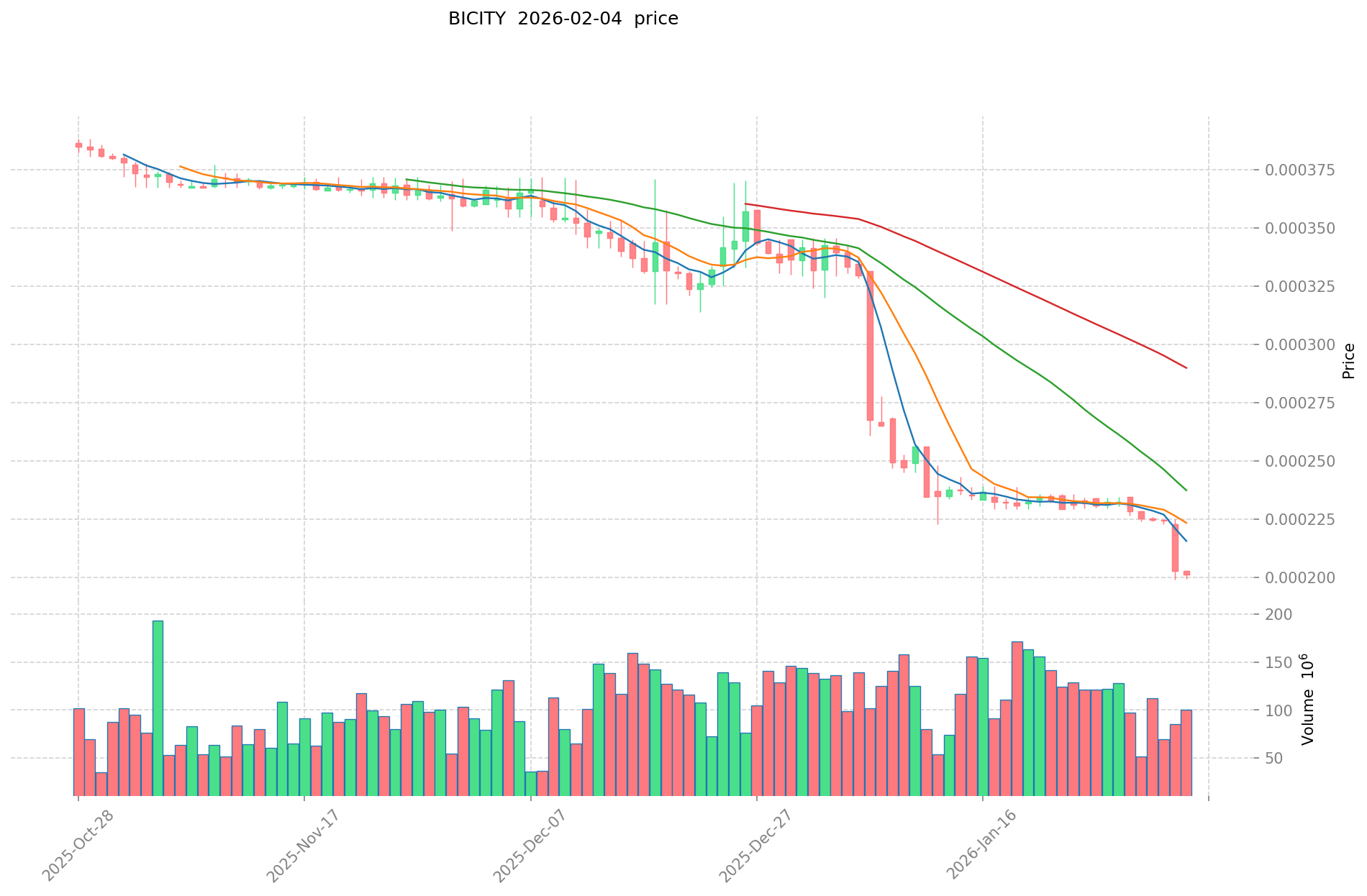
- 2024: BICITY experienced price fluctuations following its market launch, with its all-time high of $0.322 recorded on July 15, 2024.
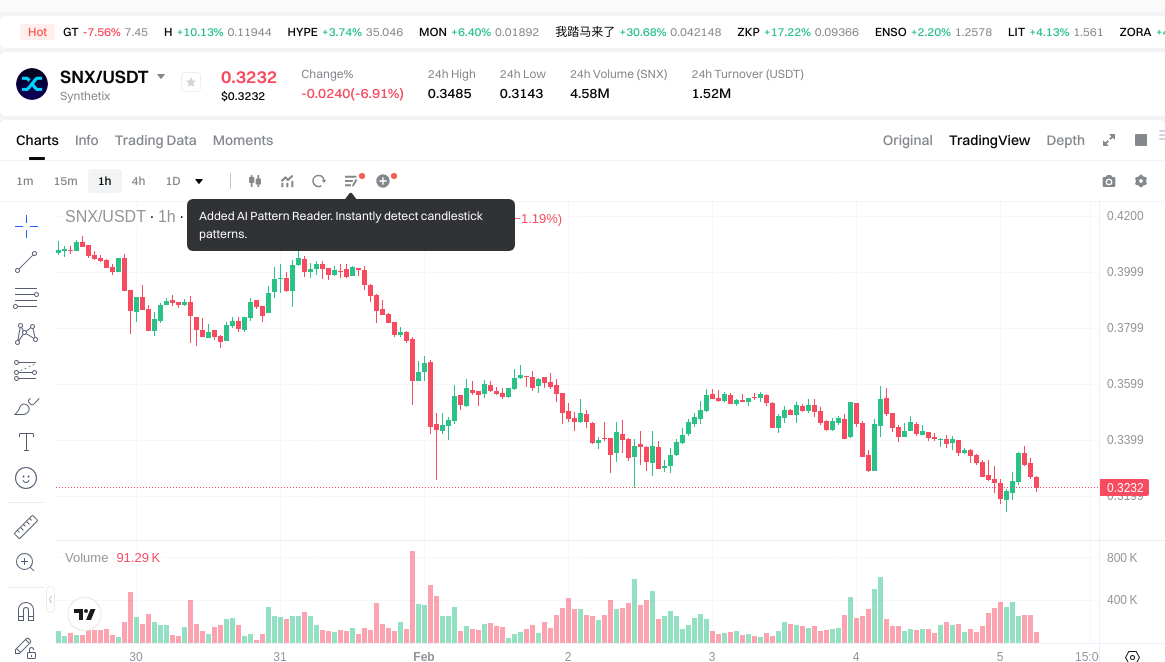
- 2021: SNX witnessed notable price movement influenced by the DeFi market expansion, reaching an all-time high of $28.53 on February 14, 2021.
- Comparative Analysis: During the recent market cycle, BICITY declined from its peak of $0.322 to a recorded low of $0.00019498, while SNX experienced a significant decrease from $28.53 to $0.0347864.
Current Market Status (2026-02-05)
- BICITY current price: $0.0002007
- SNX current price: $0.3241
- 24-hour trading volume: BICITY $22,805.23 vs SNX $1,508,194.65
- Fear & Greed Index: 14 (Extreme Fear)
View real-time prices:
- Check BICITY current price Market Price
- Check SNX current price Market Price
II. Core Factors Influencing BICITY vs SNX Investment Value
Supply Mechanism Comparison (Tokenomics)
Detailed supply mechanism information for BICITY and SNX is not available in the provided materials. Understanding tokenomics requires specific data on total supply, circulation patterns, and distribution models.
Institutional Adoption and Market Application
- Institutional Holdings: Information regarding institutional preference between BICITY and SNX is not available in the reference materials.
- Enterprise Adoption: Specific applications of BICITY and SNX in cross-border payments, settlement systems, or investment portfolios are not documented in the provided sources.
- National Policies: Regulatory attitudes toward BICITY and SNX across different jurisdictions are not covered in the available materials.
Technological Development and Ecosystem Building
- BICITY Technology: Technical upgrade details and their potential impact are not available in the reference materials.
- SNX Technology: Development roadmap and technological advancements are not documented in the provided sources.
- Ecosystem Comparison: Specific deployment in DeFi, NFT, payment systems, and smart contract implementation for both projects lacks detailed documentation.
Macroeconomic Environment and Market Cycles
- Performance in Inflationary Environments: Comparative analysis of inflation-hedging characteristics between BICITY and SNX is not available.
- Macroeconomic Monetary Policy: The reference materials note that specific impacts of interest rates and the US Dollar Index on these assets are not explained in available sources.
- Geopolitical Factors: Cross-border transaction demand and international situation impacts on BICITY and SNX are not covered in the provided materials.
III. 2026-2031 Price Forecast: BICITY vs SNX
Short-term Forecast (2026)
- BICITY: Conservative $0.0001184189 - $0.00020071 | Optimistic $0.00020071 - $0.0002729656
- SNX: Conservative $0.174366 - $0.3229 | Optimistic $0.3229 - $0.371335
Mid-term Forecast (2028-2029)
- BICITY may enter a gradual growth phase, with projected price range of $0.0002059304671 - $0.00036455258365 in 2028, and $0.000196065284588 - $0.000392130569176 in 2029
- SNX may enter a consolidation and expansion phase, with projected price range of $0.28501817925 - $0.49155309175 in 2028, and $0.3347104791975 - $0.560866208385 in 2029
- Key drivers: institutional capital inflows, ETF developments, ecosystem expansion
Long-term Forecast (2030-2031)
- BICITY: Baseline scenario $0.000303258354113 - $0.00035677453425 (2030) | Optimistic scenario $0.000255950050871 - $0.000489316273724 (2031)
- SNX: Baseline scenario $0.3647439600336 - $0.50658883338 (2030) | Optimistic scenario $0.427864928672748 - $0.772244017604472 (2031)
Disclaimer
BICITY:
| Year | Predicted High Price | Predicted Average Price | Predicted Low Price | Price Change |
|---|---|---|---|---|
| 2026 | 0.0002729656 | 0.00020071 | 0.0001184189 | 0 |
| 2027 | 0.00031973103 | 0.0002368378 | 0.000184733484 | 18 |
| 2028 | 0.00036455258365 | 0.000278284415 | 0.0002059304671 | 38 |
| 2029 | 0.000392130569176 | 0.000321418499325 | 0.000196065284588 | 60 |
| 2030 | 0.000396019733018 | 0.00035677453425 | 0.000303258354113 | 77 |
| 2031 | 0.000489316273724 | 0.000376397133634 | 0.000255950050871 | 87 |
SNX:
| Year | Predicted High Price | Predicted Average Price | Predicted Low Price | Price Change |
|---|---|---|---|---|
| 2026 | 0.371335 | 0.3229 | 0.174366 | 0 |
| 2027 | 0.47902215 | 0.3471175 | 0.25686695 | 7 |
| 2028 | 0.49155309175 | 0.413069825 | 0.28501817925 | 27 |
| 2029 | 0.560866208385 | 0.452311458375 | 0.3347104791975 | 39 |
| 2030 | 0.5369841633828 | 0.50658883338 | 0.3647439600336 | 56 |
| 2031 | 0.772244017604472 | 0.5217864983814 | 0.427864928672748 | 60 |
IV. Investment Strategy Comparison: BICITY vs SNX
Long-term vs Short-term Investment Strategies
- BICITY: May appeal to investors interested in emerging AI-powered content creation applications and early-stage technology adoption, though its current market positioning suggests consideration for speculative allocation rather than core holdings.
- SNX: Could attract investors seeking exposure to decentralized synthetic asset protocols and DeFi infrastructure, with its established presence since 2018 potentially offering different risk-return characteristics compared to newer projects.
Risk Management and Asset Allocation
- Conservative Investors: A cautious approach might consider minimal exposure to highly volatile assets like BICITY (0-5%) and SNX (5-15%), with the remainder allocated to established cryptocurrencies and traditional assets.
- Aggressive Investors: Those with higher risk tolerance might explore allocations such as BICITY (10-20%) and SNX (20-30%), balanced with diversified crypto holdings and risk management tools.
- Hedging Tools: Stablecoin reserves for rebalancing opportunities, derivative instruments where available, and cross-asset diversification across different blockchain sectors.
V. Potential Risk Comparison
Market Risk
- BICITY: The token exhibits substantial price volatility, with recorded decline from $0.322 to $0.00019498, reflecting sensitivity to market sentiment shifts and liquidity constraints. Trading volume of $22,805.23 indicates limited market depth.
- SNX: Price movement from $28.53 to $0.0347864 demonstrates exposure to broader DeFi market cycles and synthetic asset demand fluctuations. Current 24-hour volume of $1,508,194.65 suggests relatively deeper liquidity compared to BICITY.
Technical Risk
- BICITY: As a newer project launched in May 2024, considerations include platform maturity, user adoption rates, and the competitive landscape within AI content generation applications.
- SNX: Potential concerns involve protocol complexity, smart contract security considerations, and dependency on Oracle systems for accurate price feeds in synthetic asset creation.
Regulatory Risk
- Both projects operate in evolving regulatory environments where synthetic assets, AI-generated content platforms, and decentralized protocols face ongoing scrutiny. Regulatory developments in major jurisdictions could impact operational capabilities, market access, and investor participation differently for each project based on their specific use cases and structures.
VI. Conclusion: Which Is the Better Buy?
📌 Investment Value Summary:
- BICITY Characteristics: Represents exposure to AI-powered digital content creation sector with early-stage market presence; price forecasts suggest potential growth trajectory from $0.0001184189 - $0.0002729656 (2026) to $0.000255950050871 - $0.000489316273724 (2031).
- SNX Characteristics: Offers participation in established synthetic asset protocol with multi-year operational history; projections indicate potential range from $0.174366 - $0.371335 (2026) to $0.427864928672748 - $0.772244017604472 (2031).
✅ Investment Considerations:
- New Investors: May benefit from thorough research into both projects' fundamentals, starting with smaller position sizes, and prioritizing understanding of blockchain technology, DeFi protocols, and AI applications before committing capital.
- Experienced Investors: Could evaluate portfolio fit based on existing exposure to DeFi protocols versus content creation platforms, considering liquidity requirements, risk tolerance, and diversification objectives across different blockchain sectors.
- Institutional Participants: Might assess regulatory compliance frameworks, custody solutions availability, and alignment with investment mandates when evaluating exposure to either synthetic asset protocols or AI-content generation platforms.
⚠️ Risk Disclosure: Cryptocurrency markets demonstrate significant volatility and uncertainty. This analysis does not constitute financial advice, investment recommendations, or endorsements. Participants should conduct independent research, consult qualified financial advisors, and only allocate capital they can afford to lose. Past performance does not indicate future results, and price forecasts represent analytical projections subject to numerous variables and uncertainties.
VII. FAQ
Q1: What are the main differences between BICITY and SNX in terms of their use cases?
BICITY focuses on AI-powered digital content creation (articles, visuals, audio), while SNX enables synthetic asset trading (fiat currencies, precious metals, indices, cryptocurrencies). BICITY represents an emerging application in the AI content generation sector, launched in May 2024, targeting creators and content platforms. SNX, operational since March 2018, serves the decentralized finance (DeFi) ecosystem by providing infrastructure for synthetic asset exposure without direct ownership of underlying assets. These distinct use cases position them in different blockchain sectors with varying adoption patterns and market dynamics.
Q2: Which token shows higher price volatility based on historical data?
Both tokens demonstrate substantial volatility, though BICITY exhibits more extreme percentage drawdowns. BICITY declined approximately 99.94% from its all-time high of $0.322 (July 2024) to $0.00019498, while SNX fell roughly 99.88% from $28.53 (February 2021) to $0.0347864. However, SNX's longer operational history provides more data points for analysis. Current trading volumes indicate SNX maintains significantly deeper liquidity ($1,508,194.65 vs $22,805.23 for BICITY), which typically correlates with reduced price slippage during trades but doesn't eliminate volatility risk inherent to cryptocurrency markets.
Q3: What should conservative investors consider when evaluating BICITY vs SNX?
Conservative investors should prioritize risk management and limited exposure to highly volatile assets. A cautious allocation might include 0-5% BICITY and 5-15% SNX within a broader diversified portfolio containing established cryptocurrencies and traditional assets. Key considerations include: understanding each project's fundamentals, assessing personal risk tolerance, maintaining stablecoin reserves for rebalancing opportunities, recognizing regulatory uncertainties, and acknowledging that newer projects like BICITY carry additional platform maturity risks compared to established protocols like SNX. Conservative strategies emphasize capital preservation over speculative growth potential.
Q4: How do the price forecasts for 2026-2031 compare between BICITY and SNX?
Price projections suggest different growth trajectories for each token. BICITY forecasts range from $0.0001184189-$0.0002729656 (2026) to $0.000255950050871-$0.000489316273724 (2031), representing potential increases of approximately 27-144% over five years in baseline scenarios. SNX projections span $0.174366-$0.371335 (2026) to $0.427864928672748-$0.772244017604472 (2031), indicating possible growth of 32-108% under similar conditions. These forecasts reflect analytical models subject to market uncertainties, technological developments, adoption rates, and macroeconomic factors that may significantly alter actual outcomes.
Q5: What are the primary risks associated with investing in BICITY versus SNX?
Both tokens face distinct risk profiles. BICITY risks include: limited operational history, lower liquidity (affecting exit strategies), platform adoption uncertainty in competitive AI content markets, and early-stage technology maturation challenges. SNX risks encompass: protocol complexity requiring technical understanding, smart contract vulnerabilities inherent to DeFi systems, dependency on Oracle accuracy for synthetic asset pricing, and regulatory scrutiny surrounding decentralized synthetic instruments. Common risks affecting both include: cryptocurrency market volatility, evolving regulatory frameworks, macroeconomic conditions, technological disruption, and competition within their respective sectors.
Q6: Which token might be more suitable for institutional investors?
Institutional suitability depends on specific mandates and operational frameworks. SNX may align better with institutions seeking: exposure to established DeFi infrastructure, deeper liquidity for larger position management, longer operational track record for due diligence purposes, and participation in synthetic asset protocols complementing traditional portfolios. BICITY might interest institutions focused on: emerging technology sectors, AI application development, early-stage project opportunities, and diversification into content creation platforms. Both require assessment of regulatory compliance frameworks, custody solution availability, and alignment with investment policies governing digital asset exposure.
Q7: How does current market sentiment affect BICITY and SNX investment decisions?
The Fear & Greed Index registers 14 (Extreme Fear) as of February 5, 2026, indicating widespread market pessimism. This environment typically presents opportunities for long-term investors with risk capacity, as prices may reflect oversold conditions. However, extreme fear also signals potential for further downside before market stabilization. For BICITY, limited liquidity may amplify sentiment-driven price movements both upward and downward. SNX's relatively deeper market may provide more stable entry points but remains susceptible to broader DeFi sector sentiment. Investment decisions should balance sentiment indicators with fundamental analysis, risk tolerance, and portfolio objectives rather than timing market emotions.
Q8: What factors should investors monitor when comparing BICITY and SNX performance?
Critical monitoring factors include: trading volume trends (indicating liquidity changes), development activity and protocol upgrades, ecosystem growth metrics (user adoption, integration partnerships), regulatory developments affecting AI platforms and synthetic assets, macroeconomic conditions influencing risk appetite, competitive landscape evolution within their sectors, security audits and technical incidents, and community engagement levels. For BICITY specifically, track content creation platform adoption and AI technology advancements. For SNX, monitor synthetic asset trading volumes, Oracle system performance, and DeFi market integration. Regular assessment of these factors provides insight into changing investment value propositions beyond price movements alone.
Share
Content
Introduction: Investment Comparison Between BICITY and SNX
I. Historical Price Comparison and Current Market Status
II. Core Factors Influencing BICITY vs SNX Investment Value
III. 2026-2031 Price Forecast: BICITY vs SNX
IV. Investment Strategy Comparison: BICITY vs SNX
V. Potential Risk Comparison
VI. Conclusion: Which Is the Better Buy?
VII. FAQ
How to Buy Cryptocurrency


Trending Cryptocurrencies



2025 SUI coin: price, buying guide, and Staking rewards

How to Buy Crypto: A Step-by-Step Guide with Gate.com

HNT Price in 2025: Helium Network Token Value and Market Analysis
What is SwissCheese (SWCH) and How Does It Democratize Investment?

Cardano (ADA) Price Analysis and Outlook for 2025

How to Invest in Metaverse Crypto

How to Claim Free Bitcoin Daily with Bitcoin Faucet

Top 5 Coins to Mine Without Investment Right Now

Top Crypto Platforms with Registration Bonuses for New Traders

Cryptocurrency training from the ground up: how to choose the right approach

What is BICITY: A Comprehensive Guide to the Revolutionary Bike-Sharing Platform Transforming Urban Mobility