Comprehensive Guide to Moving Averages

What is Moving Average
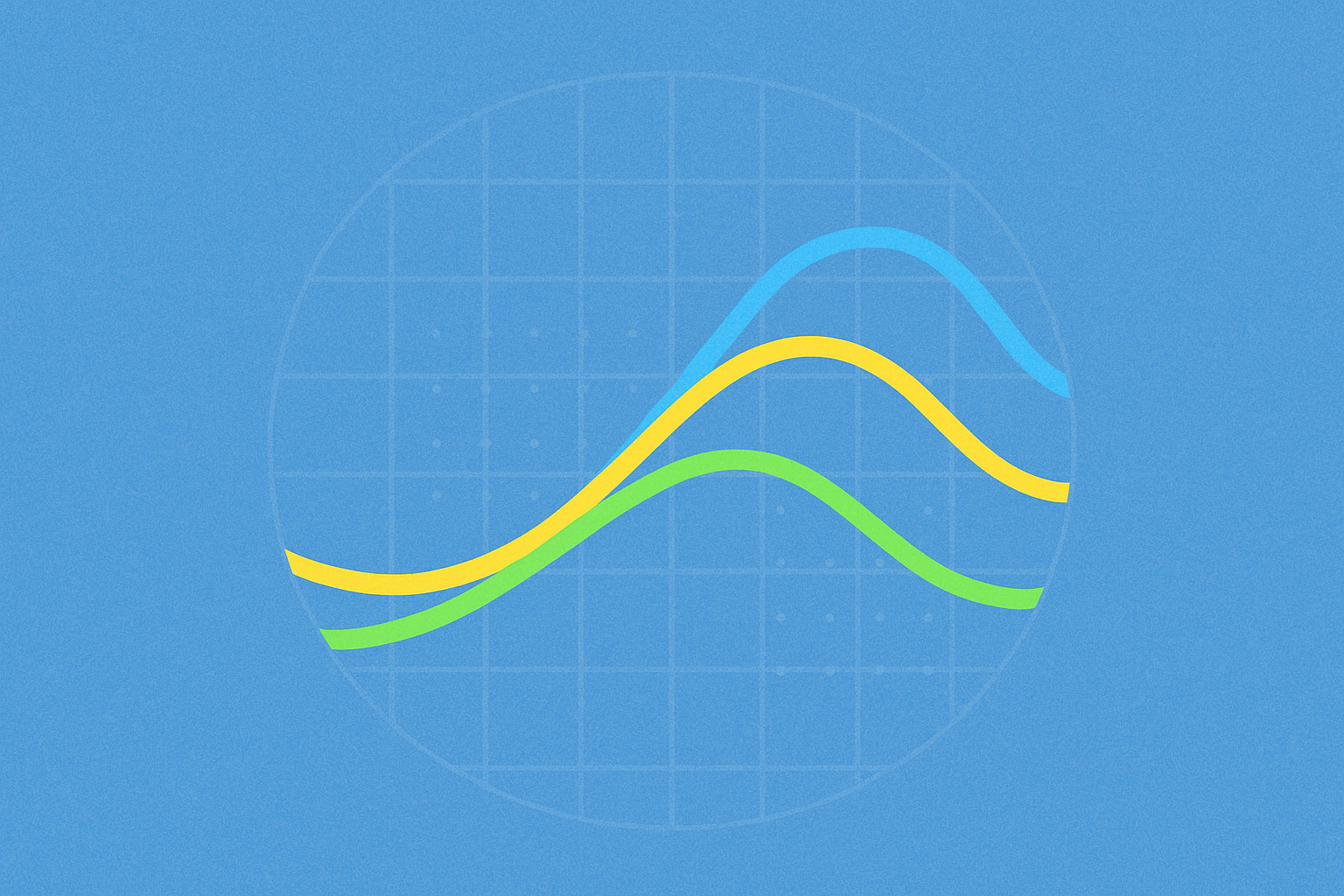
Moving Average (MA) is a fundamental tool in price analysis and one of the most widely used technical indicators in trading. This indicator helps traders identify trends and make informed decisions by smoothing out price fluctuations over a specified period.
The moving average line is created by calculating the average price of an asset over a defined timeframe and plotting it on a price chart. This line indicates the price trend of the asset over the recent period and suggests that the asset will likely continue moving in the same direction. Therefore, it serves as a foundational tool for trend-following strategies.
By filtering out short-term price noise, moving averages help traders focus on the underlying trend direction. The indicator adapts to new price data as time progresses, creating a dynamic line that moves along with the market. This characteristic makes it particularly valuable for identifying both short-term momentum shifts and long-term structural trends in various markets, including cryptocurrencies, stocks, and forex.
Types of Moving Averages
Simple Moving Average (SMA)
The calculation method involves taking all values within the specified period and calculating their equal-weighted average. This moving average type represents the most basic form and is commonly used for long-term trends on larger time frames.
Simple Moving Average treats all data points equally, regardless of when they occurred within the calculation period. For example, a 20-period SMA gives equal weight to the price from 20 periods ago and the most recent price. This equal weighting makes SMA slower to react to sudden price changes but provides a smoother representation of the overall trend. Traders often use SMA for identifying major support and resistance levels, as these levels tend to be more reliable when based on equal-weighted averages.
Exponential Moving Average (EMA)
The calculation method involves taking all values within the specified period and calculating their average while applying greater weight to recent prices. This line is more sensitive to recent changes and momentum that occurs, making it suitable for short-term trading.
Exponential Moving Average places exponentially decreasing weights on older prices, with the most recent price having the highest weight. This weighting scheme allows EMA to respond more quickly to price changes compared to SMA. For instance, a 20-period EMA will react faster to a sudden price spike than a 20-period SMA. This responsiveness makes EMA particularly popular among day traders and swing traders who need to capture short-term price movements. However, this sensitivity can also result in more false signals during choppy market conditions.
Triangular Moving Average (TMA)
The calculation method involves taking all values within the specified period, calculating their average, and applying weight to prices at the median point. TMA responds most slowly to price changes among all moving average types.
Triangular Moving Average applies a double smoothing process, first calculating a simple moving average and then calculating another moving average of that result. This double smoothing creates a smoother line that reduces noise significantly but also introduces considerable lag. TMA is most useful for identifying very long-term trends and filtering out medium-term fluctuations. Traders who focus on position trading or long-term investment strategies may find TMA valuable for confirming major trend reversals.
How to Apply Moving Averages
Using MA to Identify Trends
Analysts can identify the "trend" or direction of asset prices by examining the slope or "angle" of the moving average line. The steeper the slope, the stronger the momentum of the trend that has developed.
When the moving average line slopes upward, it indicates an uptrend, suggesting that buyers are in control and prices are generally rising over the specified period. Conversely, a downward-sloping moving average indicates a downtrend, showing that sellers dominate and prices are declining. A flat or horizontal moving average suggests a ranging market with no clear directional bias.
The degree of the slope provides additional information about trend strength. A sharply angled moving average indicates strong momentum and a robust trend, while a gently sloping line suggests a weaker trend with less conviction. Traders can use this information to adjust their position sizing and risk management accordingly, taking larger positions during strong trends and reducing exposure during weak trends.
Finding Support and Resistance Levels
Moving average lines can serve as support and resistance levels, based on the concept of mean reversion. During trending periods, moving averages are often used as accumulation points for adding to positions.
In an uptrend, the moving average line often acts as dynamic support, where prices tend to bounce after pulling back to test the line. Traders use these pullbacks as opportunities to enter long positions or add to existing positions at favorable prices. Similarly, in a downtrend, the moving average serves as dynamic resistance, where prices tend to reverse after rallying up to test the line.
The reliability of moving averages as support or resistance depends on several factors, including the timeframe, the length of the moving average, and the strength of the underlying trend. Longer-period moving averages, such as the 200-period MA, tend to provide stronger support or resistance levels because they represent a broader consensus of market participants. When prices break through a significant moving average level, it often signals a potential trend change and can trigger substantial follow-through movement.
MA Crossover Trading Strategy
MA Crossover involves setting two moving average lines of different lengths: the first for short-term trends and the second for long-term trends. The crossing of these lines is used to confirm that the short-term trend is changing.
The most common crossover strategy uses a fast-moving average (shorter period) and a slow-moving average (longer period). When the fast MA crosses above the slow MA, it generates a bullish signal, suggesting that upward momentum is building and it may be time to enter long positions. This crossover is often called a "golden cross" when it occurs with widely-followed moving averages like the 50-day and 200-day MAs.
Conversely, when the fast MA crosses below the slow MA, it generates a bearish signal, indicating that downward momentum is developing and traders should consider exiting long positions or entering short positions. This is known as a "death cross" in the context of major moving averages.
Traders should be aware that crossover strategies can generate false signals during sideways or choppy markets. To improve reliability, many traders combine crossover signals with other technical indicators or wait for additional confirmation, such as increased volume or a break of a key price level.
Popular Moving Average Applications
-
Short-term Lines: Typically use 10-15 candle periods to identify recent trends and capture short-term momentum. These moving averages are highly responsive to price changes and are favored by day traders and scalpers who need quick signals for entry and exit points.
-
Medium-term Lines: Typically use 50-60 candle periods to identify trends in a broader context. The 50-period moving average is particularly popular among swing traders as it balances responsiveness with smoothness, providing reliable signals for positions held over several days to weeks.
-
Long-term Lines: Typically use 200 candle periods to identify structural trends and major market direction. The 200-period moving average is one of the most widely watched indicators in financial markets, with institutional investors and long-term traders using it to gauge the overall health of an asset's trend.
What Period Should Moving Averages Use?
-
Setting Period by Market Open and Close Days: Adjust according to the market characteristics of the traded asset. For cryptocurrency markets that operate 24/7, traders might use different period lengths compared to traditional stock markets that have defined trading hours and weekends. Consider using periods that align with significant market cycles, such as weekly or monthly timeframes.
-
Setting Period by Fibonacci Numbers: Use numbers 8, 13, 21, 34, and 55 as moving average periods. These Fibonacci-based periods are believed to align with natural market rhythms and psychological patterns. Many traders find that Fibonacci-based moving averages provide particularly strong support and resistance levels, as they reflect multiple timeframe perspectives simultaneously.
-
Setting Period by Momentum: Customize to match the volatility characteristics of the specific asset. High-volatility assets like certain cryptocurrencies may require shorter moving average periods to capture meaningful trends, while lower-volatility assets may work better with longer periods. Traders should backtest different period lengths to find optimal settings for their specific trading instruments and strategies.
Benefits of Moving Averages
-
High Flexibility in Customization: Traders can design moving average methods that suit their individual trading styles and preferences. The ability to adjust period lengths, choose different calculation methods (SMA, EMA, TMA), and combine multiple moving averages provides endless possibilities for creating personalized trading systems. This flexibility allows both conservative long-term investors and aggressive short-term traders to find moving average configurations that match their risk tolerance and time commitment.
-
Trend Indication: Effectively indicates market trend status and momentum. Moving averages provide clear visual representation of trend direction, making it easy for traders to determine whether they should be looking for long opportunities, short opportunities, or staying on the sidelines. The indicator helps filter out market noise and focuses attention on the dominant price direction.
-
Strategy Development: Can be used to determine Stop Loss and Take Profit points. Moving averages provide logical reference points for risk management decisions. For example, traders might place stop losses just below a key moving average in an uptrend, or use moving average levels as profit-taking targets. This systematic approach to risk management helps traders maintain discipline and avoid emotional decision-making during volatile market conditions.
Key Takeaways
Moving averages are the most popular starting tools for market analysis. If you understand their principles thoroughly, you can customize them according to your preferences to suit your trading style, regardless of what type of trader you are.
The versatility of moving averages makes them suitable for various trading approaches, from scalping to long-term investing. By combining different types of moving averages, adjusting period lengths, and integrating them with other technical indicators, traders can develop robust trading systems that align with their goals and risk parameters.
Successful application of moving averages requires understanding their limitations as well as their strengths. These indicators are lagging by nature, meaning they reflect past price action rather than predicting future movements. Therefore, traders should use moving averages as part of a comprehensive analysis approach that includes other technical tools, fundamental analysis, and proper risk management practices.
FAQ
What is Moving Average (MA)? What role does it play in trading?
Moving Average is a technical indicator calculated by averaging price data over a specific period. It helps traders identify trends and potential trading opportunities. When price crosses above MA, it signals a buy; below MA signals a sell. MAs act as support/resistance levels and assist in confirming market direction across different timeframes.
What are the types of moving averages? What are the differences between Simple Moving Average (SMA), Exponential Moving Average (EMA), and Weighted Moving Average (WMA)?
SMA gives equal weight to all prices in the period. EMA assigns greater weight to recent prices, making it more responsive to price changes. WMA also weights recent prices higher but differently than EMA. EMA and WMA are more sensitive to current market movements than SMA.
How to Use Moving Average Lines to Identify Trends and Trading Signals in Trading?
Moving Averages smooth price data to reveal trends; a rising MA indicates bullish momentum while a falling MA signals bearish pressure. Crossovers between short-term and long-term MAs generate buy and sell signals. Combine with trading volume to confirm signal validity.
What do golden cross and death cross between short-term MA and long-term MA represent respectively?
Golden cross occurs when short-term MA crosses above long-term MA, signaling uptrend and bullish momentum. Death cross happens when short-term MA crosses below long-term MA, indicating downtrend and bearish signal.
What is the difference between different moving average periods such as 5-day, 20-day, 50-day, and 200-day MA?
Shorter periods (5, 20-day) track recent price action and identify short-term trends, responding quickly to price changes. Longer periods (50, 200-day) reveal long-term trends with less noise. Traders often use short MAs for entries and long MAs for trend confirmation. Crossovers between different periods signal potential trend reversals or momentum shifts.
How to use multiple moving average lines for combination trading strategies?
Combine short and long-term MAs for crossover signals; use MA ribbons to identify trend strength; apply envelope strategies for overbought/oversold levels; adjust periods based on market conditions and timeframes.
What are the limitations and risks of moving average lines?
Moving average lines lag behind price changes, cannot capture exact highs or lows, and lack predictive power for future movements. They work best combined with other indicators. Longer timeframes smooth trends but react slowly to recent price shifts.
How do Moving Average lines work together with other technical indicators such as RSI and MACD?
Combine MA lines with MACD to confirm trend direction and RSI to identify overbought/oversold conditions. This multi-indicator approach enhances trading accuracy and signal reliability for better entry and exit decisions.
Share
Content
How to Buy Cryptocurrency


Trending Cryptocurrencies



How to Withdraw Money from Crypto Exchanges in 2025: A Beginner's Guide
Hedera Hashgraph (HBAR): Founders, Technology, and Price Outlook to 2030

Jasmy Coin: A Japanese Crypto Tale of Ambition, Hype, and Hope

IOTA (MIOTA) – From Tangle Origins to 2025 Price Outlook
Bitcoin Price in 2025: Analysis and Market Trends

How to Trade Bitcoin in 2025: A Beginner's Guide

Best Overseas Cryptocurrency Exchanges for Korean Investors

Best Graphics Cards for Mining: Top GPUs from Recent Years

Trading Patterns: A Beginner's Guide

What is a Scalper? Scalping Strategies for Crypto, Forex, and Stocks

How do you interpret cryptocurrency trading charts?