This comprehensive analysis compares EQTY and FIL, two distinct blockchain solutions with different value propositions. EQTY, launched in October 2025 on Base, focuses on tokenized real-world assets and on-chain compliance infrastructure, currently trading at $0.003124. FIL, established in 2020, operates as a decentralized storage network via IPFS technology, currently at $1.09. The article examines historical price trends, market liquidity, technological ecosystems, and risk profiles to guide investment decisions. FIL demonstrates significantly higher trading volume ($1.59M vs $13K daily) and operational history, while EQTY presents early-stage RWA sector exposure with elevated volatility. Long-term price projections through 2031 and tailored investment strategies accommodate different investor profiles, from conservative to institutional approaches.
Introduction: EQTY vs FIL Investment Comparison
In the cryptocurrency market, the comparison between EQTY and FIL has become a topic of interest for investors. The two projects demonstrate notable differences in market cap ranking, application scenarios, and price performance, representing distinct positioning within the crypto asset landscape.
EQTY (EQTY): Launched in 2025, this next-generation platform focuses on bridging real-world legal ownership with blockchain liquidity. Built on Base, EQTY transforms how assets, identities, and data are anchored, verified, and traded, creating a foundation for tokenized real-world assets and on-chain compliance.
Filecoin (FIL): Introduced in 2020, Filecoin operates as a decentralized storage network built on IPFS technology. The project rewards miners for contributing idle hard drive capacity, establishing itself as a prominent player in the decentralized storage sector.
This analysis will examine historical price trends, supply mechanisms, institutional adoption, technological ecosystems, and future outlook to provide a comprehensive comparison of EQTY vs FIL investment potential, addressing the core question investors frequently ask:
"Which is the better buy right now?"
I. Historical Price Comparison and Current Market Status
Historical Price Trends of EQTY (Coin A) and FIL (Coin B)
- 2021: FIL experienced significant price movement, reaching an all-time high of $236.84 on April 1, 2021, driven by strong market momentum during the broader cryptocurrency bull cycle.
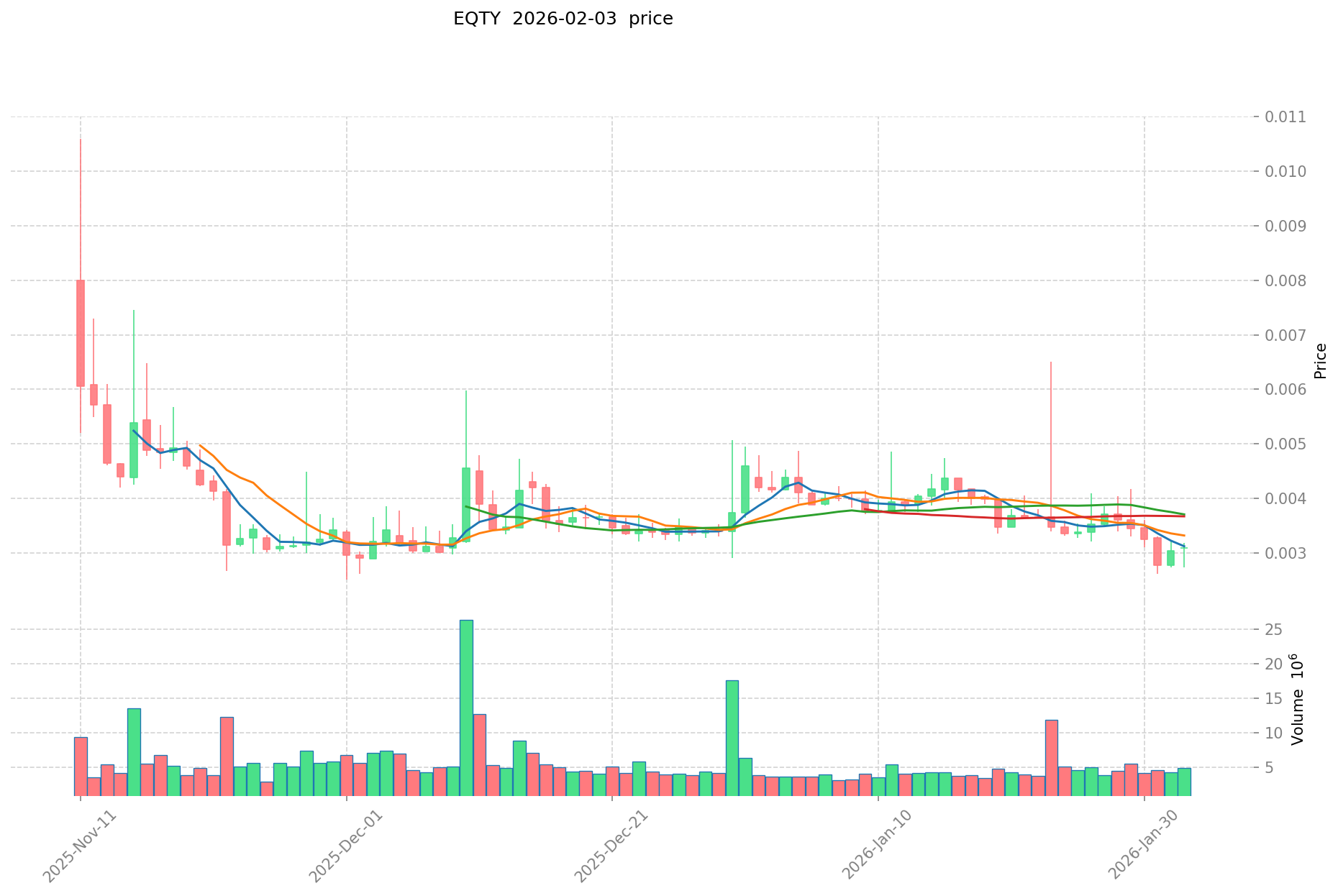
- 2025: EQTY launched in October 2025 with an initial trading period that saw its all-time high of $0.0106 recorded on November 11, 2025, followed by a decline to its all-time low of $0.002506 on December 1, 2025.
- Comparative Analysis: During recent market cycles, EQTY has shown volatility within a narrower price range from its peak of $0.0106 to its current level around $0.003124, while FIL has declined substantially from its historical high of $236.84 to approximately $1.09, reflecting broader market corrections affecting established Layer 1 projects.
Current Market Conditions (2026-02-04)
- EQTY Current Price: $0.003124
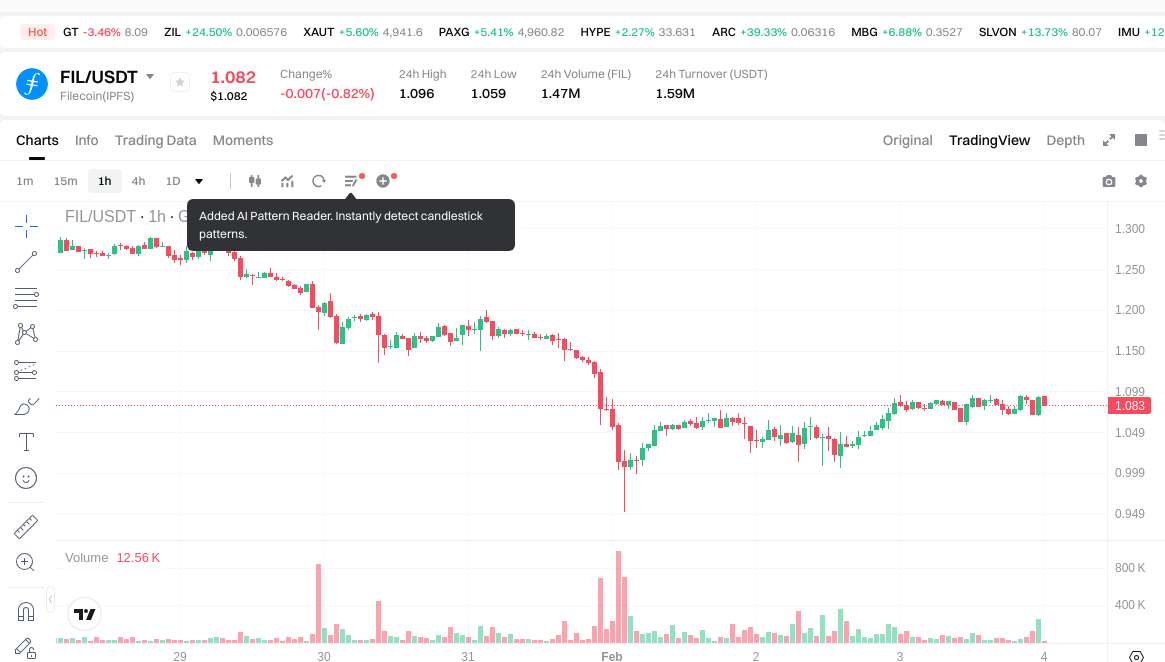
- FIL Current Price: $1.09
- 24-Hour Trading Volume: EQTY recorded $13,351.48 compared to FIL's $1,591,320.67
- Market Sentiment Index (Fear & Greed Index): 17 (Extreme Fear)
Check real-time prices:
II. Core Factors Influencing EQTY vs FIL Investment Value
Supply Mechanism Comparison (Tokenomics)
- EQTY: Information regarding the supply mechanism is not available in the provided materials.
- FIL: Information regarding the supply mechanism is not available in the provided materials.
Institutional Adoption and Market Application
- Institutional Holdings: The materials reference institutional investment frameworks through Fidelity's global equity income funds, which emphasize diversification across U.S., European, and Asian markets. These funds focus on quality companies with sustainable dividend policies and pricing power, suggesting a preference for stable, cash-flow-generating assets.
- Enterprise Adoption: The materials highlight investment strategies focusing on companies with global revenue bases, competitive advantages, and local manufacturing capabilities. Service-oriented businesses less affected by tariff policies are favored in current market conditions.
- National Policies: Investment considerations include interest rate fluctuations, exchange rate movements, market trends, economic factors, and political elements that generate investment risks. Cross-border investment involves currency risk for investors using different base currencies.
Technology Development and Ecosystem Building
- The materials emphasize sustainable investment frameworks and ESG (Environmental, Social, and Governance) integration in portfolio construction. Investment managers focus on fundamental stock selection combined with sustainable investment processes.
- Ecosystem considerations include risk management through diversification across industries and market capitalizations, with investment managers seeking to enhance value through stock selection and operational resilience assessment.
Macroeconomic and Market Cycles
- Performance in Inflationary Environments: The materials indicate that investment portfolios should account for interest rate and exchange rate fluctuations, market directions, and economic factors. Quality dividend-growth companies have historically demonstrated resilience during market volatility.
- Macroeconomic Monetary Policy: Global market dynamics in 2025 show significant volatility driven by geopolitical and trade policy challenges. Investment frameworks emphasize companies with stable cash flows and strong financial fundamentals that can navigate policy uncertainties.
- Geopolitical Factors: The materials note that investment strategies are adjusting to accommodate tariff policies and trade dynamics. Focus areas include multinational enterprises with diversified global revenue streams and companies with localized manufacturing capabilities to mitigate cross-border transaction risks.
📌 Historical Pattern: Investment in quality companies with consistent dividend growth has shown superior long-term performance compared to traditional high-dividend companies and broader market indices, particularly during periods of market uncertainty.
III. 2026-2031 Price Prediction: EQTY vs FIL
Short-term Forecast (2026)
- EQTY: Conservative $0.00287 - $0.00312 | Optimistic $0.00312 - $0.00412
- FIL: Conservative $0.730 - $1.089 | Optimistic $1.089 - $1.448
Medium-term Forecast (2028-2029)
- EQTY may enter a gradual growth phase, with projected prices ranging from $0.00332 to $0.00670 across different scenarios
- FIL may enter a moderate expansion phase, with projected prices ranging from $1.403 to $1.953 across different scenarios
- Key drivers: institutional capital inflows, ETF developments, ecosystem expansion
Long-term Forecast (2030-2031)
- EQTY: Baseline scenario $0.00308 - $0.00603 | Optimistic scenario $0.00637 - $0.00748
- FIL: Baseline scenario $1.113 - $1.983 | Optimistic scenario $2.227 - $2.360
View detailed price predictions for EQTY and FIL
Disclaimer
EQTY:
| Year |
Predicted High Price |
Predicted Average Price |
Predicted Low Price |
Price Change |
| 2026 |
0.00412368 |
0.003124 |
0.00287408 |
0 |
| 2027 |
0.0040224624 |
0.00362384 |
0.0034788864 |
16 |
| 2028 |
0.00554356924 |
0.0038231512 |
0.003517299104 |
22 |
| 2029 |
0.0066972051146 |
0.00468336022 |
0.0033251857562 |
49 |
| 2030 |
0.006373116587376 |
0.0056902826673 |
0.003641780907072 |
82 |
| 2031 |
0.007479307537899 |
0.006031699627338 |
0.003076166809942 |
93 |
FIL:
| Year |
Predicted High Price |
Predicted Average Price |
Predicted Low Price |
Price Change |
| 2026 |
1.44837 |
1.089 |
0.72963 |
0 |
| 2027 |
1.6239168 |
1.268685 |
0.79927155 |
16 |
| 2028 |
1.605393999 |
1.4463009 |
1.402911873 |
32 |
| 2029 |
1.95308473536 |
1.5258474495 |
1.46481355152 |
39 |
| 2030 |
2.2265165983104 |
1.73946609243 |
1.1132582991552 |
59 |
| 2031 |
2.359759700990538 |
1.9829913453702 |
1.348434114851736 |
81 |
IV. Investment Strategy Comparison: EQTY vs FIL
Long-term vs Short-term Investment Strategies
-
EQTY: May appeal to investors interested in emerging tokenized real-world asset platforms and on-chain compliance infrastructure. The project's focus on bridging legal ownership with blockchain liquidity positions it within the growing RWA tokenization sector, though its recent launch in October 2025 means limited historical performance data is available for assessment.
-
FIL: May attract investors seeking exposure to decentralized storage infrastructure with established market presence since 2020. The project's foundation in IPFS technology and operational track record provides a longer performance history for evaluation, though price movements have reflected broader market corrections affecting infrastructure-focused projects.
Risk Management and Asset Allocation
-
Conservative Investors: A balanced approach might consider allocating smaller percentages to emerging projects like EQTY (10-20%) while maintaining larger positions in established infrastructure projects like FIL (30-40%), complemented by diversification across other asset classes.
-
Aggressive Investors: Those with higher risk tolerance might explore increased exposure to early-stage platforms like EQTY (30-50%) while maintaining strategic positions in infrastructure projects like FIL (20-30%), though such allocations carry substantially higher volatility risk.
-
Hedging Instruments: Portfolio construction may incorporate stablecoin allocations for liquidity management, diversification across multiple crypto assets to reduce concentration risk, and consideration of market timing strategies aligned with broader market cycles. The current Fear & Greed Index of 17 (Extreme Fear) suggests elevated market caution.
V. Potential Risk Comparison
Market Risks
-
EQTY: As a recently launched project with limited trading history since October 2025, EQTY faces elevated volatility risk. The 24-hour trading volume of $13,351.48 indicates relatively lower liquidity compared to established projects, which may amplify price fluctuations during market movements. The tokenized real-world asset sector remains in early development stages, subject to market adoption uncertainties.
-
FIL: Despite established market presence since 2020, FIL has experienced substantial price decline from its April 2021 peak of $236.84 to current levels around $1.09, reflecting sensitivity to broader market corrections. The decentralized storage sector faces competitive dynamics and evolving demand patterns. Current 24-hour trading volume of $1,591,320.67 provides greater liquidity depth compared to emerging projects.
Technical Risks
-
EQTY: Built on Base infrastructure, the project's technical architecture focuses on asset tokenization and on-chain compliance mechanisms. As an emerging platform, it faces development execution risks common to early-stage blockchain projects, including network stability considerations and ecosystem adoption challenges.
-
FIL: Operating as a decentralized storage network, Filecoin's infrastructure depends on miner participation and network capacity. Technical considerations include storage provider distribution, network performance optimization, and ongoing protocol development requirements to maintain competitive positioning in the decentralized storage landscape.
Regulatory Risks
- Global regulatory frameworks for tokenized real-world assets and decentralized storage networks continue to evolve. EQTY's focus on bridging legal ownership with blockchain may face varying compliance requirements across jurisdictions. FIL's decentralized storage model encounters different regulatory considerations related to data storage and network operations. Cross-border investment in both assets involves currency risk for investors using different base currencies, alongside policy uncertainties affecting cryptocurrency markets broadly.
VI. Conclusion: Which Is the Better Buy?
📌 Investment Value Summary:
-
EQTY Characteristics: Represents exposure to the emerging tokenized real-world asset sector with focus on on-chain compliance infrastructure. Launched in October 2025, offering early-stage positioning in RWA tokenization, though accompanied by limited operational history and elevated volatility typical of newly launched projects.
-
FIL Characteristics: Provides exposure to established decentralized storage infrastructure with operational track record since 2020. Benefits from recognized positioning in IPFS-based storage solutions, though price performance has reflected broader market corrections affecting infrastructure-focused projects.
✅ Investment Considerations:
-
Novice Investors: May consider prioritizing established projects with longer operational histories and greater liquidity depth, maintaining conservative position sizing, and conducting thorough research before entering positions. Current market sentiment indicators suggest cautious market conditions.
-
Experienced Investors: Might evaluate portfolio diversification across different crypto sectors, assess risk-adjusted return profiles based on individual investment objectives, and implement position sizing aligned with personal risk tolerance. Consider market cycle positioning and sector rotation dynamics.
-
Institutional Investors: May focus on fundamental analysis of underlying technology infrastructure, ecosystem development trajectories, and regulatory compliance frameworks. Evaluation might incorporate liquidity considerations, operational risk assessment, and alignment with broader portfolio diversification strategies emphasizing quality fundamentals and sustainable business models.
⚠️ Risk Disclosure: Cryptocurrency markets demonstrate substantial volatility. Investment decisions should be based on individual financial circumstances, risk tolerance, and comprehensive research. This analysis does not constitute investment advice. Market conditions, regulatory environments, and project developments may change materially.
VII. FAQ
Q1: What is the fundamental difference between EQTY and FIL's core technology focus?
EQTY focuses on tokenized real-world assets (RWA) and on-chain compliance infrastructure, while FIL operates as a decentralized storage network. EQTY, launched in October 2025 and built on Base, bridges legal ownership with blockchain liquidity, creating infrastructure for asset tokenization and compliance verification. In contrast, Filecoin, introduced in 2020, rewards miners for contributing storage capacity through IPFS technology, establishing itself in the decentralized data storage sector. These represent fundamentally different value propositions—EQTY targets asset digitization and regulatory compliance, whereas FIL addresses decentralized data storage needs.
Q2: How do the liquidity profiles of EQTY and FIL compare for trading purposes?
FIL demonstrates significantly higher liquidity with approximately 119x greater trading volume than EQTY. As of February 4, 2026, FIL's 24-hour trading volume reached $1,591,320.67 compared to EQTY's $13,351.48. This substantial liquidity difference impacts trading execution, price stability, and position entry/exit capabilities. FIL's established market presence since 2020 has cultivated deeper liquidity pools, while EQTY's recent launch in October 2025 means its trading infrastructure is still developing. Higher liquidity typically reduces slippage and provides more efficient price discovery, which may be particularly relevant for larger position sizes.
Q3: What are the historical price volatility patterns for both assets?
FIL has experienced extreme volatility, declining approximately 99.5% from its April 2021 peak of $236.84 to current levels around $1.09. EQTY, with limited trading history since October 2025, has shown volatility within a narrower absolute range, moving from its all-time high of $0.0106 (November 11, 2025) to an all-time low of $0.002506 (December 1, 2025), currently trading around $0.003124. FIL's price movement reflects broader cryptocurrency market corrections affecting established infrastructure projects, while EQTY's volatility characteristics are typical of newly launched tokens with developing liquidity and market adoption patterns.
Q4: What investment allocation strategies suit different investor profiles for EQTY vs FIL?
Conservative investors might consider 10-20% allocation to emerging projects like EQTY and 30-40% to established infrastructure projects like FIL, balanced with diversification across other assets. Aggressive investors with higher risk tolerance might explore 30-50% exposure to early-stage platforms like EQTY and 20-30% positions in FIL, though this carries substantially higher volatility risk. The current Fear & Greed Index of 17 (Extreme Fear) suggests elevated market caution, warranting careful position sizing. Institutional investors may emphasize fundamental analysis of technology infrastructure, ecosystem development, regulatory compliance frameworks, and liquidity considerations aligned with broader portfolio diversification strategies.
Q5: How do the regulatory risk profiles differ between EQTY and FIL?
EQTY faces regulatory considerations specific to tokenized real-world assets and on-chain compliance mechanisms, with varying requirements across jurisdictions regarding asset digitization and legal ownership bridging. FIL encounters different regulatory considerations related to decentralized data storage operations, storage provider networks, and data management frameworks. Both assets face evolving global regulatory frameworks for cryptocurrency markets broadly. EQTY's focus on bridging legal ownership with blockchain may require navigation of securities regulations and compliance standards in multiple jurisdictions, while FIL's decentralized storage model must address data sovereignty and storage-related regulatory requirements.
Q6: What are the projected price ranges for EQTY and FIL through 2031?
Short-term forecasts for 2026 project EQTY in the conservative range of $0.00287-$0.00312 and optimistic range of $0.00312-$0.00412, while FIL is projected in the conservative range of $0.730-$1.089 and optimistic range of $1.089-$1.448. Long-term forecasts for 2030-2031 project EQTY baseline scenario of $0.00308-$0.00603 and optimistic scenario of $0.00637-$0.00748, while FIL baseline scenario ranges from $1.113-$1.983 and optimistic scenario from $2.227-$2.360. These projections incorporate factors including institutional capital inflows, ETF developments, ecosystem expansion, and broader market cycle dynamics, though actual outcomes may vary materially based on market conditions and project developments.
Q7: Which asset presents better risk-adjusted returns for the current market environment?
The risk-adjusted return profile depends significantly on investor objectives and risk tolerance under current market conditions. FIL offers established infrastructure positioning with greater liquidity depth and longer operational history, potentially providing more stable risk-adjusted characteristics for conservative portfolios, though its substantial decline from historical peaks reflects infrastructure sector challenges. EQTY presents early-stage exposure to the emerging RWA tokenization sector with higher potential growth characteristics but accompanied by elevated volatility, limited liquidity, and execution risk typical of newly launched projects. The current Fear & Greed Index of 17 (Extreme Fear) suggests cautious market sentiment, favoring quality fundamentals and careful position sizing regardless of asset selection.
Q8: How do the technology ecosystems and development roadmaps compare between EQTY and FIL?
FIL operates within the IPFS technology ecosystem, focusing on decentralized storage network development, miner participation optimization, and storage capacity expansion. Its established presence since 2020 provides demonstrated operational capability, though it faces competitive dynamics in the decentralized storage landscape. EQTY, built on Base infrastructure, focuses on asset tokenization infrastructure, on-chain compliance mechanisms, and bridging legal ownership with blockchain liquidity. As an emerging platform launched in October 2025, it faces development execution risks common to early-stage blockchain projects, including network stability considerations, ecosystem adoption challenges, and the need to demonstrate real-world implementation of its RWA tokenization value proposition.
* The information is not intended to be and does not constitute financial advice or any other recommendation of any sort offered or endorsed by Gate.