This comprehensive analysis compares GAIN and NEAR as Layer-1 blockchain investment opportunities. GAIN (Griffin AI), launched in 2025, operates as a no-code DeFi agent builder powering 15,000+ live agents across multiple blockchain ecosystems. NEAR Protocol, established in 2020, functions as a scalable Layer-1 platform utilizing state sharding technology. The article examines critical differences: GAIN's extreme volatility with 98.9% decline from peak versus NEAR's 94.2% decline from 2022 highs; trading volume disparity of 684x favoring NEAR; and distinct ecosystem positioning. For conservative investors, NEAR offers higher liquidity and established market presence with 15-20% allocation recommendations. Aggressive investors may consider GAIN's early-stage DeFi infrastructure potential at 20-30% allocations. Price predictions through 2031 suggest NEAR ranging $1.03-$2.25 and GAIN ranging $0.0038-$0.0065, contingent on institutional adoption, ecosystem expansion, and sustained protocol functionality. Risk man
Introduction: Investment Comparison Between GAIN and NEAR
In the cryptocurrency market, the comparison between GAIN and NEAR has become a topic of interest for investors. Both assets differ significantly in market cap ranking, application scenarios, and price performance, representing distinct positioning within the crypto asset landscape.
GAIN (Griffin AI): Launched in 2025, Griffin AI positions itself as a no-code agent builder for DeFi, powering over 15,000 live agents with integrations across major blockchain ecosystems including BNB Chain, NEAR Protocol, Cardano Foundation, and others.
NEAR (Near Protocol): Established in 2020, NEAR Protocol is recognized as a highly scalable blockchain infrastructure designed to support decentralized applications through state sharding technology, aiming to achieve linear scalability with network node growth.
This article will provide a comprehensive analysis of the investment value comparison between GAIN and NEAR, focusing on historical price trends, supply mechanisms, institutional adoption, technological ecosystems, and future projections. The analysis attempts to address the question most relevant to investors:
"Which asset presents a more compelling investment opportunity under current market conditions?"
I. Price History Comparison and Market Status
Griffin AI (GAIN) and NEAR Protocol (NEAR) Historical Price Trends
-
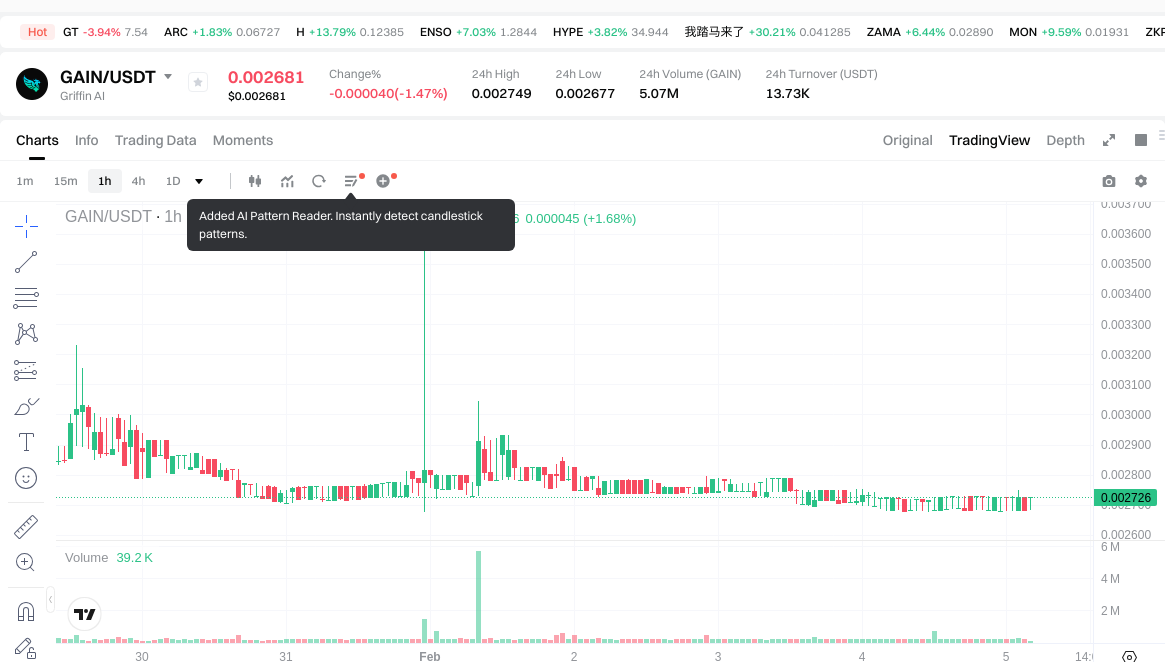
2025: GAIN experienced significant volatility following its launch in September 2025, reaching an all-time high of $0.24997 on September 24, 2025. However, the token subsequently faced a major security incident on September 25, 2025, which resulted in a sharp price decline of approximately 86.9% within 24 hours.
-
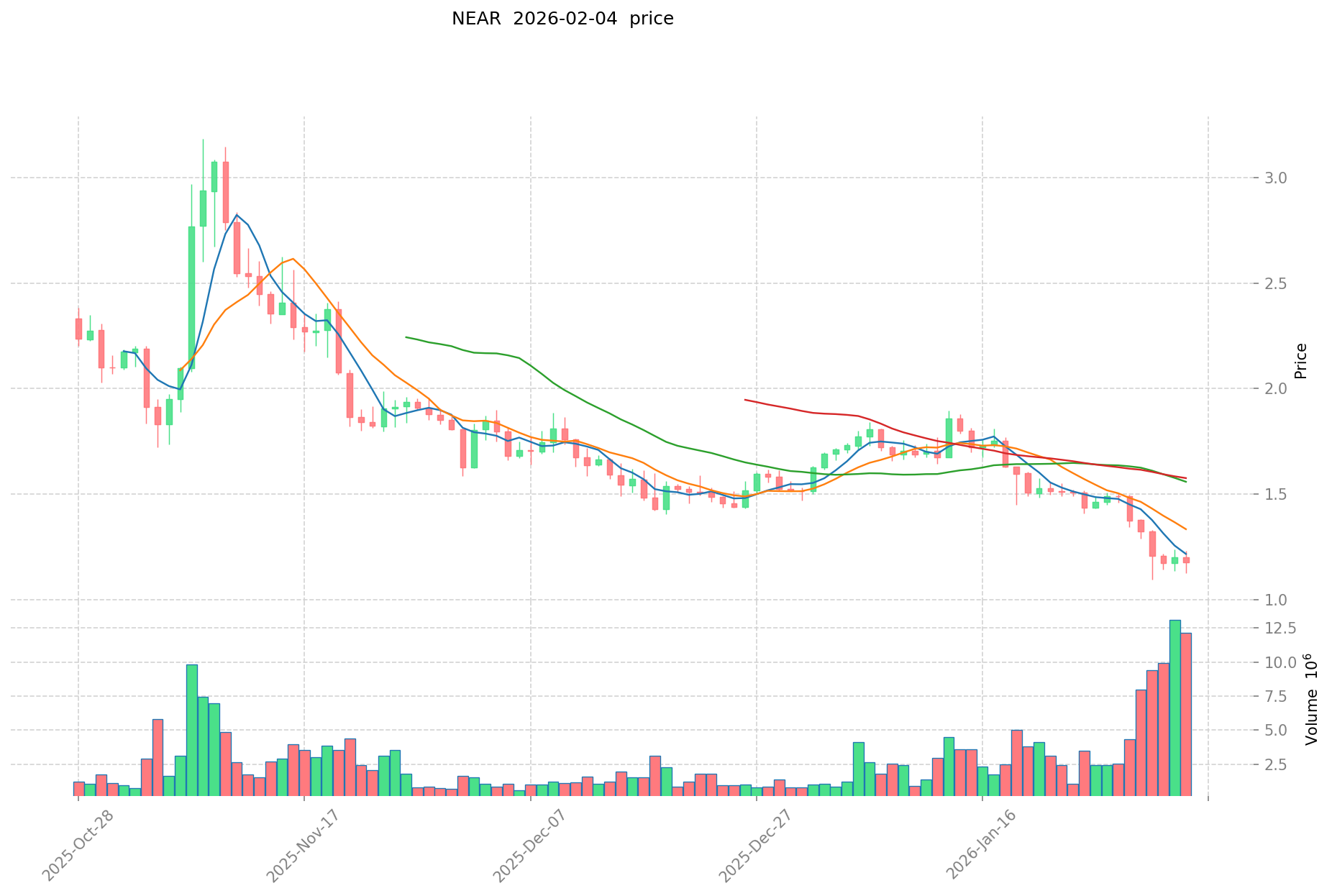
2022-2026: NEAR Protocol reached its all-time high of $20.44 on January 16, 2022, during a period of broader market enthusiasm for Layer 1 blockchain projects. Since then, NEAR has experienced a significant correction, declining by approximately 94.2% from its peak, reflecting broader market downturns and evolving competitive dynamics in the smart contract platform sector.
-
Comparative Analysis: During recent market cycles, GAIN declined from its all-time high of $0.24997 to a low of $0.002676 recorded on January 25, 2026, representing a decline of approximately 98.9%. In contrast, NEAR Protocol, while also experiencing substantial declines from its 2022 peak, has maintained relatively higher liquidity and trading activity, with a more established market presence.
Current Market Status (February 5, 2026)
- GAIN Current Price: $0.002726
- NEAR Current Price: $1.1744
- 24-Hour Trading Volume: GAIN recorded $13,694.52, while NEAR demonstrated significantly higher liquidity with $9,370,476.78
- Fear & Greed Index: 14 (Extreme Fear)
View real-time prices:
II. Core Factors Influencing GAIN vs NEAR Investment Value
Supply Mechanism Comparison (Tokenomics)
- GAIN: The reference materials do not provide specific information regarding GAIN's supply mechanism or tokenomics structure.
- NEAR: The reference materials do not provide specific information regarding NEAR's supply mechanism or tokenomics structure.
- 📌 Historical Pattern: Supply mechanisms can influence price cycles through controlling token availability and creating scarcity dynamics, though specific historical data for these assets is not detailed in the provided materials.
Institutional Adoption and Market Application
- Institutional Holdings: The reference materials do not contain comparative data on institutional preference between GAIN and NEAR.
- Enterprise Adoption: Information regarding the application of GAIN or NEAR in cross-border payments, settlements, or investment portfolios is not available in the provided materials.
- National Policies: The reference materials do not address regulatory attitudes toward these specific assets across different jurisdictions.
Technical Development and Ecosystem Building
- GAIN Technical Upgrades: Specific technical development information for GAIN is not provided in the reference materials.
- NEAR Technical Development: Specific technical development information for NEAR is not provided in the reference materials.
- Ecosystem Comparison: The reference materials do not contain detailed information comparing DeFi, NFT, payment systems, or smart contract implementation between GAIN and NEAR ecosystems.
Macroeconomic Environment and Market Cycles
- Performance in Inflationary Environment: The reference materials suggest that value investing considerations include market risk appetite and trends, though specific inflation-hedge characteristics of GAIN or NEAR are not documented.
- Macroeconomic Monetary Policy: The materials reference interest rate environments and their potential impact on asset valuations, including mentions of Federal Reserve policy discussions, though direct correlations to GAIN or NEAR are not established.
- Geopolitical Factors: While cross-border transaction needs and international situations can influence digital asset demand, the reference materials do not provide specific analysis for GAIN or NEAR in this context.
III. 2026-2031 Price Prediction: GAIN vs NEAR
Short-term Prediction (2026)
- GAIN: Conservative $0.00242614 - $0.002726 | Optimistic $0.002726 - $0.00346202
- NEAR: Conservative $0.683936 - $1.1792 | Optimistic $1.1792 - $1.639088
Mid-term Prediction (2028-2029)
- GAIN may enter a gradual growth phase, with estimated price range of $0.002284926385 - $0.004617183387975
- NEAR may enter a development phase, with estimated price range of $0.915750547272 - $1.882376124948
- Key drivers: institutional capital flows, ETF developments, ecosystem expansion
Long-term Prediction (2030-2031)
- GAIN: Baseline scenario $0.003766945959213 - $0.004980739657182 | Optimistic scenario $0.005775983804127 - $0.006474961554337
- NEAR: Baseline scenario $1.031061347434186 - $2.02168891653762 | Optimistic scenario $2.102556473199124 - $2.25427259720124
View detailed price predictions for GAIN and NEAR
Disclaimer
GAIN:
| Year |
Predicted High Price |
Predicted Average Price |
Predicted Low Price |
Price Change |
| 2026 |
0.00346202 |
0.002726 |
0.00242614 |
0 |
| 2027 |
0.0034343511 |
0.00309401 |
0.0017635857 |
13 |
| 2028 |
0.004243434715 |
0.00326418055 |
0.002284926385 |
19 |
| 2029 |
0.004617183387975 |
0.0037538076325 |
0.0021021322742 |
37 |
| 2030 |
0.005775983804127 |
0.004185495510237 |
0.003766945959213 |
53 |
| 2031 |
0.006474961554337 |
0.004980739657182 |
0.003934784329174 |
82 |
NEAR:
| Year |
Predicted High Price |
Predicted Average Price |
Predicted Low Price |
Price Change |
| 2026 |
1.639088 |
1.1792 |
0.683936 |
0 |
| 2027 |
1.77552144 |
1.409144 |
0.78912064 |
19 |
| 2028 |
1.7993359736 |
1.59233272 |
1.353482812 |
35 |
| 2029 |
1.882376124948 |
1.6958343468 |
0.915750547272 |
44 |
| 2030 |
2.25427259720124 |
1.789105235874 |
1.5207394504929 |
52 |
| 2031 |
2.102556473199124 |
2.02168891653762 |
1.031061347434186 |
72 |
IV. Investment Strategy Comparison: GAIN vs NEAR
Long-term vs Short-term Investment Strategy
- GAIN: May be suitable for risk-tolerant investors interested in emerging DeFi infrastructure projects with early-stage growth potential, though the asset carries substantial volatility considerations given its recent launch and historical price fluctuations
- NEAR: May appeal to investors seeking exposure to established Layer 1 blockchain platforms with demonstrated ecosystem development and relatively higher liquidity profiles
Risk Management and Asset Allocation
- Conservative Investors: GAIN 5-10% vs NEAR 15-20%
- Aggressive Investors: GAIN 20-30% vs NEAR 30-40%
- Hedging Tools: stablecoin allocation, options strategies, cross-asset portfolio diversification
V. Potential Risk Comparison
Market Risk
- GAIN: The asset demonstrated extreme volatility following its September 2025 launch, including an approximate 86.9% decline within 24 hours after a security incident on September 25, 2025. Trading volume remains relatively limited at $13,694.52 as of February 5, 2026, which may impact liquidity during market stress periods
- NEAR: While NEAR has experienced substantial declines from its January 2022 peak, the asset maintains comparatively higher trading volume ($9,370,476.78) and established market presence, though it remains subject to broader Layer 1 platform competition and market cycle dynamics
Technical Risk
- GAIN: scalability considerations, network stability factors
- NEAR: scalability implementation, potential security vulnerabilities
Regulatory Risk
- Global regulatory developments may affect both assets differently based on their functional characteristics, with DeFi-focused projects and Layer 1 platforms potentially subject to distinct regulatory frameworks across jurisdictions
VI. Conclusion: Which Is the Better Buy?
📌 Investment Value Summary:
- GAIN Characteristics: early-stage DeFi infrastructure positioning with no-code agent builder functionality, though accompanied by significant volatility history and limited trading volume
- NEAR Characteristics: established Layer 1 blockchain platform with state sharding technology, relatively higher liquidity, and broader ecosystem development track record
✅ Investment Considerations:
- Beginner Investors: may consider prioritizing assets with established track records and higher liquidity profiles while maintaining strict position sizing discipline
- Experienced Investors: may evaluate portfolio allocation based on risk tolerance, market cycle positioning, and individual thesis regarding DeFi infrastructure versus Layer 1 platform value propositions
- Institutional Investors: may assess both assets within broader digital asset allocation frameworks, considering liquidity requirements, regulatory considerations, and strategic positioning objectives
⚠️ Risk Disclaimer: Cryptocurrency markets exhibit extreme volatility characteristics. This analysis does not constitute investment advice.
VII. FAQ
Q1: What caused GAIN's significant price decline shortly after launch?
GAIN experienced an approximately 86.9% price decline within 24 hours following a major security incident on September 25, 2025, just one day after reaching its all-time high of $0.24997. This sharp correction reflects the heightened vulnerability of newly launched crypto assets to security breaches and demonstrates how such incidents can rapidly erode market confidence. The subsequent price trajectory, declining approximately 98.9% from peak to its January 2026 low of $0.002676, illustrates the compounded impact of both the security incident and broader market conditions on early-stage DeFi projects with limited liquidity profiles.
Q2: How do GAIN and NEAR differ in terms of liquidity and market maturity?
NEAR demonstrates significantly higher liquidity with 24-hour trading volume of $9,370,476.78 compared to GAIN's $13,694.52 as of February 5, 2026—a difference of approximately 684 times. NEAR, established in 2020, has developed a more mature market presence with established trading infrastructure across major exchanges, while GAIN, launched in September 2025, remains in early-stage market development. This liquidity disparity has practical implications for investors: NEAR offers greater ease of position entry and exit with reduced slippage risk, whereas GAIN's limited trading volume may present execution challenges during periods of market volatility or larger transaction sizes.
Q3: What are the primary technological differences between GAIN and NEAR?
GAIN positions itself as a no-code agent builder for DeFi, functioning as infrastructure that enables the creation of over 15,000 live agents with integrations across multiple blockchain ecosystems including BNB Chain, NEAR Protocol, Cardano Foundation, and others. NEAR Protocol, by contrast, operates as a Layer 1 blockchain platform utilizing state sharding technology designed to achieve linear scalability as network nodes increase. The fundamental distinction lies in their architectural roles: GAIN serves as a cross-chain DeFi application layer facilitating agent-based interactions, while NEAR provides base-layer blockchain infrastructure for decentralized application development with focus on scalability solutions.
Q4: Which asset is more suitable for different investor risk profiles?
Conservative investors may find NEAR more aligned with their risk tolerance, given its established track record since 2020, higher liquidity profile, and relatively lower volatility compared to newly launched assets. A suggested allocation of 15-20% for conservative portfolios reflects this positioning. GAIN, conversely, may appeal to risk-tolerant or aggressive investors willing to accept substantial volatility in exchange for early-stage exposure to emerging DeFi infrastructure, with suggested allocations of 5-10% for conservative profiles and 20-30% for aggressive portfolios. The extreme volatility demonstrated in GAIN's price history—including the 86.9% single-day decline—underscores the importance of strict position sizing discipline regardless of investor sophistication level.
Q5: How have GAIN and NEAR performed during broader cryptocurrency market downturns?
NEAR experienced its all-time high of $20.44 in January 2022 during peak market enthusiasm for Layer 1 blockchain projects, subsequently declining approximately 94.2% to reflect broader market corrections and evolving competitive dynamics in the smart contract platform sector. GAIN, launching during September 2025, has primarily experienced market conditions characterized by the Fear & Greed Index at 14 (Extreme Fear) as of February 2026, with limited historical data across full market cycles. Both assets demonstrate correlation with broader market sentiment, though NEAR's longer operational history provides more extensive behavioral data across multiple market environments, including both euphoric and distressed market phases.
Q6: What role do institutional investors play in GAIN versus NEAR markets?
The reference materials do not provide specific comparative data regarding institutional holdings or preference patterns between GAIN and NEAR. However, institutional participation generally gravitates toward assets with established regulatory clarity, sufficient liquidity to accommodate larger position sizes without significant market impact, and demonstrated operational track records. NEAR's higher trading volume and longer market history may present fewer practical barriers to institutional allocation compared to GAIN's limited liquidity profile. Institutional investors typically evaluate digital assets within comprehensive due diligence frameworks encompassing custody solutions, regulatory compliance considerations, and risk management infrastructure—factors that may favor more established assets over early-stage projects.
Q7: What are the key price prediction assumptions for 2026-2031?
Price predictions for both assets incorporate assumptions regarding institutional capital flows, ETF development progress, and ecosystem expansion trajectories. For GAIN, conservative 2026 predictions range from $0.00242614 to $0.002726, potentially reaching $0.003766945959213 to $0.006474961554337 by 2031 under optimistic scenarios—representing cumulative growth of 53-82% from current levels. NEAR's conservative 2026 range spans $0.683936 to $1.1792, with long-term projections of $1.031061347434186 to $2.25427259720124 by 2031, implying potential growth of 52-72%. These forecasts inherently assume continued functionality of underlying protocols, absence of catastrophic security incidents, favorable regulatory developments, and sustained or increasing market participation—assumptions that carry substantial uncertainty given cryptocurrency market volatility characteristics.
Q8: How should investors approach portfolio allocation between GAIN and NEAR?
Portfolio construction should reflect individual risk tolerance, investment timeframe, and thesis conviction regarding DeFi infrastructure versus Layer 1 platform value propositions. Diversification principles suggest avoiding concentration in any single asset, particularly those exhibiting extreme volatility profiles. Conservative approaches might emphasize NEAR's relatively established market position with limited GAIN exposure (5-10%) for speculative positioning, while aggressive portfolios might increase allocations to 30-40% for NEAR and 20-30% for GAIN. Risk management tools including stablecoin reserves, options strategies for downside protection, and cross-asset portfolio diversification can help mitigate exposure to cryptocurrency-specific volatility. Regular portfolio rebalancing based on predefined thresholds helps maintain target allocation percentages amid significant price movements, preventing unintended concentration risk from developing through appreciation of winning positions.
* The information is not intended to be and does not constitute financial advice or any other recommendation of any sort offered or endorsed by Gate.