Is PlantVsUndead (PVU) a good investment?: A Comprehensive Analysis of the Play-to-Earn Gaming Token's Potential and Risks


Introduction: PlantVsUndead (PVU) Investment Position and Market Prospects
PVU is a digital asset in the cryptocurrency space that emerged as part of the blockchain gaming sector. As of February 2026, PVU maintains a market capitalization of approximately $177,070, with a circulating supply of 285,000,000 tokens and a current trading price around $0.0006213. The project positions itself as a defense game where plants represent real assets, combining gameplay mechanics with NFT technology. With over 747,000 holders and deployment on the BSC chain, PVU has established a presence in the GameFi sector. This article examines PVU's investment characteristics, historical price movements, future price analysis, and associated risks to provide reference information for those researching "Is PlantVsUndead (PVU) a good investment?"
I. PlantVsUndead (PVU) Price History Review and Current Investment Value
PVU Historical Price Trends and Investment Performance
- 2021: Project launch and initial market enthusiasm → PVU reached price levels near $24.73 during August, representing significant early-stage gains for initial participants
- 2022-2024: Market adjustment period → Price experienced substantial corrections alongside broader market conditions, declining from elevated levels to lower valuation ranges
- 2025: Continued pressure → Trading activity remained limited, with price fluctuating in ranges reflecting reduced market participation
Current PVU Investment Market Status (February 2026)
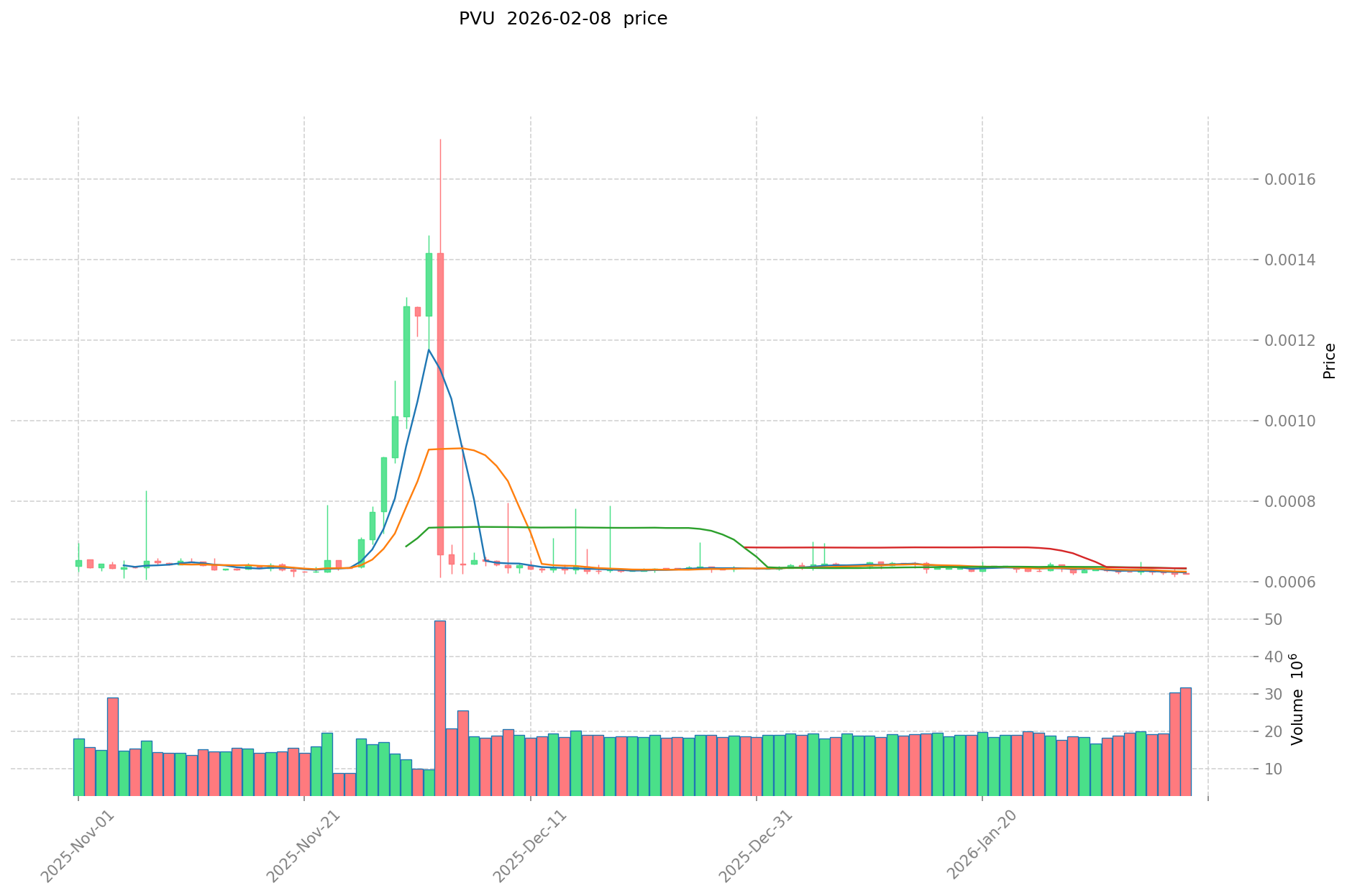
- PVU current price: $0.0006213
- 24-hour trading volume: $10,564.18
- Circulating supply: 285,000,000 PVU (95.0% of total supply)
- Market capitalization: approximately $177,070.5
Click to view real-time PVU market price
II. Core Factors Influencing Whether PVU Is a Good Investment
Supply Mechanism and Scarcity (PVU Investment Scarcity)
- Total Supply and Circulation: PVU has a maximum supply of 300,000,000 tokens, with 285,000,000 currently in circulation, representing a 95% circulation ratio. This relatively high circulation rate suggests limited supply-side scarcity in the short term.
- Price History Context: PVU experienced significant price volatility, with the token reaching a notable high of $24.73 on August 26, 2021. As of February 9, 2026, the current price stands at $0.0006213, reflecting substantial depreciation from prior levels. Historical price movements demonstrate the asset's sensitivity to market conditions and adoption trends.
- Investment Significance: The fixed maximum supply structure provides potential long-term scarcity characteristics. However, the current circulating supply level indicates that supply-side dynamics may have limited immediate impact on price appreciation unless accompanied by significant demand growth.
Market Performance and Technical Indicators
- Recent Performance Trends: PVU has shown negative returns across multiple timeframes, with a 1-year decline of approximately 44.1%. Short-term performance indicates a 0.21% decrease over 1 hour and 0.88% decline over 7 days, suggesting persistent downward pressure.
- Technical Analysis Signals: According to available technical indicators, the 50-day moving average stands at $0.00062538, with current analysis suggesting buy signals based on certain quantitative indicators. However, overall market sentiment appears mixed, with some analyses indicating neutral to bearish outlooks.
- Market Capitalization Context: With a market capitalization of approximately $177,070.5 and a fully diluted valuation of $186,390, PVU represents a micro-cap asset with limited market presence, accounting for roughly 0.0000073% market share in the broader cryptocurrency ecosystem.
Adoption and Community Engagement
- Holder Base: The project reports approximately 747,071 holders, indicating a relatively broad distribution network. This community size may provide a foundation for potential ecosystem activity and token utility.
- Trading Activity: The 24-hour trading volume of $10,564.18 suggests limited liquidity, which may contribute to price volatility and present challenges for larger investment positions.
- Blockchain Gaming Integration: PVU operates as a token within the blockchain gaming sector, specifically associated with a defense game concept that combines NFT technology. The project's value proposition centers on digital asset ownership within the gaming ecosystem, though current adoption levels and active user engagement metrics are not extensively documented in available materials.
III. PVU Future Investment Forecast and Price Outlook (Is PlantVsUndead(PVU) worth investing in 2026-2031)
Short-term Investment Forecast (2026, short-term PVU investment outlook)
Based on available market data, PVU's short-term projections for 2026 suggest the following scenarios:
- Conservative forecast: $0.000416 - $0.000531
- Neutral forecast: $0.000621 - $0.000689
- Optimistic forecast: $0.000720 - $0.000758
These estimates reflect current market conditions, with the token trading at $0.0006213 as of February 09, 2026. The 24-hour trading volume stands at $10,564.18, indicating relatively limited market activity. With a circulating supply of 285 million tokens and a market capitalization of approximately $177,070, the token maintains a micro-cap status in the broader cryptocurrency landscape.
Mid-term Investment Outlook (2027-2029, mid-term PlantVsUndead(PVU) investment forecast)
- Market stage expectation: Gradual recovery phase with potential for moderate appreciation, contingent upon sustained ecosystem development and broader market sentiment improvements
- Investment return projections:
- 2027: $0.000531 - $0.000800 (potential increase of approximately 11% year-over-year)
- 2028: $0.000417 - $0.001035 (projected growth range of 19% based on neutral scenarios)
- 2029: $0.000721 - $0.001113 (estimated appreciation of 43% under favorable conditions)
- Key catalysts: Enhanced gameplay mechanics within the tower defense framework, expansion of NFT utility features, potential partnerships within the gaming ecosystem, and broader adoption of play-to-earn models
The mid-term outlook reflects a gradual upward trajectory, though investors should note that historical performance shows significant volatility. The token experienced a substantial decline from its all-time high of $24.73 in August 2021, currently trading approximately 99.97% below that peak.
Long-term Investment Outlook (Is PVU a good long-term investment?)
- Base scenario: $0.000680 - $0.001066 (assuming steady ecosystem maintenance and stable market conditions through 2030-2031)
- Optimistic scenario: $0.001002 - $0.001450 (contingent upon successful platform upgrades, increased user engagement, and favorable regulatory environments)
- Risk scenario: Below $0.000416 (under adverse market conditions, reduced gaming activity, or competitive pressures from alternative play-to-earn platforms)
View PVU long-term investment and price forecast: Price Prediction
2026-2031 Long-term Outlook
- Base scenario: $0.000680 - $0.001066 (corresponding to steady progress and gradual mainstream application enhancement)
- Optimistic scenario: $0.001002 - $0.001450 (corresponding to large-scale adoption and favorable market environments)
- Transformational scenario: Above $0.001450 (contingent upon breakthrough ecosystem developments and mainstream proliferation)
- December 31, 2031 projected high: $0.001450 (based on optimistic development assumptions)
Disclaimer: These projections are derived from historical data patterns and current market conditions. Cryptocurrency investments carry substantial risk, including potential total loss of capital. Price forecasts should not be construed as investment advice or guarantees of future performance. Market volatility, regulatory changes, technological developments, and competitive dynamics may significantly impact actual outcomes. The gaming token sector exhibits heightened sensitivity to user engagement metrics and broader gaming industry trends. Investors should conduct comprehensive due diligence, assess personal risk tolerance, and consider consulting financial professionals before making investment decisions. Past performance, including the token's historical price movements from $24.73 to current levels, demonstrates the significant downside risks inherent in this asset class.
| Year | Predicted High Price | Predicted Average Price | Predicted Low Price | Price Change |
|---|---|---|---|---|
| 2026 | 0.000757986 | 0.0006213 | 0.000416271 | 0 |
| 2027 | 0.00079998588 | 0.000689643 | 0.00053102511 | 11 |
| 2028 | 0.0010352920716 | 0.00074481444 | 0.0004170960864 | 19 |
| 2029 | 0.00111256656975 | 0.0008900532558 | 0.000720943137198 | 43 |
| 2030 | 0.001131480201435 | 0.001001309912775 | 0.000680890740687 | 61 |
| 2031 | 0.001450297277663 | 0.001066395057105 | 0.001002411353679 | 71 |
IV. PVU Investment Strategy and Risk Management (How to invest in PVU)
Investment Methodology (PVU investment strategy)
Long-term Holding (HODL PVU)
For conservative investors seeking stability, long-term holding represents a foundational approach. This strategy involves acquiring PVU tokens and maintaining positions through market fluctuations, potentially benefiting from the project's development trajectory over extended periods. Given PVU's gaming and NFT integration model, this approach may suit those who believe in the long-term viability of blockchain gaming ecosystems.
Active Trading
Active traders may leverage technical analysis and market timing strategies when engaging with PVU. This approach requires monitoring price movements, volume patterns, and broader market sentiment. With PVU's 24-hour trading volume at approximately $10,564 and significant price volatility, swing trading opportunities may emerge for experienced market participants who can navigate short-term price movements.
Risk Management (Risk management for PVU investment)
Asset Allocation Ratios
- Conservative Investors: Consider limiting PVU exposure to less than 2% of total portfolio, prioritizing established assets
- Moderate Investors: May allocate 5-10% to gaming tokens like PVU as part of a diversified altcoin strategy
- Aggressive Investors: Could dedicate higher percentages while maintaining strict stop-loss protocols
Risk Hedging Strategies
Implementing multi-asset portfolio construction helps mitigate concentration risk. Investors might balance PVU holdings with established cryptocurrencies, stablecoins, or traditional assets. Position sizing should reflect individual risk tolerance and market conditions.
Secure Storage Solutions
- Hot Wallets: Suitable for active trading portions, though security risks exist
- Cold Storage: Hardware wallets provide enhanced security for long-term holdings
- Custody Considerations: Given PVU's BSC deployment, compatible wallet solutions should support BEP-20 tokens
V. PVU Investment Risks and Challenges (Risks of investing in PVU)
Market Risks
PVU demonstrates substantial price volatility, with historical data showing a significant decline from its all-time high of $24.73 (August 2021) to current levels around $0.0006213. The 1-year performance indicates a -44.1% change, reflecting considerable downward pressure. Trading volume remains relatively modest at approximately $10,564 over 24 hours, which may contribute to liquidity constraints and price sensitivity during larger transactions.
Regulatory Risks
Blockchain gaming projects face evolving regulatory frameworks across jurisdictions. Different countries maintain varying stances on NFT gaming models, play-to-earn mechanics, and cryptocurrency integration. Policy shifts could impact operational capacity, user accessibility, or token utility within certain markets.
Technical Risks
As a gaming platform integrating blockchain technology, PVU faces multiple technical considerations:
- Smart contract vulnerabilities on the BSC network could affect token security
- Game server stability and maintenance requirements
- NFT infrastructure dependencies
- Network congestion or upgrade complications affecting user experience
The project's reliance on blockchain gaming adoption and sustained player engagement introduces uncertainty regarding long-term viability.
VI. Conclusion: Is PVU a Good Investment?
Investment Value Summary
PVU presents a high-risk, high-volatility opportunity within the blockchain gaming sector. The token has experienced substantial value depreciation from historical peaks, currently trading near its all-time low. While the project combines gaming mechanics with NFT technology, market performance suggests cautious evaluation is warranted.
Investor Recommendations
✅ Beginners: Approach PVU with extreme caution. If considering exposure, utilize dollar-cost averaging with minimal allocations and secure BSC-compatible wallet storage. Prioritize understanding gaming tokenomics and platform mechanics before investment.
✅ Experienced Investors: May explore swing trading opportunities given price volatility, while maintaining strict risk management protocols. Portfolio allocation should remain conservative, with continuous monitoring of project development and market conditions.
✅ Institutional Investors: Consider gaming sector exposure through diversified baskets rather than concentrated positions in individual projects like PVU. Conduct thorough due diligence on project sustainability and competitive positioning.
⚠️ Disclaimer: Cryptocurrency investments carry substantial risk, including potential total loss of capital. This content serves informational purposes only and does not constitute financial advice, investment recommendations, or solicitation. Conduct independent research and consult qualified financial professionals before making investment decisions.
VII. FAQ
Q1: What is the current market status of PlantVsUndead (PVU) in 2026?
As of February 2026, PVU trades at approximately $0.0006213 with a market capitalization of around $177,070. The token has experienced significant depreciation from its all-time high of $24.73 in August 2021, representing a decline of approximately 99.97%. With a circulating supply of 285 million tokens (95% of total supply) and daily trading volume of $10,564, PVU remains a micro-cap asset with limited liquidity. The project maintains approximately 747,071 holders on the BSC chain, indicating a distributed community despite reduced market activity.
Q2: How has PVU performed as an investment historically?
PVU has demonstrated substantial volatility throughout its history. The token reached its peak price near $24.73 in August 2021 during the initial blockchain gaming boom, but subsequently experienced prolonged downward pressure through 2022-2025. Current 1-year performance shows a decline of approximately 44.1%, with short-term indicators suggesting continued bearish momentum. The dramatic price depreciation reflects both sector-wide gaming token corrections and project-specific challenges in maintaining user engagement and ecosystem growth.
Q3: What are the price forecasts for PVU from 2026 to 2031?
Short-term projections for 2026 suggest a range of $0.000416 to $0.000758 depending on market conditions. Mid-term forecasts estimate potential growth to $0.000531-$0.001113 by 2029, assuming gradual ecosystem development. Long-term outlook through 2031 presents a base scenario of $0.000680-$0.001066, with optimistic projections reaching $0.001450 under favorable conditions. These estimates reflect historical patterns and current fundamentals, though actual outcomes may vary significantly due to market volatility, competitive dynamics, and adoption trends in the blockchain gaming sector.
Q4: What are the primary risks associated with investing in PVU?
PVU investment carries multiple risk categories. Market risks include extreme price volatility, limited liquidity with modest trading volumes, and substantial historical depreciation. Technical risks encompass smart contract vulnerabilities on the BSC network, gaming platform stability requirements, and dependencies on NFT infrastructure. Regulatory uncertainties affect blockchain gaming projects globally, with varying jurisdictional approaches to play-to-earn models. The token's micro-cap status and concentration in a competitive gaming sector amplify these risks, potentially resulting in total capital loss.
Q5: What investment strategies are suitable for different types of PVU investors?
Conservative investors should limit PVU exposure to less than 2% of total portfolio, prioritizing established assets and long-term holding approaches. Moderate investors may allocate 5-10% within diversified altcoin strategies, utilizing dollar-cost averaging techniques. Aggressive investors could maintain higher allocations with strict stop-loss protocols and active trading strategies leveraging technical analysis. All investor categories should implement proper risk management, including secure BSC-compatible wallet storage, portfolio diversification, and continuous monitoring of project developments and market conditions.
Q6: How does PVU's supply mechanism affect its investment potential?
PVU has a maximum supply of 300 million tokens with 285 million currently in circulation, representing a 95% circulation ratio. This high circulation rate suggests limited supply-side scarcity in the short term, as minimal tokens remain for future distribution. While the fixed maximum supply provides theoretical long-term scarcity characteristics, the current supply dynamics indicate that price appreciation would primarily depend on demand growth rather than supply constraints. Investors should consider that supply mechanics alone do not guarantee value appreciation without corresponding ecosystem development and user adoption.
Q7: What factors could influence PVU's future performance?
Key catalysts for potential PVU appreciation include enhanced gameplay mechanics, expansion of NFT utility features, strategic partnerships within the gaming ecosystem, and broader adoption of play-to-earn models. Conversely, negative factors include continued reduction in gaming activity, increased competition from alternative platforms, adverse regulatory developments, and failure to innovate or maintain user engagement. The token's performance remains highly sensitive to broader cryptocurrency market conditions, gaming industry trends, and the project team's ability to execute development roadmaps effectively.
Q8: Should beginners consider investing in PVU?
Beginners should approach PVU with extreme caution due to its high-risk profile and significant historical volatility. If considering exposure, minimal allocations with dollar-cost averaging strategies are recommended, along with thorough understanding of gaming tokenomics and BSC wallet security before investment. Prioritizing education about blockchain gaming mechanics, NFT integration, and cryptocurrency market dynamics is essential. Beginners may benefit from gaining experience with more established cryptocurrencies before exploring micro-cap gaming tokens like PVU, and should only invest amounts they can afford to lose completely.
Share
Content
Introduction: PlantVsUndead (PVU) Investment Position and Market Prospects
I. PlantVsUndead (PVU) Price History Review and Current Investment Value
II. Core Factors Influencing Whether PVU Is a Good Investment
III. PVU Future Investment Forecast and Price Outlook (Is PlantVsUndead(PVU) worth investing in 2026-2031)
IV. PVU Investment Strategy and Risk Management (How to invest in PVU)
V. PVU Investment Risks and Challenges (Risks of investing in PVU)
VI. Conclusion: Is PVU a Good Investment?
VII. FAQ
How to Buy Cryptocurrency


Trending Cryptocurrencies



Detailed Analysis of the Best 10 GameFi Projects to Play and Earn in 2025

Popular GameFi Games in 2025

What Are the Key On-Chain Metrics Revealing About Litecoin's Whale Activity in 2025?

What is GameFi and How Does It Work?

What is DeFi: Understanding Decentralized Finance in 2025
How Will Virtuals Protocol's AI Agent Economy Evolve by 2030?

Top Cold Wallets for Cryptocurrency: Rankings

Funding Rate Analysis: Bitcoin Price Prediction and Investment Strategies

Is Ethereum becoming irrelevant?

What is PSTAKE: A Comprehensive Guide to Persistence's Liquid Staking Token

What is MAK: A Comprehensive Guide to Understanding Microkernel Architecture and Its Applications