This comprehensive analysis examines whether Prism (PRISM) represents a viable investment opportunity by evaluating its tokenomics, market fundamentals, and risk landscape. As a DeFi infrastructure utility token launched in 2021, PRISM currently trades at $0.0006213 with a market capitalization of $1.14 million and 1.83 billion circulating tokens, offering white-label solutions and multi-network launch services for EVM-compatible networks. The article presents price forecasts ranging from conservative scenarios of $0.00045976 to optimistic projections of $0.001129908612772 by 2031, alongside detailed investment strategies, risk management frameworks, and regulatory considerations. While PRISM demonstrates ecosystem potential through its DeFi infrastructure platform and decentralized services, investors must carefully assess market risks including limited liquidity, price volatility, and technical vulnerabilities before determining appropriate position sizing and allocation strategies.
Introduction: Prism (PRISM) Investment Positioning and Market Outlook
PRISM is a notable asset in the cryptocurrency sector, having been launched in 2021 and serving as a utility token within the DeFi infrastructure space. As of February 2026, Prism holds a market capitalization of approximately $1.14 million, with a circulating supply of around 1.83 billion tokens, and a current trading price of approximately $0.0006213. Positioned as a comprehensive platform integrating multi-network scalability and gas-free token redistribution, PRISM has become a subject of interest when investors consider "Is Prism (PRISM) a good investment?" This article provides a detailed analysis of PRISM's investment characteristics, historical price movements, future price projections, and associated investment risks to serve as a reference for investors.
I. Prism (PRISM) Price History Review and Current Investment Value Status
- 2022: On January 12, 2022, PRISM reached a notable price level of $0.04643859. Subsequent market conditions led to substantial price corrections, affecting early investor returns.
- 2025: On February 17, 2025, PRISM recorded a price of $0.0000841, reflecting significant volatility in the broader crypto market environment.
- Recent Period: Market cycles have demonstrated considerable price fluctuation, with PRISM experiencing movements from higher price ranges to lower levels during various phases of market sentiment shifts.
Current PRISM Investment Market Status (February 2026)
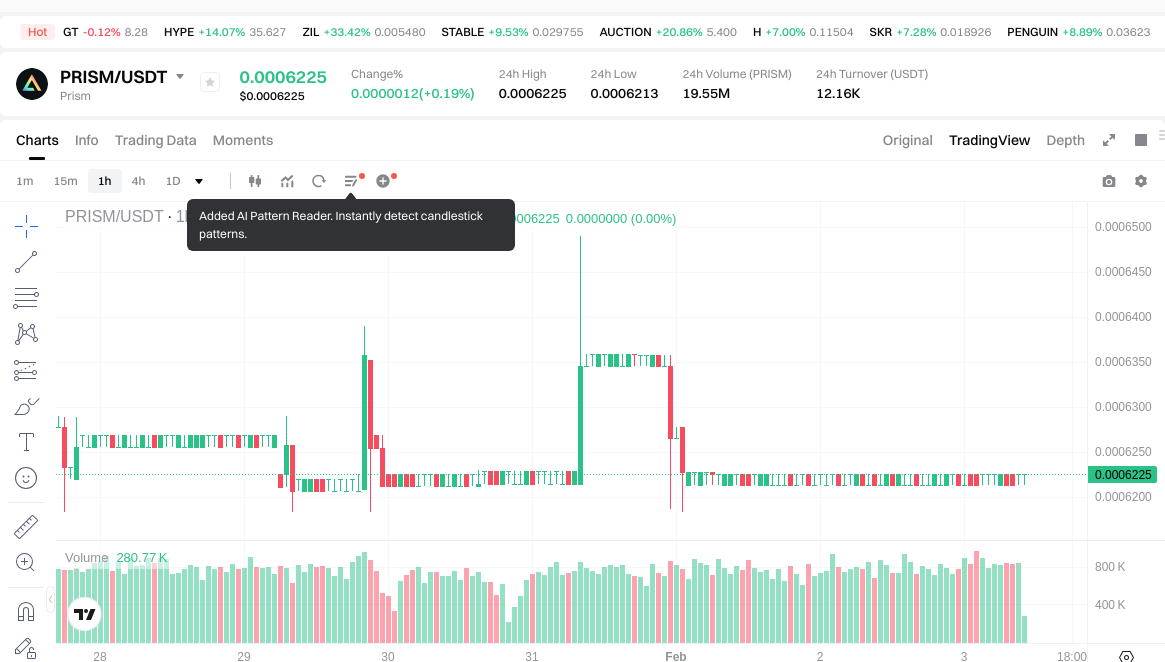
- PRISM current price: $0.0006213
- 24-hour trading volume: $12,138.55
- Market capitalization: $1,140,058.39
- Circulating supply: 1,834,956,363.16 PRISM
- Market cap to fully diluted valuation ratio: 18.35%
Click to view real-time PRISM market price
II. Core Factors Affecting Whether PRISM is a Good Investment (Is Prism(PRISM) a Good Investment)
Supply Mechanism and Scarcity (PRISM investment scarcity)
- Supply structure with total supply of 1,913,367,212 tokens and maximum supply of 10,000,000,000 tokens → influences price dynamics and investment value
- Current circulating supply represents approximately 18.35% of total supply, with 1,834,956,363 tokens in circulation
- Investment significance: the relationship between current circulation and maximum supply provides insight into potential future dilution considerations
Institutional Investment and Mainstream Adoption (Institutional investment in PRISM)
- Token holder base: 5,579 addresses currently holding PRISM tokens
- Platform ecosystem: Prism Network provides white-label solutions for DeFi startups and multi-network launch platform services for EVM-compatible networks
- PRISM utility within ecosystem: serves as core ecosystem utility token supported by Uniswap DEF/ETH liquidity pool tokens used in its minting process
Macroeconomic Environment's Impact on PRISM Investment
- Market concentration risks: broader market analysis suggests concentration may present considerations for portfolio allocation decisions
- Market position: PRISM represents 0.000042% market dominance with market capitalization of $1,140,058
- Trading activity: 24-hour trading volume of $12,138.54 across 1 exchange
Technology and Ecosystem Development (Technology & Ecosystem for PRISM investment)
- Platform integration: comprehensive platform integrating multi-network scalability, fundraising initiatives, and gas-free token redistribution
- DeFi functionality: enables startups to create customized smart contracts with tokenomics features centered on liquidity supply, yield farming, and compound-interest-based locking mechanisms
- Technical infrastructure: provides multi-network launch platform services for EVM-compatible networks, expanding ecosystem application potential
III. PRISM Future Investment Forecast and Price Outlook (Is Prism(PRISM) worth investing in 2026-2031)
Short-term Investment Forecast (2026, short-term PRISM investment outlook)
- Conservative forecast: $0.00045976 - $0.0006213
- Neutral forecast: $0.0006213 - $0.00068343
- Optimistic forecast: $0.00068343 - $0.00074556
Mid-term Investment Outlook (2027-2028, mid-term Prism(PRISM) investment forecast)
- Market stage expectation: PRISM may continue its development phase with gradual ecosystem expansion and potential user base growth during 2027-2028.
- Investment return forecast:
- 2027: $0.0006014184 - $0.0009431334
- 2028: $0.000666890994 - $0.001049133393
- Key catalysts: Platform utility enhancement, DeFi sector performance, multi-network integration progress, and broader market sentiment toward utility tokens.
Long-term Investment Outlook (Is PRISM a good long-term investment?)
- Base scenario: $0.000844791486184 - $0.001055989357731 (assuming steady ecosystem development and moderate market conditions through 2030-2031)
- Optimistic scenario: $0.001055989357731 - $0.001129908612772 (assuming accelerated adoption, favorable DeFi market trends, and enhanced platform functionality)
- Risk scenario: Below $0.000459762 (under conditions of prolonged market downturn, reduced platform activity, or significant competitive pressure)
Click to view PRISM long-term investment and price forecast: Price Prediction
2026-02-03 - 2031 Long-term Outlook
- Base scenario: $0.000844791486184 - $0.001055989357731 (corresponding to steady progress and gradual mainstream application growth)
- Optimistic scenario: $0.001055989357731 - $0.001129908612772 (corresponding to large-scale adoption and favorable market environment)
- Transformative scenario: Above $0.001129908612772 (if ecosystem achieves breakthrough developments and mainstream popularization)
- 2031-12-31 forecast high: $0.001129908612772 (based on optimistic development assumptions)
Disclaimer: The above forecasts are based on historical data and market analysis models and do not constitute investment advice. Cryptocurrency markets are highly volatile and unpredictable. Investors should conduct independent research and consider their risk tolerance before making any investment decisions.
| Year |
Predicted High Price |
Predicted Average Price |
Predicted Low Price |
Price Change |
| 2026 |
0.00074556 |
0.0006213 |
0.000459762 |
0 |
| 2027 |
0.0009431334 |
0.00068343 |
0.0006014184 |
9 |
| 2028 |
0.001049133393 |
0.0008132817 |
0.000666890994 |
30 |
| 2029 |
0.00108020075394 |
0.0009312075465 |
0.000698405659875 |
49 |
| 2030 |
0.001106274565242 |
0.00100570415022 |
0.000844791486184 |
61 |
| 2031 |
0.001129908612772 |
0.001055989357731 |
0.000950390421957 |
69 |
IV. Prism Investment Strategy and Risk Management (How to invest in Prism)
Investment Methodology (Prism investment strategy)
Long-term Holding (HODL Prism): Suitable for Conservative Investors
For investors seeking a passive approach, long-term holding of PRISM may be considered as part of a diversified portfolio strategy. This approach involves acquiring tokens and holding them through market cycles, potentially benefiting from the platform's development of white-label solutions for DeFi startups and multi-network launch platform services for EVM-compatible networks. However, given PRISM's price performance showing a decline of approximately 40.88% over the past year and current trading near historical ranges, long-term holders should carefully evaluate the project's fundamental development trajectory.
Active Trading: Relies on Technical Analysis and Swing Operations
Active traders may approach PRISM through technical analysis and short-term trading strategies. With a 24-hour trading volume of approximately $12,138.55 and price fluctuations between $0.0006213 and $0.0006225 in the last 24 hours, the token exhibits limited short-term volatility. The relatively low liquidity environment requires traders to implement precise entry and exit strategies, monitor order book depth, and maintain strict risk controls to navigate the asset's price movements effectively.
Risk Management (Risk management for Prism investment)
Asset Allocation Ratio: Conservative / Aggressive / Professional Investors
- Conservative Investors: May consider limiting PRISM exposure to no more than 1-2% of total cryptocurrency portfolio allocation, given its ranking of 2434 by market capitalization and market share of 0.000042%
- Aggressive Investors: Could allocate 3-5% of speculative portfolio allocation, acknowledging higher risk tolerance for lower-cap assets with potential growth opportunities
- Professional Investors: Should conduct thorough due diligence on the platform's white-label solutions, tokenomics centered on liquidity supply, yield farming, and compound interest-based locking mechanisms before determining position sizing
Risk Hedging Solutions: Multi-asset Portfolio + Hedging Tools
Investors may consider implementing diversification strategies across multiple blockchain ecosystems rather than concentrating exposure in single lower-cap tokens. Given PRISM's connection to the Solana ecosystem (based on its contract address), portfolio construction could include a mix of established Layer-1 tokens, DeFi protocol tokens, and stablecoins to balance risk exposure. Options strategies or stablecoin hedging may be explored by sophisticated investors, though liquidity constraints should be carefully evaluated.
Secure Storage: Hot and Cold Wallets + Hardware Wallet Recommendations
PRISM tokens deployed on the Solana blockchain require appropriate wallet infrastructure for secure storage:
- Hot Wallets: Solana-compatible wallets such as Phantom or Solflare may be used for active trading purposes, though these maintain internet connectivity and carry associated security considerations
- Cold Storage: For larger holdings intended for long-term storage, hardware wallets supporting Solana (such as Ledger devices with Solana app integration) provide enhanced security through offline private key storage
- Best Practices: Implement multi-signature configurations where applicable, maintain backup recovery phrases in secure physical locations, and regularly verify wallet software authenticity before transactions
V. Prism Investment Risks and Challenges (Risks of investing in Prism)
Market Risk: High Volatility and Price Manipulation Concerns
PRISM exhibits characteristics common to lower-cap cryptocurrency assets. The token has experienced a price decline of approximately 40.88% over the past year, with a current price of $0.0006213 representing a substantial decrease from its all-time high of $0.04643859 recorded on January 12, 2022. The circulating supply of approximately 1.83 billion tokens represents about 18.35% of the total supply, with a maximum supply of 10 billion tokens, indicating potential future supply expansion. With a relatively modest 24-hour trading volume of $12,138.55 and market capitalization of approximately $1.14 million, the asset may be subject to liquidity constraints and price volatility in response to moderate trading activity.
Regulatory Risk: Policy Uncertainty Across Different Jurisdictions
As a DeFi-focused platform providing white-label solutions and multi-network launch services, PRISM operates within an evolving regulatory landscape. Different jurisdictions maintain varying approaches to token launches, liquidity provision mechanisms, and yield farming activities. The platform's provision of tokenomics functions centered on liquidity supply and yield farming may face scrutiny as regulatory frameworks for DeFi protocols continue to develop globally. Investors should remain aware of potential regulatory developments that could impact platform operations or token utility across different markets.
Technical Risk: Network Security Vulnerabilities and Upgrade Failures
PRISM's infrastructure relies on the underlying security and performance of the networks it integrates with, including EVM-compatible chains and its deployment on the Solana blockchain. Technical considerations include:
- Smart contract vulnerabilities in the platform's customized contract creation services and liquidity mechanisms
- Network congestion or performance issues on underlying blockchain infrastructure that could affect platform accessibility
- Integration risks associated with multi-network scalability features and gas-free token redistribution mechanisms
- Dependency on the Uniswap DEX/ETH liquidity pool tokens supporting PRISM's minting process, as described in project materials
Investors should monitor the project's technical development, security audit reports (if available), and community communications regarding platform updates or identified vulnerabilities.
VI. Conclusion: Is Prism a Good Investment?
Investment Value Summary: PRISM presents as a specialized utility token within the DeFi infrastructure space, focusing on providing white-label solutions and multi-network launch platform services. The project's emphasis on scalability, fundraising initiatives, and tokenomics features centered on liquidity provision and yield farming addresses specific needs within the DeFi startup ecosystem. However, the token's current market position reflects challenges, including a ranking of 2434 by market capitalization, limited trading volume, and a price trajectory showing a decline of approximately 40.88% over the past year from its historical peak.
Investor Recommendations:
✅ Beginners: For newcomers to cryptocurrency investing, PRISM represents a higher-risk asset profile due to lower market capitalization and limited liquidity. If considering exposure, employ a dollar-cost averaging approach with minimal allocation percentages, and prioritize secure storage using Solana-compatible hardware wallets. Thorough research into the platform's utility and development roadmap should precede any allocation decisions.
✅ Experienced Investors: Investors with established risk management frameworks may evaluate PRISM as a speculative position within a diversified DeFi infrastructure portfolio. Swing trading strategies should account for liquidity constraints and implement strict stop-loss parameters. Position sizing should reflect the asset's volatility characteristics and market depth limitations, with ongoing monitoring of platform development milestones and ecosystem adoption metrics.
✅ Institutional Investors: Institutional participants should conduct comprehensive due diligence on PRISM's business model, competitive positioning within the DeFi launch platform sector, team credentials, and technical infrastructure security. The relatively small market capitalization and limited liquidity profile may present challenges for larger capital deployment. Strategic allocation decisions should incorporate thorough assessment of the platform's growth trajectory, partnership development, and market demand for its white-label solutions and multi-network services.
⚠️ Disclaimer: Cryptocurrency investments involve substantial risk, including the potential loss of principal. This analysis is provided for informational purposes only and does not constitute investment advice, financial guidance, or a recommendation to buy, sell, or hold any cryptocurrency asset. Market conditions, project fundamentals, and regulatory environments are subject to rapid change. Investors should conduct independent research, consult with qualified financial advisors, and carefully evaluate their risk tolerance before making any investment decisions.
VII. FAQ
Q1: What is the current market position and liquidity status of PRISM?
As of February 2026, PRISM holds a market capitalization of approximately $1.14 million, ranking 2434 by market cap with 0.000042% market dominance. The token has a 24-hour trading volume of $12,138.55 across 1 exchange, with a current price of $0.0006213. The circulating supply represents approximately 18.35% of the total supply at 1.83 billion tokens. This relatively modest market position and limited trading volume indicate lower liquidity, which may result in wider bid-ask spreads and greater price volatility in response to moderate trading activity, presenting considerations for both entry and exit execution.
Q2: How has PRISM performed historically, and what are its price forecasts?
PRISM reached an all-time high of $0.04643859 on January 12, 2022, and has since experienced a decline of approximately 40.88% over the past year. For 2026, price forecasts range from a conservative $0.00045976 to an optimistic $0.00074556. Mid-term projections suggest potential ranges of $0.0006014184 - $0.0009431334 for 2027 and $0.000666890994 - $0.001049133393 for 2028. Long-term outlook through 2031 estimates a base scenario of $0.000844791486184 - $0.001055989357731, with an optimistic scenario reaching up to $0.001129908612772, contingent upon ecosystem development and market conditions.
Q3: What are the primary utility functions and technical features of PRISM?
PRISM serves as a comprehensive DeFi infrastructure platform integrating multi-network scalability, fundraising initiatives, and gas-free token redistribution. The platform provides white-label solutions for DeFi startups, enabling them to create customized smart contracts with tokenomics features centered on liquidity supply, yield farming, and compound-interest-based locking mechanisms. PRISM operates as a multi-network launch platform for EVM-compatible networks, with its minting process supported by Uniswap DEX/ETH liquidity pool tokens. These technical capabilities position PRISM as a utility token facilitating DeFi project launches and infrastructure development.
Q4: What risk management strategies should investors consider for PRISM?
Risk management approaches vary by investor profile. Conservative investors should limit PRISM exposure to 1-2% of total cryptocurrency portfolio allocation, while aggressive investors might allocate 3-5% of speculative holdings. Diversification across multiple blockchain ecosystems rather than concentration in single lower-cap tokens is recommended. For secure storage, PRISM tokens deployed on Solana require appropriate wallet infrastructure: hot wallets like Phantom or Solflare for active trading, and hardware wallets (such as Ledger devices with Solana integration) for long-term holdings. Implementing multi-signature configurations, maintaining backup recovery phrases, and monitoring liquidity conditions are essential risk mitigation practices.
Q5: What are the primary investment risks associated with PRISM?
PRISM presents several risk categories. Market risk includes high volatility, with the token declining approximately 40.88% over the past year and trading significantly below its all-time high. Limited liquidity ($12,138.55 daily volume) may lead to price manipulation concerns and execution challenges. Regulatory risk stems from evolving DeFi frameworks across jurisdictions, potentially affecting the platform's white-label solutions and yield farming mechanisms. Technical risks include smart contract vulnerabilities, dependency on underlying blockchain infrastructure performance, integration risks across multi-network features, and reliance on the Uniswap DEX/ETH liquidity pool for minting processes. The circulating supply representing only 18.35% of total supply indicates potential future dilution considerations.
Q6: Is PRISM suitable for different investor types?
Suitability varies significantly by investor experience level. Beginners face higher risk due to PRISM's lower market capitalization and limited liquidity; minimal allocation percentages with dollar-cost averaging and secure hardware wallet storage are essential if considering exposure. Experienced investors may evaluate PRISM as a speculative position within diversified DeFi infrastructure portfolios, implementing swing trading strategies with strict stop-loss parameters while accounting for liquidity constraints. Institutional investors require comprehensive due diligence on business model, competitive positioning, team credentials, and technical security, though the small market cap and limited liquidity may present challenges for larger capital deployment. All investor types should prioritize thorough research and appropriate position sizing relative to risk tolerance.
Q7: What factors could drive PRISM's future value appreciation?
Several catalysts could influence PRISM's trajectory. Platform utility enhancement through expanded white-label solution adoption by DeFi startups represents a primary growth driver. Multi-network integration progress across additional EVM-compatible networks could expand ecosystem reach and token utility. Broader DeFi sector performance and market sentiment toward utility tokens affect demand dynamics. Increased trading volume and liquidity improvements across additional exchanges would reduce volatility and improve price discovery. Successful implementation of roadmap milestones, strategic partnerships, and demonstrated traction in providing launch platform services could enhance fundamental value. However, these potential catalysts face competitive pressure from established DeFi infrastructure platforms and prevailing market conditions affecting lower-cap tokens.
Q8: How should investors approach PRISM storage and security considerations?
Proper storage infrastructure is critical for PRISM token security. For active trading purposes, Solana-compatible hot wallets such as Phantom or Solflare provide necessary functionality, though users should recognize inherent security considerations of internet-connected wallets. Long-term holdings warrant cold storage solutions, particularly hardware wallets supporting Solana integration (Ledger devices with Solana app) that maintain private keys offline. Best practices include implementing multi-signature wallet configurations where applicable, storing backup recovery phrases in secure physical locations separate from devices, regularly verifying wallet software authenticity before conducting transactions, and maintaining separation between trading funds (hot wallet) and long-term holdings (cold storage). Given PRISM's deployment on Solana, investors must ensure wallet compatibility with the Solana blockchain infrastructure.
* The information is not intended to be and does not constitute financial advice or any other recommendation of any sort offered or endorsed by Gate.