Bitcoin halving is an event that cuts mining rewards by 50% about every four years. The fourth halving occurred in April 2024. In prior halvings, prices saw substantial increases. More recently, the involvement of ETFs and institutional investors has driven a new type of market cycle. This article provides an overview of the current halving schedule and price outlook.
What Is the Bitcoin Halving?
The Bitcoin halving is a protocol-driven event that cuts mining rewards (newly issued Bitcoin) by half roughly every four years. This mechanism is embedded in Bitcoin’s code to gradually slow the issuance rate, ensuring controlled supply growth and guiding total circulation toward its hard cap of 21 million BTC.
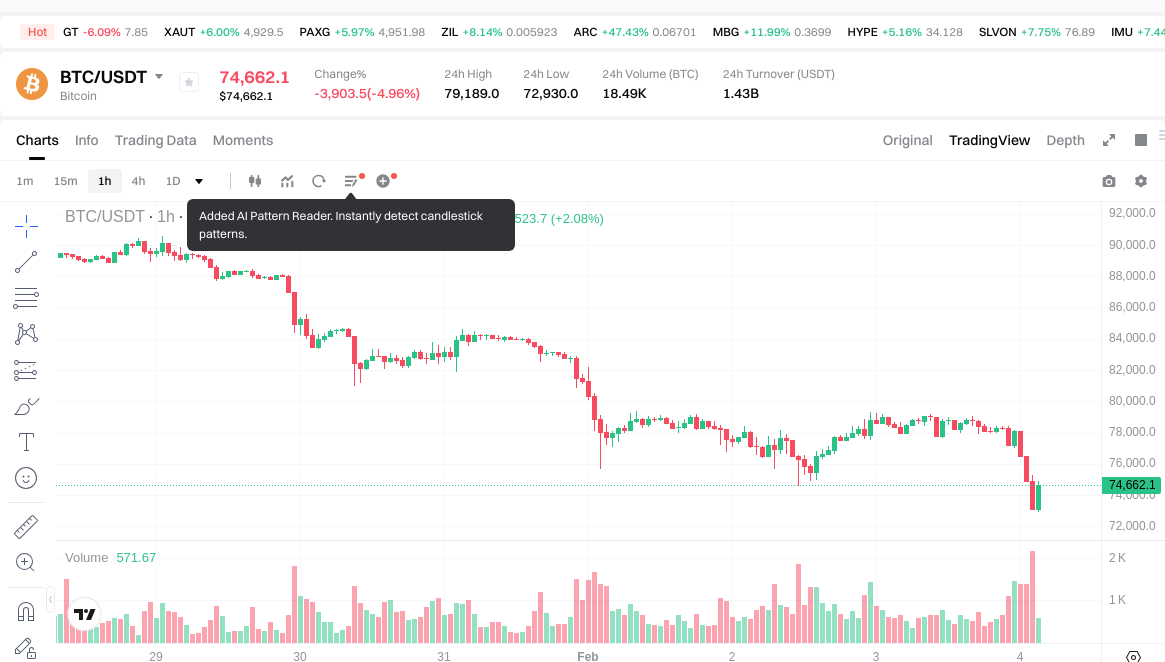
Unlike central bank monetary policy, the Bitcoin halving enforces an immutable and predictable issuance schedule. This design underpins Bitcoin’s scarcity and steadily reduces its inflation rate. Each time miners add a new block to the chain, their reward is slashed by 50% with every halving. The initial reward of 50 BTC has, by the fourth halving, dropped to just 3.125 BTC. Because a new block is mined about every 10 minutes, daily new supply also falls sharply after each halving.
This engineered "supply shock" shifts the supply-demand balance and, in theory, increases the scarcity premium for Bitcoin, fueling upward price pressure. The halving is also a major catalyst for market sentiment, often driving anticipation for future price gains.
Bitcoin Halving Overview
| Cycle |
Halving Date |
Target Block Height |
Block Reward (Before → After) |
Daily Issuance Post-Halving |
| First |
November 28, 2012 |
210,000 |
50 → 25 BTC |
Approx. 3,600 BTC/day |
| Second |
July 9, 2016 |
420,000 |
25 → 12.5 BTC |
Approx. 1,800 BTC/day |
| Third |
May 11, 2020 |
630,000 |
12.5 → 6.25 BTC |
Approx. 900 BTC/day |
| Fourth |
April 20, 2024 |
840,000 |
6.25 → 3.125 BTC |
Approx. 450 BTC/day |
(Note: Daily issuance is estimated based on 144 blocks per day.)
Inflation Rate and Market Impact
Bitcoin’s annual inflation rate has dropped dramatically across each halving event. After the first halving, it was about 12%. After the second, it dropped to 4–5%. The most recent, fourth halving brought it down to just 1.4%—a level lower than gold. This declining new supply increases Bitcoin’s scarcity, creating the foundation for long-term price appreciation.
Halving-driven supply cuts also fuel market sentiment, and previous halvings have often coincided with major bull runs. However, the timing and scale of these rallies vary with each cycle. Other market dynamics frequently shape outcomes, making straightforward forecasts difficult.
Are Bitcoin’s Price Cycles Over?|Recent Validity
Recent halvings have shown that Bitcoin’s classic four-year price cycle is no longer as predictable as it once was. Research from Kaiko notes that the explosive rally typically seen "nine months after a halving" has not materialized in the latest cycles. In other words, the textbook pattern for Bitcoin’s price cycle has broken down.
While the halving’s supply shock still influences the supply-demand balance and remains a bullish driver, new market forces—especially ETF launches and broad institutional adoption—have changed the pace, timing, and magnitude of price movements. ARK Invest observes that, while the overall return in recent years was about 5.7x (comparable to earlier cycles), the timing of peaks and the amplitude of price swings are moderating. Fidelity adds that "recent cycles are increasingly defined by strengthening fundamentals—network growth, a broader investor base, and infrastructure—rather than just price."
Here are the main bull and bear moves for the last three cycles:
| Cycle Period |
Upside (Bottom → Top) |
Downside (Top → Bottom) |
| 2015–2017 |
Approx. 5.2x |
-83% |
| 2018–2020 |
Approx. 5.9x |
-84% |
| 2022–2024 |
Approx. 5.7x |
-77% |
Bitcoin’s 60-day volatility has also collapsed—from over 200% in the early years to about 50% today—signaling an increasingly mature, less speculative market.
Bitwise points out that "Bitcoin tends to peak 100–400 days post-halving," but recently, ETF anticipation has delayed the initial rally, with new highs coming later in the cycle.
Macroeconomic and Monetary Policy Impact
Bitcoin’s price has become tightly linked to US Federal Reserve policy and global macro trends. In recent years, Bitcoin saw high correlation with tech stocks during downturns, but more recently, has exhibited "decoupling"—rising during periods of geopolitical stress and financial system anxiety, even as other assets fall.
Coinbase reports that demand for Bitcoin as a diversification and hedge asset is growing, driving price action that diverges from the traditional risk asset cycle. Recently, anticipated US rate cuts, regulatory easing, and ETF inflows have all helped underpin Bitcoin’s price.
ETF and Institutional Investor Influence
Since the approval of spot Bitcoin ETFs in the US, market leadership has shifted from retail to institutional investors, pension funds, and other long-term capital. In just a few months, spot ETFs attracted $59.2 billion in new assets, fundamentally changing supply-demand and price patterns.
Institutions tend to hold for the medium and long term, are unfazed by short-term price swings, and often accumulate more during market downturns. As a result, panic-driven selloffs are less frequent and corrections are shallower. Fidelity and ARK both note that "institutional participation has led to more rational and stable price discovery."
On-chain indicators—MVRV ratio, long-term holder share, realized cap, and others—remain critical for cycle analysis. Glassnode notes that "when long-term holders begin selling, it can signal a market top," and previous highs have coincided with increased movement from older wallets.
Checkmate, a leading on-chain analyst, finds that while Bitcoin’s price cycles still echo past rhythms, market evolution is evident. Uptrends from each cycle low, the scale of drawdowns, and the speed of recoveries all point to a market that now sees smaller drops and quicker, more stable rebounds. This resilience is thanks to ETF, institutional, and even government capital flows.
CryptoQuant CEO Ki Young Ju observes, "The Bitcoin market has shifted from whale- and retail-driven to a diverse ecosystem that now includes ETFs, corporations, institutions, and governments." Large ETF inflows help absorb the risk of swift, large selloffs, supporting greater investor diversity and a more stable market base.
The result: Today’s Bitcoin market stands out for "stable growth and resilient support levels," rather than the wild cycles of the past. Going forward, price discovery will be shaped by a complex mix of on-chain data, ETF flows, and capital movement from traditional finance.
Even as price cycles become less pronounced, "stronger foundations," "network expansion," and "sticky long-term capital" are all supporting Bitcoin’s long-term value.
In sum, today’s market is driven not just by halvings, but by the interplay of ETF capital, institutional investors, macro factors, and network health—hallmarks of a maturing asset class.
Bitcoin Price Moves and Drivers for Each Halving
After each of the past three halvings, Bitcoin entered a bull market. However, the time to lift-off, the speed, and the magnitude of new highs have differed greatly by cycle.
Market conditions such as macro environment, technological innovation, and regulatory policy have also played a role. The following summarizes Bitcoin’s price action and key drivers before and after the first (2012), second (2016), third (2020), and fourth (2024) halving events.
Bitcoin Price Trends By Halving
| Cycle |
Pre-Halving High |
Price Just After Halving |
Subsequent All-Time High |
Timing of High |
Main Drivers |
| First |
Approx. $12 |
Approx. $13 |
Approx. $1,150 |
Nov 2013 |
Crypto exchange expansion, lack of regulation |
| Second |
Approx. $660 |
Approx. $670 |
Approx. $20,000 |
Dec 2017 |
ICO boom, global crypto fever |
| Third |
Approx. $9,000 |
Approx. $8,600 |
Approx. $69,000 |
Nov 2021 |
Pandemic stimulus, institutional entry, ETF anticipation |
| Fourth |
Approx. $70,000 |
Approx. $62,000 |
– |
After Apr 2024 |
US ETF approval, supply shock, macro shifts |
First Halving (Nov 2012): Explosive Growth and Volatility in an Emerging Market
On November 28, 2012, Bitcoin’s first halving cut the block reward from 50 BTC to 25 BTC. At the time, the price per BTC was about $12, reflecting a tiny market. Over the next year, the price soared nearly 80-fold to over $1,000 at its peak.
In April 2013, the Cyprus banking crisis triggered a spike above $260, followed by sharp corrections and volatility, with Bitcoin closing the year above $1,000 for the first time.
Market Context and Drivers
- The halving heightened scarcity expectations and began to build trust in Bitcoin’s economic model.
- Global financial turmoil—most notably the Cyprus crisis—drove demand for Bitcoin as a "safe haven" asset.
- In 2013, US Senate hearings, speculative mania in China, and widespread media coverage fueled further price gains.
Aftermath
- In 2014, the collapse of Mt. Gox and new regulations in China drove prices down more than 80%, ushering in a prolonged "crypto winter."
- Still, the bottom ($200) was far above pre-halving levels ($12), establishing a higher long-term base.
- This cycle set the classic "halving → explosive rally → crash → higher floor" pattern for Bitcoin.
First Halving: Price Action and Key Events
| Period |
Price Level |
Main Events/Factors |
| Just Before Halving |
$12 |
Market infancy, few participants |
| One Year After |
Over $1,000 |
Cyprus crisis, speculative inflows |
| Crash/Bottom |
Around $200 |
Mt. Gox collapse, China crackdown |
Second Halving (Jul 2016): Market Maturity and ICO Boom
On July 9, 2016, the second halving reduced rewards from 25 BTC to 12.5 BTC. Bitcoin traded near $650 before and after the event, rebounding after an extended post-first-cycle correction.
This set the stage for a massive rally, with Bitcoin reaching over $19,000 by the end of 2017—a 30x move in roughly 18 months.
Market Context and Drivers
2017 saw an explosion of ICOs on Ethereum. Capital flooded into Bitcoin first, then into new projects—a pattern that quickly became the norm.
- Regulatory and Financial Progress
Japan updated its Payment Services Act, making Bitcoin legal tender and driving a surge in retail investor participation. In the US, CME and CBOE launched Bitcoin futures, accelerating institutional acceptance.
2017 was a strong year for risk assets, including equities, creating a favorable environment for crypto.
Aftermath
- After peaking near $19,700 at the end of 2017, Bitcoin plunged over 80% (to the $3,000s) as the ICO bubble burst, regulations tightened in China, and the Fed hiked rates.
- Still, the post-crash bottom remained well above pre-halving levels, maintaining a strong long-term uptrend.
Second Halving: Price Action and Key Events
| Period |
Price Level |
Main Events/Factors |
| Just Before Halving |
$650 |
Market bottoming, investor re-entry |
| About One Year After |
$2,500 |
ICO boom, new regulations |
| Bubble Peak |
$19,700 |
Financial product launches, risk-on sentiment |
| Crash/Bottom |
$3,000s |
Regulatory crackdown, bubble burst |
Third Halving (May 2020): The Pandemic and Institutional Entry
On May 11, 2020, the third halving reduced rewards from 12.5 BTC to 6.25 BTC. Bitcoin traded near $8,500 before the event, with little immediate reaction post-halving.
About six months later, a major bull run began. Bitcoin broke $60,000 in April 2021, hitting a record $69,000 in November—an 8x surge from pre-halving levels.
Market Context and Drivers
The COVID crisis and global recession in spring 2020 triggered financial chaos. Massive central bank stimulus drove liquidity into markets, with Bitcoin gaining attention as an inflation hedge.
- Institutional and Corporate Adoption
Large BTC purchases by MicroStrategy and Tesla, along with major hedge funds and payment firms, marked a wave of institutional entry.
- Industry Innovation and Public Awareness
DeFi and NFT booms attracted new capital. In 2021, El Salvador adopted Bitcoin as legal tender, boosting mainstream awareness.
Aftermath
- After the November 2021 peak, aggressive Fed tightening, crypto firm failures, and the Terra/LUNA collapse drove Bitcoin down to the mid-$15,000s—a 77% drawdown.
- Even so, the post-crash bottom was well above pre-halving levels, raising the long-term floor.
Key Characteristics and Shifts
- Both upside and downside moves are moderating. The market is maturing, and institutional influence is growing.
- Bitcoin’s price has become more correlated with traditional finance and macro trends, evolving from a retail-driven to a global asset class.
Third Halving: Price Action and Key Events
| Period |
Price Level |
Main Events/Factors |
| Just Before Halving |
$8,500 |
Post-pandemic, monetary easing |
| Half a Year After |
$20,000 |
Institutional entry, start of bull market |
| Peak |
$69,000 |
Corporate/government adoption, NFT/DeFi boom |
| Crash/Bottom |
$15,000s |
Monetary tightening, crypto credit crisis |
Fourth Halving (Apr 2024) and Current Market Trends
On April 20, 2024, Bitcoin’s fourth halving cut block rewards from 6.25 BTC to 3.125 BTC. Uniquely, Bitcoin hit an all-time high ($73,800) just before the halving, trading in the $63,000s on the event—a clear bull market signal.
Leading up to the halving, the US approved spot Bitcoin ETFs, unleashing massive institutional flows. In the months after launch, spot ETFs drew in $59.2 billion, rapidly reshaping supply-demand. After the halving, Bitcoin briefly dipped to the high $50,000s amid "sell the news" sentiment, but ETF inflows and long-term investor demand drove a rebound to a new high of $111,000.
Key Timeline and Market Environment
| Period/Event |
Market Environment/Price Dynamics |
| Late 2023 |
Bullish sentiment grows as BlackRock and others file for spot ETFs |
| January 2024 |
SEC approves ETFs, BTC nearly doubles in months |
| March 2024 |
New all-time high at $73,800 |
| April 20, 2024 |
Halving event, followed by short-term correction |
| Summer–Fall 2024 |
Monetary easing and ETF inflows stabilize the $50,000s floor |
| October–December 2024 |
US election, regulatory easing hopes drive BTC past $100,000 |
| Afterward |
All-time high at $109,000, then retracement |
| Recent Developments |
Tariff shocks trigger sharp drop, but price recovers to $105,000s |
Market Structure and Key Drivers
- Supply-Demand Transformation
Supply cuts from the halving, combined with massive ETF inflows, mean "ETF capital" now heavily influences price formation.
High inflation and rates were offset by US monetary easing and regulatory optimism. Political shifts and policy changes also shaped the market.
- Investor Behavior and Sentiment
Record highs and ETF launches brought in both retail and institutional investors. While periods of profit-taking and corrections occurred, long-term ETF flows increasingly support the downside.
New Trends and What to Watch
- Market leadership has shifted to institutions, governments, and long-term investors
- Bitcoin dominance has increased, with altcoins lagging
- Network resilience and decentralization remain robust
- Price cycles now reflect the interplay of halving, ETF flows, and policy
- Macro trends, policy, and ETF capital will be key going forward
The fourth cycle has been shaped by overlapping factors: the halving’s supply shock, the rise and spread of spot ETFs, policy shifts and regulatory optimism, and macroeconomic volatility—all producing a more complex price pattern than ever before.
Looking ahead, Bitcoin investors must consider ETF flows, policy, and global macro trends together to assess the market’s direction.
Summary: A New Cycle Driven by Institutional Capital
Historically, Bitcoin’s price has undergone dramatic changes around each four-year halving. While past halvings consistently led to reduced supply and higher prices, the market has recently evolved beyond a simple "halving cycle." Institutional adoption following ETF approvals, global monetary policy, and macroeconomic shifts now play central roles in price formation.
As the market matures, the halving remains important, but its impact is increasingly multifaceted and gradual. For investors, it’s vital to assess the market through diverse lenses: not just the halving, but ETF flows, policy changes, and on-chain trends all matter.
FAQ
What is the Bitcoin halving? When does it occur?
The Bitcoin halving is an event that halves mining rewards every 210,000 blocks (roughly every four years). The next halving is expected around April 2028, cutting the reward from 3.125 BTC to 1.5625 BTC. This mechanism makes Bitcoin scarcer over time, supporting its long-term value appreciation.
How has Bitcoin’s price behaved after past halvings?
After the 2016 halving, Bitcoin rose from $647 to $19,800 by December 2017. Each halving has typically reduced new supply and, as demand has increased, driven substantial price gains.
How does the Bitcoin halving affect price cycles?
By reducing new supply, the halving shifts the supply-demand balance. This creates upward price pressure and has historically sparked major bull markets on a roughly four-year cycle.
When is the next Bitcoin halving scheduled?
The next Bitcoin halving is projected for mid-2028, after another 210,000 blocks are mined from the current block height.
Are Bitcoin’s price cycles really over?
No—not completely. Institutional and ETF capital have changed the classic four-year cycle, but cyclical patterns remain. The market cycle is evolving, not disappearing.
What investment strategies are recommended around the halving?
It’s prudent to avoid leverage trading and set stop-loss orders around the halving. Dollar-cost averaging remains an effective long-term strategy.
How does the Bitcoin halving affect market supply?
Every four years, the Bitcoin halving cuts block rewards, drastically reducing new supply. The next halving will lower annual supply by about 164,250 BTC, easing inflationary pressure and reinforcing deflationary trends—key factors supporting price appreciation.
* The information is not intended to be and does not constitute financial advice or any other recommendation of any sort offered or endorsed by Gate.