This comprehensive article compares LIORA and XLM as investment opportunities in the cryptocurrency market, examining two distinct digital assets with different market positions and application scenarios. LIORA, a decentralized Web3 content creation platform launched in 2025, empowers creators with ownership and direct monetization capabilities, while XLM (Stellar), established since 2014, provides cross-border payment infrastructure. The analysis covers critical investment factors including historical price trends, current market status on Gate with real-time data, tokenomics mechanisms, institutional adoption patterns, technological ecosystems, and macroeconomic influences. Detailed price forecasts span 2026-2031, offering conservative and optimistic scenarios for both assets. The article provides tailored investment strategies for conservative, aggressive, and institutional investors, alongside comprehensive risk assessments addressing market, technology, and regulatory considerations. An extensive FAQ sec
Introduction: LIORA vs XLM Investment Comparison
In the cryptocurrency market, the comparison between LIORA vs XLM has become a topic of interest for investors. These two assets differ significantly in market capitalization ranking, application scenarios, and price performance, representing distinct positioning within the crypto asset landscape.
LIORA (LIORA): Launched in 2025, this decentralized Web3 platform positions itself as empowering creators with true ownership of their content, data, and earnings. It challenges traditional Web2 constraints by enabling users to publish freely, monetize directly, and engage communities without intermediaries.
XLM (XLM): Since its launch in 2014, Stellar has established itself as a blockchain project focused on creating a decentralized gateway for transmission between digital currency and fiat currency, enabling rapid, stable, and low-cost transfer of digital assets among banks, payment institutions, and individuals.
This article will provide a comprehensive analysis of LIORA vs XLM investment value comparison, examining historical price trends, supply mechanisms, institutional adoption, technological ecosystems, and future outlook, attempting to address the question investors care about most:
"Which presents more interesting characteristics for consideration right now?"
I. Historical Price Comparison and Current Market Status
Price History of LIORA (Coin A) and XLM (Coin B)
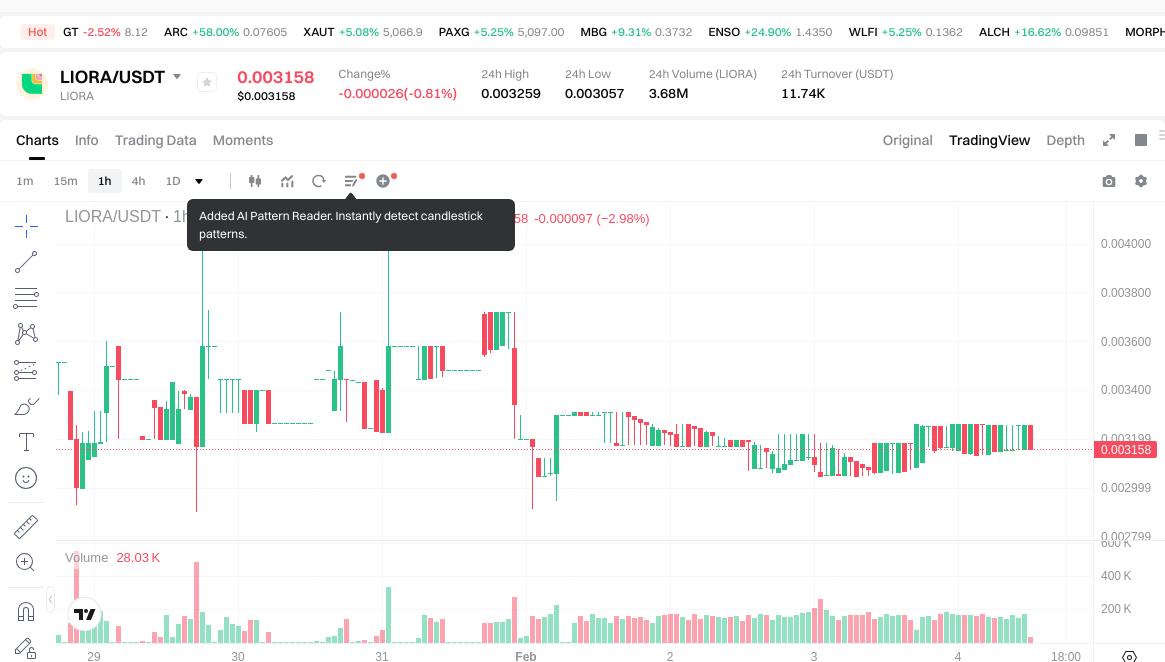
- 2025: LIORA reached its historical high of $0.29083 in August 2025, marking a significant early milestone for the project launched in 2024.
- 2026: LIORA experienced substantial volatility, declining to a historical low of $0.0028 in January 2026.
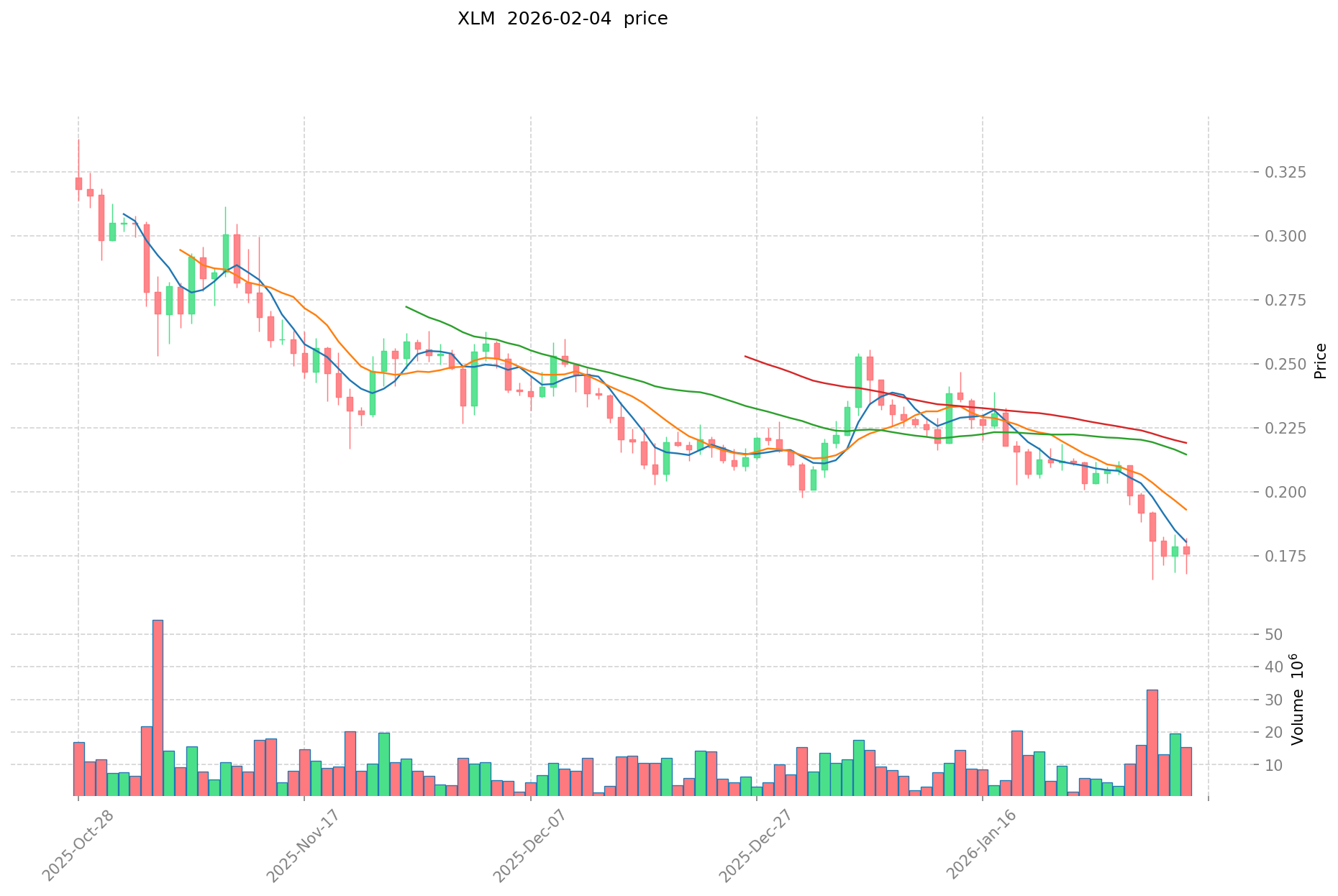
- 2018: XLM recorded its historical high of $0.875563 in January 2018 during the broader cryptocurrency market boom.
- 2015: XLM reached its historical low of $0.00047612 in March 2015, shortly after its 2014 launch.
- Comparative Analysis: During recent market cycles, LIORA declined from its high of $0.29083 to a low of $0.0028, representing substantial downward movement. XLM, with a longer market history, has shown resilience over multiple cycles, though it currently trades significantly below its historical peak.
Current Market Status (2026-02-04)
- LIORA Current Price: $0.003255
- XLM Current Price: $0.17747
- 24-Hour Trading Volume: LIORA recorded $11,714.70 compared to XLM's significantly higher $2,680,863.30
- Market Capitalization: LIORA holds a market cap of approximately $764,925, while XLM maintains approximately $5.78 billion
- 24-Hour Price Change: LIORA increased by 2.73%, while XLM decreased by 0.05%
- Market Sentiment Index (Fear & Greed Index): 14 (Extreme Fear)
View real-time prices:
II. Core Factors Influencing LIORA vs XLM Investment Value
Supply Mechanism Comparison (Tokenomics)
- LIORA: Specific supply mechanism details are not provided in the available materials.
- XLM: Specific supply mechanism details are not provided in the available materials.
- 📌 Historical patterns: Supply mechanisms may influence price cycle dynamics through scarcity effects and distribution schedules, though specific mechanisms for these assets require further research.
Institutional Adoption and Market Application
- Institutional holdings: Available materials do not specify institutional preference between LIORA and XLM. Materials indicate broader institutional interest in digital assets, with examples including Third Eye crypto hedge fund launching with $70 million in capital and Fosun International expanding into crypto asset sectors.
- Enterprise adoption: Cross-border payment and settlement applications for LIORA and XLM are not detailed in the provided materials. However, broader trends show stablecoins processing $15.6 trillion in on-chain transactions in 2024, gradually replacing traditional high-cost settlement systems like SWIFT.
- Regulatory policies: Materials reference evolving regulatory frameworks including Hong Kong's Stablecoin Ordinance, Bolivia-El Salvador cooperation on digital asset regulation, and South Korea's discussions on digital asset legislation. Specific regulatory stances toward LIORA and XLM are not documented.
Technology Development and Ecosystem Building
- LIORA technology upgrades: Specific technological developments are not documented in the available materials.
- XLM technology development: Specific technological advancements are not documented in the available materials.
- Ecosystem comparison: While materials discuss broader ecosystem developments such as Ethereum's Layer 2 solutions managing over $44 billion in locked value and various DeFi platforms showing growth, specific DeFi, NFT, payment, and smart contract implementations for LIORA and XLM are not detailed.
Macroeconomic Factors and Market Cycles
- Performance in inflationary environments: Materials do not provide comparative inflation-hedging characteristics for LIORA and XLM.
- Macroeconomic monetary policy: Available materials indicate interest rates and U.S. dollar index movements influence digital asset markets generally. Specific impacts on LIORA and XLM require further analysis.
- Geopolitical factors: Materials reference increasing cross-border transaction demand and international cooperation on digital asset frameworks, such as Bolivia-El Salvador partnerships and Hong Kong's regulatory developments aimed at reducing dependence on dollar-based clearing systems. However, specific implications for LIORA and XLM are not detailed.
III. 2026-2031 Price Forecast: LIORA vs XLM
Short-term Forecast (2026)
- LIORA: Conservative $0.00217902 - $0.003158 | Optimistic $0.003158 - $0.00464226
- XLM: Conservative $0.1725436 - $0.17788 | Optimistic $0.17788 - $0.2259076
Mid-term Forecast (2028-2029)
- LIORA may enter a gradual recovery phase, with projected prices ranging from $0.004255821856 to $0.007205880188 in 2028, potentially expanding to $0.0057199696593 - $0.00848963917854 by 2029.
- XLM may enter a moderate growth phase, with projected prices ranging from $0.20690076624 to $0.32759287988 in 2028, potentially reaching $0.157823411867 - $0.3672981221632 by 2029.
- Key drivers: institutional capital flows, ETF developments, ecosystem expansion.
Long-term Forecast (2030-2031)
- LIORA: Baseline scenario $0.005006177656026 - $0.007980862929897 | Optimistic scenario $0.008539523334989 - $0.008706395923524
- XLM: Baseline scenario $0.281327405444376 - $0.390914243611662 | Optimistic scenario $0.454703597171724 - $0.535552513747976
View detailed price predictions for LIORA and XLM
Disclaimer: Price predictions are based on historical data analysis and market modeling. Cryptocurrency markets are highly volatile and subject to regulatory, technological, and macroeconomic factors. These forecasts do not constitute investment advice, and actual prices may vary significantly from projections.
LIORA:
| Year |
Predicted High Price |
Predicted Average Price |
Predicted Low Price |
Price Change |
| 2026 |
0.00464226 |
0.003158 |
0.00217902 |
-2 |
| 2027 |
0.0057721924 |
0.00390013 |
0.0035881196 |
19 |
| 2028 |
0.007205880188 |
0.0048361612 |
0.004255821856 |
48 |
| 2029 |
0.00848963917854 |
0.006021020694 |
0.0057199696593 |
84 |
| 2030 |
0.008706395923524 |
0.00725532993627 |
0.005006177656026 |
122 |
| 2031 |
0.008539523334989 |
0.007980862929897 |
0.005666412680226 |
145 |
XLM:
| Year |
Predicted High Price |
Predicted Average Price |
Predicted Low Price |
Price Change |
| 2026 |
0.2259076 |
0.17788 |
0.1725436 |
0 |
| 2027 |
0.290727072 |
0.2018938 |
0.19179911 |
13 |
| 2028 |
0.32759287988 |
0.246310436 |
0.20690076624 |
38 |
| 2029 |
0.3672981221632 |
0.28695165794 |
0.157823411867 |
61 |
| 2030 |
0.454703597171724 |
0.3271248900516 |
0.281327405444376 |
84 |
| 2031 |
0.535552513747976 |
0.390914243611662 |
0.332277107069912 |
120 |
IV. Investment Strategy Comparison: LIORA vs XLM
Long-term vs Short-term Investment Strategies
- LIORA: May appeal to investors with higher risk tolerance who are interested in emerging Web3 content creation platforms and are willing to accept significant volatility in exchange for potential growth opportunities in decentralized creator economy ecosystems.
- XLM: May suit investors seeking exposure to established cross-border payment infrastructure with a longer operational history and broader market recognition in the digital currency transmission space.
Risk Management and Asset Allocation
- Conservative Investors: LIORA: 5-10% vs XLM: 15-25% - Conservative portfolios might allocate smaller positions to newer assets while favoring more established projects with demonstrated market persistence.
- Aggressive Investors: LIORA: 15-25% vs XLM: 20-35% - More risk-tolerant investors might increase exposure to both assets while maintaining diversification across the broader digital asset spectrum.
- Hedging Tools: Stablecoin allocation for capital preservation, options strategies for downside protection, cross-asset portfolio construction combining different market segments.
V. Potential Risk Comparison
Market Risk
- LIORA: Recent price history shows significant volatility with a decline from $0.29083 to $0.0028 between August 2025 and January 2026. Lower trading volume of $11,714.70 may indicate limited liquidity and potential for increased price volatility during market stress.
- XLM: Trading volume of $2,680,863.30 suggests more established liquidity. Price currently trades substantially below historical peak of $0.875563 from 2018, though has maintained market presence across multiple market cycles since 2014 launch.
Technology Risk
- LIORA: As a platform launched in 2025 focused on decentralized content creation, the project faces execution challenges in building sustainable creator adoption and demonstrating technological differentiation in competitive Web3 landscape.
- XLM: Network stability considerations for blockchain infrastructure focused on cross-border payment processing, ongoing need for technological adaptation to evolving financial technology standards.
Regulatory Risk
- Global regulatory frameworks continue evolving with developments including Hong Kong's Stablecoin Ordinance, Bolivia-El Salvador cooperation on digital asset regulation, and South Korea's legislative discussions. Both assets may face different regulatory considerations based on their functional classifications - content platform versus payment infrastructure - though specific regulatory treatment remains subject to jurisdictional interpretation.
VI. Conclusion: Which Is the Better Buy?
📌 Investment Value Summary:
- LIORA Characteristics: Represents emerging Web3 content creation sector with decentralized ownership models. Current low price point relative to historical levels. Substantial volatility with limited trading volume may present both opportunities and challenges.
- XLM Characteristics: Established market presence since 2014 with focus on cross-border digital currency transmission. Higher market capitalization of approximately $5.78 billion and trading volume indicate broader market acceptance. Longer operational history across multiple market cycles.
✅ Investment Considerations:
- Beginner Investors: May consider starting with smaller position sizes in more established assets with demonstrated market persistence. Thorough research into project fundamentals, team backgrounds, and technological implementations remains essential before allocation decisions.
- Experienced Investors: Might evaluate portfolio diversification across different digital asset categories - established payment infrastructure versus emerging Web3 platforms. Risk assessment should incorporate liquidity analysis, historical volatility patterns, and correlation with broader market movements.
- Institutional Investors: Could assess alignment with investment mandates regarding asset maturity, liquidity requirements, regulatory clarity, and technological infrastructure evaluation. Due diligence on custody solutions, counterparty risks, and compliance frameworks remains critical.
⚠️ Risk Disclosure: Cryptocurrency markets exhibit extreme volatility. This analysis does not constitute investment advice. Market conditions, technological developments, regulatory changes, and macroeconomic factors may significantly impact asset performance. Investors should conduct independent research and consider their risk tolerance, investment objectives, and financial situation before making allocation decisions.
VII. FAQ
Q1: What is the primary difference between LIORA and XLM in terms of their core functionality?
LIORA is a decentralized Web3 content creation platform launched in 2025, while XLM (Stellar) is an established cross-border payment infrastructure launched in 2014. LIORA focuses on empowering creators with ownership of their content, data, and earnings through direct monetization and community engagement without intermediaries. In contrast, XLM serves as a blockchain-based gateway for transmitting digital currency and fiat currency, enabling rapid, stable, and low-cost transfers among banks, payment institutions, and individuals. These fundamental differences position LIORA in the emerging creator economy sector and XLM in the financial infrastructure and payment processing space.
Q2: How do the current market capitalizations and trading volumes compare between LIORA and XLM?
XLM demonstrates significantly larger market presence with approximately $5.78 billion market capitalization and $2,680,863.30 in 24-hour trading volume, whereas LIORA maintains approximately $764,925 market capitalization and $11,714.70 in 24-hour trading volume as of February 4, 2026. This substantial difference reflects XLM's established market position since 2014 and broader acceptance in the digital asset ecosystem. The lower trading volume for LIORA indicates limited liquidity, which may result in increased price volatility and larger bid-ask spreads during market transactions. Investors should consider these liquidity characteristics when evaluating position sizing and execution strategies.
Q3: What are the projected price ranges for LIORA and XLM by 2031?
Based on historical data analysis and market modeling, LIORA's 2031 price projections range from a baseline scenario of $0.005666412680226 - $0.007980862929897 to an optimistic scenario of $0.008539523334989 - $0.008706395923524, representing a potential 145% increase from 2026 levels. XLM's 2031 projections range from a baseline scenario of $0.332277107069912 - $0.390914243611662 to an optimistic scenario of $0.454703597171724 - $0.535552513747976, indicating a potential 120% increase from current levels. However, these forecasts should not be interpreted as guaranteed outcomes, as cryptocurrency markets are subject to extreme volatility driven by regulatory developments, technological changes, macroeconomic conditions, and market sentiment shifts that may cause actual prices to vary significantly from projections.
Q4: What portfolio allocation percentages are suggested for conservative versus aggressive investors?
For conservative investors, suggested allocations range from 5-10% in LIORA and 15-25% in XLM as part of a diversified digital asset portfolio. Conservative portfolios typically allocate smaller positions to newer assets while favoring established projects with demonstrated market persistence. For aggressive investors with higher risk tolerance, allocations may increase to 15-25% in LIORA and 20-35% in XLM. These aggressive allocations reflect willingness to accept greater volatility in exchange for potential growth opportunities in emerging Web3 platforms and established payment infrastructure. Regardless of investor profile, maintaining diversification across different digital asset categories, implementing hedging strategies through stablecoin allocations, and establishing clear risk management protocols remain essential components of portfolio construction.
Q5: What are the key risk factors investors should consider when comparing LIORA and XLM?
Market risk differs substantially between the two assets: LIORA experienced significant volatility declining from $0.29083 to $0.0028 between August 2025 and January 2026, while XLM, despite trading below its 2018 peak of $0.875563, has maintained market presence across multiple cycles since 2014. Technology risk considerations include LIORA's execution challenges in building sustainable creator adoption in the competitive Web3 landscape versus XLM's need for ongoing technological adaptation in financial technology standards. Regulatory risk affects both assets as global frameworks evolve through developments like Hong Kong's Stablecoin Ordinance and international cooperation initiatives, though regulatory treatment may differ based on functional classifications - content platform versus payment infrastructure. Liquidity risk is notably higher for LIORA given its substantially lower trading volume, which may result in execution challenges during market stress periods.
Q6: How has the historical price performance of LIORA and XLM differed across market cycles?
LIORA, launched in 2025, reached its historical high of $0.29083 in August 2025 shortly after launch, then declined substantially to $0.0028 by January 2026, representing its first major market cycle with extreme downward movement. XLM demonstrates a longer operational history spanning multiple market cycles since its 2014 launch, achieving its historical high of $0.875563 in January 2018 during the broader cryptocurrency market boom, and recording its historical low of $0.00047612 in March 2015. XLM's extended market presence through various cycles indicates resilience and sustained market acceptance, while LIORA's limited historical data reflects early-stage project characteristics with heightened volatility typical of newly launched digital assets in the emerging Web3 sector.
Q7: What type of investor profile is best suited for each asset?
LIORA may appeal to investors with higher risk tolerance who possess strong understanding of Web3 technologies, interest in emerging decentralized creator economy ecosystems, and willingness to accept significant volatility and liquidity constraints in exchange for potential early-stage growth opportunities in content creation platforms. These investors should have capacity to withstand substantial drawdowns and extended holding periods while the ecosystem develops. XLM may suit investors seeking exposure to established cross-border payment infrastructure with demonstrated market persistence, broader institutional recognition, and more substantial liquidity for position management. XLM investors typically value proven operational history, established use cases in financial technology applications, and reduced execution risk compared to emerging projects, while accepting that established assets may offer different growth trajectories than early-stage opportunities.
Q8: What due diligence steps should investors take before allocating capital to LIORA or XLM?
Investors should conduct comprehensive research including evaluation of project fundamentals such as technological architecture, development team backgrounds and track records, governance structures, and roadmap execution capabilities. Analysis should encompass assessment of ecosystem development including partnership networks, developer activity, community engagement metrics, and adoption indicators within target markets. Financial due diligence requires examination of tokenomics including supply mechanisms, distribution schedules, treasury management, and historical capital flows. Regulatory analysis should evaluate compliance frameworks, jurisdictional considerations, and potential regulatory classification impacts. Technical evaluation should include security audit reviews, network performance metrics, and infrastructure scalability assessments. Additionally, investors must establish personal risk management protocols including position sizing relative to portfolio allocation limits, stop-loss thresholds, rebalancing schedules, and liquidity requirements aligned with investment timeframes and financial objectives.
* The information is not intended to be and does not constitute financial advice or any other recommendation of any sort offered or endorsed by Gate.