What is ROUTE: A Comprehensive Guide to Understanding Network Routing Protocols and Best Practices

Router Protocol's Positioning and Significance
In 2021, Router Protocol was launched to address the fragmentation of blockchain ecosystems and inefficiencies in cross-chain communication. As a chain abstraction protocol enabling intent-based cross-chain transfers, Router Protocol plays a pivotal role in blockchain interoperability and decentralized infrastructure.
As of 2026, Router Protocol has positioned itself within the cross-chain messaging and intent-based execution space, with an active development focus on security borrowing mechanisms for PoS chains. This article will provide an in-depth analysis of its technical architecture, market performance, and future potential.
Origin and Development History
Genesis Background
Router Protocol was created to solve the challenges of cross-chain interoperability and fragmented liquidity across blockchain networks. It emerged during the expansion of multi-chain ecosystems, with the goal of enabling seamless, secure, and permissionless cross-chain transfers and messaging. Router Protocol's launch brought new possibilities for developers building cross-chain applications and users seeking unified blockchain experiences.
Key Milestones
- July 2024: Token listed on Gate.com, expanding accessibility to the broader crypto community.
- 2024: Mainnet deployment with ERC20 compatibility established foundational infrastructure.
- Ongoing: Development of technology allowing PoS chains to borrow security from Ethereum, advancing cross-chain security models.
- 2026: Continued ecosystem growth with focus on intent-based product development and chain abstraction capabilities.
With support from its development community and ecosystem partners, Router Protocol continues to enhance its technology, security standards, and real-world applications.
How Router Protocol Works?
Decentralized Architecture
Router Protocol operates on a decentralized network of nodes distributed globally, eliminating dependence on centralized intermediaries. These nodes collaborate to validate cross-chain transactions and messages, ensuring the system remains transparent and resistant to attacks, granting users greater autonomy and enhancing network resilience.
Blockchain Foundation
Router Protocol leverages blockchain technology as a transparent, immutable digital ledger recording cross-chain interactions. Transactions and messages are organized into blocks, linked through cryptographic hashing to form a secure chain. Anyone can verify records without requiring intermediaries, establishing trustless verification. The protocol's chain abstraction approach streamlines cross-chain operations by abstracting underlying blockchain complexities.
Consensus and Security
Router Protocol employs security mechanisms adapted for cross-chain environments to validate transactions and prevent fraudulent activities. Network participants maintain security through validation processes and security borrowing from Ethereum, receiving ROUTE token incentives. Its innovation includes enabling PoS chains to leverage Ethereum's security infrastructure.
Secure Cross-Chain Transfers
Router Protocol utilizes cryptographic techniques to protect cross-chain transactions:
- Private keys authorize transaction execution
- Public keys verify ownership and transaction authenticity
This mechanism ensures asset security during cross-chain transfers while maintaining transparency appropriate to cross-chain messaging protocols. The protocol's intent-based architecture adds an additional layer of execution optimization and user experience enhancement.
Router Protocol's Market Performance
Circulation Overview
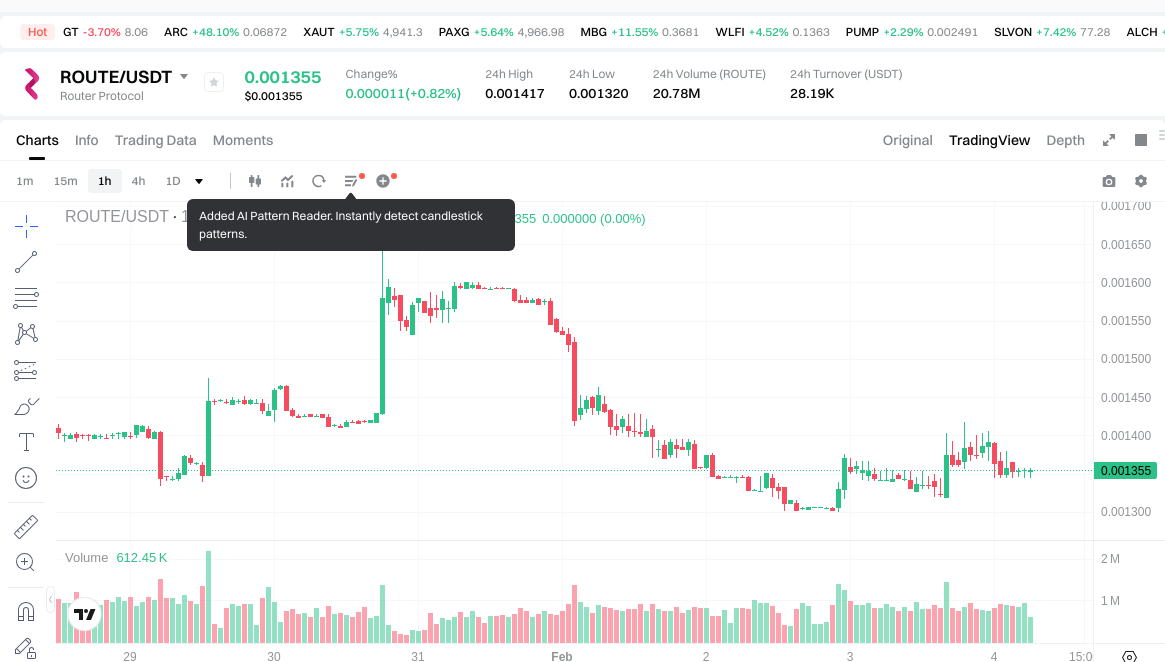
As of February 04, 2026, Router Protocol's circulating supply stands at 648,739,153.3008 ROUTE tokens, with a total supply of 982,072,351.3008 ROUTE. The circulating supply represents approximately 66.06% of the total supply. The token distribution mechanism influences the supply-demand dynamics of ROUTE in the market.
Price Volatility
Router Protocol reached a notable price level of $0.08108 on November 12, 2024, during a period of market activity. The token's lowest price of $0.0013 was recorded on February 02, 2026, reflecting market fluctuations and broader industry trends. These price movements illustrate the impact of market sentiment, adoption patterns, and external factors on ROUTE's valuation.
Click to view current ROUTE market price
On-Chain Metrics
- Holder Count: 3,633 addresses (indicating network participation)
- 24-Hour Trading Volume: $28,116.71 (reflecting current market activity)
- Market Capitalization: $871,905.42 (representing the circulating token value)
Router Protocol Ecosystem Applications and Partners
Core Use Cases
Router Protocol's ecosystem supports multiple applications:
- Cross-Chain Infrastructure: Router Protocol provides seamless cross-chain transfers and messaging, enabling developers to build intent-based products across multiple blockchain networks.
- Chain Abstraction Solutions: The protocol offers chain abstraction technology, allowing developers to create applications without being limited to a single blockchain environment.
Strategic Partnerships
Router Protocol continues to expand its ecosystem through technical collaborations that enhance its cross-chain capabilities and interoperability solutions. These partnerships provide a solid foundation for Router Protocol's ecosystem expansion.
Challenges and Controversies
Router Protocol faces the following challenges:
- Technical Complexity: Managing secure cross-chain messaging and transfers across multiple blockchain networks presents ongoing technical considerations.
- Market Competition: The emergence of other cross-chain solutions and chain abstraction protocols creates a competitive landscape.
- Adoption Hurdles: Encouraging developers and projects to integrate cross-chain infrastructure requires continuous ecosystem development.
These issues have sparked discussions within the community and market, while also driving Router Protocol's continuous innovation.
Router Protocol Community and Social Media Atmosphere
Community Engagement
Router Protocol maintains an active community with 3,633 token holders as of February 2026. On X platform, discussions and hashtags related to Router Protocol generate consistent engagement among cross-chain technology enthusiasts. Developments in cross-chain technology and protocol updates have contributed to community interest.
Social Media Sentiment
Sentiment on X presents varied perspectives:
- Supporters praise Router Protocol's chain abstraction capabilities and cross-chain messaging solutions, viewing it as infrastructure for multi-chain applications.
- Observers monitor market performance and ecosystem development progress.
Recent trends reflect ongoing interest in cross-chain technology solutions.
Popular Topics
X users discuss Router Protocol's cross-chain infrastructure development, PoS security mechanisms, and ecosystem expansion, showcasing both its technological potential and the challenges of building robust multi-chain solutions.
Router Protocol Additional Information Sources
- Official Website: Visit Router Protocol Official Website for features, use cases, and latest updates.
- Documentation: Router Protocol Documentation details its technical architecture, goals, and vision.
- X Platform: Router Protocol maintains an active presence on X at @routerprotocol, sharing updates on technical developments, ecosystem progress, and cross-chain solutions.
Router Protocol Future Roadmap
- Ongoing Development: Continued enhancement of chain abstraction protocols and cross-chain messaging infrastructure, improving interoperability and security
- Ecosystem Goals: Expanding developer adoption and integration of cross-chain solutions
- Long-term Vision: Establishing Router Protocol as foundational infrastructure for multi-chain applications
How to Participate in Router Protocol?
- Purchase Options: Acquire ROUTE on Gate.com and other supported platforms
- Storage Solutions: Use compatible wallets such as MetaMask to securely store ROUTE tokens
- Ecosystem Development: Visit Router Protocol documentation to explore development opportunities and contribute to the cross-chain ecosystem
- Stay Updated: Follow official channels for announcements on protocol upgrades and ecosystem developments
Summary
Router Protocol addresses the blockchain interoperability challenge through chain abstraction technology, offering seamless cross-chain transfers, secure messaging, and developer-friendly infrastructure. Its technical approach, growing ecosystem, and focus on solving multi-chain complexity position it as a relevant solution in the cross-chain infrastructure space. While facing competitive pressures and adoption challenges, Router Protocol's innovation in chain abstraction and clear technical direction give it a meaningful role in the evolving multi-chain landscape. Whether you're a developer exploring cross-chain solutions or an investor interested in blockchain infrastructure, Router Protocol represents an approach worth understanding and monitoring.
FAQ
What is ROUTE token and what does it do?
ROUTE token is the universal gas token for Router Protocol, enabling seamless cross-chain transactions and swaps across different blockchain networks with efficient settlement mechanisms.
How can I buy and store ROUTE cryptocurrency?
You can purchase ROUTE through crypto exchanges using debit cards, credit cards, or bank transfers. After buying, transfer your ROUTE to a secure personal wallet for long-term storage and full asset control.
What is the difference between ROUTE and other DeFi tokens?
ROUTE enables dynamic, cross-blockchain token swaps unlike static traditional routes. It provides flexible, decentralized interactions across various blockchain networks, offering users unique multi-chain functionality compared to standard DeFi tokens.
What are the risks and benefits of investing in ROUTE?
Benefits include strong community support, innovative ecosystem integration, and growth potential. Risks include market volatility, regulatory uncertainty, and liquidity challenges. ROUTE offers long-term value for strategic investors.
Which exchanges support ROUTE trading?
ROUTE is supported on decentralized exchange platforms like Swapzone, enabling seamless trading with other cryptocurrencies. Multiple DEX platforms facilitate ROUTE trading with competitive rates and efficient execution.
What is the use case and real-world application of ROUTE protocol?
ROUTE protocol optimizes data transmission paths across networks, enabling efficient routing for enterprise communications, cloud infrastructure, and decentralized applications requiring reliable cross-chain or cross-network message delivery.
Share
Content
Router Protocol's Positioning and Significance
Origin and Development History
How Router Protocol Works?
Router Protocol's Market Performance
Router Protocol Ecosystem Applications and Partners
Challenges and Controversies
Router Protocol Community and Social Media Atmosphere
Router Protocol Additional Information Sources
Router Protocol Future Roadmap
How to Participate in Router Protocol?
Summary
FAQ
How to Buy Cryptocurrency


Trending Cryptocurrencies



XZXX: A Comprehensive Guide to the BRC-20 Meme Token in 2025

Survey Note: Detailed Analysis of the Best AI in 2025

Detailed Analysis of the Best 10 GameFi Projects to Play and Earn in 2025

Kaspa’s Journey: From BlockDAG Innovation to Market Buzz

Best Crypto Wallets 2025: How to Choose and Secure Your Digital Assets

Popular GameFi Games in 2025

What is mobile mining, and can you make money with it?
Sylwester Suszek: The Story of Poland's Cryptocurrency King

How to Generate Income through Cryptocurrency Affiliate Programs

What is CBDC, or Central Bank Digital Currency

Top 14 DeFi Investment Tools for Investors