MAT vs FIL: A Comprehensive Comparison of Two Leading Technologies in Modern Industry


Introduction: Investment Comparison Between MAT and FIL
In the cryptocurrency market, the comparison between MAT vs FIL has become a topic that investors cannot avoid. The two differ significantly in market cap ranking, application scenarios, and price performance, representing different positioning within the crypto asset landscape.
Matchain (MAT): Launched in 2025, it has gained market recognition for its focus on identity and data sovereignty, aiming to onboard over 500 million users through global IP partnerships via MatchID.
Filecoin (FIL): Since its launch in 2020, it has been positioned as a decentralized storage solution, rewarding miners for contributing idle hard drive capacity through a novel proof-of-work mechanism.
This article will comprehensively analyze the investment value comparison of MAT vs FIL through historical price trends, supply mechanisms, institutional adoption, technical ecosystems, and future predictions, attempting to answer the question that investors care about most:
"Which is the better buy right now?"
I. Historical Price Comparison and Current Market Status
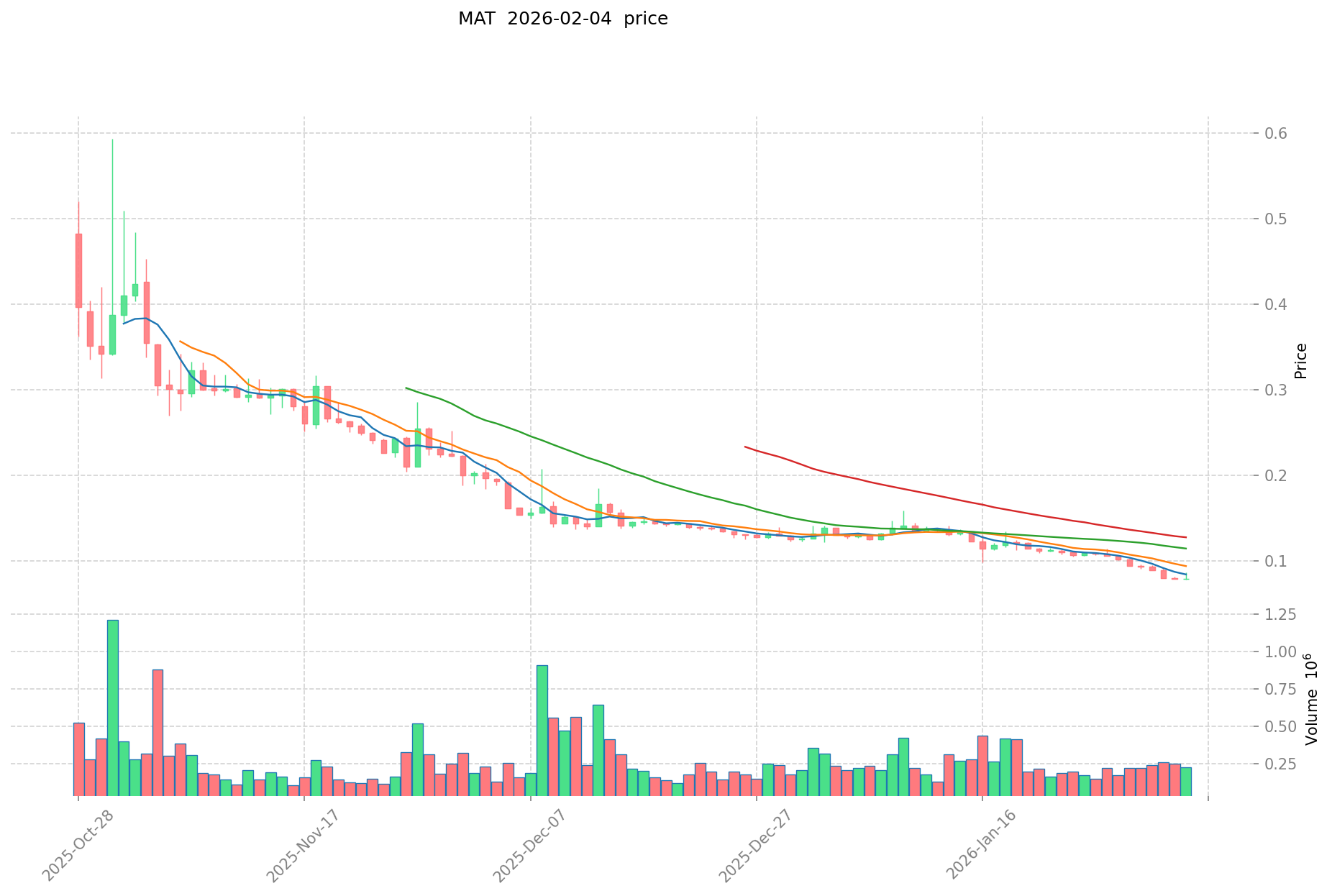
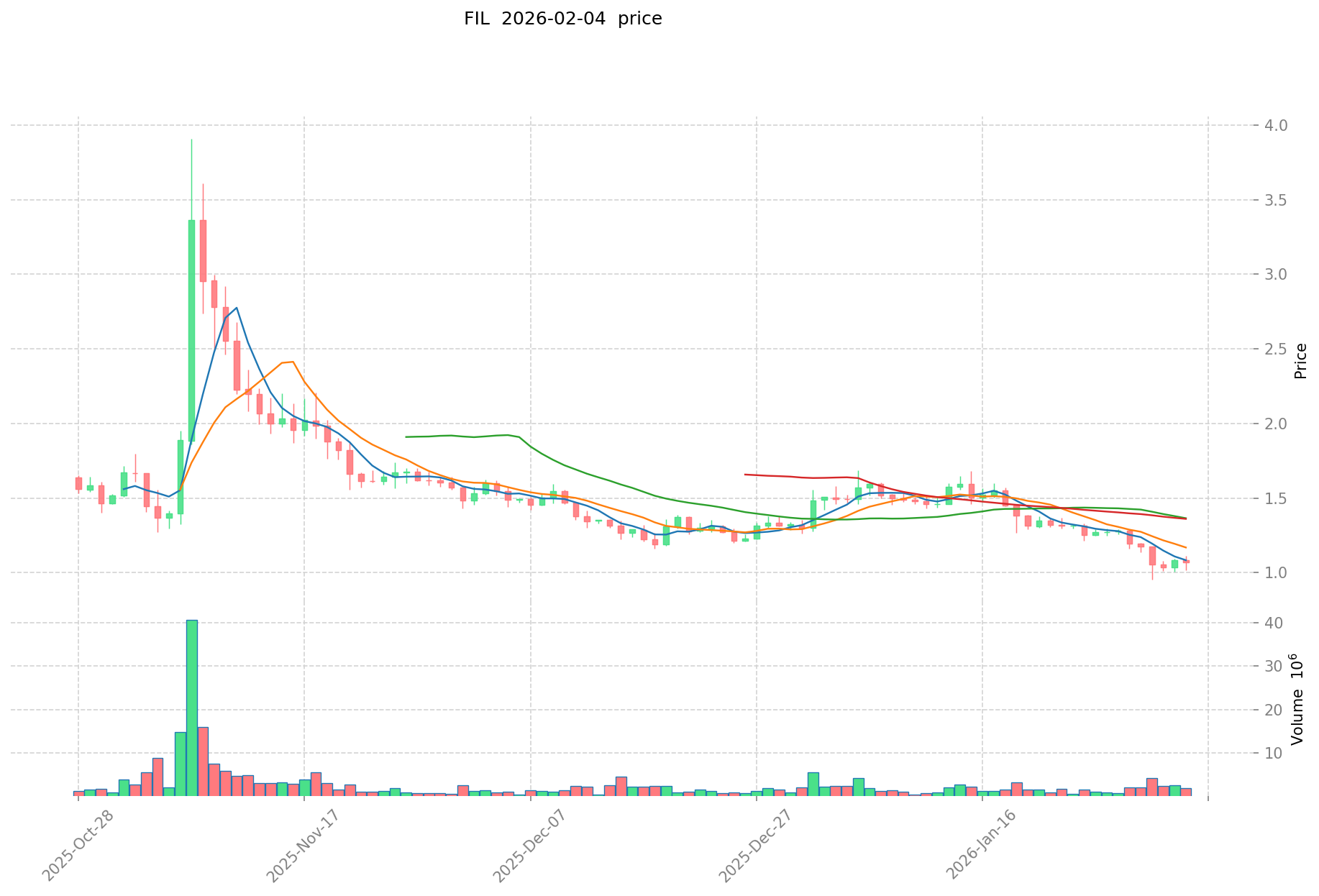
Matchain (MAT) and Filecoin (FIL) Historical Price Trends
- 2021: FIL experienced significant growth during the broader crypto market rally, with its price reaching $236.84 on April 1, 2021.
- 2025: MAT launched with an initial trading phase showing high volatility, with prices ranging from $0.08 to $7.38 in June 2025.
- Comparative Analysis: During recent market cycles, MAT has declined from its peak of $7.38 to $0.08374, representing a substantial correction, while FIL has also experienced notable decline from its all-time high, currently trading around $1.034, reflecting broader market conditions.
Current Market Situation (February 5, 2026)
- MAT Current Price: $0.08374
- FIL Current Price: $1.034
- 24-Hour Trading Volume: MAT $19,757.67 vs FIL $2,150,533.43
- Market Sentiment Index (Fear & Greed Index): 14 (Extreme Fear)
View real-time prices:
- Check MAT current price Market Price
- Check FIL current price Market Price
II. Core Factors Influencing MAT vs FIL Investment Value
Supply Mechanism Comparison (Tokenomics)
- FIL: According to available materials, FIL employs a mechanism influenced by market dynamics, with recent observations noting significant upward movements in the crypto market. The token's value has been supported by factors including NFT and metaverse developments, alongside deflationary elements that may contribute to value appreciation.
- MAT: Specific supply mechanism details for MAT were not available in the reference materials.
- 📌 Historical Pattern: Market observations suggest that supply-side factors, combined with technological adoption trends, have historically contributed to cyclical price movements in the crypto asset space.
Institutional Adoption and Market Application
- Institutional Holdings: Reference materials indicate that FIL has received attention from institutional players, with documented instances of institutional accumulation activities.
- Enterprise Adoption: The materials provided limited specific information regarding enterprise-level adoption patterns for either asset in cross-border payments, settlements, or institutional portfolios.
- Regulatory Landscape: Comprehensive regulatory stance information across different jurisdictions was not extensively covered in the available materials.
Technology Development and Ecosystem Building
- FIL Technology: The reference materials note FIL's association with emerging technological trends including NFT infrastructure and metaverse-related developments, suggesting ongoing ecosystem expansion.
- MAT Technology: Specific technical development details for MAT were not provided in the source materials.
- Ecosystem Comparison: While the materials reference general trends in DeFi, NFT, and payment infrastructure, detailed comparative analysis between MAT and FIL ecosystem implementations was not available.
Macroeconomic Environment and Market Cycles
- Inflation Context Performance: The available materials did not provide sufficient data for a comparative analysis of how MAT and FIL perform specifically under inflationary conditions.
- Monetary Policy Impact: Reference materials suggested general market sensitivity to broader financial conditions, though specific correlations with interest rates or dollar index movements for these particular assets were not documented.
- Geopolitical Factors: While cross-border transaction demand and international developments may influence crypto asset valuations broadly, asset-specific analysis was not available in the provided materials.
III. 2026-2031 Price Forecast: MAT vs FIL
Short-term Forecast (2026)
- MAT: Conservative $0.0619 - $0.0836 | Optimistic $0.0836 - $0.1229
- FIL: Conservative $0.7142 - $1.0350 | Optimistic $1.0350 - $1.1799
Mid-term Forecast (2028-2029)
- MAT may enter a gradual growth phase, with projected price range of $0.0802 - $0.1916
- FIL may enter an expansion phase, with projected price range of $0.7803 - $2.2522
- Key drivers: institutional capital inflows, ETF developments, ecosystem expansion
Long-term Forecast (2030-2031)
- MAT: Baseline scenario $0.1078 - $0.1607 | Optimistic scenario $0.1607 - $0.2368
- FIL: Baseline scenario $1.0939 - $1.9192 | Optimistic scenario $1.9192 - $2.7828
Disclaimer
MAT:
| Year | Predicted High Price | Predicted Average Price | Predicted Low Price | Price Change |
|---|---|---|---|---|
| 2026 | 0.1229067 | 0.08361 | 0.0618714 | 0 |
| 2027 | 0.1290729375 | 0.10325835 | 0.0815740965 | 23 |
| 2028 | 0.14404539825 | 0.11616564375 | 0.0801542941875 | 38 |
| 2029 | 0.19125511587 | 0.130105521 | 0.11579391369 | 55 |
| 2030 | 0.192816382122 | 0.160680318435 | 0.1124762229045 | 91 |
| 2031 | 0.23684278937319 | 0.1767483502785 | 0.107816493669885 | 111 |
FIL:
| Year | Predicted High Price | Predicted Average Price | Predicted Low Price | Price Change |
|---|---|---|---|---|
| 2026 | 1.1799 | 1.035 | 0.71415 | 0 |
| 2027 | 1.4507595 | 1.10745 | 0.8970345 | 7 |
| 2028 | 1.89307503 | 1.27910475 | 0.7802538975 | 23 |
| 2029 | 2.2522476438 | 1.58608989 | 1.3957591032 | 53 |
| 2030 | 2.782794712005 | 1.9191687669 | 1.093926197133 | 85 |
| 2031 | 2.421511191636075 | 2.3509817394525 | 1.26953013930435 | 127 |
IV. Investment Strategy Comparison: MAT vs FIL
Long-term vs Short-term Investment Strategies
-
MAT: May suit investors interested in emerging identity and data sovereignty narratives, with focus on early-stage ecosystem development potential. The asset's current price positioning suggests it remains in an earlier development phase compared to more established alternatives.
-
FIL: May appeal to investors seeking exposure to decentralized storage infrastructure themes, with consideration for its longer operational history since 2020 and established market presence in the storage sector.
Risk Management and Asset Allocation
-
Conservative Investors: Consideration might favor established assets with longer track records and demonstrated institutional interest. A conservative approach could involve limited exposure to newer assets like MAT (10-20%) versus more established alternatives like FIL (20-30%), complemented by diversification across other asset classes.
-
Aggressive Investors: Those with higher risk tolerance might explore greater allocation to emerging projects like MAT (30-40%) alongside established infrastructure plays like FIL (20-30%), while maintaining awareness of elevated volatility profiles.
-
Hedging Instruments: Portfolio construction may incorporate stablecoin allocations for liquidity management, derivatives for volatility mitigation, and cross-asset diversification strategies to manage exposure across different crypto market segments.
V. Potential Risk Comparison
Market Risks
-
MAT: The asset exhibits characteristics associated with early-stage projects, including limited trading volume ($19,757.67 on the reference date) and substantial price volatility, having experienced movement from $7.38 to $0.08374. Market depth considerations and liquidity constraints may present challenges during periods of market stress.
-
FIL: While demonstrating higher trading volume ($2,150,533.43), the asset has experienced notable decline from previous price levels around $236.84 to current levels near $1.034. Market participants should consider the broader market sentiment environment, currently characterized by extreme fear conditions (Fear & Greed Index: 14).
Technical Risks
-
MAT: Specific technical implementation details were not extensively documented in available materials. Early-stage blockchain projects typically face considerations around network scalability, security architecture maturation, and ecosystem stability as user adoption expands.
-
FIL: As a proof-of-work based storage network, considerations include network participation dynamics, storage provider distribution patterns, and ongoing technical development requirements. Infrastructure projects of this nature face ongoing considerations around maintaining decentralization while scaling capacity.
Regulatory Risks
- Both assets operate within evolving regulatory frameworks that vary significantly across jurisdictions. Projects with identity-focused components (such as MAT's positioning around identity and data sovereignty) may face distinct regulatory considerations compared to infrastructure-focused protocols. Storage network protocols may encounter regulatory attention regarding data custody and cross-border data flow requirements. Investors should monitor developments in cryptocurrency regulation across major markets, including evolving frameworks for digital asset classification, tax treatment, and operational requirements.
VI. Conclusion: Which Is the Better Buy?
📌 Investment Value Summary:
-
MAT Considerations: Represents exposure to emerging identity and data sovereignty themes with stated ambitions for large-scale user onboarding. The project's early stage positioning (launched 2025) presents both early-mover potential and heightened execution risks. Current market conditions reflect substantial volatility and limited liquidity depth.
-
FIL Considerations: Offers exposure to decentralized storage infrastructure with longer operational history (since 2020) and documented institutional interest. The asset provides positioning within established storage and Web3 infrastructure narratives, though has experienced notable price correction from previous levels.
✅ Investment Considerations:
-
New Investors: May prioritize understanding fundamental differences between early-stage ecosystem projects versus established infrastructure protocols. Starting with smaller allocation sizes and emphasizing educational resources around both projects' technical foundations and market dynamics could support informed decision-making.
-
Experienced Investors: Might evaluate relative risk-reward profiles within portfolio context, considering factors including historical volatility patterns, liquidity characteristics, ecosystem development trajectories, and correlation with broader market movements. Diversification across different crypto market segments may help manage concentration risks.
-
Institutional Investors: Could assess both assets within framework of infrastructure investment themes, evaluating factors such as protocol maturity, developer activity, institutional adoption indicators, custody solutions availability, and regulatory clarity across operating jurisdictions.
⚠️ Risk Notice: Cryptocurrency markets exhibit extreme volatility characteristics. This content does not constitute investment advice. Market participants should conduct independent research, consider personal risk tolerance, and consult qualified financial advisors before making investment decisions.
VII. FAQ
Q1: What is the primary difference between MAT and FIL in terms of their core use cases?
MAT focuses on identity and data sovereignty with plans to onboard over 500 million users through global IP partnerships via MatchID, while FIL operates as a decentralized storage infrastructure that rewards miners for contributing storage capacity through a proof-of-work mechanism. MAT represents an emerging identity-layer protocol launched in 2025, positioning itself within the digital identity and data ownership narrative. FIL, operational since 2020, has established itself as a Web3 storage solution addressing decentralized file storage needs, functioning as infrastructure for data preservation and retrieval across distributed networks.
Q2: How do the current price levels and market capitalizations of MAT and FIL compare?
As of February 5, 2026, MAT trades at $0.08374 while FIL trades at $1.034, reflecting their different market positioning and development stages. MAT's 24-hour trading volume stands at $19,757.67 compared to FIL's significantly higher volume of $2,150,533.43, indicating substantial differences in market liquidity and participation. Both assets have experienced notable corrections from their respective peaks—MAT declined from $7.38 to current levels, while FIL has decreased from its all-time high of $236.84. These price movements reflect both project-specific developments and broader market sentiment conditions, currently characterized by extreme fear (Fear & Greed Index: 14).
Q3: Which asset presents better long-term growth potential through 2031?
Price projections suggest FIL may demonstrate higher absolute growth potential, with forecasts ranging from $1.09-$2.78 by 2031 compared to MAT's projected range of $0.11-$0.24 over the same period. FIL's longer operational history, established institutional interest, and positioning within growing decentralized storage markets support its growth thesis. MAT's potential lies in capturing value from identity and data sovereignty narratives as these sectors mature. However, both projections remain subject to significant uncertainty given cryptocurrency market volatility, regulatory developments, technological adoption rates, and macroeconomic conditions. Investment decisions should account for individual risk tolerance and portfolio diversification strategies rather than relying solely on price predictions.
Q4: What are the key risk factors investors should consider for MAT versus FIL?
MAT's primary risks include limited trading volume and liquidity depth, elevated volatility associated with early-stage projects, and execution uncertainty around achieving stated user onboarding goals. FIL faces considerations including network participation dynamics, storage provider centralization risks, and competition from alternative decentralized storage solutions. Both assets operate within evolving regulatory frameworks that vary across jurisdictions—MAT may encounter identity-specific regulations while FIL could face data custody requirements. Market risks affect both assets, though MAT's lower liquidity amplifies potential price impact during volatile periods. Technical risks include network scalability challenges, security architecture maturation, and ongoing development requirements to maintain competitive positioning within rapidly evolving crypto markets.
Q5: How should investors approach portfolio allocation between MAT and FIL?
Conservative investors might consider limited exposure to MAT (10-20%) given its early-stage profile, with potentially higher allocation to FIL (20-30%) considering its longer operational history, while maintaining significant diversification across other asset classes. Aggressive investors with higher risk tolerance might explore greater allocation to emerging projects like MAT (30-40%) alongside infrastructure plays like FIL (20-30%), accepting elevated volatility in pursuit of growth potential. Portfolio construction should incorporate risk management tools including stablecoin allocations for liquidity, derivatives for volatility hedging, and cross-asset diversification. Allocation decisions should align with individual investment objectives, time horizons, and risk capacity rather than following standardized templates. Regular portfolio rebalancing and monitoring of project developments, market conditions, and regulatory changes remain essential for effective exposure management.
Q6: What institutional adoption trends exist for MAT and FIL?
Available evidence suggests FIL has received documented institutional attention, with reference to institutional accumulation activities, though specific participation details remain limited in public materials. MAT's institutional adoption profile remains less established given its recent 2025 launch date. Institutional interest in cryptocurrency assets typically correlates with factors including operational maturity, regulatory clarity, custody solution availability, liquidity depth, and integration with existing financial infrastructure. FIL's positioning within decentralized storage infrastructure may appeal to institutions exploring Web3 data solutions, while MAT's identity-focused narrative could attract interest from entities prioritizing digital identity frameworks. However, comprehensive institutional holdings data for either asset was not extensively available in reference materials, and investors should monitor ongoing developments through official project disclosures and institutional investment reports.
Q7: How do current market sentiment conditions affect MAT and FIL investment considerations?
The current Fear & Greed Index reading of 14 (Extreme Fear) reflects significant market pessimism that historically has preceded both extended downturns and eventual recovery periods. Under extreme fear conditions, both MAT and FIL may face selling pressure unrelated to project fundamentals, presenting potential accumulation opportunities for investors with conviction in long-term value propositions. However, such conditions also indicate heightened uncertainty and potential for continued volatility. MAT's lower liquidity profile may amplify downside movements during fearful markets, while FIL's higher trading volume provides relatively better price stability. Market sentiment cycles historically have influenced cryptocurrency valuations substantially, with fear periods sometimes offering favorable entry points for long-term holders, though timing market bottoms presents significant challenges. Investment decisions should balance sentiment considerations with fundamental analysis and personal risk tolerance.
Q8: What technological developments could influence MAT and FIL valuations through 2026-2031?
FIL's future valuation may benefit from growth in decentralized storage demand driven by NFT infrastructure expansion, metaverse data requirements, and increasing adoption of Web3 applications requiring persistent data availability. MAT's potential value drivers include successful implementation of identity sovereignty solutions, achievement of user onboarding targets, and integration with emerging data privacy frameworks. Both assets could benefit from broader cryptocurrency adoption trends, institutional infrastructure development, and favorable regulatory clarity. However, technological risks include emergence of competing protocols, scalability limitations, security vulnerabilities, and changing market preferences. Ecosystem development indicators worth monitoring include developer activity, partnership announcements, protocol upgrades, network usage metrics, and community growth patterns. Investors should evaluate technological progress through objective metrics rather than marketing narratives when assessing long-term investment prospects.
Share
Content
Introduction: Investment Comparison Between MAT and FIL
I. Historical Price Comparison and Current Market Status
II. Core Factors Influencing MAT vs FIL Investment Value
III. 2026-2031 Price Forecast: MAT vs FIL
IV. Investment Strategy Comparison: MAT vs FIL
V. Potential Risk Comparison
VI. Conclusion: Which Is the Better Buy?
VII. FAQ
How to Buy Cryptocurrency


Trending Cryptocurrencies



2025 SUI coin: price, buying guide, and Staking rewards

How to Buy Crypto: A Step-by-Step Guide with Gate.com

HNT Price in 2025: Helium Network Token Value and Market Analysis
What is SwissCheese (SWCH) and How Does It Democratize Investment?

Cardano (ADA) Price Analysis and Outlook for 2025

How to Invest in Metaverse Crypto

Top 5 Tokens to Consider for DeFi Investment
Tax Planning for Bitcoin Investors Who Have Achieved Millionaire Status

FUD and FOMO in Crypto: Key Concepts Explained with Practical Examples

OpenSea NFT Exchange: Reviews, Advantages and Disadvantages

Top 10 Metaverse Platforms: An In-Depth Overview