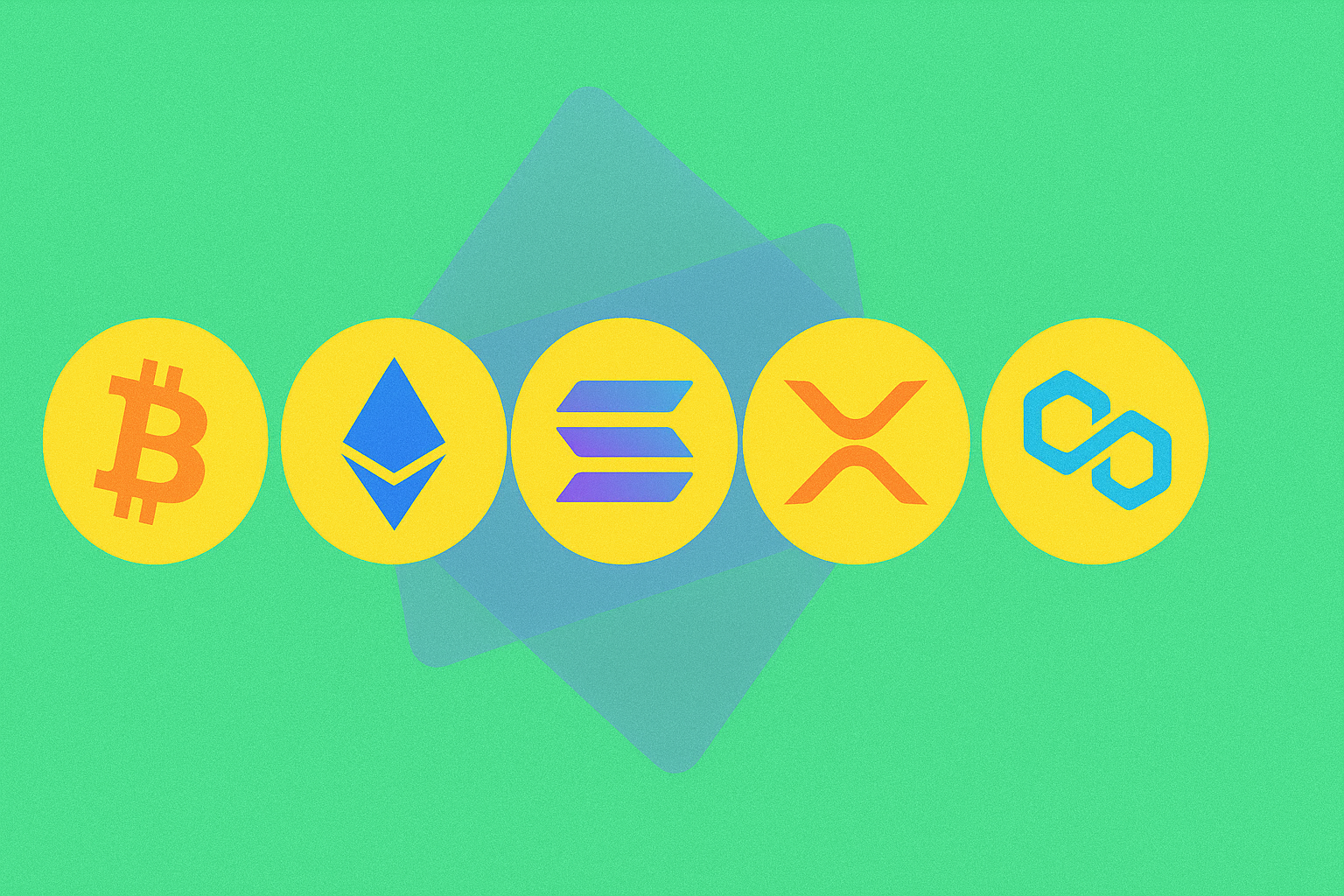
Top Cryptocurrencies to Watch in 2024–2025: Bitcoin, Ethereum, Solana, and Layer-2 Solutions. Expert insights on the best altcoins for investment. Guidance on portfolio diversification on Gate and choosing digital assets positioned for sustained growth.
Top Cryptocurrencies to Watch in 2025: Expert Selections
The number of cryptocurrencies available continues to grow exponentially. With such a vast array of choices, it’s increasingly difficult for the crypto community to identify the best digital assets for investment. Industry experts have analyzed the market and highlighted the projects most likely to achieve substantial growth in the next few years.
Rafik Mamin’s Perspective: Prioritizing Established Assets
Rafik Mamin, CEO of Minestream, considers Ethereum, XRP, Solana, and Bitcoin as the leading candidates for maximum returns. These assets feature robust technology and strong community backing.
Bitcoin is poised to reach $150,000 and could surpass $180,000 under favorable conditions. As the world’s premier cryptocurrency, Bitcoin continues to solidify its status as digital gold and a hedge against inflation. Institutional investors are increasingly incorporating Bitcoin into their portfolios, driving additional demand.
Ethereum is expected to maintain its dominance through ongoing network upgrades. Analysts project its price could rise to $5,700, and with exceptionally positive momentum, up to $5,800. The platform remains the backbone for decentralized applications (dApps), DeFi protocols, and NFT projects. Its transition to Proof-of-Stake has significantly reduced energy consumption and improved scalability.
XRP offers major potential in cross-border payments. A favorable outcome in its legal battle with regulators could see prices reach $4–5. Ripple Labs keeps expanding its financial institution partnerships, making XRP a top contender for international money transfers.
Solana delivers outstanding performance and infrastructure growth. SOL’s price could range from $200–$550, with upside to $700. Its network processes over 65,000 transactions per second with minimal fees, making it a preferred platform for dApp developers.
Oleksii Bykov’s Portfolio: Emphasis on Ethereum Ecosystem
Oleksii Bykov recommends six cryptocurrencies for investment, focusing on Ethereum’s ecosystem and scalability solutions:
-
Ethereum — Retains a leadership position through continual upgrades that enhance scalability and lower fees. It remains the go-to platform for smart contract and dApp development.
-
Optimism — A Layer-2 solution for Ethereum that alleviates network congestion. Its optimistic rollup technology dramatically reduces transaction costs and speeds up processing.
-
StarkNet — An innovative Layer-2 platform built on Ethereum using zk-rollup technology. This ensures high security and transaction privacy while maintaining low fees.
-
Polygon — Resolves Ethereum’s scalability challenges through fast, inexpensive transactions. The network supports a wide range of dApps and actively develops partnerships with major corporations.
-
Bitcoin — Remains digital gold and the most dependable asset in the crypto sector. Its capped supply and decentralized design make it ideal for long-term value preservation.
-
Solana — Draws investor interest with high transaction speeds and low fees. Its ecosystem is expanding rapidly, attracting new projects in DeFi, NFTs, and GameFi.
Illia Makar’s Recommendations: Diversified Portfolios
Illia Makar identifies Ethereum and Cardano as foundational assets for any investment portfolio. He also suggests looking into Polkadot, Chainlink, Solana, Avalanche, Polygon, Cosmos, and Near Protocol.
Cardano stands out for its scientific development methodology and strong security. The platform leverages the Ouroboros consensus mechanism, which ensures energy efficiency and scalability.
Polkadot builds a network of interconnected blockchains (parachains), enabling seamless data and asset transfers between networks. This technology solves blockchain isolation challenges.
Chainlink remains the top decentralized oracle, reliably connecting smart contracts to external data sources. Hundreds of DeFi projects integrate its protocol.
Avalanche offers high throughput and low latency. The platform enables creation of custom blockchains (subnets) with flexible parameters.
Cosmos seeks to build the “Internet of Blockchains” via the Inter-Blockchain Communication (IBC) protocol, allowing networks to interact without intermediaries.
Near Protocol uses sharding technology to maximize scalability. The platform is designed for ease of use for both developers and end-users.
Oleksandr Vays’s Approach: Layer-2 Solutions
Oleksandr Vays advises investors to focus on Layer-2 coins that address major blockchain scalability issues. His top picks are TON, Solana, and Sui.
TON (The Open Network) — Blockchain platform featuring high transaction speeds and integration with leading messaging apps. The project is backed by a strong community and is rapidly growing its app ecosystem.
Sui — An innovative blockchain built with the Move programming language. The platform enables parallel transaction processing, dramatically boosting network efficiency.
Pavlo Butenko’s Guidance: RWA and DePIN
Pavlo Butenko recommends focusing on Ethereum as well as Arbitrum and Optimism tokens as key Layer-2 solutions. He also highlights RWA (Real World Assets) and DePIN (Decentralized Physical Infrastructure Networks) as promising sectors.
Arbitrum — A leading Layer-2 Ethereum solution utilizing optimistic rollup technology. The network supports a wide range of DeFi protocols and maintains low transaction fees.
Lido Finance — The liquid staking leader, allowing users to earn rewards without locking up assets. The protocol supports multiple blockchain networks.
Synthetix — A decentralized platform for creating and trading synthetic assets, allowing exposure to a variety of asset classes without direct ownership.
IOTA — Focused on the Internet of Things (IoT) and machine-to-machine payments. Its Tangle technology enables feeless transactions and high scalability.
Conclusion: Choosing the Right Cryptocurrency Investment
Experts have identified several cryptocurrencies with high growth potential, each offering unique advantages and technological innovations.
Top Tier: Established Leaders
Bitcoin remains the most reliable asset, with projected growth to $150,000–$180,000. As the leading global cryptocurrency, it continues to serve as a store of value and a hedge against traditional financial risks. Institutional adoption is rising, fueling additional demand.
Ethereum retains popularity through ongoing ecosystem upgrades and expansion. The platform is the foundation for DeFi, NFT, and Web3 applications. Transitioning to Proof-of-Stake and leveraging scaling solutions makes the network more efficient and environmentally sustainable.
High Potential: Fast-Growing Platforms
XRP has strong prospects, especially if its legal challenges end positively. Ripple Labs is actively expanding its partner network among banks and financial institutions, positioning XRP as a key solution for cross-border payments.
Solana could reach $700, driven by high performance and robust ecosystem growth. Its network supports thousands of projects, ranging from DeFi to GameFi and NFTs.
Layer-2 Solutions: Scaling Ethereum
Polygon, Optimism, StarkNet — Standout assets with technological advantages in scaling. They address Ethereum’s high fees and low throughput while safeguarding mainnet security.
Arbitrum — A rapidly expanding Layer-2 ecosystem supporting DeFi protocols, offering low fees and high transaction speeds for users and developers.
Technology Leaders: Innovation & Scalability
Polkadot, Chainlink, Avalanche, Cosmos are backed by robust technology and solve critical blockchain industry challenges. These projects drive infrastructure for blockchain interoperability and real-world integration.
Cardano is recognized for its research-driven development and security focus. The platform is expanding functionality, adding support for smart contracts and DeFi.
Near Protocol leverages advanced sharding for scalability. The platform is developer-friendly and offers low barriers to entry.
Alternative Projects: New Opportunities
TON, Sui — Recommended altcoins with unique technology. TON’s integration with messaging apps brings millions of users, while Sui’s innovative architecture enables parallel transaction processing.
Specialized Sectors: RWA & DePIN
Lido Finance, Synthetix, IOTA — Coins in niche segments with significant growth potential. Lido Finance leads in liquid staking, Synthetix creates synthetic assets, and IOTA specializes in IoT and machine-to-machine payments.
When building an investment portfolio, consider diversification, the technological strengths of each project, and your personal risk tolerance. Experts recommend a mix of established assets (Bitcoin, Ethereum) with promising altcoins and Layer-2 solutions for optimal balance between reliability and growth.
FAQ
Which cryptocurrencies have the highest growth potential in 2025?
Bitcoin, Ethereum, BNB, Cardano, Solana, and Polkadot are among the most promising. They lead in market cap, innovation, and adoption. Bitcoin is digital gold, Ethereum is a smart contract platform, Solana excels in fast transactions, and Polkadot offers cross-chain technology.
What is the investment outlook for Bitcoin and Ethereum in 2025?
Bitcoin and Ethereum present strong investment opportunities. Bitcoin remains “digital gold” with growing institutional demand, while Ethereum’s prospects are fueled by DeFi, NFTs, and network upgrades. Analysts expect both assets to grow in 2025, with Ethereum potentially outpacing Bitcoin’s growth rate.
Which new crypto projects should you keep an eye on?
Focus on projects with innovative technology and real-world utility. Mega Dice and Sponge V2 show promise in gaming and DeFi. Key factors include a strong developer community, real use cases, and unique blockchain solutions.
What core knowledge is essential for crypto investing?
Understand blockchain technology and major cryptocurrencies. Track market trends and risks. Stay updated on industry news. Learn about wallets and security. Start with small investments and diversify your portfolio.
What are the main risks facing the crypto market in 2025?
Major risks in 2025 include smart contract vulnerabilities and AI-driven attacks. Centralized exchanges and new cyber threats are also critical concerns. About 80% of ransomware uses AI. Regulatory changes and security will remain top priorities.
How do you choose a crypto investment strategy that fits you?
Evaluate your risk tolerance and research projects with solid technology. Long-term investors should prioritize project resilience and strong development teams.
What opportunities do Layer-2 solutions and other innovative coins offer in 2025?
Layer-2 solutions like Optimism and Arbitrum offer substantial growth through higher throughput and lower fees. Quantum-resistant networks will also gain traction. These technologies provide attractive investment opportunities.
What are the advantages and disadvantages of cryptocurrency investments compared to traditional financial assets?
Cryptocurrency pros: high return potential, decentralization, transaction transparency, strong financial inclusion. Cons: high price volatility, security risks, limited regulation. Traditional investments: greater stability, regulatory protection, comprehensive historical records. Downsides: lower returns, higher barriers to entry, less transparency.
* The information is not intended to be and does not constitute financial advice or any other recommendation of any sort offered or endorsed by Gate.