This comprehensive analysis compares OPTIMUS and ARB, two distinct digital assets within the Ethereum ecosystem. ARB operates as an established Layer 2 scaling solution with $6 billion in Total Value Locked, while OPTIMUS represents an emerging AI-robotics venture positioned in the crypto sector. The article examines critical investment factors including historical price performance, tokenomics structures, institutional adoption, technical ecosystems, and macroeconomic influences. Conservative investors may favor ARB's proven infrastructure and $4M+ daily trading volume on Gate, while aggressive investors might consider OPTIMUS's asymmetric return potential despite higher volatility and liquidity constraints. Long-term price predictions through 2031 suggest differentiated growth trajectories based on technological adoption and market cycles, with detailed risk management frameworks provided for portfolio allocation decisions.
Introduction: Investment Comparison Between OPTIMUS and ARB
In the cryptocurrency market, the comparison between OPTIMUS vs ARB has become a topic that investors cannot overlook. These two assets differ significantly in market capitalization ranking, application scenarios, and price performance, representing distinct positioning within the crypto asset landscape.
OPTIMUS: Launched as a decentralized venture fund for AI projects, paying tribute to Elon Musk and Tesla's robot initiative, OPTIMUS has carved out a niche in the AI-focused crypto sector.
Arbitrum (ARB): Since its launch in 2023, ARB has been recognized as a key Ethereum scaling solution, utilizing Optimistic Rollup technology to provide faster and cheaper transactions while maintaining Ethereum-level security.
This article will comprehensively analyze the investment value comparison between OPTIMUS vs ARB, focusing on historical price trends, supply mechanisms, institutional adoption, technical ecosystems, and future projections, attempting to answer the question that concerns investors most:
"Which is the better buy right now?"
I. Historical Price Comparison and Current Market Status
OPTIMUS and ARB Historical Price Trends
- 2024: OPTIMUS reached its historical high of $0.617148 on March 10, 2024, representing a significant price peak during this period.
- 2024: ARB reached its historical high of $2.39 on January 12, 2024, reflecting strong market interest in the Ethereum Layer 2 ecosystem during that timeframe.
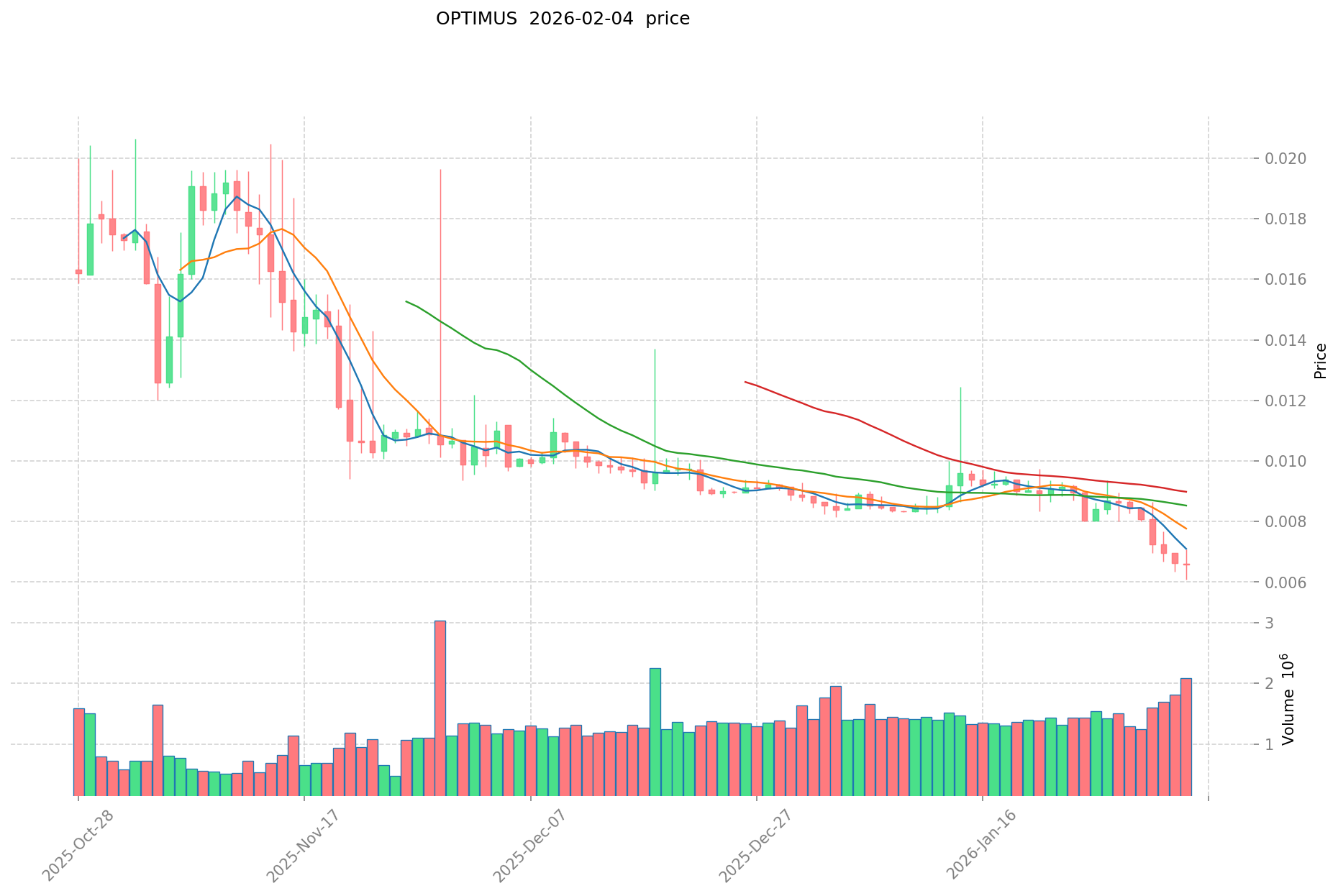
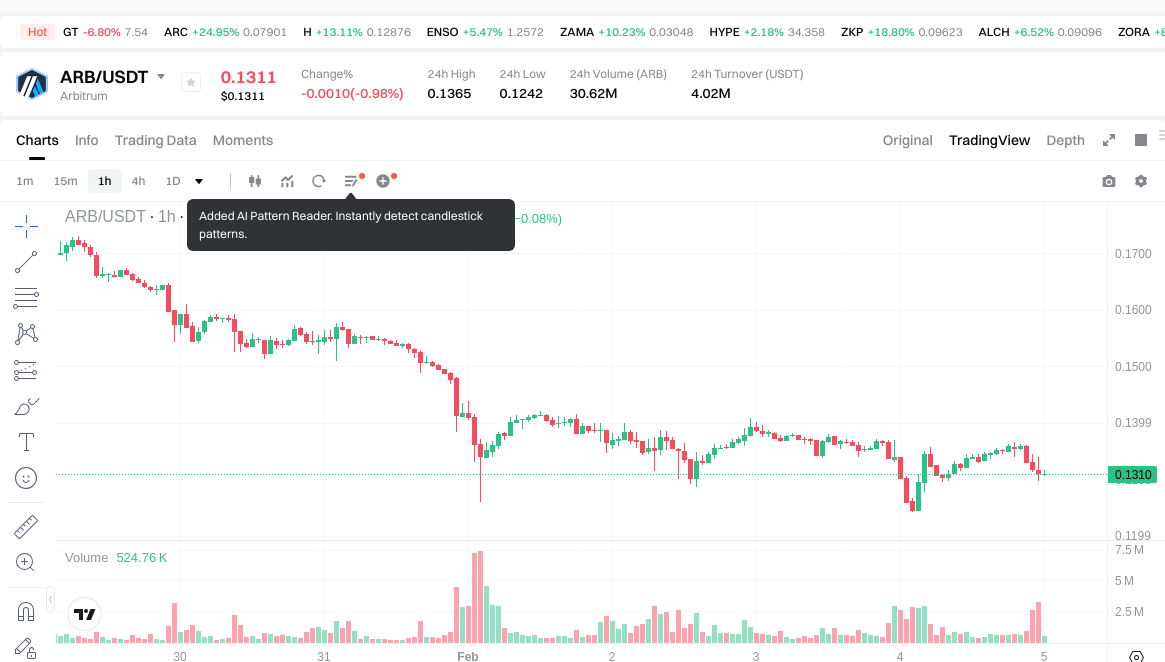
- Comparative analysis: During the subsequent market cycle, OPTIMUS declined from its high of $0.617148 to a low of $0.00605614 recorded on February 4, 2026, while ARB declined from $2.39 to $0.124507 during a similar timeframe.
Current Market Situation (February 5, 2026)
- OPTIMUS current price: $0.006391
- ARB current price: $0.1304
- 24-hour trading volume: OPTIMUS $12,745.12 vs ARB $4,032,321.07
- Market sentiment index (Fear & Greed Index): 14 (Extreme Fear)
Click to view real-time prices:
II. Core Factors Influencing OPTIMUS vs ARB Investment Value
Tokenomics Comparison
-
ARB: Operates under a decentralized sequencer model that may adopt Proof of Stake (PoS) mechanisms, requiring staking of native ARB tokens as collateral. The Layer 2 (L2) profit model involves purchasing storage space from trusted Data Availability layers and generating revenue through transaction fees.
-
OPTIMUS: Positioned in the humanoid robotics sector rather than cryptocurrency tokenomics. Tesla's Optimus represents a physical-world AI application with valuation derived from hardware sales, software subscriptions, and ecosystem services rather than token supply mechanisms.
-
📌 Historical Pattern: For ARB, the P/E ratio (circulating market cap/annualized L2 profit) has shown improvement, with OP's ratio falling below 80 compared to ARB's 113. Network effects and adoption cycles significantly influence valuation trajectories in L2 solutions.
Institutional Adoption & Market Application
-
Institutional Holdings: ARB benefits from Arbitrum's strong L2 infrastructure with partnerships across DeFi protocols. The monthly active addresses ratio of OP/ARB increased from 32.1% to 73.6%, indicating growing adoption.
-
Enterprise Adoption: OP Stack gained significant traction with Coinbase's Base L2, Binance's opBNB, and integration with Worldcoin. ARB maintains dominance in L2 transaction volume but faces competition in the Rollup-as-a-Service (RaaS) market from platforms like ALTLayer.
-
Regulatory Environment: Both projects operate within evolving regulatory frameworks for blockchain scaling solutions, with ongoing discussions around licensing requirements for L2 stack deployment.
Technology Development & Ecosystem Building
-
ARB Technical Upgrades: Arbitrum launched Orbiter L3 stack and opened licensing for Arbitrum stack deployment. The platform maintains approximately $6 billion in Total Value Locked (TVL), though competition intensifies from ZK-rollup solutions like ZKsync, Linea, and Scroll.
-
OPTIMUS Technical Development: Features advanced multi-modal AI integration with xAI's Grok-3, camera systems with photon counting capabilities, and actuator systems. Tesla targets deployment of 5,000 robots in its factories by 2026, with plans to expand production capacity significantly.
-
Ecosystem Comparison: ARB leads in DeFi integration with strong presence across smart contract platforms. OPTIMUS focuses on industrial automation, logistics, healthcare, and manufacturing applications. Morgan Stanley projects the humanoid robotics market could reach approximately $5 trillion by 2050, with 92% deployed in industrial and commercial applications.
Macroeconomic Factors & Market Cycles
-
Performance Under Economic Conditions: L2 solutions like ARB benefit from reduced gas costs and increased transaction efficiency during network congestion. Cost reductions following upgrades like EIP-4844 could decrease L1 costs by approximately 90%, significantly improving profit margins.
-
Monetary Policy Impact: Interest rate environments affect venture capital funding for both blockchain infrastructure and robotics development. OPTIMUS benefits from Tesla's manufacturing expertise and xAI's computing infrastructure expansion from 100,000 H100 GPUs to planned 1 million units.
-
Geopolitical Factors: Cross-border payment demands favor L2 scaling solutions. Labor shortages in developed markets create opportunities for humanoid robotics deployment. The global labor market represents approximately $30 trillion annually, with robotics potentially addressing workforce gaps in manufacturing, logistics, and healthcare sectors.
III. 2026-2031 Price Prediction: OPTIMUS vs ARB
Short-term Prediction (2026)
- OPTIMUS: Conservative $0.003798 - $0.00633 | Optimistic $0.00633 - $0.0085455
- ARB: Conservative $0.100947 - $0.1311 | Optimistic $0.1311 - $0.184851
Medium-term Prediction (2028-2029)
- OPTIMUS may enter a gradual growth phase, with estimated prices ranging from $0.0049803174 to $0.0118158030315
- ARB may enter an expansion phase, with estimated prices ranging from $0.1079288616 to $0.278987260608
- Key drivers: institutional capital inflows, ETF developments, ecosystem expansion
Long-term Prediction (2030-2031)
- OPTIMUS: Baseline scenario $0.007341451293802 - $0.01095738999075 | Optimistic scenario $0.012820146289177 - $0.018973816507982
- ARB: Baseline scenario $0.166778584391462 - $0.236364206904 | Optimistic scenario $0.26472791173248 - $0.3203207731963
View detailed price predictions for OPTIMUS and ARB
Disclaimer
OPTIMUS:
| Year |
Predicted High Price |
Predicted Average Price |
Predicted Low Price |
Price Change |
| 2026 |
0.0085455 |
0.00633 |
0.003798 |
0 |
| 2027 |
0.01100787 |
0.00743775 |
0.0057270675 |
16 |
| 2028 |
0.0109751439 |
0.00922281 |
0.0049803174 |
44 |
| 2029 |
0.0118158030315 |
0.01009897695 |
0.0095940281025 |
58 |
| 2030 |
0.014682902587605 |
0.01095738999075 |
0.007341451293802 |
71 |
| 2031 |
0.018973816507982 |
0.012820146289177 |
0.007435684847722 |
100 |
ARB:
| Year |
Predicted High Price |
Predicted Average Price |
Predicted Low Price |
Price Change |
| 2026 |
0.184851 |
0.1311 |
0.100947 |
0 |
| 2027 |
0.19588962 |
0.1579755 |
0.118481625 |
21 |
| 2028 |
0.2105497464 |
0.17693256 |
0.1079288616 |
35 |
| 2029 |
0.278987260608 |
0.1937411532 |
0.168554803284 |
48 |
| 2030 |
0.29309161656096 |
0.236364206904 |
0.19145500759224 |
81 |
| 2031 |
0.3203207731963 |
0.26472791173248 |
0.166778584391462 |
103 |
IV. Investment Strategy Comparison: OPTIMUS vs ARB
Long-term vs Short-term Investment Strategies
-
OPTIMUS: May appeal to investors with higher risk tolerance seeking exposure to emerging AI and robotics narratives within the crypto sector. The asset exhibits characteristics of early-stage venture capital positioning with potential correlation to developments in humanoid robotics and AI infrastructure.
-
ARB: May suit investors seeking exposure to established Layer 2 scaling infrastructure with demonstrated network effects and ecosystem adoption. The asset benefits from institutional integration across DeFi protocols and ongoing technical developments in the Ethereum scaling landscape.
Risk Management and Asset Allocation
-
Conservative Investors: OPTIMUS 5-10% allocation vs ARB 15-25% allocation, complemented by established crypto assets and stablecoins to manage volatility exposure.
-
Aggressive Investors: OPTIMUS 15-25% allocation vs ARB 25-35% allocation, with higher tolerance for drawdowns and focus on asymmetric return potential during market expansion phases.
-
Hedging Tools: Stablecoin reserves for market downturns, options strategies for downside protection, cross-asset portfolio diversification including correlation analysis between Layer 2 infrastructure tokens and AI-focused assets.
V. Potential Risk Comparison
Market Risks
-
OPTIMUS: Higher volatility profile with limited trading volume ($12,745.12 as of February 5, 2026) may result in liquidity constraints during market stress. Price movements may exhibit significant sensitivity to broader AI and robotics sector sentiment shifts.
-
ARB: Subject to competition from alternative Layer 2 solutions including ZK-rollup platforms (ZKsync, Linea, Scroll) and other Optimistic Rollup implementations. Market share erosion risks exist as the L2 landscape evolves with technological improvements and new entrant platforms.
Technical Risks
-
OPTIMUS: Early-stage project characteristics may involve smart contract vulnerabilities, governance mechanism uncertainties, and dependency on external AI infrastructure developments. Limited operational history creates uncertainty regarding long-term technical sustainability.
-
ARB: Scalability challenges during network congestion periods, potential sequencer centralization concerns, and dependencies on Ethereum mainnet security assumptions. Technical upgrades like EIP-4844 implementations may introduce unforeseen complications affecting network operations.
Regulatory Risks
- Evolving regulatory frameworks for blockchain scaling solutions may impact licensing requirements for L2 stack deployment, affecting ARB's operational model. AI-focused crypto projects like OPTIMUS may face scrutiny under securities regulations regarding tokenomics structures and investment positioning. Cross-border regulatory divergence creates compliance complexities for both assets across different jurisdictions.
VI. Conclusion: Which Is the Better Buy?
📌 Investment Value Summary:
-
OPTIMUS Characteristics: Positioning within AI and robotics narrative sectors, venture capital-style risk/reward profile, early-stage ecosystem development phase with potential correlation to technological adoption trends in automation and artificial intelligence applications.
-
ARB Characteristics: Established Layer 2 infrastructure with demonstrated network effects, significant Total Value Locked (approximately $6 billion), institutional adoption across DeFi protocols, and ongoing technical ecosystem expansion through Orbiter L3 stack and licensing models.
✅ Investment Considerations:
-
Novice Investors: May consider prioritizing established infrastructure assets with proven adoption metrics and higher liquidity profiles. Gradual portfolio construction with stablecoin reserves for risk management may be appropriate.
-
Experienced Investors: Portfolio diversification across different crypto sectors (Layer 2 infrastructure, AI-focused assets) with position sizing calibrated to risk tolerance. Monitoring technical developments, adoption metrics, and macroeconomic conditions for tactical adjustments.
-
Institutional Investors: Due diligence on custody solutions, regulatory compliance frameworks, and correlation analysis within broader digital asset portfolios. Consideration of liquidity requirements and position sizing relative to market depth.
⚠️ Risk Disclosure: Cryptocurrency markets demonstrate high volatility characteristics. This analysis does not constitute investment advice. Market conditions, technological developments, and regulatory environments may change materially. Investors should conduct independent research and consider their financial circumstances before making investment decisions.
VII. FAQ
Q1: What are the main differences between OPTIMUS and ARB in terms of market positioning?
OPTIMUS is positioned as a decentralized venture fund for AI projects within the crypto sector, while ARB serves as an established Ethereum Layer 2 scaling solution. OPTIMUS focuses on emerging AI and robotics narratives with venture capital-style characteristics, whereas ARB provides proven blockchain infrastructure with approximately $6 billion in Total Value Locked and extensive DeFi protocol integration. The fundamental distinction lies in their operational focus: OPTIMUS targets speculative exposure to AI-related developments, while ARB delivers practical scaling solutions for Ethereum's transaction throughput limitations.
Q2: How do the liquidity profiles of OPTIMUS and ARB compare for investors?
ARB demonstrates significantly higher liquidity with 24-hour trading volume of $4,032,321.07 compared to OPTIMUS's $12,745.12 as of February 5, 2026. This substantial difference impacts execution risk, slippage potential, and exit strategy feasibility. ARB's higher liquidity profile makes it more suitable for larger position sizes and institutional allocation, while OPTIMUS's limited trading volume may create challenges during market stress periods. Investors should consider liquidity constraints when determining position sizing and portfolio construction strategies.
Q3: What are the key technical risks associated with investing in OPTIMUS versus ARB?
OPTIMUS faces early-stage project risks including potential smart contract vulnerabilities, governance mechanism uncertainties, and limited operational history. Its dependencies on external AI infrastructure developments create additional uncertainty vectors. ARB encounters different technical challenges: scalability constraints during network congestion, potential sequencer centralization concerns, and dependencies on Ethereum mainnet security assumptions. Both assets face implementation risks from ongoing technical upgrades, though ARB's established operational track record provides more historical performance data for risk assessment.
Q4: How should investors approach portfolio allocation between OPTIMUS and ARB based on risk tolerance?
Conservative investors may consider allocating 5-10% to OPTIMUS and 15-25% to ARB, complemented by established crypto assets and stablecoins for volatility management. Aggressive investors with higher risk tolerance might allocate 15-25% to OPTIMUS and 25-35% to ARB, accepting greater drawdown potential in exchange for asymmetric return opportunities. Portfolio construction should incorporate correlation analysis, as both assets may demonstrate different sensitivities to market cycles: OPTIMUS correlating with AI sector sentiment shifts, while ARB tracks Ethereum ecosystem developments and Layer 2 adoption trends.
Q5: What competitive threats could impact ARB's long-term investment value?
ARB faces intensifying competition from alternative Layer 2 solutions including ZK-rollup platforms (ZKsync, Linea, Scroll) and other Optimistic Rollup implementations. Market share erosion risks exist as technological improvements enable faster transaction finality and reduced costs across competing platforms. The Rollup-as-a-Service (RaaS) market introduction from platforms like ALTLayer creates additional competitive pressure. Technical upgrades such as EIP-4844 reducing Layer 1 costs by approximately 90% may compress profit margins across Layer 2 solutions. Investors should monitor adoption metrics, transaction volume trends, and technological differentiation factors when assessing ARB's competitive positioning.
Q6: How do macroeconomic conditions differently affect OPTIMUS and ARB investment performance?
ARB benefits from network congestion periods that increase demand for Layer 2 scaling solutions, though rising transaction efficiency across competitors may reduce relative advantages. Interest rate environments affect venture capital funding flows that support both blockchain infrastructure development and AI-focused projects. OPTIMUS demonstrates correlation with broader AI sector sentiment and technology adoption trends in automation markets. Geopolitical factors favoring cross-border payment demands support Layer 2 solutions like ARB, while labor market conditions in developed economies create demand drivers for robotics applications that may influence OPTIMUS narrative positioning. Investors should consider these asymmetric macroeconomic sensitivities when constructing diversified portfolios.
Q7: What regulatory considerations should investors evaluate for OPTIMUS versus ARB?
ARB faces evolving regulatory frameworks governing blockchain scaling solutions, including potential licensing requirements for Layer 2 stack deployment that could affect operational models. The decentralized sequencer model and revenue generation through transaction fees may attract scrutiny regarding financial services regulations. OPTIMUS, as an AI-focused crypto project, confronts potential securities regulation challenges regarding tokenomics structures and investment positioning claims. Cross-border regulatory divergence creates compliance complexities for both assets, with different jurisdictions applying varied frameworks to Layer 2 infrastructure versus AI-related digital assets. Investors should monitor regulatory developments in key markets and assess potential impacts on project operations, token utility, and market access.
Q8: Based on 2026-2031 price predictions, which asset offers better risk-adjusted return potential?
Price predictions suggest ARB may offer more substantial absolute returns with 2031 optimistic scenarios reaching $0.32 from current levels of $0.1304, representing potential 145% appreciation. OPTIMUS predictions indicate 2031 optimistic scenarios of $0.019 from $0.006391, representing approximately 197% potential appreciation from significantly lower base prices. However, risk-adjusted return assessments must incorporate volatility profiles, liquidity constraints, and probability distributions around predicted outcomes. ARB's established infrastructure and institutional adoption suggest lower execution risk for predicted returns, while OPTIMUS's venture capital characteristics imply higher uncertainty but potentially asymmetric upside. Investors should calibrate return expectations against individual risk tolerance, investment timeframes, and portfolio diversification objectives rather than focusing solely on percentage appreciation projections.
* The information is not intended to be and does not constitute financial advice or any other recommendation of any sort offered or endorsed by Gate.