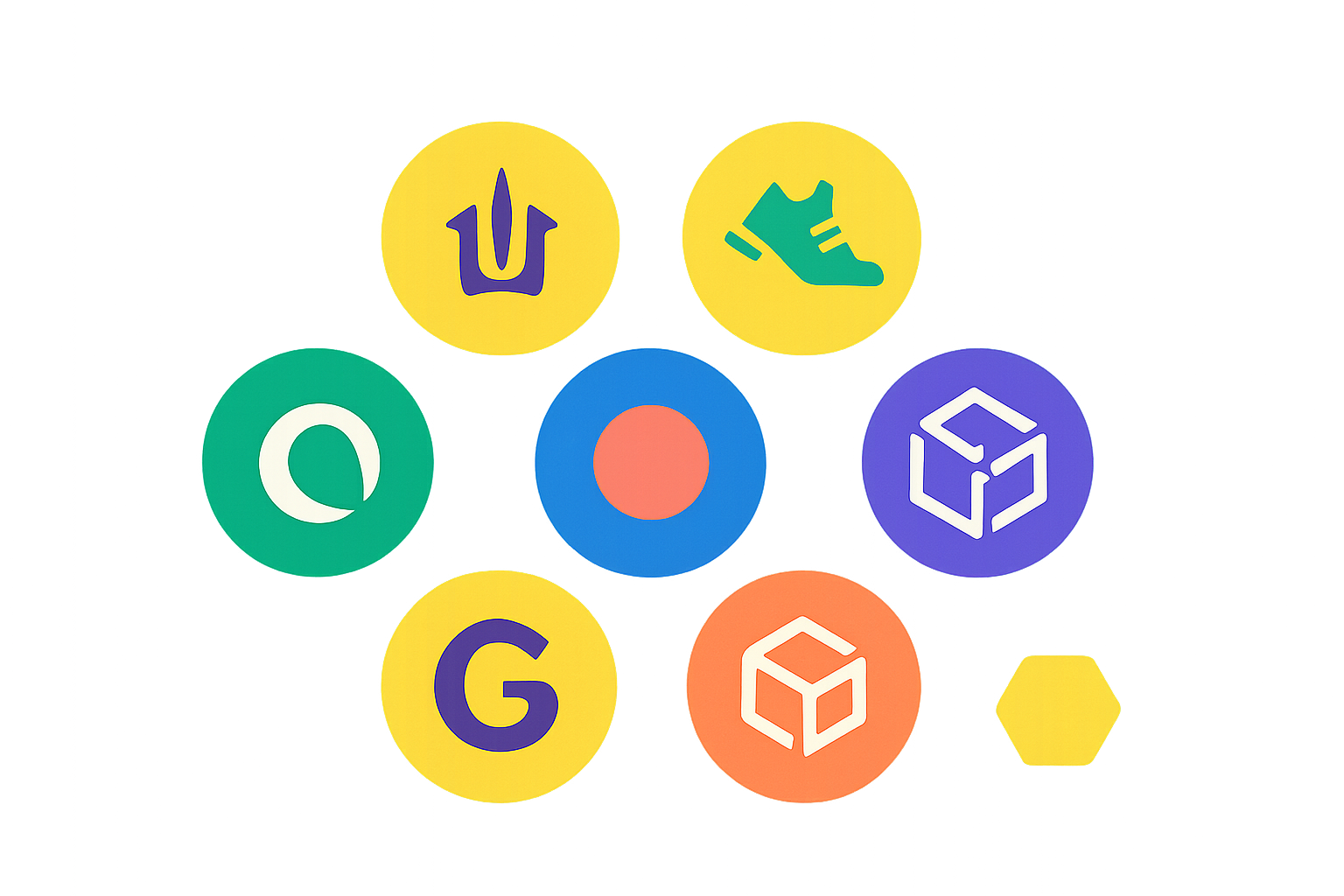
The ultimate beginner’s guide to blockchain gaming. Discover comprehensive insights into seven NFT game tokens—ILV, AXS, GMT, and more. Learn proven strategies for earning with crypto games, step-by-step instructions to get started, and expert picks for the top games of 2024. Industry professionals reveal key tactics for maximizing earnings with Play to Earn.
Blockchain Games
Investment in blockchain games (NFT games) has surged in recent years, reaching record levels over the past several years. Even though more than three-quarters of blockchain games released in the past five years have become inactive, the industry is looking forward to a new growth phase.
The NFT gaming sector bridges the worlds of video games and crypto assets, creating an innovative space. This article offers a detailed look at key NFT and blockchain game tokens—their features, investment value, and technical background. With blockchain technology, players now have true ownership of in-game assets and can freely trade them. This new economic model is reshaping the traditional gaming industry.
What Are NFT Game Tokens? | How They Differ from Game Coins
Gaming coins (tokens) are cryptocurrencies used within blockchain (NFT) games. In-game tokens allow players to purchase items, characters, and weapons, and players can earn crypto assets by achieving objectives. These games also use non-fungible tokens (NFTs), giving each item unique value and ownership.
While NFT and blockchain game tokens have only recently gained traction, many are extensions of concepts already used in the traditional gaming industry. For example, the NFT-powered battle royale game “Off The Grid (OTG)” reached the top of the free games category on Epic Games Store—a sign of success in the mainstream market.
Recent surveys show blockchain games are a major driver in the Web3 ecosystem, accounting for about 30% of unique active wallets. Leading gaming companies and investors are increasingly interested in the gaming currency ecosystem, and investment in this field continues to grow. Blockchain technology lets players turn their time and effort into real economic value—now a core part of the new gaming experience.
Top 7 NFT and Blockchain Game Tokens
Blockchain gaming coins have unique traits that set them apart from other cryptocurrencies. Here are seven of the most notable tokens, with a breakdown of their technology, gameplay, and investment value. Each supports its own ecosystem and offers players diverse earning opportunities.
1. Illuvium (ILV)
Illuvium is an open-world RPG adventure Play-to-Earn (P2E) game available on the Epic Games Store, which boasts over 180 million users. The game centers on exploring an alien planet and collecting Illuvials—allowing players to freely explore in an open-world format.
Illuvials become part of the player’s collection and are used in battles against other adventurers. In auto-battler mode, players deploy their Illuvials strategically. The heart of Illuvium’s system is collecting and developing Illuvials as NFTs, each with a class and affinity. Combining Illuvials with matching classes or affinities creates synergy, enabling nuanced strategy. Upon reaching certain levels, players can synthesize classes or affinities to further enhance their Illuvials.
Players earn the ILV token through gameplay, which serves as both in-game currency and governance token. ILV is used for council member elections—five members make up the council, and ILV holders vote to shape the project’s direction. Professional long-term forecasts expect steady growth over the coming years, making ILV a noteworthy investment for long-term holders.
Advantages
- Developed as a AAA blockchain game, Illuvium delivers high-quality graphics and gameplay, rivaling traditional console games and appealing to a broad gamer audience.
- The variety of Illuvial types, classes, and affinities creates deep strategy and collection value, supporting long-term player engagement.
- Illuvium employs zk-Rollups for scalable, secure off-chain data processing, enabling fast transactions and significantly reducing gas fees.
Disadvantages
- High-quality graphics and a vast open world require a powerful PC, which could limit the user base and create barriers for new entrants.
- The rarity and demand for certain Illuvials and items can drive prices up, making entry difficult for new players. Market liquidity and price swings require caution.
- Development delays have pushed Illuvium behind its original schedule, which could frustrate users. It’s important to monitor development updates regularly.
2. Axie Infinity (AXS)
Axie Infinity is a blockchain-based trading and battle game where players collect and trade Axies—each a unique ERC-721 NFT with true ownership. AXS holders earn rewards through staking, gameplay, and governance. Axies can be customized with over 500 body parts, enabling nearly limitless combinations.
As an early Play-to-Earn (P2E) platform, Axie Infinity reached a large market cap. Its popularity soared in emerging markets, where many players use the game as a source of income. In places like the Philippines and Vietnam, gamers have earned living expenses through Axies, making the game a prime example of digital economic activity.
The game has a global player base, and its AXS token continues to see strong market attention. Axie Infinity has, at times, generated more fees in short periods than Bitcoin or Ethereum, showing the scale of its economy. Cumulative sales have surpassed several billion dollars, making it a widely recognized blockchain gaming success. Experts forecast stepwise growth over the coming years and see AXS as a viable long-term investment.
Advantages
- A highly active global community supports the game’s ongoing growth, with frequent community-driven events and tournaments.
- Developers are committed to continuous updates, regularly adding new content and features to keep players engaged.
- As a Play-to-Earn pioneer, Axie Infinity has produced many success stories, demonstrating what’s possible in blockchain gaming.
Disadvantages
- Popularity has cooled from its early peak, making it harder to attract new players as competition intensifies and the user base spreads across projects.
- Security remains a concern: major hacks in the past led to sizable asset losses, so ongoing improvements are essential.
- The high initial investment to acquire Axies is a barrier for newcomers, and price volatility introduces investment risk.
3. STEPN GO (GMT)
STEPN GO is an innovative Move-to-Earn app from Find Satoshi Lab, creators of “STEPN.” The platform’s GMT token uses the Move-to-Earn (M2E) model, letting users convert daily activity into tangible value. By purchasing NFT sneakers, users track their steps—walking, running, or jogging—to earn GMT after meeting step goals.
STEPN GO’s revenue comes from NFT shoe sales, NFT trading royalties, and fees for energy refreshes and level-ups. Earnings are tracked by GPS in five-minute energy units, which gradually recharge after use, incentivizing regular exercise.
According to the company, the previous version of STEPN generated tens of millions in revenue from NFT marketplace transactions and royalties. STEPN GO remains in development, and future updates may expand its features. Studies show financial rewards can promote sustained fitness activity, making STEPN GO’s approach a promising blend of health and economic incentive.
Advantages
- The straightforward model—rewarding exercise with crypto—makes it easy for anyone to join, even without crypto knowledge. Daily activity becomes a source of income.
- GMT is listed on leading exchanges, ensuring liquidity and ease of cashing out rewards.
- Its health-meets-monetization approach appeals to a broad user base.
Disadvantages
- The Green Satoshi Token (GST) used for rewards has unlimited supply, so scarcity is lacking and the token can lose value—a structural challenge.
- There are complaints about GPS issues and app complexity on Google Play, highlighting the need for a better user experience.
- The high initial cost of purchasing NFT sneakers makes it harder for new users to join.
4. Immutable (IMX)
Immutable is a comprehensive platform for building Web3 games on Ethereum, focusing on NFT issuance and GameFi. Its flagship, Immutable X, uses StarkWare’s zk-rollup to enable gas-free NFT minting and fast, secure transactions. Tens of millions of NFTs have been minted and millions traded without gas on Immutable X. Compared to legacy Proof-of-Work solutions, Immutable X greatly reduces energy use, supporting sustainability.
The team, led by Forbes 30 Under 30 honorees James and Robbie Ferguson, developed zk-rollup with StarkWare and helped shape Ethereum’s scaling roadmap. Major crypto investment managers have listed IMX among possible future investment products.
IMX is used for fees, staking, and governance, boosting liquidity across the Immutable ecosystem. Supported games include “Gods Unchained,” “Guild of Guardians,” and “Illuvium.” Immutable accelerates Web3 game development and deployment. While IMX’s all-time high is well above current prices, this may present an opportunity for long-term investors.
Advantages
- Immutable X enables gas-free NFT trading and minting, so even small transactions are economically feasible—spurring NFT market growth.
- It handles over 9,000 transactions per second, so large games run smoothly and many players can participate simultaneously.
- With APIs and SDKs, developers with limited coding experience can build NFT games and applications, lowering barriers for new projects.
Disadvantages
- Immutable X doesn’t support smart contracts, so advanced features may require other platforms for complex game logic.
- The NFT market is highly competitive and volatile, so investors face greater risk, especially in immature markets.
- Immutable X depends on Ethereum for security, so network issues on Ethereum can have an impact. Ongoing monitoring is necessary.
5. Notcoin (NOT)
Notcoin (NOT) is a GameFi project on The Open Network (TON) blockchain. This Play-to-Earn game lets users earn coins by tapping their Telegram screen, and it attracted tens of millions of users rapidly.
Tapping generates Notcoin, but the energy system limits taps; boosters can improve efficiency. Users compete on leaderboards and squads, and inviting friends brings extra rewards—building a strong community.
Notcoin gained significant attention after its launch, with rapid price gains and a market cap over $1 billion. Plans include enhancing the reward model and adding staking, which could drive further growth. Running on Telegram makes it easy to attract new users and could accelerate blockchain game adoption.
Advantages
- Simple, addictive gameplay led to rapid user growth. Anyone can join because there are no complicated rules.
- Integration with Telegram and TON enables fast, secure transactions. No additional app installation is required.
- With planned reward and feature expansions, long-term growth is expected. Staking will create new income opportunities for token holders.
Disadvantages
- Repetitive gameplay can reduce long-term retention. Once the novelty fades, user interest may decline.
- The energy system limits play and can require frequent spending, restricting earning potential for non-paying users.
- Crypto market volatility creates the risk of large price swings. Short-term price fluctuations are a key risk.
6. The Sandbox (SAND)
The Sandbox is a Play-to-Earn metaverse platform with the SAND utility token. Its metaverse is made up of LAND units (digital real estate), and players use NFTs and SAND to create, own, and sell games. The Sandbox Game Maker lets users easily import user-generated assets as NFTs.
The Sandbox offers true ownership, asset scarcity, interoperability, and advanced monetization thanks to blockchain. SAND is essential for governance and the economy—users purchase, rent, or develop LAND, stake SAND for passive income, and earn rewards like gems or catalysts for asset enhancement.
The Sandbox has partnered with major companies like Atari and Shibuya 109 to build exclusive virtual theme parks. With only 166,464 LAND plots, scarcity has pushed prices into the tens of thousands of dollars. SAND is used for LAND and digital asset purchases, with 5% of transactions funding staking pools and a foundation for content creation.
Experts forecast significant price gains for SAND over the next several years. As the metaverse market expands, The Sandbox’s value is expected to rise further.
Advantages
- SAND holders can influence platform policy and metaverse direction through decentralized governance, enabling community-driven development.
- Multiple Play-to-Earn features offer income opportunities for both creators and players—developers monetize their games, and players earn rewards for playing.
- Partnerships with leading brands raise visibility and solidify The Sandbox’s metaverse position.
Disadvantages
- Full metaverse implementation may take a long time from beta to release; delays can disappoint investors.
- Many tokens were sold in private sales, so some groups may exert disproportionate influence on DAO policy. Low token distribution can increase centralization risk.
- High LAND prices make it harder for new users to join, and high initial costs may limit market growth.
7. Gala (GALA)
Gala’s Gala Games platform offers a wide range of game genres and cost-effective transactions compared to other Play to Earn platforms. It supports RTS, MOBA, RPG, and more, with players earning GALA and NFTs in each game. GALA tokens are used for NFT purchases, network fees, and Founder’s Node rewards. While built on Ethereum, integration with Polygon and BNB Chain helps reduce gas fees.
Gala Games aims to solve traditional gaming’s issues by giving players freedom and rewards. Players own in-game items as NFTs and can trade them, and partnerships with major NFT marketplaces allow peer-to-peer trading. GALA tokens also power Gala Music and Gala Film, extending rewards and benefits to entertainment as a whole.
Founded by Zynga co-founder Eric Schiermeyer and blockchain experts, Gala Games is dedicated to delivering player value. Experts predict gradual price increases for GALA, with long-term growth as the game portfolio and token demand expand.
Advantages
- Player ownership: Gala lets players fully own and trade in-game assets as NFTs, ensuring true digital asset control.
- Decentralized ecosystem: Gala Games uses a decentralized platform with community-run nodes, ensuring transparency and fairness and removing centralized control.
- Monetization opportunities: Players earn GALA through gameplay, can sell it, or use it in other games, increasing overall ecosystem value.
Disadvantages
- Intense competition: Gala is up against many blockchain gaming projects, making differentiation a challenge.
- Volatility: GALA prices fluctuate easily, so investment risk is high and highly sensitive to market sentiment.
- Scalability issues: Relying on existing blockchains limits transaction throughput and cost. Network congestion can cause slower transactions.
Is It Effective to Invest in Blockchain/NFT Game Tokens?
Blockchain (NFT) gaming is one of the crypto market’s most active areas. It’s poised to become a major industry, with companies making serious investments in compelling ideas. As the capital pouring in shows, investment in this sector will likely keep rising. Market research forecasts the global blockchain gaming market will reach hundreds of billions of dollars in the next few years.
Blockchain games are innovative compared to traditional gaming, offering players true asset ownership and earning potential. The Play to Earn model lets players convert time and skill into value—a new income stream, especially in emerging markets. NFTs add scarcity and tradability to in-game items, fueling digital asset market growth.
This field is still in its early stages, and the future—including regulations and law—is uncertain. National regulatory stances on blockchain games and NFTs could have a major impact on market growth. Before investing, thoroughly research each game’s currency or token fundamentals. Evaluate the project’s technology, development team’s track record, community engagement, and tokenomics in combination.
Investing here carries high volatility, and many regions lack robust regulatory frameworks, which may limit investor protection. There is a risk of losing principal, and as a new market, blockchain gaming can experience unpredictable price swings. Diversification, risk management, and self-responsibility are essential for investment decisions.
FAQ
What are blockchain games? How do they differ from traditional games?
Blockchain games are decentralized, allowing free data management and item trading, with built-in cheat prevention. Unlike traditional games, you can reuse assets in other games or markets, and your characters or items remain as assets even if the game ends.
What are the main uses and roles of in-game tokens?
In-game tokens let players buy items and characters. They can also hold and manage gameplay rewards as tokens, keeping the game’s economy in motion.
What risks are involved in blockchain game token investment?
Blockchain game tokens are very volatile and carry project failure risk. Regulatory changes, security issues, and market manipulation are other considerations. Thorough research is critical.
Where can you buy these game tokens?
Game tokens are listed on leading crypto exchanges. They trade on many platforms, and volumes are rising. Set up a wallet and search for token pairs to start trading.
What’s the difference between NFT games and blockchain games?
NFT games use blockchain so in-game items become permanent NFTs. Blockchain games are a broader category—any game using blockchain. NFT games are highly transparent, cheat-resistant, and let you profit from item sales.
Can you actually earn money with game tokens?
Yes. In Play to Earn games, you can earn tokens and sell them on marketplaces for profit. Success stories are growing, and real income is possible.
What’s the outlook for blockchain games?
The blockchain gaming market is expected to grow from $65 billion to $90 billion by 2030. NFT technology advances and growing gamer demand will rapidly accelerate Web3 gaming.
* The information is not intended to be and does not constitute financial advice or any other recommendation of any sort offered or endorsed by Gate.