Top 10 Metaverses to Watch Over the Next Few Years
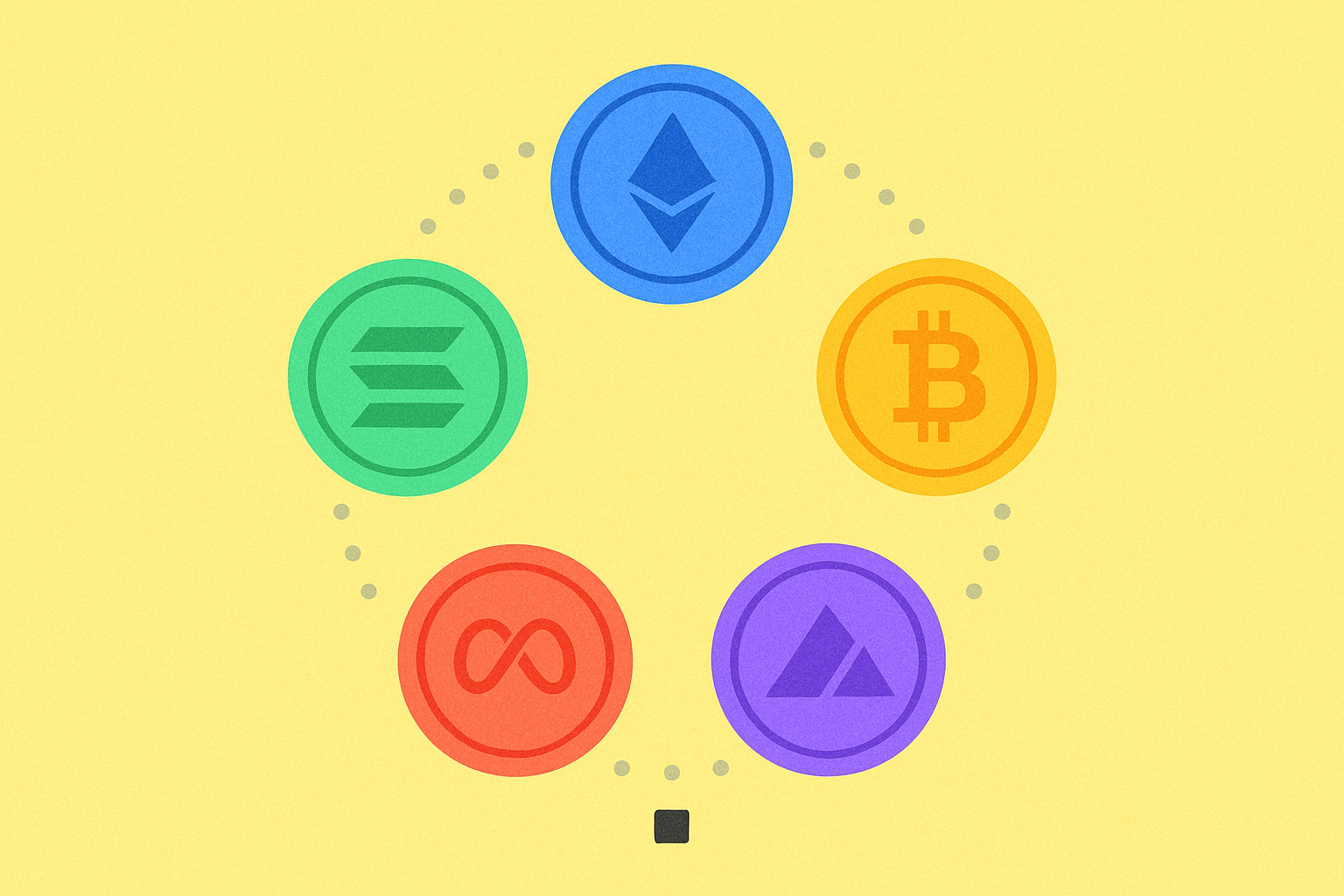
What Are Metaverses
The metaverse is a virtual space where people interact with digital objects and each other using advanced augmented and virtual reality technologies. This concept represents a digital universe that blends physical and virtual realities, unlocking new possibilities for communication, entertainment, and business.
MRS Digital reports that interest in metaverses has grown dramatically in recent years—over 2.5 million search queries featuring the word "metaverse" were logged in a single period. This surge reflects rising user curiosity about virtual worlds and their potential.
Top 10 Metaverses
1. Decentraland
Decentraland was founded in 2015 by Ariel Meilich and Esteban Ordano and is recognized as a pioneer in decentralized virtual worlds. The platform's ICO in 2017 drew significant investor attention, and its public launch followed in February 2020.
Decentraland operates under decentralized autonomous organization (DAO) governance, allowing the community to participate directly in key decisions. Its native cryptocurrency, MANA, is an ERC-20 token on the Ethereum blockchain. Players use MANA to buy and sell virtual land, explore Decentraland's expansive map, attend events, and play in virtual casinos.
The Decentraland ecosystem also includes two additional tokens—LAND and ESTATE—which represent parcels of digital land and comply with the ERC-721 (NFT) standard. Over recent years, Decentraland has hosted many notable events, including a MetaMask party celebrating 10 million active users, virtual weddings, and activities tied to major sports events. Global superstars like Ariana Grande, Travis Scott, Marshmello, and Justin Bieber have performed virtual concerts in Decentraland, highlighting the platform's growing influence in entertainment.
2. The Sandbox
The Sandbox metaverse runs on Ethereum and offers players unique tools to create and monetize game content. The platform features user-friendly creation tools, enabling users without extensive technical backgrounds to build games and virtual worlds. SAND, an ERC-20 token, powers transactions across the platform.
The Sandbox has forged partnerships with leading brands, artists, and musicians, including Snoop Dogg, the Bored Ape Yacht Club NFT collection, and Ubisoft. Recently, snowboarding legend Tony Hawk joined as a partner, further expanding the platform's audience. These collaborations underscore the metaverse's appeal to both traditional brands and crypto enthusiasts.
3. Axie Infinity
Axie Infinity is a prominent metaverse built around a blockchain game inspired by iconic Japanese video games like Pokemon and Tamagotchi. The platform features a unique game economy, allowing players to earn real money through gameplay.
AXS is Axie Infinity's native token and serves multiple roles in the ecosystem. Players use AXS to breed virtual pets (Axie), join battle competitions, and purchase virtual land to expand their holdings. AXS is also used for earning in-game rewards and participating in platform governance via voting. The ecosystem includes the SLP (Smooth Love Potion) token, essential for breeding new Axie. This play-to-earn model has attracted millions worldwide and set a standard for future blockchain games.
4. Roblox
Roblox began as a website in 2006 and has evolved significantly since then. Today, it's available on PC, mobile devices, and gaming consoles, with tens of millions of active users worldwide.
Players interact using customizable avatars that reflect their individuality. Attributes like health, appearance, and special abilities can be purchased with Robux, Roblox's in-platform currency. Roblox stands out for enabling users not only to play games created by others but also to design their own worlds and games using built-in development tools. This makes Roblox a creative ecosystem where anyone can become a game developer.
5. Sorare
Sorare is among the first soccer games built on NFT technology. The platform blends soccer passion with blockchain to deliver a unique fan gaming experience. Sorare users assemble teams from collectible cards of real soccer players and win rewards based on actual sports achievements.
These rewards can be exchanged for real money or used to upgrade collections. Sorare leverages Starkware technology for fast and low-cost transactions, avoiding Ethereum's typical scalability and fee issues.
Sorare has partnered with dozens of leading clubs worldwide, including teams from Europe's top leagues. French soccer star Kylian Mbappé is the platform's official ambassador, boosting Sorare's visibility among fans.
6. Illuvium
Illuvium is an innovative blockchain game with collectible tokens, built on Unreal Engine 4 to deliver stunning 3D virtual environments. Its high-end graphics make Illuvium one of the most visually striking metaverses in crypto.
The platform features a vast virtual world inhabited by unique creatures called Illuvials—NFTs on Ethereum with distinctive traits and abilities. Players use their Illuvials to battle others, explore game regions, and earn ILV and SILV tokens as rewards.
Like Axie Infinity, Illuvium centers on collecting and upgrading in-game fighter creatures with customizable attributes. Players can enhance Illuvials, merge them into stronger beings, and develop unique strategies for victory.
7. Metahero
Metahero is a decentralized platform built atop a leading smart contract platform, featuring ultra-realistic 3D scanning technology. Its creators aim to give users access to virtual opportunities of the future, erasing boundaries between physical and digital worlds. HERO, the platform's token, handles all ecosystem transactions.
Launched in 2020, Metahero has gained traction among metaverse and 3D scanning enthusiasts. Wolf Studio is a key partner, enabling advanced NFT integration through 3D scanning of real-world objects.
Wolf Studio's technology captures detailed data on physical objects—shape, texture, and more—to create high-quality digital renderings. This allows Metahero users to turn almost any real-world item into a unique NFT for use in the metaverse.
Metahero also plans to launch the HERO app as a gateway for ecosystem features, including 3D avatar creation and digital asset management.
8. Bloktopia
Bloktopia is a metaverse that uniquely combines blockchain with virtual and augmented reality, delivering an innovative user experience for players, developers, and investors. Its concept stands out for its unconventional organization of virtual space.
The project features a striking 21-story virtual skyscraper (symbolizing the maximum 21 million bitcoins), with each floor serving dedicated purposes and activities. Bloktopia residents earn BLOK tokens by owning virtual property, placing ads, and participating in ecosystem growth.
Users can join events, conferences, and educational programs, exploring each floor's unique content and opportunities. Bloktopia aims to become a central hub for the crypto community—for entertainment, learning, work, and investment.
9. Star Atlas
Star Atlas is an ambitious online MMORPG built on the high-speed Solana blockchain. Solana was chosen for its ability to process thousands of transactions per second with minimal fees, which is essential for a dynamic gaming environment.
Star Atlas uses Unreal Engine 5 for stunning graphics and realistic physics, creating a vast space-themed metaverse. Players can communicate, join massive space battles, claim territory in star systems, and build their own alliances and communities.
Its economy uses two tokens: POLIS for governance (allowing holders to influence game development) and ATLAS as the primary currency for purchasing ships, resources, and in-game assets. The game is set in a sci-fi universe in the year 2620, with three factions vying for control over resources and territory.
10. Upland
Upland is an innovative gaming metaverse built on EOS and launched in early 2020. It uniquely fuses the virtual world with real geography. Users can interact and buy NFTs representing real-world property in cities around the globe.
Players can convert in-game tokens to US dollars using Tilia Pay, ensuring transparent and secure transactions. This appeals both to gamers and investors interested in virtual real estate.
Upland aims to create detailed virtual replicas of real addresses and locations. Currently, the platform features over 20 US cities—including Detroit, San Francisco, New York, Cleveland, and Chicago—each carefully recreated with accurate street layouts and neighborhoods. Players collect real estate, build themed collections, and compete in challenges for rewards.
The Future of Metaverses
Metaverses are multiplying every year, with Web3 startups and traditional Web2 companies entering the market as they recognize the potential of virtual worlds. Tech giants are investing billions, viewing metaverses as the next stage in internet evolution.
Yet, for metaverses to become mainstream, they need more than big-brand funding. User engagement, content quality, and usability are critical. Users must find real value in virtual worlds—whether for entertainment, socializing, work, or investment.
Innovative projects still have opportunities to establish themselves in the growing industry and build successful metaverses. Success hinges on understanding what users want: intuitive interfaces, quality content, fair economic models, and avenues for self-expression and social interaction. Projects that deliver genuine value and solve industry challenges are poised to lead the metaverse market in the years ahead.
FAQ
What is the metaverse, and how does it differ from virtual reality (VR) and augmented reality (AR)?
The metaverse is an integrated virtual world that combines VR and AR technologies. Unlike VR, which creates a fully virtual environment, the metaverse fuses real and virtual worlds. AR enhances reality, while the metaverse offers a comprehensive ecosystem for social, economic, and cultural engagement.
Which metaverse projects are worth tracking in 2024–2025?
In 2024–2025, Huawei, Alibaba, Tencent, and Baidu lead in digital twins, virtual humans, and applications. Globally, Microsoft, Meta, Apple, Google, and NVIDIA are investing in VR, AR, and AI technologies.
How can you earn money in the metaverse? What profit opportunities exist?
You can earn in the metaverse by investing in virtual real estate, creating and selling digital assets, developing games and experiences, trading platform crypto tokens, and offering design, marketing, and consulting services.
What are the main risks of investing in metaverse projects?
Main risks include market volatility, technological immaturity, regulatory uncertainty, and fraud. Metaverse projects are still in early development, leading to a high degree of uncertainty.
How do Decentraland, The Sandbox, and Roblox differ?
Decentraland and The Sandbox are decentralized Ethereum platforms with their own tokens, enabling land and asset ownership. Roblox is a centralized platform focused on user-generated content. The primary differences are governance, blockchain technology, and ownership models.
How do you trade NFTs and virtual real estate in metaverse projects?
NFTs and virtual land are traded using cryptocurrencies like Ethereum. Owners create a crypto wallet, connect it to metaverse marketplaces, and buy or sell land parcels through auctions or fixed prices. Trading values will rise as ecosystems mature.
How can ordinary users start exploring and participating in the metaverse?
Download a metaverse app, create an avatar, and begin exploring the virtual world. Many platforms offer free access. Start with basic actions: interact with other users, join events, and purchase digital assets.
What is the outlook for metaverse development and market forecasts?
The metaverse is projected to reach trillions of dollars by 2030. It will expand beyond gaming into social governance, public services, and industry, driving large-scale tech innovation and economic transformation.
Share
How to Buy Cryptocurrency


Trending Cryptocurrencies



XRP Price Analysis 2025: Market Trends and Investment Outlook

Treasure NFT Marketplace: A 2025 Guide for Web3 Gamers and Investors

Mastering the Crypto Fear and Greed Index: 2025 Trading Strategies
What Is the Best Crypto ETF in 2025: Top Performers and Beginner's Guide

What is SwissCheese (SWCH) and How Does It Democratize Investment?

What Is the Best AI Crypto in 2025?
Blockchain Developer Salaries: What Web3 Developers Are Paid

Revolut Quiz Answers: Complete Guide to Earning Free Cryptocurrency
Best Non-Custodial Wallets: Top Choices

Comprehensive Guide to Moving Averages
Six Cryptocurrencies That Have Achieved Over 1,000x Total Growth