What Are Network Nodes?

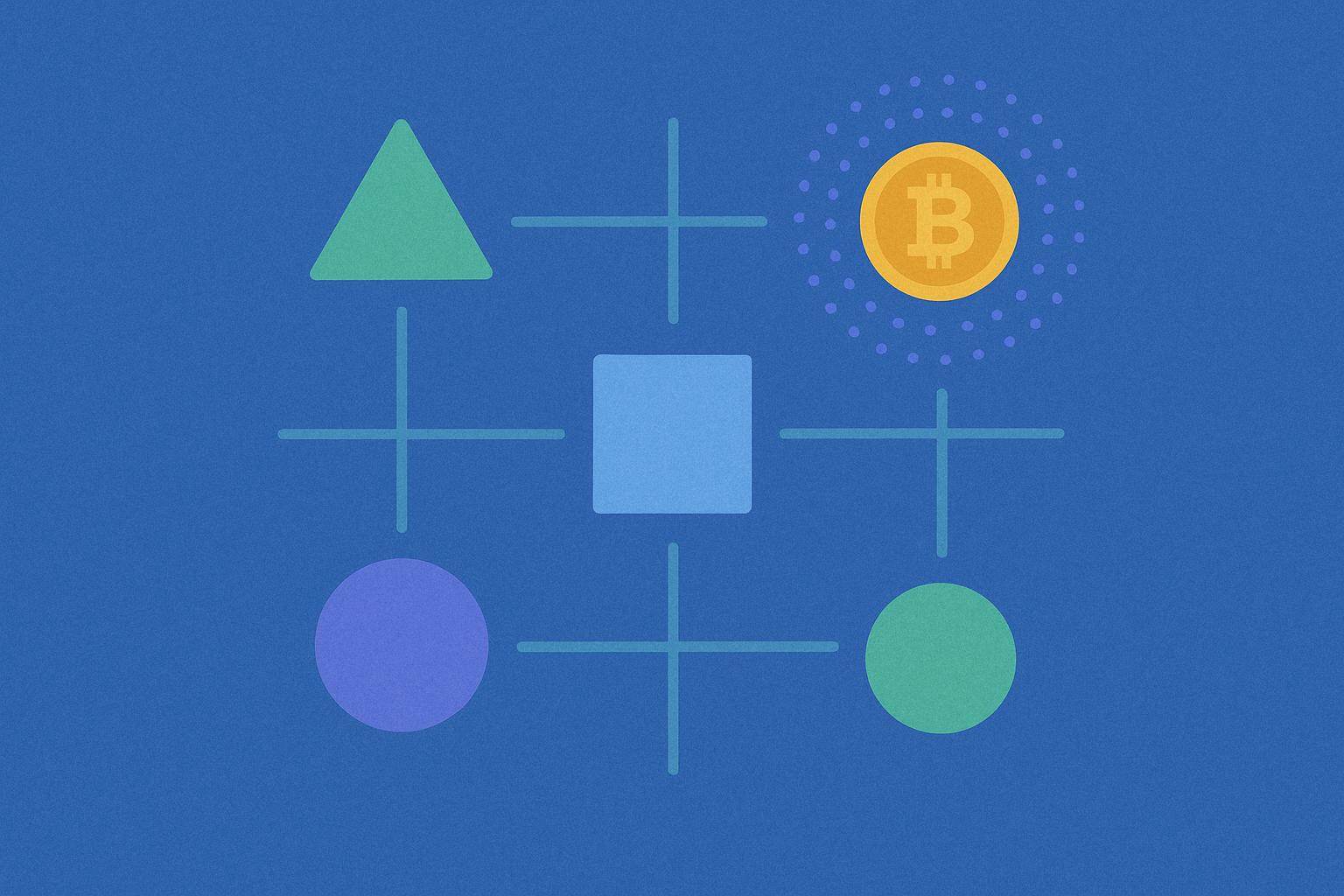
Why Are Blockchain Network Nodes Important?
Bitcoin and most other blockchain networks are not controlled by a single entity – instead, control belongs to community members across the entire distributed network. Their role is to ensure that the network operates smoothly and efficiently. These validators verify that no one is using the network for fraudulent purposes. They also help ensure that transactions cannot be reversed or manipulated.
They accomplish this by offering the computational power of their computers. Older blockchain networks, such as those used by Bitcoin, operate using a proof-of-work mechanism. This consensus mechanism requires nodes to solve complex mathematical problems to validate transactions and add new blocks to the chain.
Nodes contain a complete copy of the entire blockchain. In this way, it functions as a universal ledger system. Any interested party can verify information about transactions on the network from any point in its history. This transparency is fundamental to the trustless nature of blockchain technology.
Network nodes serve to relay transaction information across the network. Ultimately, they contribute to ensuring consensus among blockchain users, maintaining the integrity and security of the distributed ledger.
Using Consensus Algorithms
Because there are no central authorities auditing transactions on a decentralized blockchain, "control" is exercised through validators – node operators. The consensus algorithm takes all the information provided by nodes and ensures they have reached a common agreement. This ensures the security and reliability of transactions on the network.
Blocks are large fragments of data that are added to the blockchain. Miners do not confirm transactions one by one. Rather, blocks contain information about a large number of these transactions, bundling them together for efficient processing.
Network nodes guarantee that the information contained in a block represents the only true version of events. This prevents double-spending and ensures data integrity across the network. Different consensus mechanisms, such as proof-of-work and proof-of-stake, use various methods to achieve this agreement among nodes.
What Is Hash Mining?
The goal of cryptocurrency mining is to confirm transactions as quickly as possible. Speed and accuracy serve both the network and individual miners. Mining involves solving complex cryptographic puzzles to validate transactions and create new blocks.
Mining nodes have the same characteristics as full nodes or receive their information from other nodes. For the additional task they perform, they receive rewards in the form of cryptocurrencies when a new block is mined on the network. This incentive mechanism encourages participation and network security.
Most miners on the network use ASICs (Application Specific Integrated Circuits) – specialized computers designed to calculate hashes as quickly as possible. These devices are optimized specifically for mining operations, providing significantly higher hash rates compared to general-purpose computers.
Types of Blockchain Network Nodes
Archival Full Nodes
Full nodes are the heart of the blockchain network. They offer governance rights and play a crucial role in network security. Archival full nodes store the entire blockchain, recording details of every transaction from the genesis block to the present. These nodes can independently verify any transaction or block without relying on third parties.
Light Nodes
Light nodes save disk space by downloading only selected information. They are used in simplified payment verification (SPV). Light nodes rely on full nodes for transaction validation but can still verify that transactions are included in blocks. This makes them ideal for mobile wallets and devices with limited storage capacity.
Pruned Full Nodes
Such nodes help save disk space while maintaining network security. They "prune" older blocks on the network by removing them after verification. However, they still maintain the current state of the blockchain and can validate new transactions. Pruned nodes typically keep only the most recent blocks, reducing storage requirements significantly.
Mining Nodes
Mining nodes confirm transactions required to create new data blocks. They compete to solve cryptographic puzzles and add new blocks to the blockchain. Mining nodes require significant computational power and energy consumption, especially in proof-of-work networks. Successful miners are rewarded with newly created cryptocurrency and transaction fees.
Authority Nodes
Authority nodes are used in centralized blockchains. The owners of these networks decide on transaction validators. This model is common in private or consortium blockchains where trust is distributed among known entities rather than being fully decentralized. Authority nodes provide faster transaction processing but sacrifice some degree of decentralization.
Masternodes
Masternodes are similar to full nodes but cannot add blocks to the network and serve only to verify and record transaction information. Masternode owners earn rewards expressed in the network's native token. To operate a masternode, users typically must lock up a certain amount of cryptocurrency as collateral, ensuring their commitment to network integrity.
Lightning Nodes
Lightning nodes help facilitate off-chain transactions by connecting users from inside and outside the blockchain. They enable faster and cheaper transactions by creating payment channels that don't require every transaction to be recorded on the main blockchain. Lightning nodes are particularly useful for micropayments and high-frequency transactions.
Why Consider Running a Node?
Running a node primarily plays a key role in maintaining the smooth functioning of the blockchain network. Unlike miners, typical nodes do not earn financial rewards directly, but they provide other valuable benefits to operators.
Running your own node increases the level of security for your own transactions. It helps ensure you have much greater autonomy. There is no need to rely on third-party services, which could potentially censor transactions or provide inaccurate information about the blockchain state.
Additionally, you will contribute to increasing the security of the blockchain network. More nodes mean greater decentralization and resilience against attacks or failures.
By running a node, you can participate in the governance process. This means you have a real voice in matters such as system updates, protocol changes, and network improvements. Node operators can signal support for or against proposed changes.
Running a node is quite accessible. There is no requirement to own expensive supercomputers, as is the case with cryptocurrency miners. A standard computer with adequate storage and a stable internet connection is sufficient for most blockchain networks.
First Steps in Creating a Node
Running your own full Bitcoin node can be a satisfying experience that contributes to the network while giving you complete control over your transactions.
Minimum requirements for running a node:
- You will need a computer using recent versions of Windows, Linux, or macOS.
- You will need at least 2 GB of RAM and several hundred GB of free disk space (Bitcoin's blockchain continues to grow over time).
- Finally, you will need a broadband connection and preferably as much uptime as possible for the node to remain operational and synchronized with the network.
Raspberry Pi is a popular device used to run a Bitcoin node due to its low cost and energy efficiency. Next, you will need to install the hardware, operating system, and Bitcoin software to run your node. Detailed setup guides are available from the Bitcoin community and various online resources.
Blockchain Node Providers
Blockchain node providers are an alternative for individuals running their own nodes. They offer APIs that help developers create automated blockchain node management solutions. This is particularly useful for businesses and applications that need reliable blockchain access without maintaining their own infrastructure.
These companies can provide access to blockchain networks such as Bitcoin, Ethereum, Monero, and others based on client requirements. Popular node providers include Infura, GetBlock, and Alchemy. These services handle node maintenance, updates, and scaling, allowing developers to focus on building applications rather than managing infrastructure.
Network Nodes Are a Fundamental Element of Blockchain
Blockchain technology has a vast number of applications across various industries, from finance to supply chain management. One of its key principles, however, is the importance of maintaining a decentralized system. This depends on the contribution of ordinary users who run nodes and participate in network validation.
Nodes help in the functioning of this type of public network by ensuring transparency, security, and decentralization. Regardless of the specific blockchain implementation, nodes remain the nerve receptors of the blockchain network, constantly monitoring and validating the state of the distributed ledger.
The more nodes a network has, the more resilient and secure it becomes. Each node acts as a checkpoint, verifying that the rules of the protocol are being followed and that no malicious actors are attempting to compromise the network. This distributed validation is what makes blockchain technology revolutionary and trustworthy without requiring central authorities.
FAQ
What are network nodes? What is their basic definition and characteristics?
Network nodes are devices connected to a blockchain network with independent addresses. They validate transactions, maintain the distributed ledger, and enable data transmission. Nodes can be computers or servers that receive and transmit data across the network.
What role do network nodes play in distributed systems?
Network nodes process, store, and transmit data in distributed systems. They coordinate through networks, validate transactions, and maintain consensus. Each node contributes to system decentralization, security, and resilience by operating autonomously yet collectively.
What is the difference between different types of network nodes, such as full nodes and light nodes?
Full nodes store the entire blockchain data and verify all transactions, requiring more storage and computing power. Light nodes store only essential information and rely on other nodes for transaction verification, consuming fewer resources but with lower network participation.
How do network nodes communicate and exchange data with each other?
Network nodes communicate through message broadcasting. Each node sends messages containing its IP address to neighboring nodes, which then distribute these messages across the network. This peer-to-peer propagation ensures all nodes can discover and connect with each other, enabling decentralized data synchronization and consensus.
How to deploy and run a network node?
Download and install node software from your blockchain network. Configure node settings, sync blockchain data, and ensure adequate hardware resources. Run the node client, maintain security, and monitor synchronization status regularly for optimal network participation.
What are the security risks of network nodes?
Network nodes face risks including IP address exposure through proxy nodes, man-in-the-middle attacks stealing data, unverified certificates causing information leaks, and unreliable nodes spreading malware. Proper validation and secure configurations mitigate these threats.
Share
Content
How to Buy Cryptocurrency


Trending Cryptocurrencies



XZXX: A Comprehensive Guide to the BRC-20 Meme Token in 2025

Survey Note: Detailed Analysis of the Best AI in 2025

Detailed Analysis of the Best 10 GameFi Projects to Play and Earn in 2025

Kaspa’s Journey: From BlockDAG Innovation to Market Buzz

Best Crypto Wallets 2025: How to Choose and Secure Your Digital Assets

Popular GameFi Games in 2025

7 Leading NFT Artists to Watch in 2025
Bitcoin MVRV Z-Score: A Key Indicator for Determining Bitcoin’s Fair Value

What is Distributed Ledger Technology
What is GMRT: A Comprehensive Guide to the Giant Metrewave Radio Telescope and Its Revolutionary Role in Astronomy

What is AIR: A Comprehensive Guide to Understanding Artificial Intelligence Revolution