Proof-of-Work explained in straightforward terms

2026-02-03 17:38:25
Bitcoin
Blockchain
Crypto Tutorial
Mining
PoW
Article Rating : 4
67 ratings
Discover Proof of Work: an in-depth overview of the PoW mechanism, how blockchain consensus algorithms function, the distinctions between PoW and PoS, key mining concepts, and which cryptocurrencies utilize this protocol. This is a thorough guide designed for beginners.
Proof-of-Work explained in straightforward terms
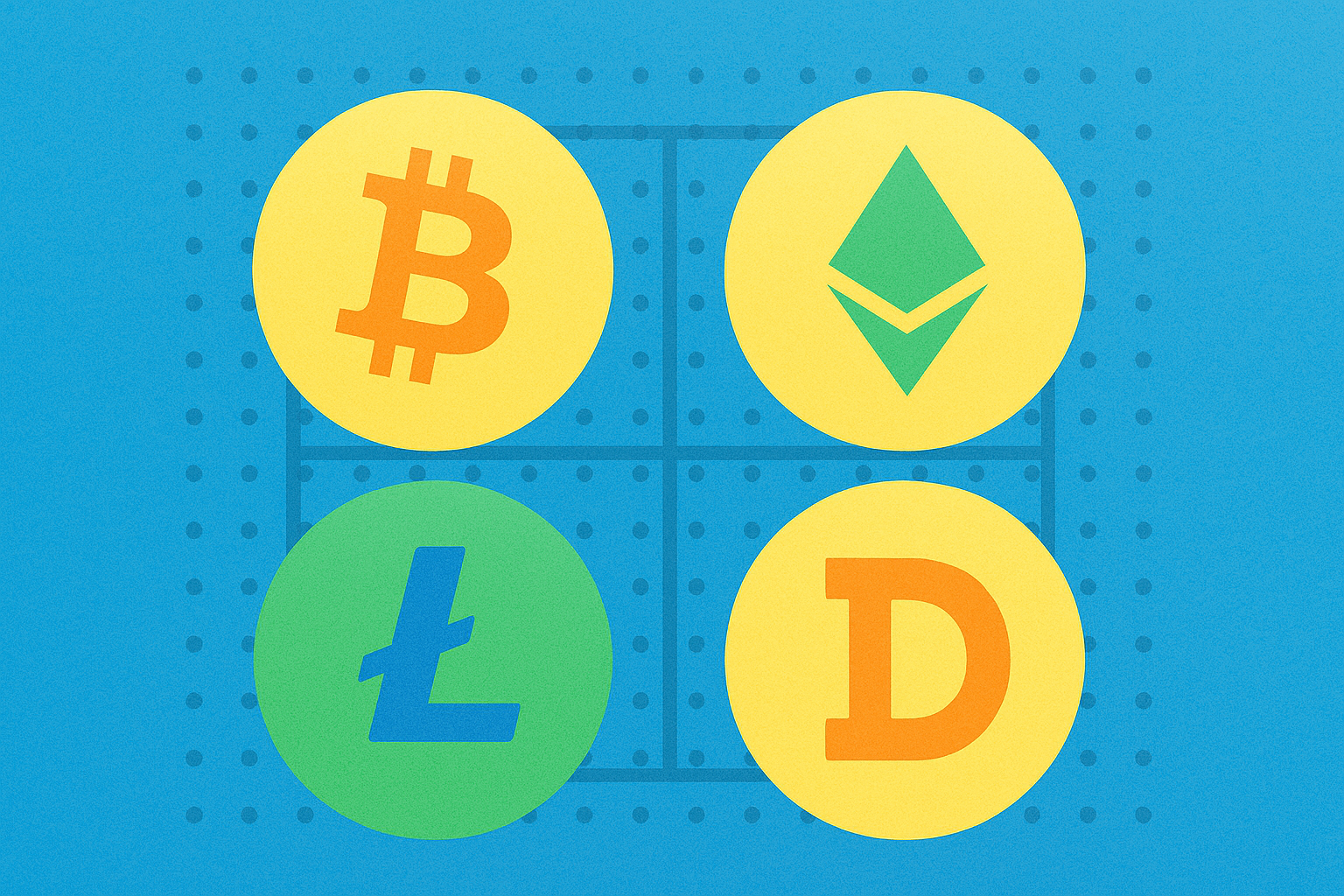
What Is PoW in Plain Language

PoW, or Proof-of-Work, is a consensus algorithm central to many cryptocurrencies. The term PoW stands for Proof-of-Work, which literally means “proof of work.”

PoW facilitates the mining of new blocks in blockchain networks, playing a crucial role in transaction verification and validating blockchain data across decentralized participants’ computers. Because the process is distributed, every network node can independently confirm the accuracy of the work performed.

One of Proof-of-Work’s most significant achievements is solving the double-spending problem—preventing the same digital asset from being used twice. PoW also effectively blocks other types of abuse in cryptocurrency networks, providing a high level of security and system reliability.

Core Principle of Proof-of-Work

PoW coordinates the operation of decentralized networks. The system relies on miners—specialized market participants who connect high-performance hardware to the cryptocurrency network and solve complex mathematical problems for rewards.

PoW system workflow:

  • Users initiate transactions and set a fee, which serves as a miner’s reward. The fee size determines how quickly the transaction is processed
  • Miners’ hardware executes intensive cryptographic calculations to verify and process transactions. If all transaction parameters meet network rules, the transaction is included in a new block
  • The new block is added to the cryptocurrency blockchain, ensuring the transparency and immutability of transaction history

It’s important to note that, in PoW systems, a miner’s income depends directly on computational power. The higher the miner’s hash rate, the greater the chance of discovering a new block and earning a reward.

Who Invented PoW

Proof-of-Work has a long and storied history. Programmers Cynthia Dwork and Moni Naor first introduced the idea in a 1993 paper aimed at countering spam and denial-of-service attacks.

In 1997, Adam Back, a programmer and cryptographer, implemented the concept in Hashcash—a system designed to combat email spam by requiring senders to complete a computational task before sending messages.

By 1999, Markus Jakobsson and Ari Juels published a paper that defined the concept more precisely and gave it the name Proof-of-Work. Their research provided the theoretical groundwork for further technological advances.

In 2009, an anonymous developer or group known as Satoshi Nakamoto launched Bitcoin, a groundbreaking cryptocurrency built on the Proof-of-Work algorithm. This milestone ushered in a new era in financial technology and propelled PoW to global prominence.

What Does Proof-of-Work Mining Mean?

In cryptocurrency, mining is the process of generating digital assets through computational operations. In PoW-based systems, miners compete continuously to create new blocks and earn rewards.

Key features of Proof-of-Work mining:

  • The difficulty of mining adjusts dynamically based on overall network activity. As more miners join, computational challenges become tougher, ensuring consistent block generation times
  • PoW mining creates a hardware “arms race.” Miners must invest in increasingly powerful equipment to stay competitive. Failing to upgrade leads to a smaller share of the network’s hash rate, lower profits, or exit from mining altogether
  • Mining requires significant investments not just in hardware, but also in electricity, cooling systems, and ongoing maintenance

PoW Criticism

Proof-of-Work faces strong criticism from environmental groups and segments of the crypto community, primarily due to its high energy consumption. Miners are locked in an ongoing race for computational power, driving constant hardware upgrades and exponential electricity use. The carbon footprint of large PoW networks rivals that of entire countries.

There’s also concern about the centralization of PoW mining. Competitive hardware demands major financial investment, creating a high entry barrier for regular users. As a result, most PoW mining has concentrated in large companies and industrial-scale farms—contrary to cryptocurrency’s original decentralized vision.

Another criticism is the geographic clustering of mining operations in regions with cheap electricity, posing security risks if there’s coordinated action or regulatory intervention.

Which Cryptocurrencies Use Proof-of-Work?

PoW is the core consensus algorithm for Bitcoin—the world’s first and most valuable cryptocurrency. In 2022, Ethereum transitioned from Proof-of-Work to Proof-of-Stake to lower energy consumption and boost scalability.

Other notable PoW cryptocurrencies include:

  • Dogecoin—a coin originally created as a parody but now widely recognized with an active community
  • Ethereum Classic—a fork of the original Ethereum that continues to use PoW
  • Litecoin—one of the earliest altcoins, often called “digital silver” alongside Bitcoin’s “digital gold”
  • Monero and Zcash—cryptocurrencies focused on transaction privacy
  • Bitcoin Cash and Bitcoin SV—Bitcoin forks that emerged from community disputes over protocol development

Each of these coins has its own PoW implementation and unique features, but all rely on consensus via proof of completed computational work.

FAQ

What Is Proof-of-Work? Explain Simply—How Does PoW Work?

Proof-of-Work (PoW) is a consensus mechanism where nodes solve complex mathematical puzzles to validate transactions. Successful nodes earn rewards and create new blocks. PoW deters fraud by making blockchain manipulation costly and difficult.

What’s the Difference Between Proof-of-Work and Proof-of-Stake?

Proof-of-Work relies on miners solving challenging mathematical problems, while Proof-of-Stake uses token staking by holders. PoW consumes more energy; PoS is more efficient and environmentally friendly.

Why Does Bitcoin Use Proof-of-Work?

Bitcoin uses Proof-of-Work to secure the network from attacks, establish decentralized consensus, and ensure the blockchain remains immutable without centralized control.

How Does Proof-of-Work Mining Validate Transactions?

Miners solve complex puzzles to verify transactions. The first to find a solution earns a reward and adds a new block to the blockchain. This process confirms all network operations.

Is Proof-of-Work Worth the Electricity?

Yes. Proof-of-Work provides maximum blockchain security and decentralization. Electricity costs are an investment in network reliability and protection against attacks. The value of Bitcoin and other PoW networks justifies these expenditures.

How Do I Participate in Proof-of-Work Mining?

Join a mining pool, buy specialized hardware (ASIC or GPU), install mining software, and start solving cryptographic puzzles. Block rewards decrease over time due to halving.

* The information is not intended to be and does not constitute financial advice or any other recommendation of any sort offered or endorsed by Gate.
Related Articles
How to Mine Ethereum in 2025: A Complete Guide for Beginners

How to Mine Ethereum in 2025: A Complete Guide for Beginners

This comprehensive guide explores Ethereum mining in 2025, detailing the shift from GPU mining to staking. It covers the evolution of Ethereum's consensus mechanism, mastering staking for passive income, alternative mining options like Ethereum Classic, and strategies for maximizing profitability. Ideal for beginners and experienced miners alike, this article provides valuable insights into the current state of Ethereum mining and its alternatives in the cryptocurrency landscape.
2025-05-09 07:23:30
Exploring the Crypto World: The Ultimate Mining Guide and Profit Secrets

Exploring the Crypto World: The Ultimate Mining Guide and Profit Secrets

Cryptocurrency mining has evolved into one of the most exciting frontiers in the financial technology landscape. Whether you’re a seasoned investor or a newcomer, understanding the ins and outs of mining is essential to unlocking the secrets behind digital asset creation and profitability. In this comprehensive guide, we’ll explore everything from the fundamentals of mining to the trends shaping the industry—helping you build your very own digital gold factory. And for those who want to diversify their crypto journey, platforms like Gate.com provide a seamless integration of mining tools and exchange services to support your strategy.
2025-04-17 09:44:58
From Zero to Hero – Mining Technology and Trends Analysis

From Zero to Hero – Mining Technology and Trends Analysis

Explore the evolution of mining technology, highlighting key innovations and analyzing current industry trends. It offers insights into how emerging tools and techniques are transforming the sector from traditional practices to high-efficiency operations.
2025-04-17 10:22:41
Mining Strategies – Building Your Digital Gold Factory

Mining Strategies – Building Your Digital Gold Factory

Explore effective mining strategies to build your digital gold factory. Learn how to optimize performance, reduce costs, and harness cutting-edge technology for success in the evolving digital mining landscape.
2025-04-17 10:26:10
Pi Network (PI): Mobile-Friendly Cryptocurrency for Global Adoption

Pi Network (PI): Mobile-Friendly Cryptocurrency for Global Adoption

Deep dive into how Pi Network lowers the threshold of crypto assets and promotes global user participation and blockchain economy popularization through mobile mining and community trust mechanism.
2025-05-21 06:55:22
Pi Network 2025: Latest Mining Updates and Mainnet Launch Progress
Pi Network 2025: Latest Mining Updates and Mainnet Launch Progress

Pi Network is set to achieve a significant breakthrough in 2025 with the successful launch of its Mainnet, sparking a surge in the cryptocurrency market. The latest Pi crypto news indicates that Pi Network mining updates are leading to an ecological explosion, with user numbers increasing by 300%. Exchanges like Gate are supporting the rise in Pi coin value prediction, and the adoption of Pi cryptocurrency continues to expand. However, the surge in exchange balances also raises potential risks, and the subsequent development following the Pi Network mainnet launch is worth paying attention to.
2025-06-24 07:28:42
Recommended for You
Understanding PoS in Cryptocurrency: A Beginner’s Guide to Proof-of-Stake

Understanding PoS in Cryptocurrency: A Beginner’s Guide to Proof-of-Stake

Discover how Proof of Stake operates—the blockchain consensus mechanism. This beginner's guide offers a clear explanation of PoS, staking, key differences from PoW, and provides examples of cryptocurrencies available on Gate.
2026-02-03 18:56:20
What is MENGO: Understanding the Grassroots Organization Empowering Communities in Uganda

What is MENGO: Understanding the Grassroots Organization Empowering Communities in Uganda

Flamengo Fan Token (MENGO) is a blockchain-based digital asset launched by Chiliz in 2021 to revolutionize football fan engagement. Operating on the Chiliz Chain, MENGO enables Flamengo supporters to participate in club decision-making, access exclusive rewards, and strengthen their connection with the club. With a circulating supply of 15.5 million tokens and market cap of $896,198.16, MENGO utilizes decentralized technology and public-private key cryptography for secure transactions. Currently trading at $0.05783 on Gate, the token faces market volatility with a one-year decline of 69.26%. This article explores MENGO's technical architecture, market performance, ecosystem applications, community dynamics, and how fans can participate in this innovative sports-blockchain integration.
2026-02-03 18:43:12
What is SDN: A Comprehensive Guide to Software-Defined Networking Architecture and Implementation

What is SDN: A Comprehensive Guide to Software-Defined Networking Architecture and Implementation

This comprehensive guide explores Shiden Network (SDN), a multi-chain decentralized application layer on Kusama launched by Plasm Network in 2021. The article examines SDN's technical architecture, including its Nominated Proof of Stake consensus, EVM and WebAssembly compatibility, and Layer2 solutions. Current market data shows SDN trading at $0.01412926 with 68.22M circulating tokens, available on Gate. The guide covers ecosystem applications in DeFi and NFTs, community engagement across 13,108 holders, and development roadmap. Whether you're a developer seeking to build dApps or an investor evaluating multi-chain smart contract platforms, this resource provides essential insights into SDN's role within the Kusama ecosystem and its competitive positioning in decentralized technology.
2026-02-03 18:42:48
Top 11 Leading Exchanges for Traders

Top 11 Leading Exchanges for Traders

Top Crypto Exchanges of 2024: Gate vs. Other Trading Platforms. Explore secure exchanges offering low fees and high liquidity, ideal for both new and seasoned traders. Find your best platform today!
2026-02-03 18:42:42
What is GST: A Comprehensive Guide to Goods and Services Tax and Its Impact on Business and Consumers
What is GST: A Comprehensive Guide to Goods and Services Tax and Its Impact on Business and Consumers

Green Satoshi Token (GST) is a utility token within the STEPN move-to-earn ecosystem, launched in 2022 to incentivize physical activity and blockchain adoption through outdoor fitness rewards. This comprehensive guide explores GST's technical foundation on BSC blockchain, featuring decentralized control, smart contract-based distribution, and multi-layered anti-cheating mechanisms ensuring ecosystem fairness. As of February 2026, GST demonstrates a circulating supply of 1.14 billion tokens with 45,597 holders and current market capitalization of $898,227.73, reflecting its position within the Web3 lifestyle application sector. The article examines market performance, ecosystem applications including NFT trading and DeFi integration, community engagement on social platforms, and participation strategies through Gate exchange and in-app marketplaces. Despite facing price volatility and competitive pressures, GST's innovative move-to-earn model and transparent reward mechanisms distinguish it as a notable Web3 l
2026-02-03 18:41:46
What is ALEX: A Comprehensive Guide to the Advanced Learning and Execution System

What is ALEX: A Comprehensive Guide to the Advanced Learning and Execution System

ALEX Lab is a leading DeFi protocol on the Stacks blockchain, designed to bring decentralized finance capabilities to Bitcoin. Launched in 2021, it addresses the lack of sophisticated DeFi infrastructure on Bitcoin while maintaining Bitcoin-level security. The platform operates on a decentralized network utilizing Proof of Transfer consensus, enabling secure transactions through cryptographic key mechanisms. As of 2026, ALEX boasts 21,270 token holders and dominates DeFi activity on Stacks with over half the network's TVL. The token trades on Gate and has experienced significant price volatility, peaking at $0.54 in April 2024. This comprehensive guide explores ALEX's technical architecture, market performance, ecosystem applications, and community engagement. Despite facing market challenges and competitive pressures, ALEX Lab's partnership with Stacks Foundation and focus on Bitcoin integration demonstrates its commitment to expanding decentralized finance opportunities in the cryptocurrency landscape.
2026-02-03 18:41:41