In recent weeks, the Middle East crisis has escalated rapidly, as the United States and Israel jointly launched large-scale military operations against Iran, sparking multiple regional conflicts and unsettling the international community. Outlets such as Reuters, The Guardian, and the Associated Press report that the conflict has expanded beyond its initial geographic scope, introducing new variables: heightened diplomatic tensions involving countries like Lebanon and Saudi Arabia, increased shipping risks through the Strait of Hormuz, and extreme volatility in crude oil and other commodity prices. This article offers an in-depth analysis across five dimensions—conflict fundamentals, the evolution of geopolitical risk, market response mechanisms, the impact on supply and demand fundamentals, and multiple future scenarios—providing an objective medium- to long-term outlook.
I. Current Conflict Status and Geopolitical Background
1. Flashpoints and Escalation
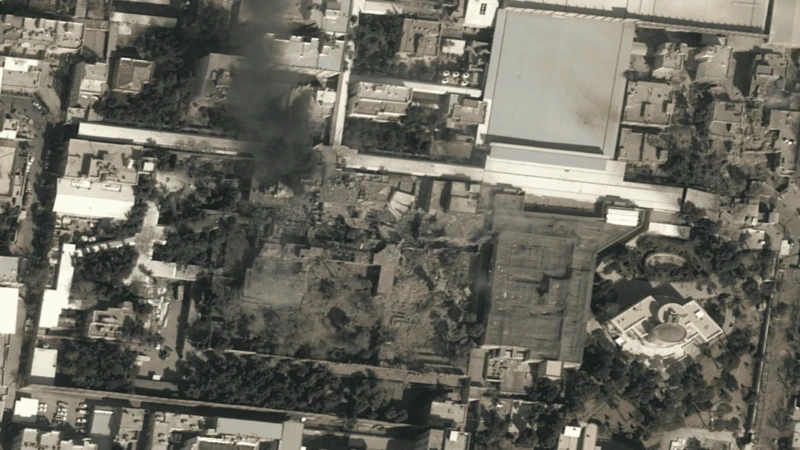
Image: Damage to the residence complex of Iran’s Supreme Leader Khamenei in Tehran.
In late February 2026, the United States and Israel launched coordinated military operations against Iran, targeting command centers, military bases, and even senior commanders, with the aim of suppressing Iran’s regional strategic capabilities. Some reports mention casualties among Iran’s top leadership, signaling a shift from “proxy warfare” to direct confrontation.
In response, Iranian proxy groups such as Hezbollah in Lebanon launched missile and drone attacks against Israel, which retaliated with large-scale airstrikes. The conflict has evolved from isolated incidents to simultaneous outbreaks across the region. As of the latest updates, southern Lebanon has suffered intense bombardment—one of the most concentrated attack periods since the 2024 war.
Beyond military confrontation, this round of conflict includes clear “symbolic strikes and political shock,” with both sides leveraging the situation to boost domestic unity and project external deterrence.
2. The Role of Regional Powers and Spillover Risks
Saudi Arabia has recalled its ambassador to Iran and strongly condemned Iran’s attacks, highlighting deepening diplomatic rifts among major oil producers in the Middle East and potentially limiting the region’s ability to coordinate de-escalation. Unconfirmed OSINT sources also report US carrier strike group deployments, suggesting the conflict could draw in additional military forces and further heighten uncertainty.
This multi-state contest means the conflict is no longer confined to two countries, but could involve complex international alliances and shifting regional power dynamics—directly impacting the conflict’s duration and the global risk premium.
II. Market Response: Safe-Haven Assets, Risk Assets, and Crisis Premiums
Following the outbreak, global markets rapidly entered a risk repricing phase. The performance of various assets clearly reflected their perceived roles among investors.
1. Crude Oil: Rapid Rise in Supply Risk Premiums
After the escalation, Brent crude surged 7%–13% at its peak, with WTI also posting significant gains. The core driver was not an actual production decline, but market repricing based on expectations of potential supply disruptions.
The Strait of Hormuz handles roughly 20% of global oil shipments. When shipping risks increase, oil prices quickly build in a risk premium. Structurally, this rally is a preemptive reaction to “potential supply shocks,” not a reflection of an immediate supply shortfall.
In short, the latest oil price rally is primarily driven by uncertainty.
2. Gold: Clear Safe-Haven Demand
Amid rising geopolitical risk, gold prices have remained elevated, with some capital rotating out of risk assets into precious metals and government bonds—traditional safe-haven vehicles.
The logic for gold is straightforward: conflict increases uncertainty, reduces risk appetite, and benefits safe-haven assets.
However, this type of rally typically reflects a short-term premium before a risk event enters a “prolonged attrition phase,” rather than the start of a sustained bull market.
3. BTC: Marked Short-Term Risk Asset Behavior
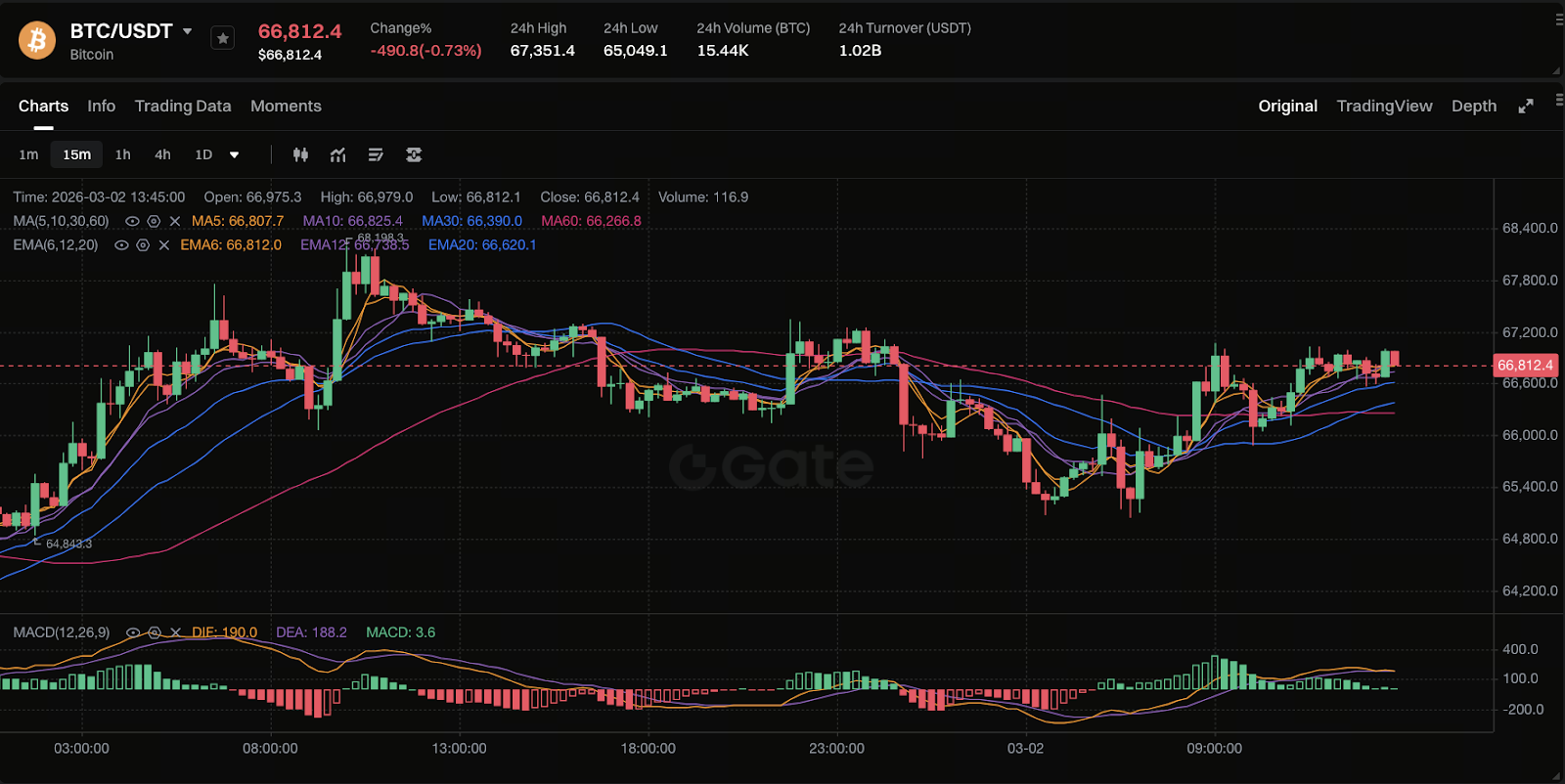
Unlike gold, BTC did not display clear safe-haven characteristics at the onset of the conflict. When volatility spikes, crypto assets often adjust in tandem, due in part to:
- High leverage ratios
- Pronounced liquidity-driven moves
- Risk-off sentiment triggering liquidations
In the initial phase of a risk event, BTC behaves more like a high-volatility risk asset than a traditional safe haven. Time horizon is key: if the conflict continues to drive inflation expectations higher and ultimately shifts global monetary policy, BTC could regain liquidity support in the medium term.
Currently, BTC’s core trading variables remain global liquidity and risk appetite, not the war itself.
4. Equities and Regional Risk
Rising oil and gold prices are often matched by short-term equity market volatility, especially in regions and sectors with high energy dependence. Once the conflict news broke, regional markets adjusted, producing the classic “risk scissors” pattern: safe-haven assets rallied while risk assets faced pressure.
III. Supply and Demand Fundamentals: Short-Term Disruption and Long-Term Structure
Assessing the true impact of this conflict on global markets requires shifting focus from short-term “event shocks” to the long-term “supply and demand fundamentals.”
1. Current Global Oil Market Supply and Demand
Prior to the conflict, most institutional analysis indicated the global oil market had some supply buffer. The World Bank noted that, barring major supply disruptions, upward pressure on oil prices from Middle East conflict could be limited, and even a surplus might exert downward pressure. If the conflict causes supply losses, however, price increases could be rapid and pronounced.
This highlights a key reality: today’s global energy market is shaped by multiple forces—OPEC+ maintains spare capacity, non-Middle East supply is growing, and strategic petroleum reserves can cushion supply shocks to some extent.
2. Geopolitical Risk’s Actual Impact on Oil Exports
Any actual disruption in the Strait of Hormuz would immediately ripple through the global energy supply, as most regional oil exports transit this corridor. Historically, localized conflicts have triggered short-term energy price volatility, but major long-term supply disruptions are extremely rare.
Unless the conflict persists and spreads to production facilities or critical export routes, physical energy flows are likely to remain within market-tolerable ranges.
IV. Multiple Evolution Paths: Three Possible Outcomes Amid Structural Divergence
In a highly uncertain geopolitical environment, single linear forecasts often fail. Rather than asking “what will happen,” it’s more effective to analyze potential paths probabilistically. Based on current dynamics and historical precedent, the Middle East conflict could follow several structural paths.
1. Rapid De-escalation and Diplomatic Reset
This scenario is most favorable for overall market stability. History shows that after major conflicts, if the main parties seek a ceasefire or third-party mediation succeeds, markets typically revert to prior price ranges. Oil prices return to fundamental-driven levels, risk premiums fade, and gold retraces gains.
Conditions for this outcome include:
- Ceasefire negotiations
- Mediation by major powers
- Diplomatic engagement by key regional oil producers
Here, supply disruptions are limited; even if short-term volatility is acute, long-term trends are still dictated by fundamentals.
2. Prolonged Standoff and Structural Risk
This scenario emerges if escalation continues, regional military confrontations are frequent, and diplomacy stalls. Here, risk premiums are gradually priced in, energy supply costs rise, oil trades in a higher range, and spillover effects reach the real economy.
In this scenario:
- Some regional shipping lanes remain persistently risky
- Global energy supply-demand balance tightens
- Investors hold safe-haven assets for the long term
If the conflict drags on for years, markets may face a prolonged supply risk premium, with significant implications for oil, metals, and inflation expectations.
3. Extreme Supply Shock and Global Chain Reaction
This scenario is less likely but cannot be ruled out, including:
- Destruction of major export infrastructure
- Long-term closure of shipping routes
- Wider conflict as more countries become involved
Here, the global energy supply gap widens dramatically, oil prices could reach new highs, and the world economy would face severe inflationary pressure.
V. Impact on the Global Economy and Supply Chains
1. Inflation and Energy Costs
If energy prices remain elevated, production costs will rise, impacting transportation, manufacturing, and consumption, fueling a new round of inflation and potentially forcing central banks to adjust monetary policy.
2. Monetary and Policy Response
Major central banks typically maintain a cautious stance in the early stages of a conflict, but if oil prices keep rising, this may trigger:
- Earlier or delayed interest rate adjustments
- Stronger demand for safe-haven assets
- Greater capital market volatility
3. Long-Term Energy Structure and Alternatives
Persistent Middle East risk will accelerate some countries’ efforts to diversify energy sources and invest in alternatives, with significant implications for long-term supply and demand trends.
VI. Conclusion: A Rational View of Conflict and Market Dynamics
Key conclusions:
- Current market volatility is largely driven by risk premiums, not by actual supply shortages.
- Sharp rises in oil and gold prices mainly reflect market pricing of future uncertainty.
- The true long-term economic impact will depend on the conflict’s duration and whether critical infrastructure and export routes are affected.
- Supply-demand fundamentals, global spare capacity, and strategic reserves remain crucial buffers for market stability.
- Three main paths are possible; short-term price swings should not be mistaken for long-term trends.
In summary, historical precedent, market fundamentals, and current conflict dynamics suggest that medium- to long-term price trends will revert to fundamentals, though short-term volatility and risk premium cycles are likely to persist.