
Anthropic has launched Claude Managed Agents, offering fully managed infrastructure and multi-agent coordination, greatly simplifying the underlying architecture for development. The official claims it can help businesses accelerate production by tenfold, actively competing for a share of the enterprise AI market.
Claude Managed Agents officially released
AI tech giant Anthropic has launched Claude Managed Agents to help enterprises build and deploy AI agents more easily. This tool provides developers with a ready-to-use foundation, simplifying the complex processes that have previously hindered work-task automation, and it also claims it can speed up how quickly companies bring products into production by ten times.
What features does Claude Managed Agents have?
According to the official article, when typical enterprises develop an agent system, they usually need several months to handle infrastructure, state management, and permission settings.
Claude Managed Agents abstracts away these complex underlying architectures, so developers only need to define the agents’ tasks and guardrails; the platform will automatically handle the subsequent operations.
Its main features include the following:
Feature 1: Fully managed secure infrastructure
Claude Managed Agents provides a production-grade execution environment. It automatically handles secure sandbox execution and verification, enabling language models to access files, run code, and browse web pages inside protected cloud containers.
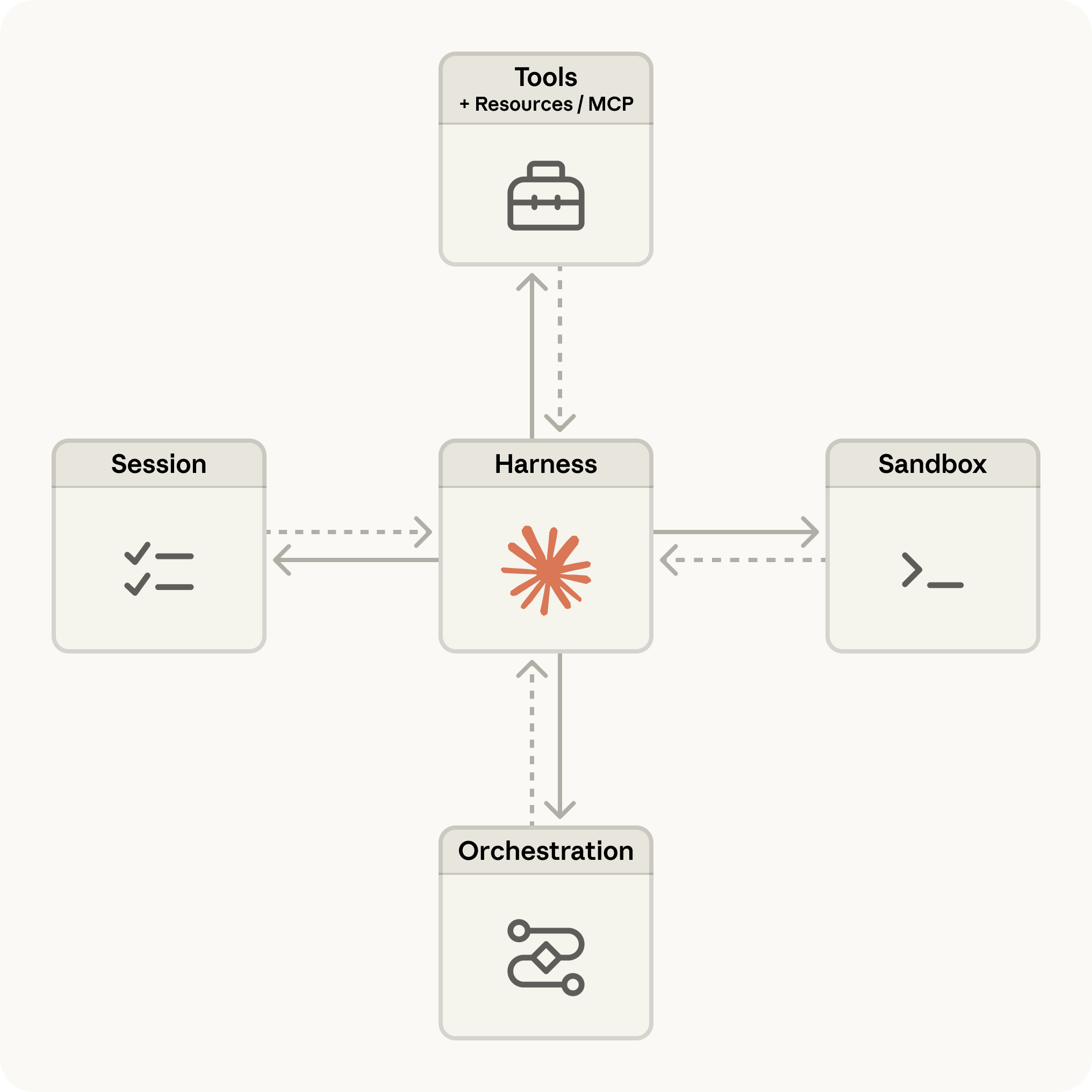
Image source: anthropic Claude Managed Agents has fully managed secure infrastructure
Feature 2: Supports long-running autonomous operation
Claude Managed Agents is designed for asynchronous tasks that need to run for long periods. The agents can operate autonomously for hours, with a persistent file system and conversation history; even if the connection drops mid-way, it can still preserve execution progress and output results.
Feature 3: Multi-agent coordination and governance tools
Claude Managed Agents can start up and direct other agents to process work in parallel. The platform includes built-in governance tools such as identity management, scope-based permissions, and execution tracking to ensure the security of agents when accessing real systems.
How does Claude Managed Agents work?
Regarding how Claude Managed Agents actually works, the official documentation divides it into the following steps:
- Create an agent: Developers define the model, system prompts, and tools. After it is created, it can be referenced repeatedly across different sessions.
- Set up the environment: Configure cloud containers, pre-install software packages, and set network access rules in advance.
- Start a session: Start execution instances that reference the agent and the environment configuration above to perform specific tasks.
- Send events and stream responses: Send user messages as events. The model autonomously runs tools and returns the results, and the history is also retained on the server side.
- Guide or interrupt: During execution, users can send additional events to guide the agent, or directly interrupt it to change the direction of execution.
Bridging the technical gap—Notion tests it first
Claude platform engineering lead Katelyn Lesse said that large-scale deployment of agents is a highly complex distributed-systems engineering problem. With Anthropic providing a ready-made underlying architecture, customers’ engineers can focus their effort on core business and product development.
An Anthropic official article further explains that in older AI Agents designs, language models and execution tools are often tied to the same container, which makes system maintenance difficult.
The new architecture separates the compute model from the execution environment. This not only significantly reduces latency for generating the first token, but also allows agents to flexibly connect to an enterprise’s own virtual private cloud, while improving security and preventing malicious code from accessing sensitive credentials.
In real-world use, productivity startup Notion has shown how to use this new service to power customer onboarding and guidance features.
In its demonstration, Notion product manager Eric Liu handed a long list of tasks to Claude Managed Agents, and it began completing each step one by one. Developers can also directly view the agent’s working status and the tools being used in real time through the Claude platform dashboard.
Tech giants race for the enterprise AI market
Recently, technology companies have been pouring resources into competing for the enterprise-level AI market. **This February, OpenAI released the ****Frontier platform, and this March Nvidia also followed the OpenClaw crayfish-feeding craze, launching the open-source **NemoClaw for OpenClaw, providing an open model and an isolated sandbox environment to add data privacy and security protection for AI Agents.
These moves show that the industry is actively building more scalable and secure AI infrastructure for enterprises, accelerating the full rollout of AI in business settings.
Further reading:
Binance’s CZ mocks AI agents “Little Crawfish”: claims to free up your hands, but ends up busy fixing it every day
Disclaimer: The information on this page may come from third parties and does not represent the views or opinions of Gate. The content displayed on this page is for reference only and does not constitute any financial, investment, or legal advice. Gate does not guarantee the accuracy or completeness of the information and shall not be liable for any losses arising from the use of this information. Virtual asset investments carry high risks and are subject to significant price volatility. You may lose all of your invested principal. Please fully understand the relevant risks and make prudent decisions based on your own financial situation and risk tolerance. For details, please refer to
Disclaimer.


