Bittensor (TAO) continues to hold steady trading above the psychological level of $300, showing relatively standout strength compared with the rest of the market. Amid significant selling pressure on Bitcoin (BTC) and Ethereum (ETH) over the past week and recorded declines, TAO has still managed to maintain a stable uptrend.
The $300 milestone has therefore become a key support zone that swing traders should pay close attention to. The question is whether the current upward momentum still offers an opportunity to accumulate, or whether it’s already time to take profits ahead of the risk of a deeper correction.
The bullish structure is reinforced
The breakout above the $302.4 level in the previous week confirmed a positive structural shift on the 3-day timeframe. At the same time, the OBV indicator continues to set new local highs, reflecting that inflows remain positive, while an important psychological resistance level has been conquered.
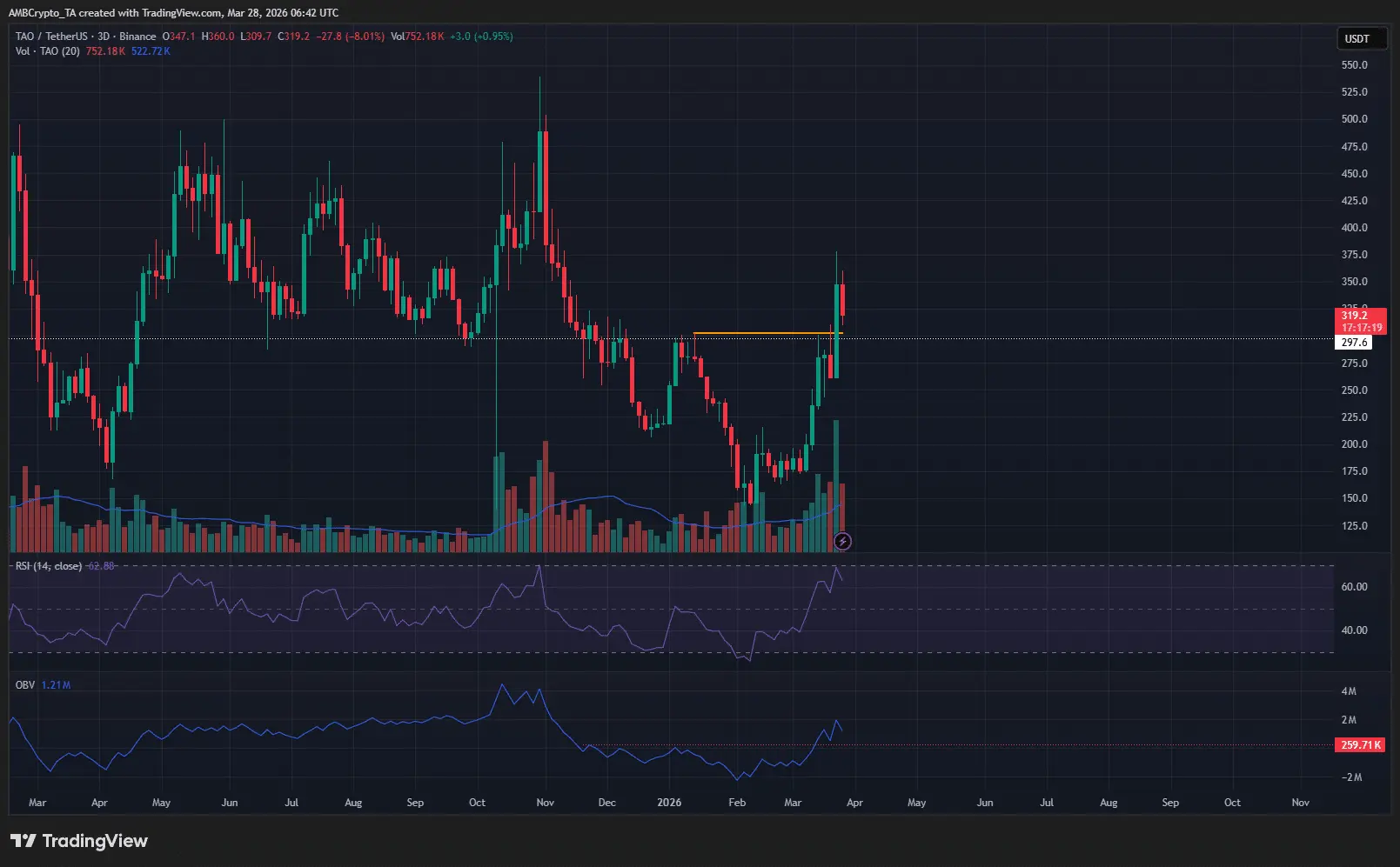 Source: TradingViewThis development becomes even more noteworthy as most altcoins, along with Bitcoin, are in a weakened or sideways state. Increased demand for decentralized AI infrastructure is seen as the main catalyst driving TAO’s strength.
In a correction scenario, the $300 zone could serve as a potential entry point for both traders and investors. Mid-term targets are identified in the $450–$500 range.
Buying opportunities are still there
On the 4-hour timeframe, the price structure remains clearly bullish, along with technical signals that support the upward move and stable buying pressure.
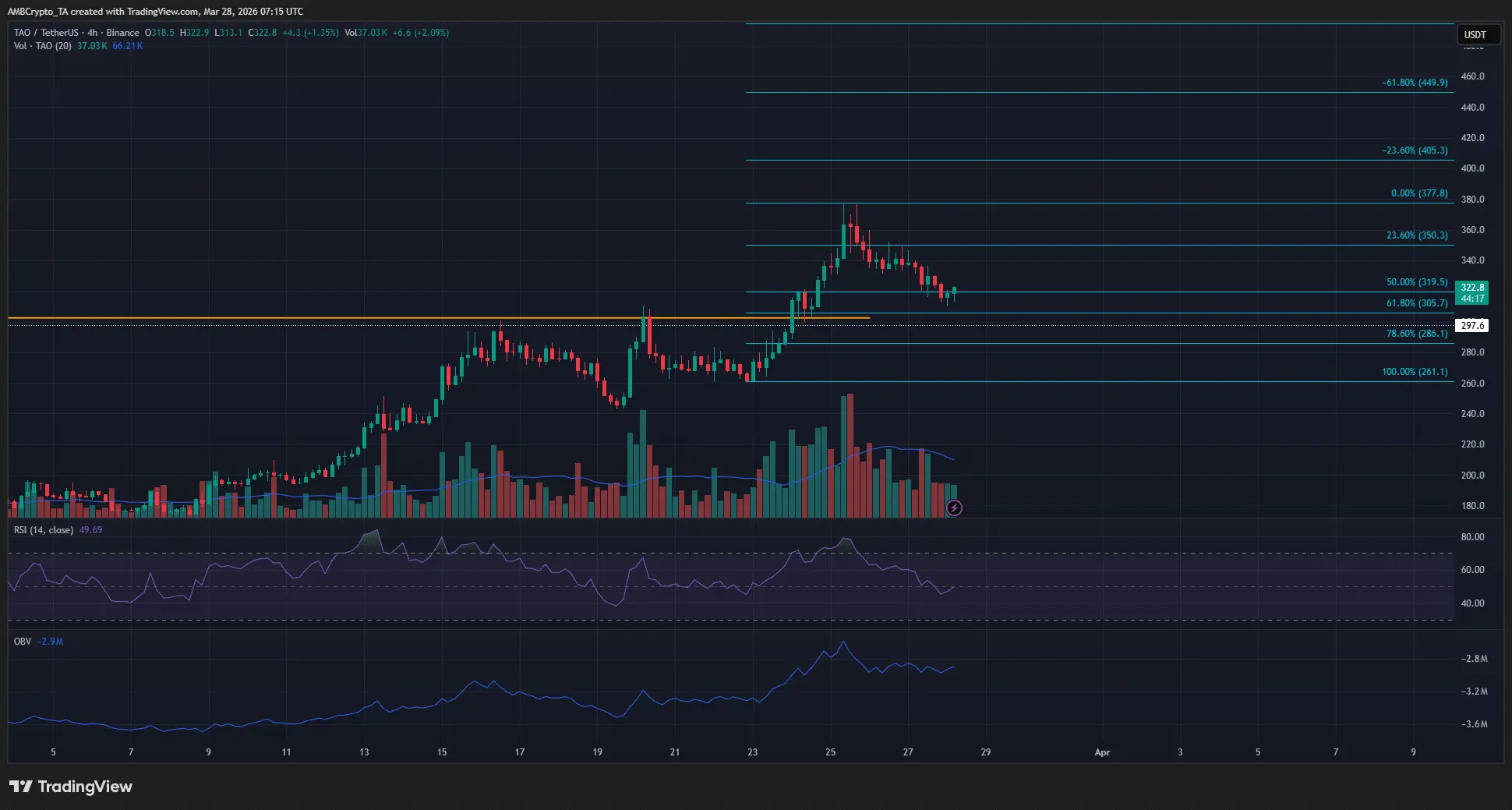 Source: TradingViewThe Fibonacci retracement levels indicate that the market is entering a short-term correction phase. The $286–$305 price zone is assessed as the ideal accumulation area, although it’s not yet fully certain that price will reach this range.
With a more flexible approach, traders could consider deploying capital in the $286–$319 range, since the 50% retracement level is often regarded as an important support in an uptrend. If the trend holds, the $405 and $449 levels will be the next targets.
Conversely, if the price breaks down below $261.1, the structure on the 4-hour timeframe would turn negative, thereby invalidating the bullish scenario mentioned above.
Disclaimer: The information on this page may come from third parties and does not represent the views or opinions of Gate. The content displayed on this page is for reference only and does not constitute any financial, investment, or legal advice. Gate does not guarantee the accuracy or completeness of the information and shall not be liable for any losses arising from the use of this information. Virtual asset investments carry high risks and are subject to significant price volatility. You may lose all of your invested principal. Please fully understand the relevant risks and make prudent decisions based on your own financial situation and risk tolerance. For details, please refer to
Disclaimer.


