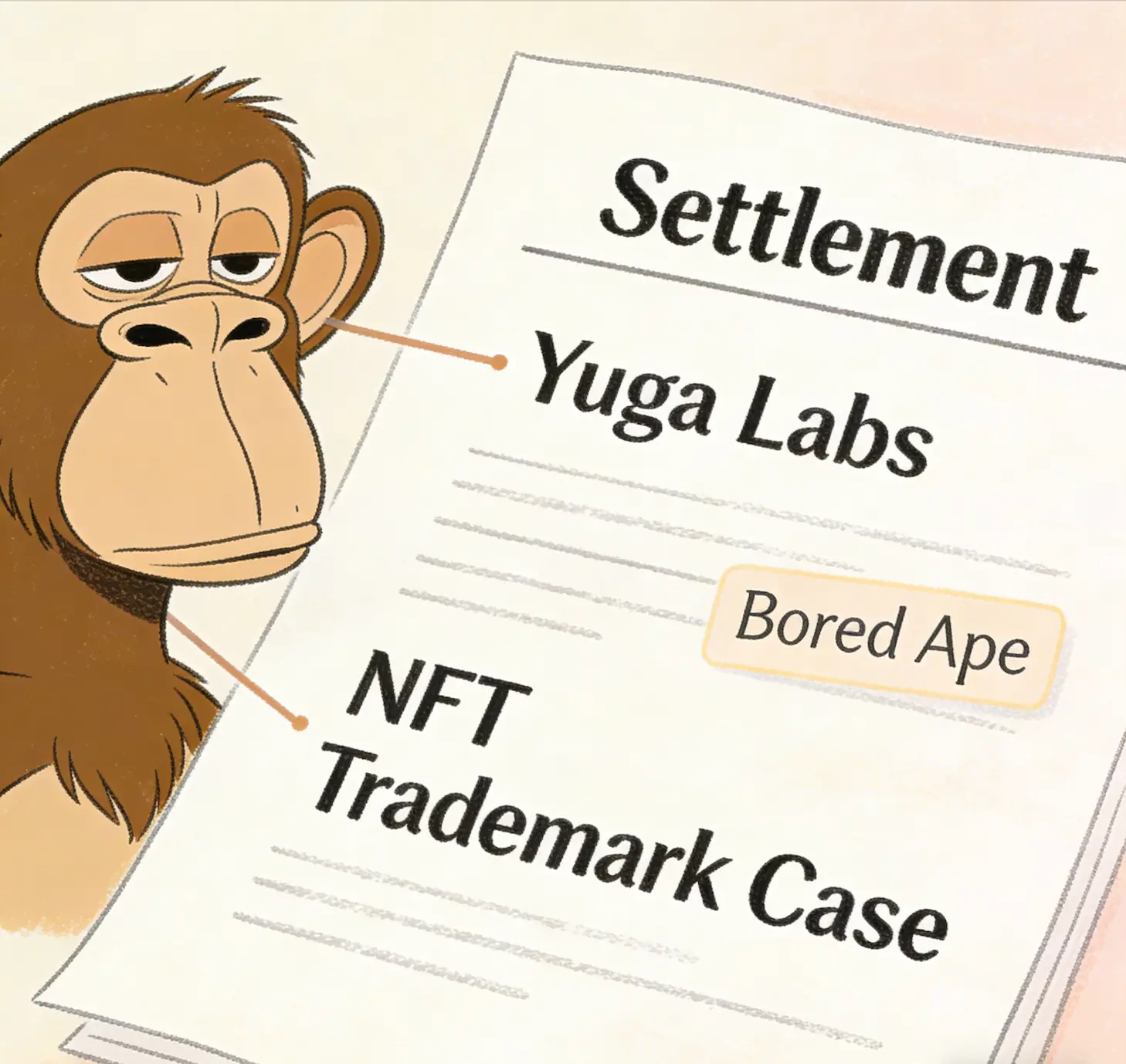
 Yuga Labs reached a settlement on April 8, 2026 with artist Ryder Ripps and Jeremy Cahen, ending a two‑year lawsuit over the RR/BAYC NFT collection that allegedly copied imagery from the Bored Ape Yacht Club (BAYC) brand.
The settlement includes a permanent injunction barring the defendants from using Yuga’s trademarks and imagery, effectively shutting down the RR/BAYC ecosystem and transferring all remaining NFTs, domain names, smart contracts, and social media accounts to Yuga Labs.
Settlement Imposes Sweeping Ban on RR/BAYC NFTs
The proposed court order permanently bars Ripps and Cahen from using BAYC‑related trademarks, including names, logos, and associated branding, in connection with any goods or services. The restrictions apply across NFTs, websites, social media accounts, and other digital or physical products. The defendants are prohibited from minting, marketing, selling, or promoting any RR/BAYC NFTs, and from collecting royalties tied to them.
As part of the settlement, Ripps and Cahen must transfer any remaining RR/BAYC NFTs, related domain names, and associated assets to Yuga Labs within a defined timeframe. Yuga Labs gains control over key infrastructure, including smart contracts, websites, and social media accounts linked to the collection. The defendants are required to remove existing online content that references BAYC branding and certify compliance with the injunction. Financial terms of the settlement were not disclosed.
Lawsuit Originated from 2022 Trademark Infringement Claims
Yuga Labs sued Ripps and Cahen in 2022, alleging that their RR/BAYC NFT collection reused Bored Ape imagery and confused buyers, earning the defendants millions. Ripps and Cahen argued that their project was a satirical response to the original Bored Ape Yacht Club collection, protected as “expressive appropriation art” under the First Amendment.
A district judge initially sided with Yuga Labs, awarding nearly $9 million in damages and fees. However, the U.S. Court of Appeals for the Ninth Circuit later overturned that ruling, holding that a jury must decide whether buyers were actually misled. The appeals court also set a precedent that NFTs are protectable by trademark law. The settlement avoids that jury trial.
Case Reinforces Trademark Protections for NFT Brands
The outcome of the settlement, though not a final court ruling, reinforces how intellectual property rights are applied in the NFT space. The scope of the injunction suggests that NFT collections can be treated as commercial goods subject to traditional trademark protections, even when deployed through decentralized infrastructure. The case also highlights the limits of using artistic or satirical framing when projects rely on recognizable branding that could create consumer confusion.
The settlement effectively dismantles the RR/BAYC ecosystem and prevents any future activity tied to the project. Yuga Labs had previously asked the court to sanction Ripps after he claimed to have destroyed the private keys to the RR/BAYC project.
FAQ
What does the settlement between Yuga Labs and Ryder Ripps require?
The settlement imposes a permanent injunction barring Ripps and Jeremy Cahen from using BAYC‑related trademarks and imagery. They must transfer all remaining RR/BAYC NFTs, domain names, smart contracts, and social media accounts to Yuga Labs. No further minting, marketing, or royalty collection is permitted.
Why did the appeals court overturn the initial $9 million award?
The Ninth Circuit ruled that a jury must decide whether buyers were actually misled by the RR/BAYC collection. While the court dismissed much of Ripps’ fair‑use argument, it vacated the summary judgment and the $9 million penalty, ordering the case to trial.
What does this settlement mean for NFT intellectual property rights?
The settlement signals that NFT collections can be subject to traditional trademark protections. Even derivative projects framed as satire may face liability if they create consumer confusion. The outcome also demonstrates that courts are willing to enforce control over NFT‑related infrastructure, including smart contracts and associated digital assets.
Disclaimer: The information on this page may come from third parties and does not represent the views or opinions of Gate. The content displayed on this page is for reference only and does not constitute any financial, investment, or legal advice. Gate does not guarantee the accuracy or completeness of the information and shall not be liable for any losses arising from the use of this information. Virtual asset investments carry high risks and are subject to significant price volatility. You may lose all of your invested principal. Please fully understand the relevant risks and make prudent decisions based on your own financial situation and risk tolerance. For details, please refer to
Disclaimer.


