
 :
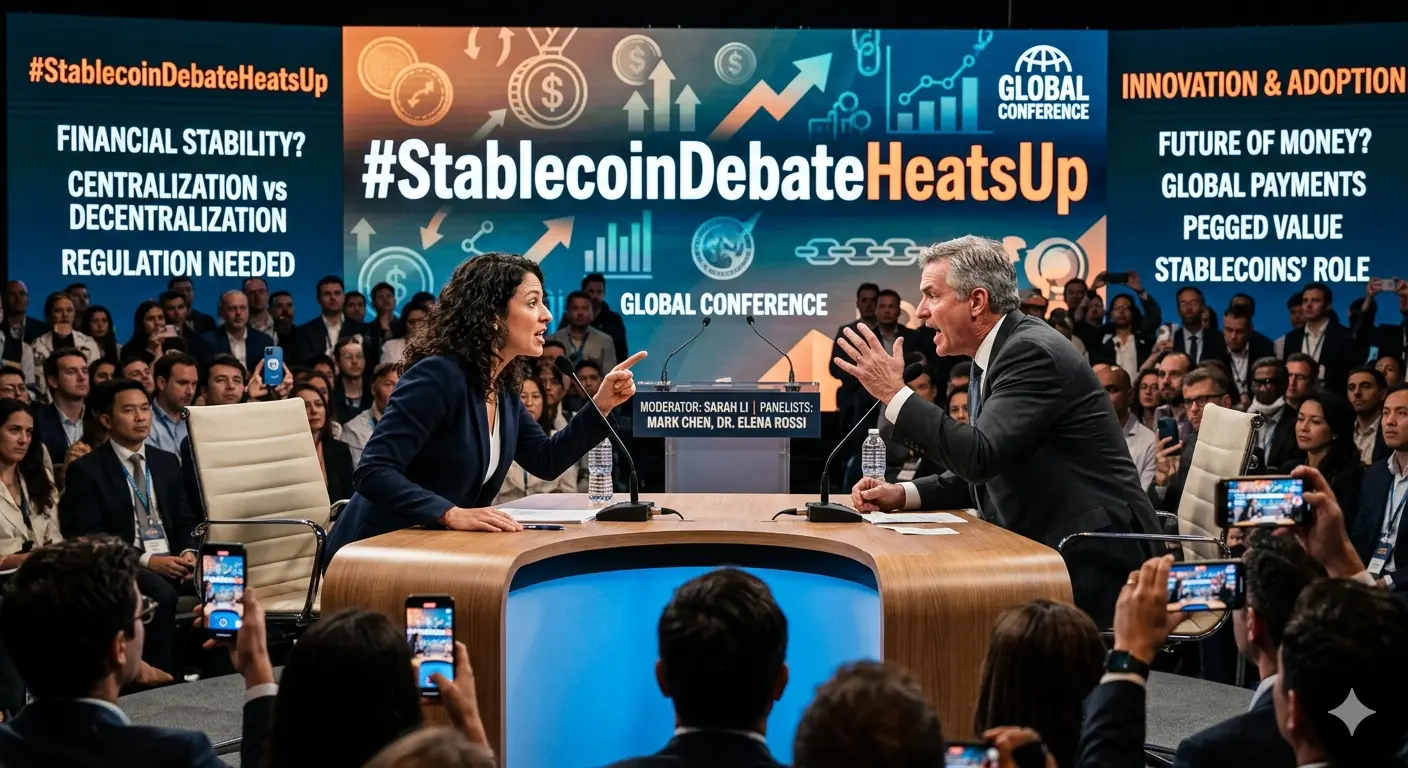
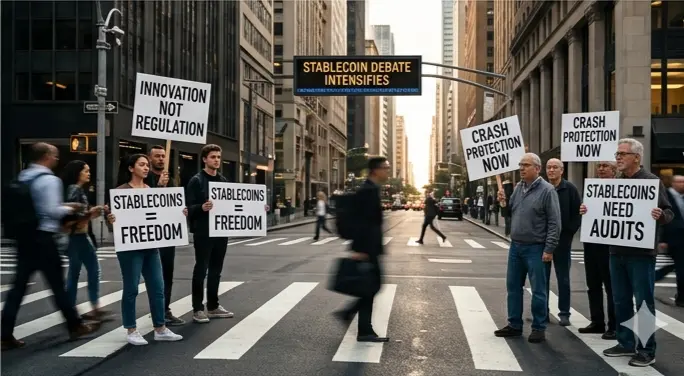
:#StablecoinDebateHeatsUp
...The Stablecoin Debate: What's Heating Up, Why It Matters, and Where the Crypto Market Goes from Here
---
...Parts 1 — What Is the Stablecoin Debate, Actually?
Stablecoins are cryptocurrencies pegged 1:1 to a real-world asset — almost always the US Dollar. Think USDT (Tether), USDC (Circle), and now even bank-issued tokenized deposits. They do not swing wildly in price. They are the "calm water" inside the stormy crypto ocean.
So what is the debate about?
Simple: **Who controls them. Who audits them. Who profits from them. And who gets hurt when they break.**
The hashtag #StablecoinDebateHeatsUp captures a global regulatory and ideological war that has been building for years — and in 2025-2026, it finally boiled over.
---
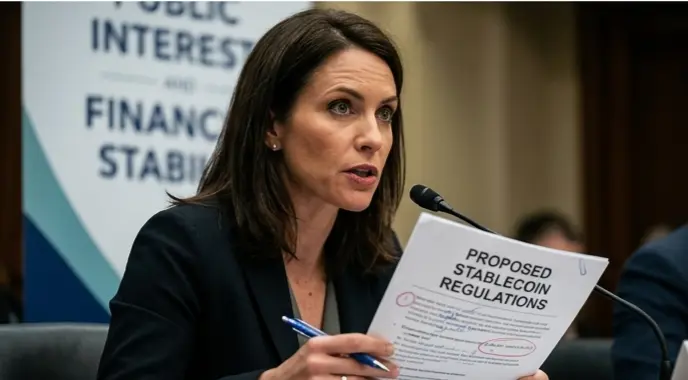
...Parts 2 — The GENIUS Act: The First Major Crypto Law in US History
In 2025, the US House of Representatives passed the **GENIUS Act** (Guiding and Establishing National Innovation for US Stablecoins) with a 308-122 vote — a bipartisan landslide. This is the **first major federal crypto legislation ever passed** in the United States.
**What the GENIUS Act does:**
- Every stablecoin issuer must hold **1:1 reserves** — dollar for dollar, no fractional nonsense.
- Reserves must be held in: US dollars, Federal Reserve notes, short-term US Treasuries, or regulated bank accounts.
- Only **OCC-licensed depository institutions** can issue stablecoins from 2027 onward.
- **Foreign stablecoin issuers** (like Tether, technically based in the British Virgin Islands) must register with the OCC and hold US-based reserves — or they cannot operate in America.
- **Stablecoin yield is banned.** You cannot earn interest just for holding a stablecoin. This is enormous — and it is one of the most debated clauses right now.
**Why is Trump involved?** He, his family, and companies connected to him have direct financial stakes in crypto entities that issue stablecoins. This makes the law politically messy — critics argue the President personally benefits from legislation he signed.
---
....Parts 3— The CLARITY Act: The Next Battle
Right after GENIUS, Congress started drafting the **Digital Asset Market Clarity Act (CLARITY Act)** — this one is even bigger.
It decides: **Is a crypto token a security (SEC) or a commodity (CFTC)?**
This question has paralyzed the industry for a decade. The CLARITY Act tries to draw a clean line:
- Decentralized digital commodities → CFTC oversight
- Tokens with issuer control → SEC oversight
But in late March 2026, the debate got explosive again. Senate negotiators reached a deal that could **ban stablecoin yield altogether** — even in DeFi protocols. Circle's stock led a crypto sell-off the same day the news broke.
---
...Parts 4 — The Core Arguments: Both Sides
.....The Pro-Stablecoin Camp says:
- Stablecoins hit **$33 trillion in transaction volume in 2025** — up 72% from 2024. This is not niche finance anymore. This is infrastructure.
- They allow **instant cross-border payments** without bank fees. A worker in Pakistan sending money home pays near-zero with USDT vs. 5-7% via Western Union.
- Stablecoin issuers (Tether, Circle) collectively hold over **$155 billion in US Treasuries** — they are literally funding US government debt. Regulating them out of existence weakens dollar demand globally.
- In emerging markets — Pakistan, Nigeria, Argentina — dollar stablecoins are often the only accessible inflation hedge for ordinary people.
....The Anti/Cautious Camp says:
- If a major stablecoin **de-pegs** (like TerraUST did in 2022, wiping out $40B overnight), it can trigger a global financial stability crisis. The FSB (Financial Stability Board) has explicitly warned of this.
- Reserve transparency is still weak. Tether's KPMG audit is a first step, but it came years late.
- Big banks are fighting stablecoin yield because it threatens their core business model — if people park money in USDC and earn yield, they do not need savings accounts.
- **China angle:** The Washington Post published an opinion piece arguing that if US banks kill stablecoin yields and restrict the dollar stablecoin ecosystem, China's digital yuan (e-CNY) fills the vacuum globally. The banks may be protecting their margins while harming America's financial dominance.
---
...Parts 5 — The Non-Dollar Stablecoin Rise
Here is a trend most people miss:
The total stablecoin market reached **$313 billion in March 2026** (per DefiLlama). But now **non-dollar stablecoins** are growing fast:
- Euro stablecoin monthly volume went from $383 million to **$3.83 billion** in one year after EU regulation (MiCA) kicked in.
- Brazil's BRLA (real-pegged) hit **$400M/month** in transfers, up 8x year-over-year.
- Singapore's XSGD and XUSD processed **$18B in on-chain volume** in 2025.
This means the stablecoin world is quietly becoming **multi-currency** — and the dollar's dominance in this space, while still overwhelming, is being challenged.
---
......Parts 6 — What Does This Mean for the Crypto Market?
Now to the core question you asked: **where does the crypto market trend go from here?**
Current market snapshot (as of April 4, 2026):
- **BTC: $66,930** — essentially flat, -0.01% in 24h, trapped in a $66,500-$67,350 range
- **ETH: $2,050** — down -0.42%, range $2,041-$2,080
- **Fear & Greed Index: 11 — Extreme Fear**
The market is not panicking because of stablecoins alone. It is in a broader macro compression — oil above $103, Fed locked in restrictive mode, geopolitical tension elevated. But stablecoin regulation is a **structural factor** that will reshape the market in the following ways:
---
....
Trend 1 — Short-Term: Uncertainty = Sell-Side Pressure
Regulatory debates create legal uncertainty. Funds and institutions hold back deployment until the rules are clear. This is part of why we are at Extreme Fear (11) right now. Expect sideways to mildly bearish price action until the CLARITY Act is finalized.
---
......Trend 2 — Medium-Term: Stablecoin Legitimacy = Institutional On-Ramp
If the GENIUS Act framework stabilizes, it becomes dramatically easier for institutional money — hedge funds, pension funds, corporations — to enter crypto. Because stablecoins are the on-ramp. You do not buy BTC directly with your corporate treasury. You buy USDC first. If USDC is now federally regulated and fully audited, the hesitation disappears.
**Bullish for BTC and ETH** in the 6-18 month window if GENIUS implementation goes smoothly.
---
.....
Trend 3 — DeFi Gets Pressured Hard
The yield ban clause in the CLARITY Act is potentially devastating for DeFi. Protocols like Aave, Compound, and Maker build their entire model on lending stablecoins for yield. If stablecoin yield is criminalized in the US, these protocols either geo-block Americans or restructure entirely.
**Bearish for DeFi tokens (AAVE, MKR, COMP)** in the near term. Watch this space closely.
---
.....Trend 4 — Tether's Uncertain Position
Tether (USDT) is the largest stablecoin at over $130B. But it is not US-registered. Under the GENIUS Act, it must either register with the OCC or get locked out of US markets by 2027.
If Tether **complies** → bullish signal, legitimacy surge.
If Tether **cannot comply or retreats** → liquidity shock for the entire crypto market. USDT is the lifeblood of most crypto trading pairs globally.
This is the single biggest tail risk in the stablecoin space right now.
---
....Trend 5 — Dollar Dominance vs. Multi-Polar Stablecoins
As euro, real, and Singapore dollar stablecoins grow, cross-chain liquidity diversifies. This is actually **good for crypto infrastructure broadly** — it reduces single points of failure. But it also reduces the structural demand for USDT specifically.
Watch for **Circle (USDC)** to be the biggest winner here. Circle is fully US-compliant, already audited, registered, and positioned perfectly for the post-GENIUS world.
---
....Part 7 — Pakistan/Emerging Market Angle
Since you are asking from that context — here is what this debate means for Pakistan and similar markets:
- Stablecoins like USDT are currently used by millions in Pakistan to hedge against PKR depreciation, receive freelance payments, and do cross-border commerce.
- If Tether gets cut off from US markets or faces severe restrictions, the most accessible dollar stablecoin for Pakistani users gets shakier.
- However, USDC or regulated alternatives stepping in could actually make things **more stable**, not less — fully audited reserves mean a de-peg event becomes far less likely.
- The non-dollar stablecoin trend also opens a future possibility of PKR-pegged or regional stablecoins for local use cases.
---
.....SUMMARY TAHE 5-Point Cheat Sheet
| Factor | Impact |
|---|---|
| GENIUS Act passed | Short-term uncertainty, long-term institutional bullish |
| CLARITY Act yield ban | Bearish for DeFi, bearish for Circle in short run |
| Tether compliance question | Biggest tail risk for overall crypto liquidity |
| Institutional on-ramp legitimized | Bullish for BTC/ETH over 6-18 months |
| Non-dollar stablecoin rise | Healthy diversification, reduces systemic USD concentration risk |
The stablecoin debate is not just regulatory noise. It is the **structural foundation** being poured for the next phase of crypto's existence — either as regulated global financial infrastructure, or as a legally fractured mess that forces the industry offshore. The next 12-18 months decide which way it goes.
And right now, at Fear & Greed Index of 11, the market is pricing in the worst. That historically tends to be where the long-term opportunities are — not promises, just patterns.
...The Stablecoin Debate: What's Heating Up, Why It Matters, and Where the Crypto Market Goes from Here
---
...Parts 1 — What Is the Stablecoin Debate, Actually?
Stablecoins are cryptocurrencies pegged 1:1 to a real-world asset — almost always the US Dollar. Think USDT (Tether), USDC (Circle), and now even bank-issued tokenized deposits. They do not swing wildly in price. They are the "calm water" inside the stormy crypto ocean.
So what is the debate about?
Simple: **Who controls them. Who audits them. Who profits from them. And who gets hurt when they break.**
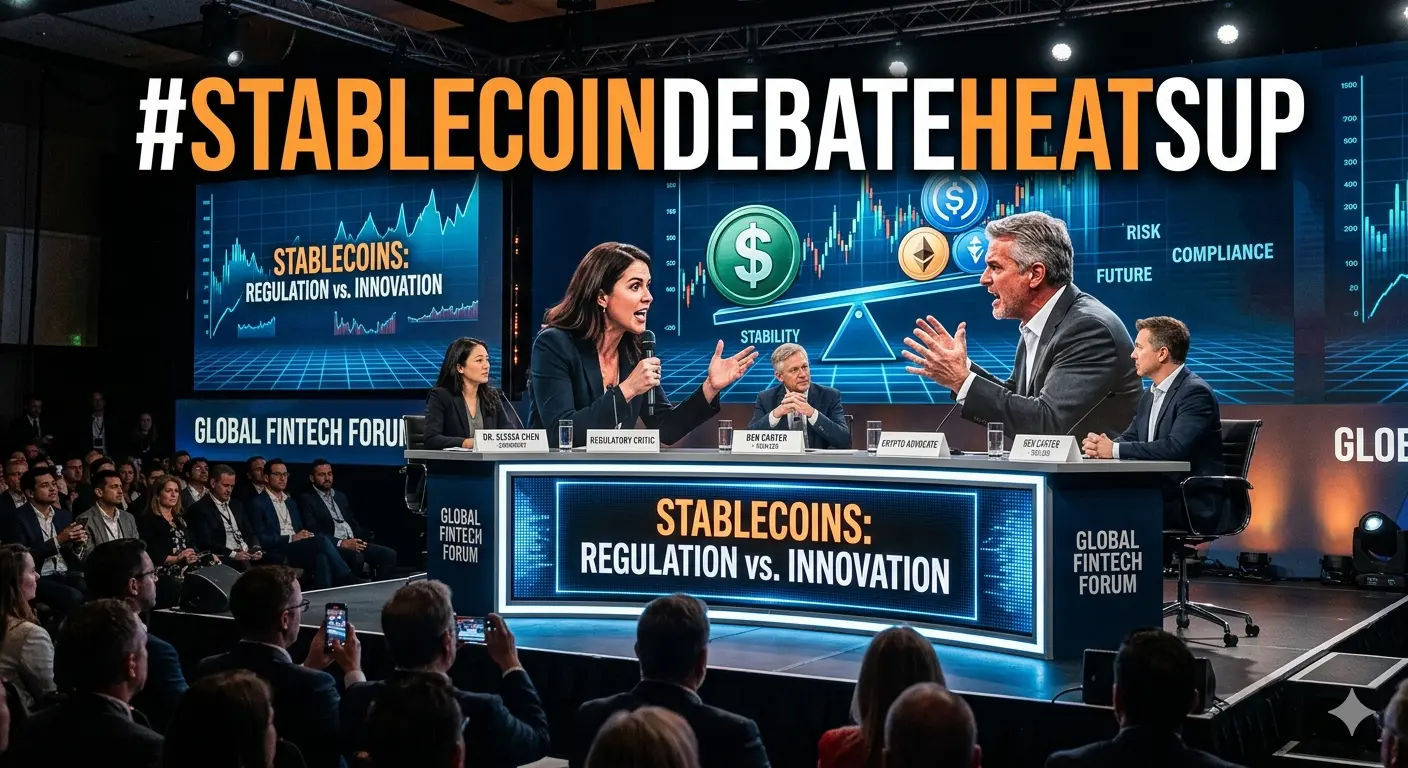
The hashtag #StablecoinDebateHeatsUp captures a global regulatory and ideological war that has been building for years — and in 2025-2026, it finally boiled over.
---
...Parts 2 — The GENIUS Act: The First Major Crypto Law in US History
In 2025, the US House of Representatives passed the **GENIUS Act** (Guiding and Establishing National Innovation for US Stablecoins) with a 308-122 vote — a bipartisan landslide. This is the **first major federal crypto legislation ever passed** in the United States.
**What the GENIUS Act does:**
- Every stablecoin issuer must hold **1:1 reserves** — dollar for dollar, no fractional nonsense.
- Reserves must be held in: US dollars, Federal Reserve notes, short-term US Treasuries, or regulated bank accounts.
- Only **OCC-licensed depository institutions** can issue stablecoins from 2027 onward.
- **Foreign stablecoin issuers** (like Tether, technically based in the British Virgin Islands) must register with the OCC and hold US-based reserves — or they cannot operate in America.
- **Stablecoin yield is banned.** You cannot earn interest just for holding a stablecoin. This is enormous — and it is one of the most debated clauses right now.
**Why is Trump involved?** He, his family, and companies connected to him have direct financial stakes in crypto entities that issue stablecoins. This makes the law politically messy — critics argue the President personally benefits from legislation he signed.
---
....Parts 3— The CLARITY Act: The Next Battle
Right after GENIUS, Congress started drafting the **Digital Asset Market Clarity Act (CLARITY Act)** — this one is even bigger.
It decides: **Is a crypto token a security (SEC) or a commodity (CFTC)?**
This question has paralyzed the industry for a decade. The CLARITY Act tries to draw a clean line:
- Decentralized digital commodities → CFTC oversight
- Tokens with issuer control → SEC oversight
But in late March 2026, the debate got explosive again. Senate negotiators reached a deal that could **ban stablecoin yield altogether** — even in DeFi protocols. Circle's stock led a crypto sell-off the same day the news broke.
---
...Parts 4 — The Core Arguments: Both Sides
.....The Pro-Stablecoin Camp says:
- Stablecoins hit **$33 trillion in transaction volume in 2025** — up 72% from 2024. This is not niche finance anymore. This is infrastructure.
- They allow **instant cross-border payments** without bank fees. A worker in Pakistan sending money home pays near-zero with USDT vs. 5-7% via Western Union.
- Stablecoin issuers (Tether, Circle) collectively hold over **$155 billion in US Treasuries** — they are literally funding US government debt. Regulating them out of existence weakens dollar demand globally.
- In emerging markets — Pakistan, Nigeria, Argentina — dollar stablecoins are often the only accessible inflation hedge for ordinary people.
....The Anti/Cautious Camp says:
- If a major stablecoin **de-pegs** (like TerraUST did in 2022, wiping out $40B overnight), it can trigger a global financial stability crisis. The FSB (Financial Stability Board) has explicitly warned of this.
- Reserve transparency is still weak. Tether's KPMG audit is a first step, but it came years late.
- Big banks are fighting stablecoin yield because it threatens their core business model — if people park money in USDC and earn yield, they do not need savings accounts.
- **China angle:** The Washington Post published an opinion piece arguing that if US banks kill stablecoin yields and restrict the dollar stablecoin ecosystem, China's digital yuan (e-CNY) fills the vacuum globally. The banks may be protecting their margins while harming America's financial dominance.
---
...Parts 5 — The Non-Dollar Stablecoin Rise
Here is a trend most people miss:
The total stablecoin market reached **$313 billion in March 2026** (per DefiLlama). But now **non-dollar stablecoins** are growing fast:
- Euro stablecoin monthly volume went from $383 million to **$3.83 billion** in one year after EU regulation (MiCA) kicked in.
- Brazil's BRLA (real-pegged) hit **$400M/month** in transfers, up 8x year-over-year.
- Singapore's XSGD and XUSD processed **$18B in on-chain volume** in 2025.
This means the stablecoin world is quietly becoming **multi-currency** — and the dollar's dominance in this space, while still overwhelming, is being challenged.
---
......Parts 6 — What Does This Mean for the Crypto Market?
Now to the core question you asked: **where does the crypto market trend go from here?**
Current market snapshot (as of April 4, 2026):
- **BTC: $66,930** — essentially flat, -0.01% in 24h, trapped in a $66,500-$67,350 range
- **ETH: $2,050** — down -0.42%, range $2,041-$2,080
- **Fear & Greed Index: 11 — Extreme Fear**
The market is not panicking because of stablecoins alone. It is in a broader macro compression — oil above $103, Fed locked in restrictive mode, geopolitical tension elevated. But stablecoin regulation is a **structural factor** that will reshape the market in the following ways:
---
....
Trend 1 — Short-Term: Uncertainty = Sell-Side Pressure
Regulatory debates create legal uncertainty. Funds and institutions hold back deployment until the rules are clear. This is part of why we are at Extreme Fear (11) right now. Expect sideways to mildly bearish price action until the CLARITY Act is finalized.
---
......Trend 2 — Medium-Term: Stablecoin Legitimacy = Institutional On-Ramp
If the GENIUS Act framework stabilizes, it becomes dramatically easier for institutional money — hedge funds, pension funds, corporations — to enter crypto. Because stablecoins are the on-ramp. You do not buy BTC directly with your corporate treasury. You buy USDC first. If USDC is now federally regulated and fully audited, the hesitation disappears.
**Bullish for BTC and ETH** in the 6-18 month window if GENIUS implementation goes smoothly.
---
.....
Trend 3 — DeFi Gets Pressured Hard
The yield ban clause in the CLARITY Act is potentially devastating for DeFi. Protocols like Aave, Compound, and Maker build their entire model on lending stablecoins for yield. If stablecoin yield is criminalized in the US, these protocols either geo-block Americans or restructure entirely.
**Bearish for DeFi tokens (AAVE, MKR, COMP)** in the near term. Watch this space closely.
---
.....Trend 4 — Tether's Uncertain Position
Tether (USDT) is the largest stablecoin at over $130B. But it is not US-registered. Under the GENIUS Act, it must either register with the OCC or get locked out of US markets by 2027.
If Tether **complies** → bullish signal, legitimacy surge.
If Tether **cannot comply or retreats** → liquidity shock for the entire crypto market. USDT is the lifeblood of most crypto trading pairs globally.
This is the single biggest tail risk in the stablecoin space right now.
---
....Trend 5 — Dollar Dominance vs. Multi-Polar Stablecoins
As euro, real, and Singapore dollar stablecoins grow, cross-chain liquidity diversifies. This is actually **good for crypto infrastructure broadly** — it reduces single points of failure. But it also reduces the structural demand for USDT specifically.
Watch for **Circle (USDC)** to be the biggest winner here. Circle is fully US-compliant, already audited, registered, and positioned perfectly for the post-GENIUS world.
---
....Part 7 — Pakistan/Emerging Market Angle
Since you are asking from that context — here is what this debate means for Pakistan and similar markets:
- Stablecoins like USDT are currently used by millions in Pakistan to hedge against PKR depreciation, receive freelance payments, and do cross-border commerce.
- If Tether gets cut off from US markets or faces severe restrictions, the most accessible dollar stablecoin for Pakistani users gets shakier.
- However, USDC or regulated alternatives stepping in could actually make things **more stable**, not less — fully audited reserves mean a de-peg event becomes far less likely.
- The non-dollar stablecoin trend also opens a future possibility of PKR-pegged or regional stablecoins for local use cases.
---
.....SUMMARY TAHE 5-Point Cheat Sheet
| Factor | Impact |
|---|---|
| GENIUS Act passed | Short-term uncertainty, long-term institutional bullish |
| CLARITY Act yield ban | Bearish for DeFi, bearish for Circle in short run |
| Tether compliance question | Biggest tail risk for overall crypto liquidity |
| Institutional on-ramp legitimized | Bullish for BTC/ETH over 6-18 months |
| Non-dollar stablecoin rise | Healthy diversification, reduces systemic USD concentration risk |
The stablecoin debate is not just regulatory noise. It is the **structural foundation** being poured for the next phase of crypto's existence — either as regulated global financial infrastructure, or as a legally fractured mess that forces the industry offshore. The next 12-18 months decide which way it goes.
And right now, at Fear & Greed Index of 11, the market is pricing in the worst. That historically tends to be where the long-term opportunities are — not promises, just patterns.



 :
: