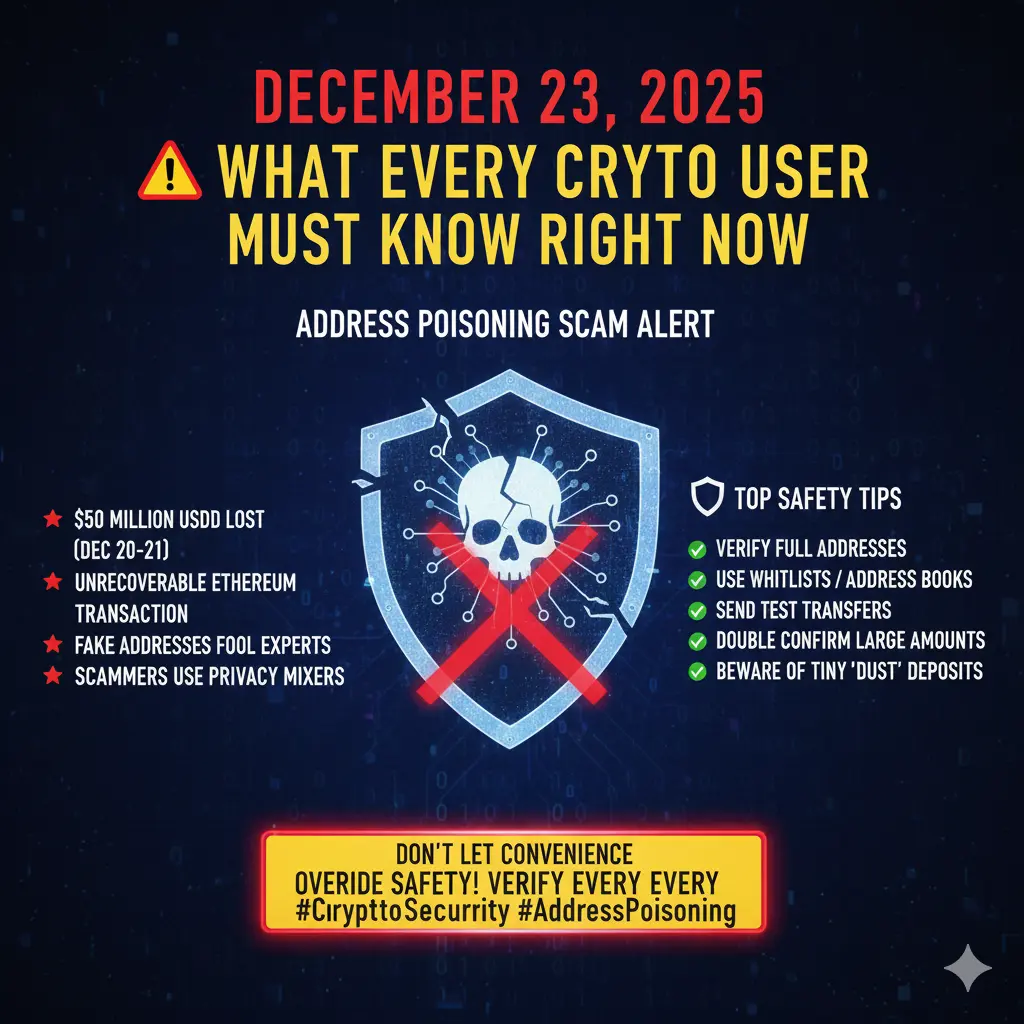
#EthereumWarnsonAddressPoisoning
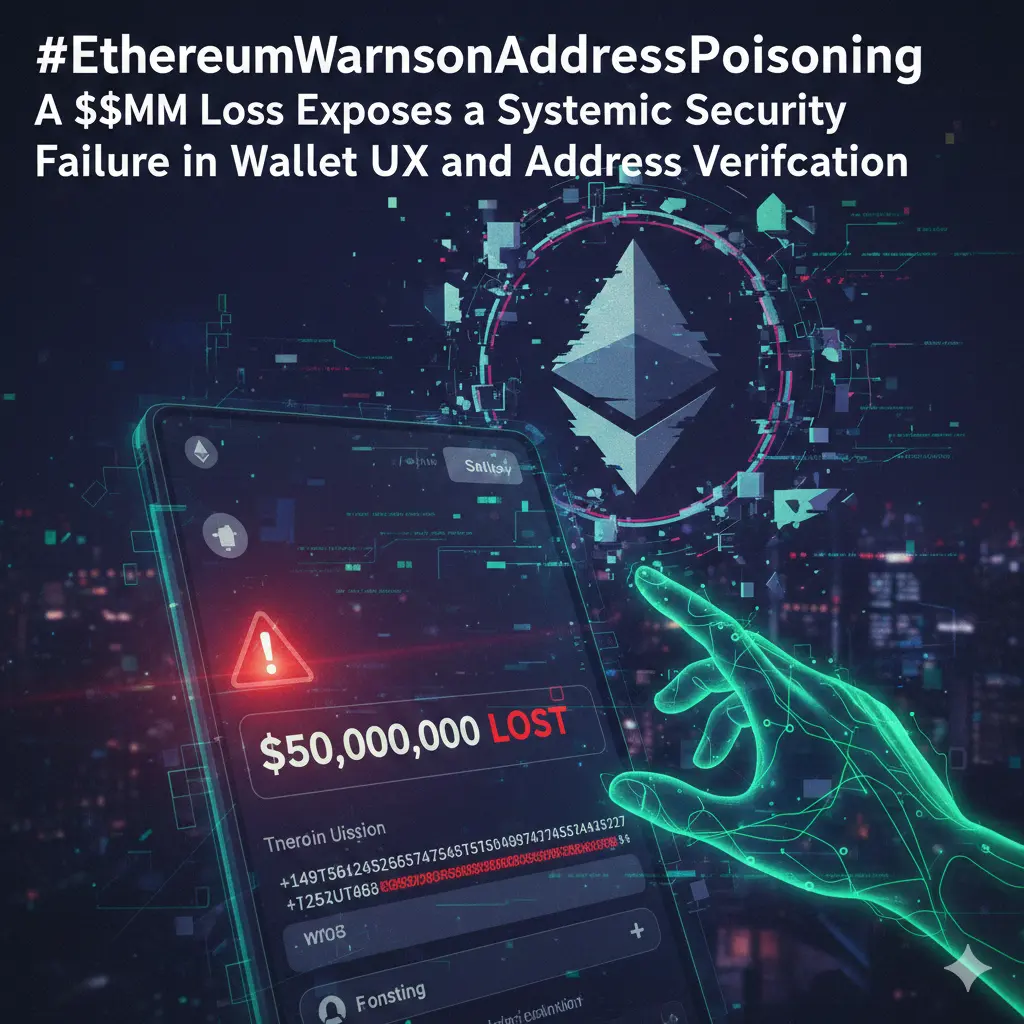
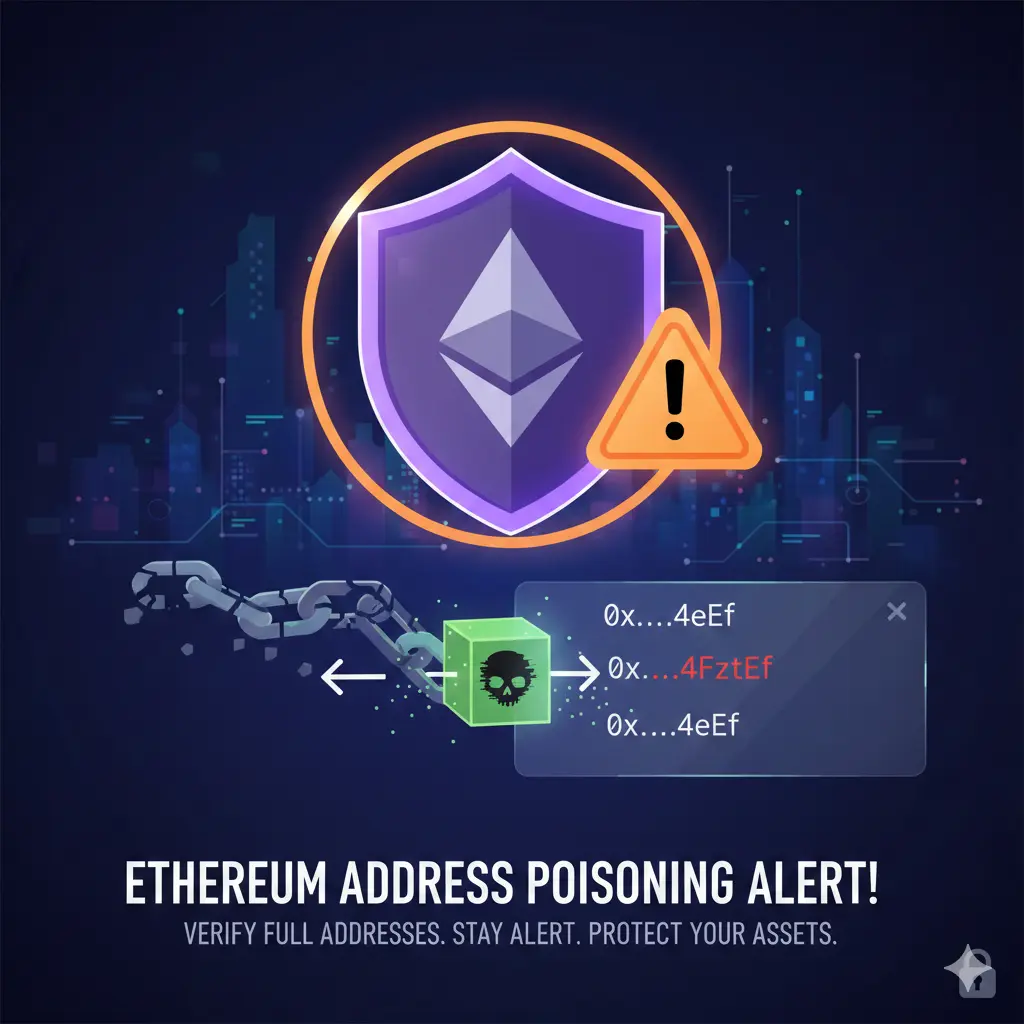
The $50M USDT phishing incident caused by lookalike Ethereum addresses has exposed a systemic problem in crypto security that goes beyond simple user error: truncated wallet addresses are inherently unsafe in adversarial environments, and the ecosystem has relied on this dangerous practice for far too long. Most wallets display only the first few and last few characters of an address something like implicitly training users to assume that verifying just the visible segments is sufficient. Attackers exploit this predictability by generating addresses that share
The $50M USDT phishing incident caused by lookalike Ethereum addresses has exposed a systemic problem in crypto security that goes beyond simple user error: truncated wallet addresses are inherently unsafe in adversarial environments, and the ecosystem has relied on this dangerous practice for far too long. Most wallets display only the first few and last few characters of an address something like implicitly training users to assume that verifying just the visible segments is sufficient. Attackers exploit this predictability by generating addresses that share
 :
: