How can investors participate in Changxin Technology? The essential differences center on whether the three available paths provide registered A-share stocks, on-chain Pre-IPO perpetual contracts, or Gate pre-market perpetual contracts. Only the A-share path represents a legally recognized stock holding. Changxin Technology (CXMT) has already mapped out its business structure and exposure types; the following sections focus on entry requirements, product structure comparison, and rights differences.
The A-share path is open to accounts meeting domestic suitability rules, while Hyperliquid and Gate paths are for participants with digital asset accounts who express price expectations through contracts. Understanding the Changxin DRAM business structure helps inform fundamental analysis, but it is critical to distinguish between "stock ownership" and "derivative exposure."
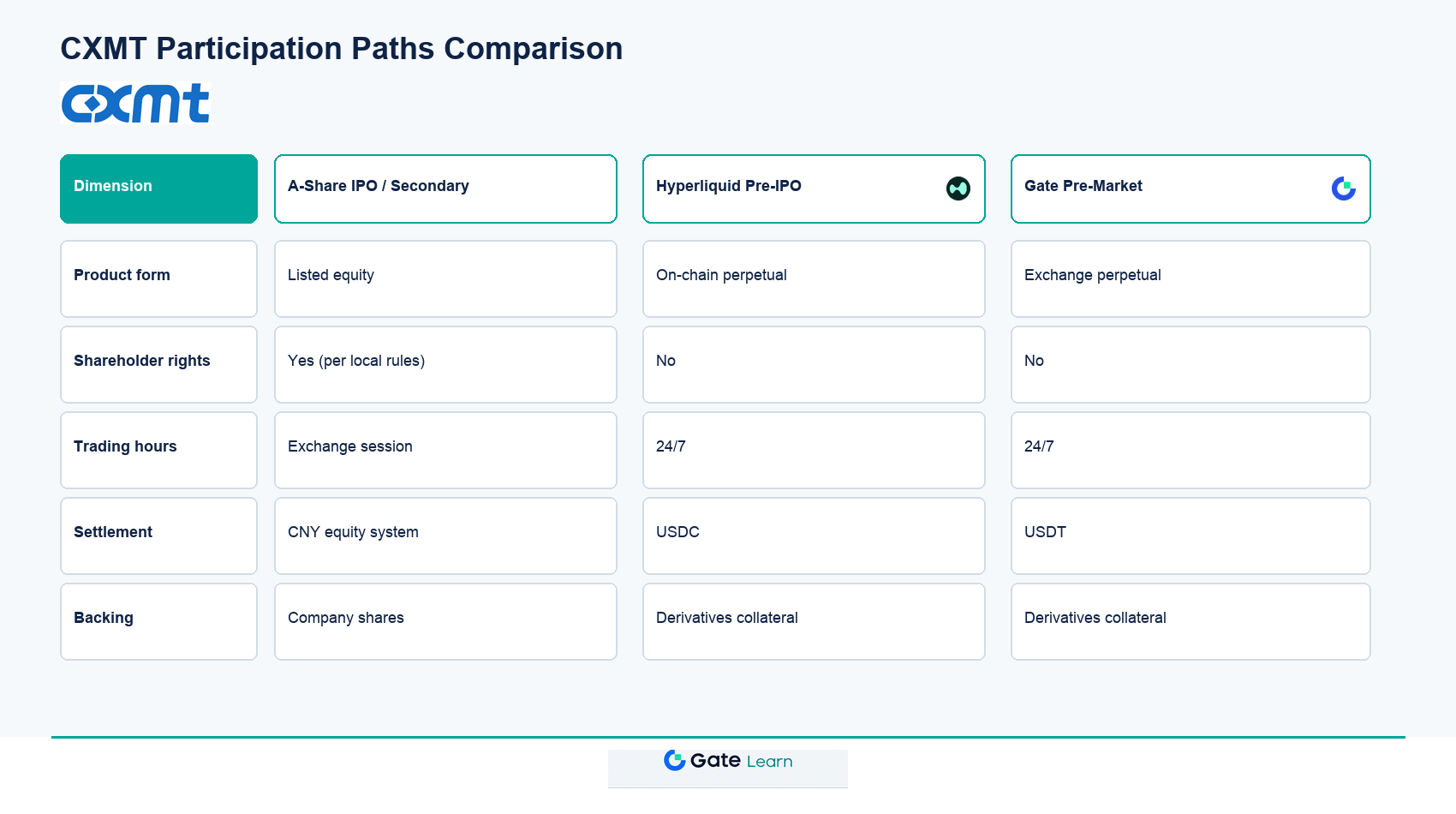 Figure 1. Side-by-side comparison of shareholder rights, trading hours, and pricing anchors across the three paths.
What participation paths are available for Changxin Technology?
There are three public participation paths for CXMT: A-share STAR Market IPO subscription or secondary trading after listing; Hyperliquid HIP-3 framework CXMT Pre-IPO perpetual; and Gate CXMT_USDT pre-market perpetual (is_pre_market).
| Path |
Product Type |
Settlement Currency |
Registered Equity |
| A-share STAR Market IPO / Secondary |
Listed stock |
RMB |
Yes |
| Hyperliquid Pre-IPO |
Perpetual contract |
USDC |
No |
| Gate CXMT_USDT |
Pre-market perpetual contract |
USDT |
No |
The A-share path provides exchange-matched spot stocks, while the two contract paths offer leveraged exposure based on price expectations and cannot be converted to registered A-share holdings.
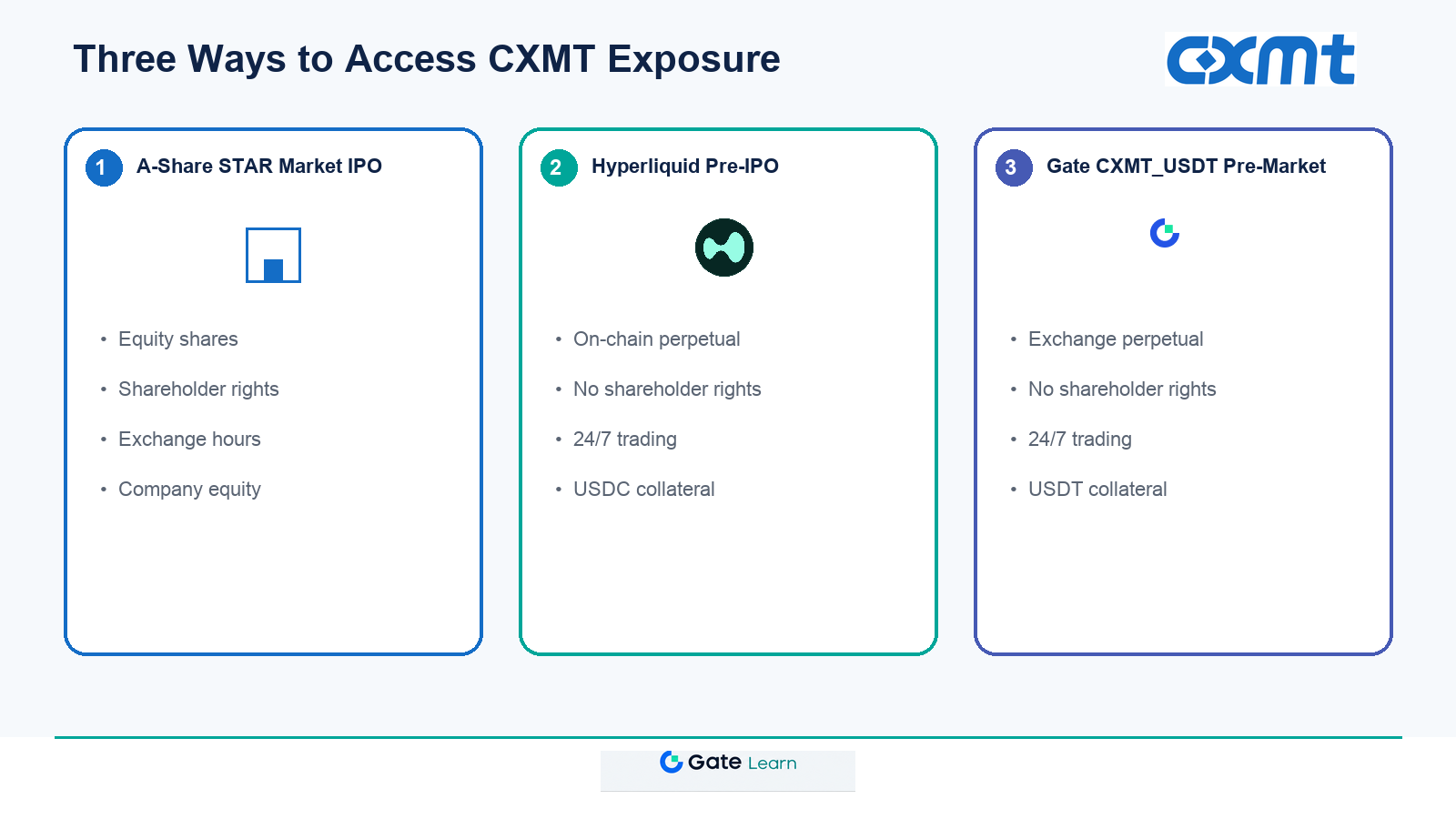 Figure 2. Overview of the three participation paths for Changxin Technology: A-share stocks, Hyperliquid Pre-IPO perpetual, and Gate pre-market perpetual.
What are the requirements for the A-share STAR Market IPO and secondary market path?
The A-share path is the only public channel to obtain registered equity in Changxin Technology, divided into IPO subscription and secondary trading after listing.
IPO subscription requires opening a compliant A-share securities account and meeting STAR Market investor suitability requirements (asset size, investment experience, etc., as per exchange and broker rules). Those not allocated or who miss the IPO window may trade CXMT in the secondary market after listing under exchange rules.
Secondary trading follows A-share market hours, price fluctuation limits, and T+1 settlement. Holders are eligible for dividends, voting, and other corporate actions (subject to registration and disclosure). This path does not involve on-chain wallets or contract margin but is subject to domestic account and cross-border fund regulations.
How to participate in Hyperliquid Pre-IPO perpetual contracts?
CXMT on Hyperliquid falls under the HIP-3 framework as a Pre-IPO (IPOP) perpetual contract, margined and settled in USDC. Participants must have a supported on-chain account and complete identity or regional compliance verification.
The contract tracks the expected RMB price of one A-share of Changxin Technology, converted to USD based on exchange rates. Pre-listing mark price is mainly formed by the on-chain order book; post-listing, external A-share transaction price expectations are included in index calculation. Hyperliquid CXMT mechanism details mark price and funding rate; Hyperliquid trading process outlines execution checkpoints.
Participation requires confirmation of ticker, USDC margin, leverage, liquidation thresholds, and the impact of funding rates on position costs. Contract holders do not receive IPO allocation, dividends, or voting rights.
How to participate in Gate CXMT_USDT pre-market perpetual?
Gate's CXMT_USDT is a stock-type pre-market perpetual contract, settled in USDT, supporting leveraged long and short positions. Participants must have a Gate contract account and complete KYC and regional access verification.
The product is marked as is_pre_market: pre-listing index price may use internal platform mechanisms; post-listing, it transitions according to pre-market to regular perpetual rules.
Before participating, confirm: trading pair is CXMT_USDT, product type is pre-market perpetual; leverage, maintenance margin, forced liquidation rules, and funding rate; regional restrictions and account mode. Execution details are subject to the Gate contract product page; step-by-step instructions are not provided.
Key differences between the three paths at a glance
| Comparison Dimension |
A-share IPO / Secondary |
Hyperliquid Pre-IPO |
Gate CXMT_USDT Pre-market |
| Underlying Attribute |
Registered listed stock |
Perpetual contract exposure |
Pre-market perpetual contract exposure |
| Shareholder Rights |
Yes |
No |
No |
| Trading Hours |
A-share market hours |
On-chain 24/7 |
Extended platform trading |
| Short Selling Ability |
Restricted by margin lending |
Supported |
Supported |
| Pricing Anchor |
Exchange spot |
Pre-listing order book; post-listing includes A-share price |
Internal pre-market mechanism; post-listing transition |
| With gStocks |
Not applicable |
Not applicable |
Not gStocks |
The A-share path is the only option providing full shareholder rights; the two contract paths do not substitute for legal equity, and Hyperliquid and Gate differ in settlement assets and pricing mechanics.
What rights and restrictions do the three paths have?
A-share: Registered equity, eligible for dividends and corporate actions, protected by Securities Law and exchange rules. Restrictions include uncertainty in IPO allocation, price fluctuation limits and T+1, margin lending thresholds, and domestic account requirements.
Hyperliquid: Supports bidirectional trading and 24/7 quoting. Restrictions include no shareholder rights, potential pre-listing pricing deviation from A-share spot, slippage with insufficient liquidity, and HIP-3 rule change risk.
Gate: USDT settlement enables unified contract account management. Restrictions include not gStocks, no mapping to real stock reserves, possible decoupling of pre-market index from external spot, and platform rule and regional access adjustments.
None of the paths eliminate DRAM cycle and competitive landscape risks revealed in Changxin vs Samsung, SK Hynix, Micron.
What are common misconceptions about participating in Changxin Technology?
On-chain CXMT equals A-shares: Hyperliquid and Gate tickers are derivatives; holdings are not registered in the A-share system and cannot be exchanged for registered stocks.
Gate CXMT is gStocks: Gate has not launched CXMT gStocks; CXMT_USDT is a pre-market perpetual, which is a different product line from 1:1 real stock mapping.
Pre-IPO contract price equals IPO issue price: Contract price is determined by the order book or internal index and may diverge from A-share issue price and post-listing spot price.
The three paths can be freely interchanged: Each belongs to different accounts and legal frameworks, with no automatic conversion. Switching paths requires closing and reopening positions.
| Risk Type |
Main Manifestation |
Affected Path |
| Pricing Deviation |
Contract price diverges from A-share spot |
Hyperliquid, Gate |
| Liquidity |
Insufficient depth, increased slippage |
Contract paths |
| Leverage Liquidation |
Forced liquidation due to insufficient margin |
Hyperliquid, Gate |
| Rule Changes |
Adjustment of contract parameters or regional restrictions |
Contract paths |
| Industry Fundamentals |
DRAM cycle, technology gap |
All paths |
A-share path risks are mainly spot price volatility and regulatory rules; contract paths add leverage and funding rate risks. Path selection should be based on an understanding of product attributes and risk mechanisms, not just price direction.
Summary
Investors can participate in Changxin Technology (CXMT) via three paths: A-share STAR Market IPO or secondary trading, Hyperliquid Pre-IPO perpetual, and Gate CXMT_USDT pre-market perpetual. Only the A-share path offers registered equity; the two contract paths are settled in USDC or USDT, support leverage and short selling, but do not constitute legal stock. Gate does not offer CXMT gStocks. Participants must confirm product type, rights boundaries, and pricing mechanism before participating.
FAQ
How can investors participate in Changxin Technology?
Three paths: A-share STAR Market IPO subscription or secondary purchase of registered stocks; Hyperliquid trading CXMT Pre-IPO perpetual (USDC); Gate trading CXMT_USDT pre-market perpetual (USDT). The latter two are derivatives and do not confer shareholder rights.
What are the differences between A-share IPO subscription, Hyperliquid, and Gate pre-market contracts?
A-shares provide legal stock ownership, settled in RMB, subject to market hours and T+1. Hyperliquid and Gate are perpetual contracts, settled in USDC and USDT respectively, support extended hours and leveraged short selling, but do not offer registered equity or voting rights.
Is on-chain CXMT a stock?
It is not a registered A-share stock, but a derivative tracking Changxin Technology's expected stock price. Holdings are not registered in the A-share system and cannot be exchanged for spot stocks.
Does Gate offer CXMT gStocks?
Gate has not launched CXMT gStocks spot; only CXMT_USDT pre-market perpetual is available, which is a different product line from gStocks' 1:1 real stock mapping.
What is most important to confirm before participating in Changxin Technology?
Confirm product attributes for each path: A-share suitability and trading rules, or Hyperliquid/Gate ticker, margin, leverage, funding rate, and regional restrictions. Only the A-share path confers shareholder rights.
What risks are associated with trading CXMT-related exposure?
Risks include contract price deviation from A-share spot, insufficient liquidity, leverage liquidation, platform rule changes, DRAM industry cycle volatility, ticker selection errors, and improper margin management.